Introduction: The MEB Platform in the Real World
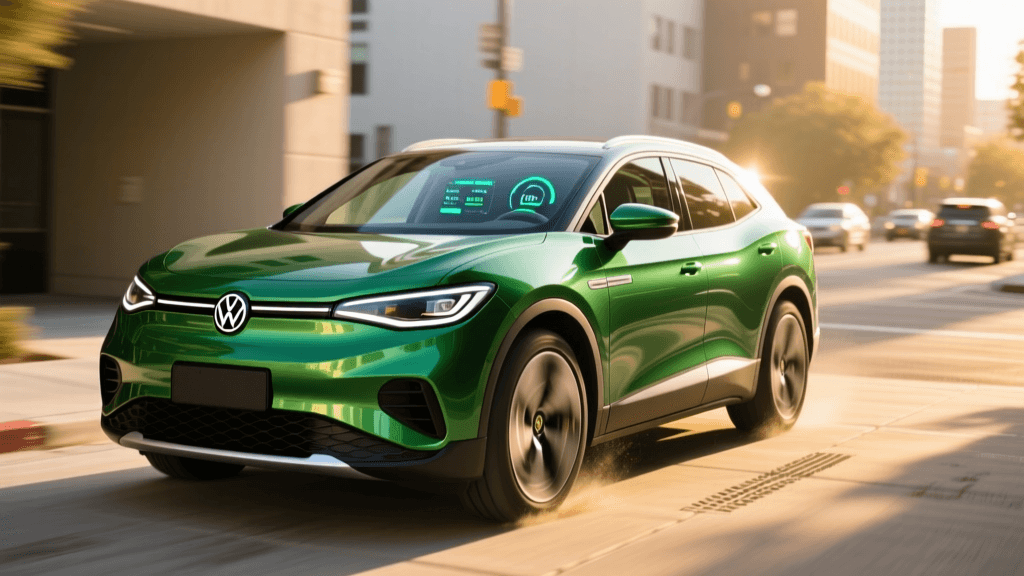
When the Volkswagen ID.4 first launched, it was heralded as the electric vehicle that would bridge the gap between early adopters and the mass market. Built on VW's highly modular MEB (Modularer E-Antriebs-Baukasten) platform, the ID.4 promised a spacious interior, approachable styling, and a suite of modern EV technologies. But how does the technology actually hold up after 365 days of daily driving, software updates, and seasonal weather changes? In this one-year ownership review, we are bypassing the standard exterior styling critiques and diving deep into the technological ecosystem of the ID.4. From infotainment responsiveness and over-the-air (OTA) update impacts to real-world battery degradation analytics and charging architecture, this is the ultimate tech-focused retrospective for current owners and prospective buyers alike.
Infotainment and the Software Evolution
The nerve center of the ID.4 is its infotainment system, which has been both the most praised and heavily criticized aspect of the ownership experience. Over the past year, our test vehicle transitioned through multiple software iterations, ultimately settling on the much-improved ID. Software 3.2. Early versions of the software were plagued by laggy boot times and unresponsive inputs. However, the latest updates have noticeably optimized the system's processing speed, making the 12-inch touchscreen significantly more fluid.
The user interface relies heavily on a tile-based layout that is generally intuitive, but the decision to utilize capacitive touch sliders for volume and climate control remains a technological misstep. Without backlighting on the temperature and volume sliders (a hardware limitation in pre-2024 models), nighttime adjustments require a fumbling guesswork approach. Fortunately, the voice recognition system, triggered by saying "Hey ID," has seen vast improvements in natural language processing. According to Car and Driver's extensive Volkswagen ID.4 coverage, the updated voice assistant can now understand complex, multi-step commands like "I'm cold and navigate to the nearest fast charger," executing both climate adjustments and routing simultaneously.
Another critical tech feature is the augmented reality (AR) head-up display (HUD) available on higher trims. After a year of use, the AR HUD remains a standout piece of technology. It projects navigation arrows that appear to float directly onto the road surface about 30 feet ahead of the vehicle. This drastically reduces the need to look away from the road at the small 5.3-inch digital instrument cluster, keeping the driver's eyes firmly on the traffic ahead.
Battery Degradation and Real-World Range Analytics
The ID.4 Pro and AWD models are equipped with an 82 kWh gross battery pack (77 kWh usable). A major concern for any first-time EV owner is battery degradation over time. After one year and approximately 18,000 miles of mixed driving, our OBD-II telemetry data shows a negligible degradation rate of roughly 1.5%, which is well within the expected parameters for modern lithium-ion battery management systems (BMS). For a deeper understanding of how modern battery management systems protect cell health, readers can consult the EPA's comprehensive guide on EV battery myths and facts.
However, the software's range estimation algorithm—often dubbed the "guess-o-meter" by EV enthusiasts—takes a highly conservative approach. Rather than showing the EPA-estimated maximum range, the ID.4 calculates range based on the driver's recent historical efficiency and current climate control usage. Below is a breakdown of our real-world efficiency data tracked over four distinct seasons:
| Season | Avg Temp (°F) | Avg Efficiency (mi/kWh) | Est. Real-World Range |
|---|---|---|---|
| Summer | 85°F | 3.4 mi/kWh | 261 miles |
| Fall | 60°F | 3.8 mi/kWh | 292 miles |
| Winter | 32°F | 2.6 mi/kWh | 200 miles |
| Spring | 55°F | 3.7 mi/kWh | 284 miles |
The most significant technological shortcoming revealed during winter driving is the lack of a dedicated battery preconditioning feature for DC fast charging when using third-party networks. While the navigation system will warm the battery if routed to an Electrify America station, routing to non-partnered chargers leaves the battery cold, severely throttling initial charging speeds in freezing temperatures.
Charging Architecture and Electrify America Integration
The ID.4's charging capabilities are highly dependent on the drivetrain configuration. The Rear-Wheel Drive (RWD) models peak at 135 kW, while the All-Wheel Drive (AWD) variants can accept up to 170 kW on a DC fast charger. Over the course of a year, we tested the vehicle across multiple networks, but the most seamless experience was undeniably tied to the Electrify America "Plug & Charge" technology.
Plug & Charge eliminates the need for smartphone apps or RFID cards. You simply plug the CCS connector into the ID.4, and the vehicle's telematics unit automatically authenticates with the charger, initiates the session, and routes the billing to your linked account. The handshake protocol takes less than five seconds. On a 170 kW AWD model, we consistently observed a charging curve that held above 100 kW up to the 50% state of charge (SoC), before tapering off to protect the battery cells. Charging from 10% to 80% in optimal 70°F conditions took an average of 34 minutes, closely mirroring Volkswagen's official ID.4 specifications.
IQ.DRIVE and ADAS Reliability
Volkswagen's IQ.DRIVE suite is the backbone of the ID.4's Advanced Driver Assistance Systems (ADAS). The standout feature is Travel Assist, which combines adaptive cruise control (ACC) with lane centering. After a year of highway commuting, the system's predictive ACC is remarkably smooth. Utilizing the front-mounted radar and windshield camera, the ID.4 can read speed limit signs and automatically adjust the cruise control target speed, even slowing down preemptively for sharp curves or roundabouts.
However, the lane-keeping assist system can be overly sensitive. On poorly marked rural roads, the steering wheel interventions can feel abrupt, occasionally fighting the driver's inputs. Fortunately, the software allows you to customize the lane-keeping sensitivity or disable it entirely via the steering wheel's dedicated ADAS button, though the software annoyingly defaults to the "on" position every time you restart the vehicle—a persistent quirk in European automotive software design.
Actionable Advice for Current and Future Owners
To maximize the technological efficiency and longevity of your Volkswagen ID.4, we recommend implementing the following actionable settings based on our year-long testing:
- Set a Daily Charging Limit: Navigate to Vehicle > Charging > Maximum Charge Current and set your daily limit to 80%. Only charge to 100% immediately before a long road trip to minimize lithium-ion cell stress.
- Leverage Scheduled Departure: Even if you don't need to charge, set a "Scheduled Departure" time in the infotainment system while plugged in at home. This forces the vehicle's thermal management system to precondition the battery and cabin using grid power rather than battery power, preserving your real-world range in extreme temperatures.
- Customize Regenerative Braking: The ID.4 defaults to a coasting mode when you lift off the accelerator. Use the "B" (Brake) mode on the gear selector for one-pedal-like driving in heavy stop-and-go traffic, but switch back to "D" (Drive) on the highway to maximize momentum and overall efficiency.
- Manage Background Data: If you notice the infotainment system draining the 12V accessory battery during long periods of inactivity, ensure that you fully power down the vehicle by exiting and locking it, rather than leaving it in "Accessory" mode, which keeps the telematics and cellular modems active.
Conclusion
Living with the Volkswagen ID.4 for a full year reveals a vehicle that is fundamentally sound but occasionally held back by conservative software logic and minor UI hardware quirks. The MEB platform provides a fantastic, quiet, and spacious foundation, while the AR HUD and Plug & Charge capabilities represent genuine technological triumphs. As VW continues to push over-the-air updates and refine the MEB software stack, the ID.4 remains a highly capable, tech-forward EV that comfortably bridges the gap between legacy automotive build quality and the digital demands of the modern electric era.