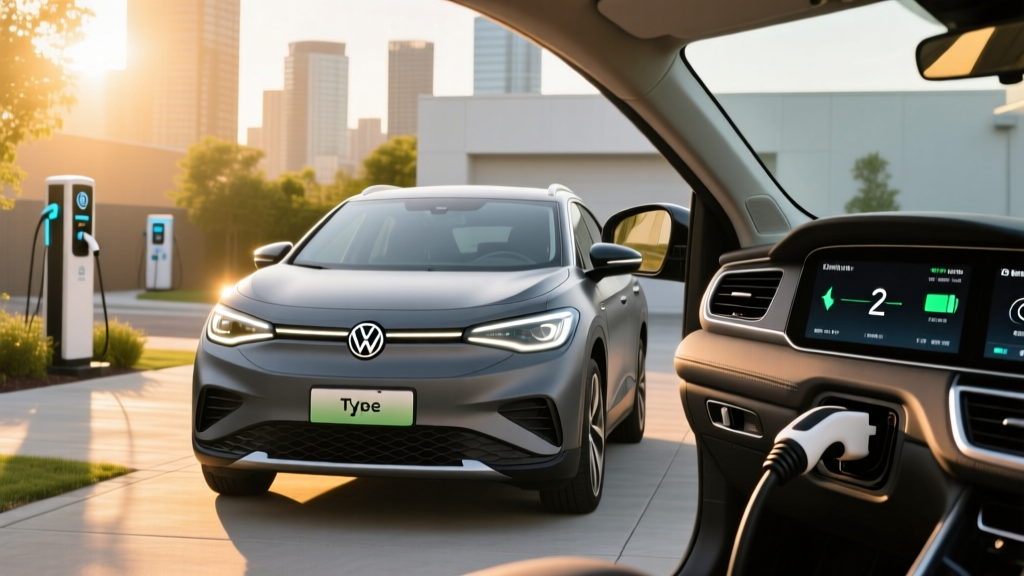
The Volkswagen ID.4 occupies a specific niche in the American EV market: a practical, comfort-oriented compact electric SUV that prioritizes daily drivability over headline-grabbing performance. For 2025, VW has refined the formula with incremental software improvements, a more responsive infotainment system, and continued eligibility for the full $7,500 federal tax credit — a critical advantage in a segment where price sensitivity drives purchasing decisions.
After spending time with both the Standard Range and Pro S AWD trims, I'm breaking down what the numbers actually mean for real ownership — from how far you'll really go on a charge in January to whether the 170 kW DC fast-charging peak holds up on a road trip.
2025 VW ID.4 at a Glance: Key Specifications
| Spec | Standard Range (RWD) | Pro (RWD) | Pro S AWD |
|---|---|---|---|
| Base MSRP | $44,995 | $47,995 | $53,995 |
| EPA Range | 206 mi | 275 mi | 263 mi |
| Battery (usable) | 62 kWh (NMC) | 82 kWh (NMC) | 82 kWh (NMC) |
| Horsepower | 201 hp | 282 hp | 335 hp |
| 0–60 mph | 7.7 sec | 7.2 sec | 5.4 sec |
| Drivetrain | Rear-Wheel Drive | Rear-Wheel Drive | Dual-Motor AWD |
| Max DC Fast Charge | 140 kW | 170 kW | 170 kW |
| 10–80% DCFC Time | ~30 min | ~28 min | ~28 min |
| Level 2 Home Charging | 11 kW (~37 mi/hr) | 11 kW (~37 mi/hr) | 11 kW (~37 mi/hr) |
| MPGe (combined) | 104 MPGe | 107 MPGe | 101 MPGe |
| Efficiency | 32 kWh/100 mi | 31 kWh/100 mi | 33 kWh/100 mi |
Range and Efficiency: EPA Sticker vs. Reality
The EPA posts the Pro RWD at 275 miles and the Pro S AWD at 263 miles. These are reasonable figures for the compact electric SUV class, but the sticker number only tells part of the story.
EPA Estimate: 275 mi (Pro RWD) / 263 mi (Pro S AWD)
Highway (70 mph, 75°F): ~235–250 mi
Highway (70 mph, 30°F, no heat pump): ~190–210 mi
City/commute (mixed, 75°F): ~260–275 mi
The 2025 ID.4 Pro S AWD includes a heat pump, which reduces cold-weather range loss by roughly 10–15% compared to resistance heating. Standard Range and base Pro trims may not include one — verify at purchase.
The ID.4's efficiency of roughly 31–33 kWh per 100 miles is competitive with the Hyundai Ioniq 5 (30–34 kWh/100 mi depending on trim) but trails the more aerodynamic Tesla Model Y Long Range at around 28 kWh/100 mi. On the highway, the ID.4's bluff SUV profile creates more drag, and you'll see consumption climb to 35–38 kWh/100 mi at sustained 75–80 mph speeds.
According to fueleconomy.gov, the Pro RWD achieves 107 MPGe combined (113 city / 101 highway). That highway figure is the one road-trippers should internalize — it translates to needing a charge stop roughly every 200 miles on the interstate.
Charging Speed: DC Fast Charging and Home Setup
The 2025 ID.4 Pro and Pro S AWD accept up to 170 kW on a DC fast charger, up from 135 kW on earlier model years. The Standard Range model tops out at 140 kW. These are peak rates — the sustained average matters more for trip planning.
| Charging Method | Power (kW) | Rate | Typical Time |
|---|---|---|---|
| Level 1 (120V household) | ~1.2 kW | ~4 mi/hr | 55–70 hr (full) |
| Level 2 (240V home, 48A) | 11 kW | ~37 mi/hr | ~7.5 hr (full, 82 kWh) |
| DC Fast Charge (Pro/Pro S) | Peak 170 kW | 10–80% | ~28 min |
| DC Fast Charge (Std Range) | Peak 140 kW | 10–80% | ~30 min |
The charge curve on the 82 kWh battery is respectable but not class-leading. You'll see the full 170 kW briefly between 10–25% state of charge, then a taper to roughly 130–140 kW through 50%, dropping further to around 75 kW by 70%, and falling sharply above 80%. This is typical for NMC chemistry without an aggressive thermal preconditioning system. Unlike Tesla or Hyundai/Kia's 800V architectures, the ID.4 runs on a 400V system, which limits its peak charge rate.
For home charging, the 11 kW onboard charger is a strong point. On a 48-amp Level 2 circuit (requiring a 60-amp breaker), you'll add about 37 miles of range per hour — enough to fully replenish the 82 kWh battery overnight in roughly 7.5 hours. A licensed electrician should evaluate your panel capacity before installation; a 200-amp service panel is usually sufficient, but older homes may need an upgrade.
Performance, Ride, and Drivetrain
The ID.4 was never engineered to chase Tesla Model Y Performance lap times, and that's fine. The dual-motor AWD variant's 5.4-second 0–60 mph time is brisk enough for confident highway merging and passing. The single-motor RWD models at 7.2–7.7 seconds feel more relaxed but entirely adequate for commuting.
Where the ID.4 genuinely excels is ride quality. The suspension tuning is noticeably softer than the Ioniq 5 or Model Y, absorbing potholes and expansion joints with a composure that makes it a strong choice for rougher American roads. Steering is light and progressive — not sporty, but predictable. The turning circle of 31.5 feet is tight for the class, making parking lot maneuvers easy.
Regenerative braking offers multiple modes via steering-wheel paddles: coast, light regen, and strong regen. However, the ID.4 does not offer true one-pedal driving to a complete stop — you'll need the friction brakes at very low speeds, which some EV veterans find annoying after acclimating to Nissan Leaf or Chevrolet Bolt behavior.
Interior, Cargo, and Technology
The cabin is where the ID.4 makes its strongest case as a family vehicle. Rear legroom measures 37.6 inches — genuinely generous for the compact SUV segment, and enough for rear-facing child seats without front-passenger compromise. Cargo volume behind the second row is 30.3 cubic feet, expanding to 64.2 cubic feet with the rear seats folded. There is no front trunk (frunk); the space under the hood houses drive electronics.
The 2025 model year benefits from VW's updated MEB software platform (version 4.0), which addresses many of the sluggishness complaints from 2021–2023 models. The 12.9-inch infotainment touchscreen is responsive, and wireless Apple CarPlay and Android Auto are standard. The illuminated touch-slider for volume and temperature remains a polarizing choice — it works, but physical knobs would be preferable for gloved winter use.
Driver assistance comes via VW's IQ.DRIVE suite, which includes adaptive cruise control with stop-and-go, lane centering, and emergency braking. This is an SAE Level 2 system — the driver must keep hands on the wheel and eyes on the road at all times. It is not autonomous driving. The system is competent on well-marked highways but can struggle with faded lane lines and construction zones, consistent with Level 2 limitations across the industry.
Pricing, Trims, and Federal Tax Credit Eligibility
The 2025 ID.4 lineup starts at $44,995 for the Standard Range and climbs to $53,995 for the Pro S AWD before destination charges. The Pro RWD at $47,995 represents the sweet spot for most buyers — you get the full 275-mile range and 170 kW charging at a moderate price point.
| Trim | MSRP | §30D Credit | Effective Price |
|---|---|---|---|
| Standard Range | $44,995 | Up to $7,500 | From ~$37,495 |
| Pro RWD | $47,995 | Up to $7,500 | From ~$40,495 |
| Pro S RWD | $50,995 | Up to $7,500 | From ~$43,495 |
| Pro S AWD | $53,995 | Up to $7,500 | From ~$46,495 |
- MSRP Cap: SUVs must be under $80,000 — all ID.4 trims qualify.
- Buyer Income Cap: Modified AGI must not exceed $150,000 (single), $225,000 (head of household), or $300,000 (joint filers).
- Battery Sourcing: The full $7,500 requires meeting both critical-mineral and battery-component sourcing thresholds. As of 2025, VW's U.S.-assembled ID.4 (built in Chattanooga, TN) is structured to meet these requirements, but buyers should confirm with their dealer using the IRS VIN-lookup tool at the point of sale.
- Point-of-Sale Transfer: Eligible buyers can transfer the credit to the dealer at purchase, reducing the purchase price directly rather than waiting for a tax refund.
How the ID.4 Stacks Up Against Key Competitors
The compact electric SUV segment is crowded, and the ID.4's value proposition depends on which attributes you prioritize.
vs. Tesla Model Y Long Range: The Model Y offers superior range (~320 mi EPA), faster Supercharger access, and better efficiency. But the ID.4 delivers a quieter, softer ride, more intuitive physical controls, and — critically — eligibility for the full $7,500 credit, which the Model Y no longer qualifies for due to battery-sourcing changes. At effective pricing, the ID.4 Pro can undercut a base Model Y by $8,000–$10,000.
vs. Hyundai Ioniq 5: The Ioniq 5 charges faster (up to 240 kW on 800V architecture, 10–80% in ~18 minutes) and has a slightly more distinctive design. The ID.4 counters with more rear legroom, a more compliant ride, and a larger dealer/service network in rural areas.
vs. Ford Mustang Mach-E: The Mach-E is sportier to drive and offers a longer-range Extended Range battery option (~320 mi). The ID.4 is more practical for families, with better rear-seat space and a more traditional SUV silhouette that buyers find easier to transition into.
- Eligible for full $7,500 federal tax credit (point-of-sale)
- Comfortable, quiet ride quality — best in class for rough roads
- Generous rear legroom (37.6 in) and cargo space (30.3 cu ft)
- Strong 11 kW Level 2 onboard charger for fast home replenishment
- Competitive pricing after credit — from ~$37,495 effective
- U.S. assembly (Chattanooga, TN) supports domestic supply chain
- DC fast-charging speed (170 kW peak) trails Ioniq 5 and EV6
- No front trunk (frunk) for additional storage
- Touch-slider controls frustrating for some users
- Real-world highway range drops to ~235 mi — plan stops accordingly
- No true one-pedal driving to a full stop
- 400V architecture limits future charging-speed potential
Who Should Buy the 2025 VW ID.4?
Best for: Families and commuters who prioritize ride comfort, interior space, and value after tax credits over maximum range or fastest charging. If your daily drive is under 60 miles round-trip and you have home Level 2 charging, the ID.4 Pro RWD is a compelling, low-stress EV ownership experience.
Consider alternatives if: You frequently road-trip more than 300 miles in a day (the Ioniq 5 or Model Y charge faster), you need maximum cargo versatility (no frunk here), or you want sporty handling dynamics (look at the Mach-E GT or Model Y Performance).
Towing note: The AWD Pro S is rated for 2,700 lbs — enough for a small utility trailer or a pair of dirt bikes, but not a camper. If towing is a priority, the Ford F-150 Lightning or Rivian R1S are better suited.
Battery Warranty and Long-Term Ownership
VW covers the ID.4's high-voltage battery for 8 years or 100,000 miles, whichever comes first, against defects and capacity loss below 70% of original capacity. The powertrain (motors, reduction gear) is covered for the same period. The basic vehicle warranty is 4 years / 50,000 miles.
The 82 kWh battery uses NMC (nickel-manganese-cobalt) chemistry, which offers higher energy density than LFP but is more sensitive to sustained high-state-of-charge storage. For longevity, VW recommends keeping daily charge limits at 80% and only charging to 100% for long trips. Following this practice, owners can reasonably expect 85–90% capacity retention at 100,000 miles based on fleet data from European ID.4 models.
The NHTSA has not yet published a full rating for the 2025 model year at time of writing, but the ID.4 earned a 5-star overall rating in prior model years. The IIHS previously named it a Top Safety Pick+.
Frequently Asked Questions
What is the real-world range of the 2025 VW ID.4?
The EPA rates the Pro RWD at 275 miles and the Pro S AWD at 263 miles. In real-world highway driving at 70 mph in mild weather, expect 235–250 miles. In cold weather (below 35°F), range can drop to 190–210 miles without a heat pump, or 210–230 miles with one (standard on Pro S AWD).
How fast does the ID.4 charge at home and on the road?
At home on a 240V Level 2 charger (48A), the ID.4 charges at 11 kW, adding roughly 37 miles of range per hour — a full charge in about 7.5 hours. On DC fast chargers, the Pro and Pro S peak at 170 kW, achieving 10–80% in approximately 28 minutes. The Standard Range model peaks at 140 kW.
Does the 2025 VW ID.4 qualify for the $7,500 federal tax credit?
Yes — all ID.4 trims fall under the $80,000 MSRP cap for SUVs, and VW's Chattanooga, TN assembly with U.S.-sourced battery components is structured to meet §30D critical-mineral and component requirements. However, buyer income caps apply ($150K single / $300K joint), and you should verify eligibility via the IRS VIN-lookup tool at the dealership. The credit can be applied at the point of sale.
Is the ID.4 worth buying over a Tesla Model Y or Hyundai Ioniq 5?
It depends on your priorities. The ID.4 wins on ride comfort, rear-seat space, and effective price after the $7,500 credit. The Model Y wins on range, charging infrastructure, and efficiency. The Ioniq 5 wins on DC charging speed and design. For a family commuter with home charging, the ID.4 is a strong value. For frequent road-trippers, the Ioniq 5's faster charging may be worth the premium.
How long will the ID.4 battery last?
VW warranties the battery for 8 years / 100,000 miles with a 70% capacity-retention guarantee. NMC chemistry in the ID.4, when charged to 80% daily and 100% only for trips, typically retains 85–90% capacity at 100,000 miles based on European fleet data. Replacement cost outside warranty is estimated at $12,000–$18,000 depending on labor and module availability.