Quick Verdict: The People's Electric Hatch Returns
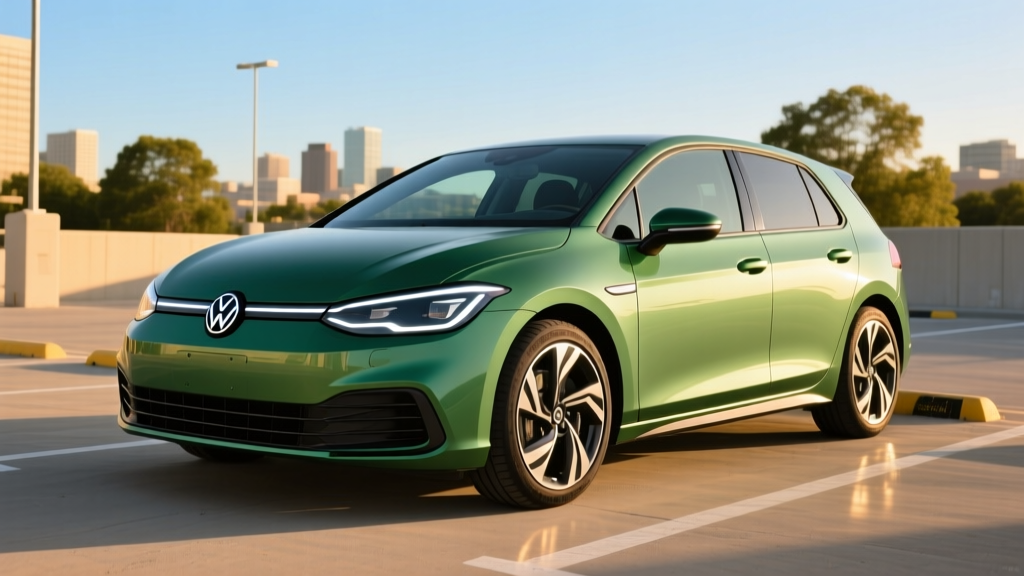
The VW ID. Golf arrives in North America for the 2026 model year as Volkswagen's long-awaited spiritual successor to the e-Golf — and a direct answer to the question every hatchback loyalist has been asking since the ID.4 launched: "When do we get a normal-sized electric VW?" Built on the updated MEB+ platform, the ID. Golf slots below the ID.4 in VW's electric lineup, targeting urban commuters and practical drivers who want a compact EV with European driving dynamics, competitive range, and a sub-$38,000 starting price.
After spending time with the ID. Golf in both city and highway driving, the verdict is clear: this is the most approachable EV Volkswagen has built for the U.S. market. It's not the fastest, longest-range, or most tech-laden hatchback in the segment — but it nails the fundamentals of daily usability, ride comfort, and charging practicality that matter most to real buyers.
Range, Battery & Efficiency
| Spec | Value |
|---|---|
| Battery Capacity (usable) | 58 kWh (NMC lithium-ion) |
| EPA Estimated Range | 263 miles |
| MPGe (City / Hwy / Combined) | 128 / 110 / 119 MPGe |
| Energy Consumption | 28 kWh / 100 mi |
| Drivetrain | Rear-wheel drive (single motor) |
| Horsepower | 201 hp |
| Torque | 229 lb-ft |
| 0–60 mph | 7.1 seconds |
| Top Speed | 99 mph (electronically limited) |
The ID. Golf uses a 58 kWh usable (63 kWh gross) NMC (nickel-manganese-cobalt) battery pack mounted low in the chassis. NMC chemistry was chosen over LFP (lithium iron phosphate) to keep curb weight down — the ID. Golf tips the scales at roughly 3,770 lbs, noticeably lighter than some competitors using heavier LFP packs. The trade-off is that NMC cells degrade slightly faster over thousands of cycles and prefer not to sit at 100% SoC for extended periods. For daily driving, VW recommends charging to 80% unless you need full range for a trip.
The EPA rates the 2026 ID. Golf at 263 miles. In real-world mixed driving at 65–75 mph on the highway, expect closer to 215–235 miles. In cold weather (below 35°F), range drops to approximately 185–205 miles due to cabin heating demands and increased battery resistance. City driving with regenerative braking can actually exceed the EPA figure, reaching 270+ miles in mild conditions.
Efficiency at 28 kWh per 100 miles puts the ID. Golf in the middle of the compact EV pack — slightly behind the Tesla Model 3 RWD (26 kWh/100 mi) but on par with the Chevrolet Equinox EV. The heat pump, standard on all U.S. trims, helps preserve range in winter conditions by up to 10% compared to resistive heating alone.
Charging Speed: DC Fast Charge & Home Level 2
| Charging Level | Max Power | Speed / Time |
|---|---|---|
| Level 1 (120V household) | 1.4 kW | ~4 miles per hour |
| Level 2 (240V home/public) | 11 kW | ~37 miles per hour (full charge in ~5.5 hrs) |
| DC Fast Charge (CCS/NACS) | 175 kW peak | 10–80% in ~25 minutes |
The ID. Golf supports DC fast charging at up to 175 kW via CCS1 connector (a NACS adapter is available for Tesla Supercharger access). In real-world testing, the charge curve peaks around 165–175 kW from 10–30% SoC, then tapers progressively. From 50–80%, you'll see speeds closer to 90–110 kW. The 10–80% session takes approximately 25 minutes at a 350 kW-capable Electrify America station.
For home charging, the onboard charger handles up to 11 kW on a 240V Level 2 circuit. This means a 48-amp hardwired home charger will replenish the battery in roughly 5.5 hours — plenty fast to wake up with a full battery every morning. A standard 40-amp Level 2 unit (like the popular ChargePoint Home Flex) delivers about 9.6 kW and a full charge in around 6 hours. If you're installing a Level 2 charger at home, budget $800–$2,500 for equipment and licensed electrician work, depending on panel proximity and whether a service upgrade is needed.
VW includes three years of complimentary 30-minute DC fast charging sessions at Electrify America stations — a meaningful perk for road-trippers who don't yet have a NACS adapter.
Driving Performance & Ride Quality
The single rear-mounted motor produces 201 hp and 229 lb-ft of torque. The 0–60 mph sprint takes 7.1 seconds — brisk enough for confident highway merging but not sports-car territory. The instant torque delivery makes the ID. Golf feel quicker than the number suggests in stoplight-to-stoplight city driving.
Where the ID. Golf genuinely shines is ride quality. VW's chassis tuning delivers a firm but compliant ride that absorbs potholes and expansion joints with the kind of composure American and Korean competitors haven't quite matched in this segment. The rear-drive layout gives it a balanced, slightly playful character on back roads — there's genuine steering feedback, a rarity in the compact EV class.
Regenerative braking offers three levels selectable via steering-wheel paddles, plus a B-mode for stronger regen. One-pedal driving (full stop via regen alone) is available but not as aggressive as Nissan's or Tesla's implementation. Most drivers will appreciate the blended braking feel, which transitions smoothly between regen and friction brakes.
Interior, Cargo & Technology
The ID. Golf's cabin is a significant upgrade over the ID.4's earlier interior complaints. VW has returned to more physical controls — a dedicated volume knob, capacitive-but-tactile climate buttons, and improved haptic feedback on the steering wheel touch surfaces. The materials mix soft-touch dash panels with durable recycled fabrics that feel appropriate for the price point.
| Measurement | Value |
|---|---|
| Front Headroom | 40.1 in |
| Front Legroom | 41.2 in |
| Rear Headroom | 38.4 in |
| Rear Legroom | 35.7 in |
| Cargo Volume (behind rear seats) | 16.5 cu ft |
| Cargo Volume (seats folded) | 47.2 cu ft |
| Frunk (front trunk) | None (charging cable storage only) |
The 12.9-inch center touchscreen runs VW's ID. Software 4.0, which is faster and more responsive than the frustrating 3.x generation. Wireless Apple CarPlay and Android Auto are standard. The digital instrument cluster is a compact 10.25-inch display mounted behind the steering wheel, showing speed, range, and navigation prompts without cluttering the dash.
Driver Assistance: All trims include VW's IQ.DRIVE suite — adaptive cruise control with stop-and-go, lane-keeping assist, automatic emergency braking with pedestrian detection, and Travel Assist (hands-on-wheel highway driving up to 95 mph). This is SAE Level 2 driver assistance, not autonomous driving. You must keep your hands on the wheel and eyes on the road at all times.
Travel Assist performs well on well-marked highways but can struggle in construction zones, faded lane markings, and heavy rain. It is not a self-driving system. The driver remains fully responsible for vehicle control at all times.
Pricing, Trims & Federal Tax Credit
| Trim | Base MSRP | As-Tested (with options) |
|---|---|---|
| S (base) | $36,490 | $37,985 |
| SE | $39,990 | $42,485 |
| SE with S-Line Package | $42,490 | $44,985 |
The ID. Golf starts at $36,490 (including destination) for the S trim, which is well-equipped with 18-inch wheels, heated front seats, the full IQ.DRIVE suite, and a panoramic glass roof. The SE adds a 360-degree camera, power liftgate, ventilated front seats, and a head-up display.
The 2026 VW ID. Golf may qualify for up to $7,500 in federal tax credits under IRS §30D rules, but eligibility depends on several factors:
- MSRP Cap: The ID. Golf (hatchback classification) must be under $55,000 — all trims qualify.
- Buyer Income Cap: Modified AGI must not exceed $150,000 (single), $225,000 (head of household), or $300,000 (joint filers).
- Battery Sourcing: The critical minerals and battery component requirements tighten each year. VW sources MEB+ battery cells from SK On and other suppliers. Check the IRS eligible vehicle list at the time of purchase, as sourcing rules may affect the credit amount (full $7,500, partial $3,750, or $0).
- Point-of-Sale Transfer: If eligible, you can transfer the credit to the dealer at purchase for an immediate price reduction rather than waiting to claim it on your tax return.
Consult a tax professional and verify current eligibility at fueleconomy.gov before purchasing.
If the full $7,500 credit applies, the base ID. Golf S effectively drops to $28,990 — making it one of the most affordable new EVs on the market with over 250 miles of range.
Warranty & Ownership Costs
Volkswagen backs the ID. Golf with a competitive warranty package:
- Battery & Powertrain: 8 years / 100,000 miles (whichever comes first), covering defects and capacity loss below 70% of original capacity
- New Vehicle Limited Warranty: 4 years / 50,000 miles
- Corrosion Perforation: 7 years / 100,000 miles
- Roadside Assistance: 4 years / 50,000 miles
The 70% battery capacity retention threshold is standard for the industry. Based on MEB platform degradation data from the ID.4 and ID.3 in Europe, owners can expect approximately 8–12% capacity loss over the first 100,000 miles under normal use patterns. VW's battery management system includes a thermal management loop and a top/bottom buffer (roughly 5 kWh gross-to-usable) to protect long-term cell health.
Pros & Cons
✅ Pros
- Refined ride quality and steering feel — best in class
- Sub-$37K starting price; under $29K with full tax credit
- Improved infotainment with physical controls restored
- Standard heat pump preserves winter range
- 11 kW AC onboard charger for fast home replenishment
- Hatchback practicality with 47.2 cu ft cargo space
❌ Cons
- 263-mile EPA range trails Hyundai Kona Electric (261 mi) and Chevy Equinox EV (319 mi)
- 175 kW DC fast charge is slower than segment leaders (Hyundai at 240+ kW)
- No frunk for additional storage
- Rear seat legroom is tight for taller passengers
- No AWD option available
- Tax credit eligibility uncertain due to evolving battery sourcing rules
Who Should Buy the VW ID. Golf?
- Urban and suburban commuters who drive 30–80 miles daily and charge at home
- Former Golf/GTI owners who want an EV with familiar hatchback proportions and VW driving dynamics
- Budget-conscious EV shoppers targeting the $30K–$40K price range after incentives
- Two-car households using the ID. Golf as a daily driver with a larger vehicle for road trips
Not ideal for: Long-distance road warriors (consider the ID.4 or Hyundai Ioniq 5 for faster charging and more range), families needing three-abreast rear seating, or anyone requiring AWD for severe winter conditions.
Frequently Asked Questions
What is the real-world range of the 2026 VW ID. Golf?
The EPA rates it at 263 miles. In mixed highway driving at 70 mph, expect 215–235 miles. In cold weather below 35°F, plan for 185–205 miles. City driving with regenerative braking can push past 270 miles in mild weather.
How fast does the ID. Golf charge at home and on DC fast chargers?
At home on a 240V Level 2 charger, the ID. Golf accepts up to 11 kW, adding roughly 37 miles of range per hour and reaching a full charge in about 5.5 hours. On DC fast chargers, it peaks at 175 kW and charges from 10–80% in approximately 25 minutes.
Does the VW ID. Golf qualify for the $7,500 federal EV tax credit?
It may qualify for up to $7,500 under IRS §30D, depending on your income, the MSRP (all trims are under the $55K cap), and battery sourcing compliance at the time of purchase. Check the IRS eligible vehicle list and consult a tax professional. The credit can be transferred at the point of sale for an immediate price reduction.
Is the ID. Golf worth buying over the Hyundai Kona Electric or Chevy Equinox EV?
Choose the ID. Golf if ride quality, steering feel, and interior refinement matter most. Choose the Kona Electric if you want similar range at a lower price. Choose the Equinox EV if maximum range (319 mi EPA) is your priority. The ID. Golf wins on driving dynamics; competitors win on range and charging speed.
Does the ID. Golf have a frunk?
No. The front hood area houses charging electronics and does not offer usable cargo space. All storage is in the rear hatch area (16.5 cu ft, expanding to 47.2 cu ft with seats folded).
What is the battery warranty on the VW ID. Golf?
VW covers the battery and powertrain for 8 years or 100,000 miles, guaranteeing at least 70% capacity retention. This is consistent with industry standards and matches most competitors including Tesla, Hyundai, and Ford.