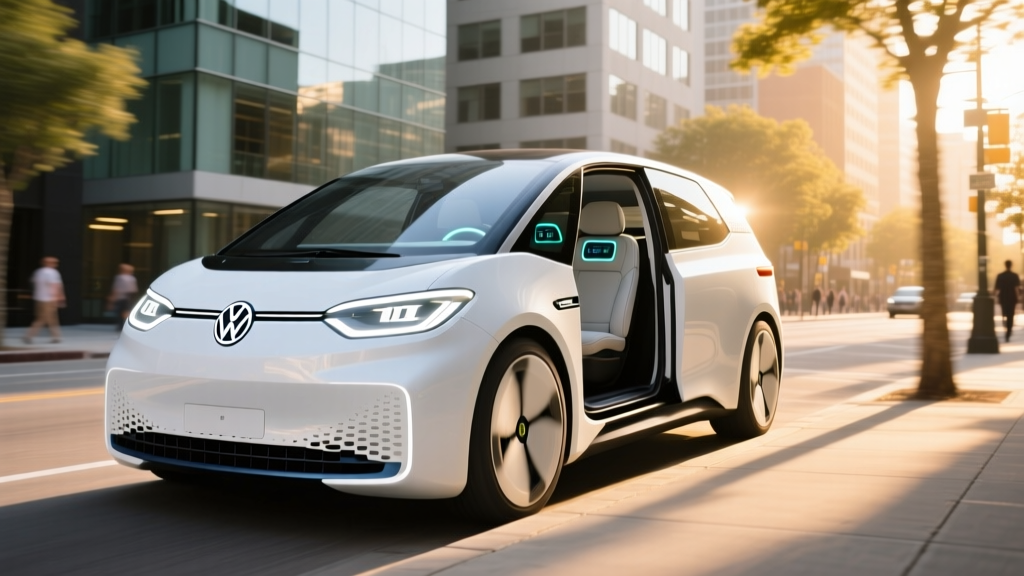
The EV VW Bus — officially the Volkswagen ID. Buzz — is a retro-styled, three-row electric minivan built on VW's MEB platform. For the 2026 model year, the ID. Buzz offers an EPA-estimated 234 miles of range (RWD Pro S), a 91 kWh usable battery (NMC chemistry), peak DC fast charging at 200 kW (10–80% in roughly 26 minutes), and a starting MSRP around $61,545. It seats up to seven, qualifies for the IRS §30D federal tax credit (up to $7,500, subject to income, MSRP, and battery-sourcing rules), and competes against gas minivans like the Toyota Sienna hybrid and Chrysler Pacifica, as well as EVs like the Kia EV9.
What the ID. Buzz Actually Offers: Specs That Matter
Volkswagen revived the iconic microbus nameplate as a fully electric vehicle, and the result is a genuinely practical family hauler with standout design. But nostalgia doesn't charge your battery — here are the numbers that determine whether the ID. Buzz fits your life.
| Specification | ID. Buzz Pro S (RWD) | ID. Buzz Pro S Plus (AWD) |
|---|---|---|
| EPA Range | 234 miles | 203 miles |
| Battery (usable) | 91 kWh, NMC | 91 kWh, NMC |
| Horsepower | 282 hp | 335 hp |
| 0–60 mph | ~7.9 sec | ~5.9 sec |
| Peak DC Charge Rate | 200 kW | 200 kW |
| 10–80% DC Charge Time | ~26 min | ~26 min |
| Level 2 Charge Rate | 11 kW | 11 kW |
| MPGe (combined) | 87 MPGe | 81 MPGe |
| Seating | 7 passengers | 7 passengers |
| Cargo (behind 3rd row) | 18.2 cu ft | 18.2 cu ft |
| Base MSRP | ~$61,545 | ~$69,545 |
| Battery Warranty | 8 yr / 100,000 mi | 8 yr / 100,000 mi |
Sources: fueleconomy.gov, Volkswagen of America official specifications.
Real-World Range Expectations: The EPA rates the RWD ID. Buzz at 234 miles, but plan for approximately 190–210 miles on sustained highway driving at 70+ mph, and as low as 165–185 miles in freezing temperatures (below 30°F) with cabin heat running. The AWD Pro S Plus drops to 203 miles EPA — expect roughly 165–180 highway miles in moderate conditions. These figures assume you're driving conservatively; aggressive acceleration and roof-rack cargo will reduce range further.
ID. Buzz vs. Gas and Hybrid Minivans: Cost Comparison
The ID. Buzz doesn't exist in a vacuum. Most buyers cross-shop it against the Toyota Sienna (a hybrid-only minivan rated at 36 MPG combined) or the Chrysler Pacifica Hybrid (a PHEV with 32 miles of electric-only range). Here's how the math works over five years of ownership at 15,000 miles per year.
| Cost Factor | VW ID. Buzz Pro S (RWD) | Toyota Sienna XLE (HEV) | Chrysler Pacifica Hybrid (PHEV) |
|---|---|---|---|
| Base MSRP | $61,545 | $42,495 | $51,095 |
| Federal Tax Credit (§30D) | Up to $7,500* | $0 | Up to $7,500* |
| Effective Purchase Price | ~$54,045 | $42,495 | ~$43,595 |
| 5-Year Fuel/Energy Cost | ~$4,800** | ~$9,400 | ~$6,200 |
| 5-Year Maintenance (est.) | ~$1,800 | ~$3,200 | ~$3,500 |
| 5-Year Total (purchase + energy + maint.) | ~$60,645 | ~$55,095 | ~$53,295 |
*§30D credit eligibility depends on buyer AGI, vehicle MSRP caps, and battery component/critical-mineral sourcing. Confirm via IRS.gov and a tax professional before purchasing.
**Energy cost assumes $0.16/kWh national average (home Level 2 charging). Public DC fast charging at $0.40–0.55/kWh would increase the ID. Buzz 5-year energy cost to roughly $8,500–$11,000 if used exclusively.
The ID. Buzz narrows the gap with gas and hybrid minivans primarily through lower energy and maintenance costs, but the higher upfront price means the break-even point extends to roughly 6–8 years for most buyers. If you qualify for the full $7,500 credit and charge at home, the math improves substantially.
Charging the ID. Buzz: Home, Public, and the Curve Reality
The ID. Buzz supports a peak DC fast-charge rate of 200 kW via CCS1 (with NACS compatibility arriving via adapter and future native NACS ports on newer model years). At a 350 kW Electrify America or compatible station, VW claims 10–80% in approximately 26 minutes.
But here's the charging-curve reality: The 200 kW peak applies only between roughly 10–30% State of Charge. From 30–60%, the rate tapers to approximately 150 kW. Above 80%, charging slows dramatically to protect battery health — expect 80–100% to take an additional 25–30 minutes. On a road trip, plan your stops around 10–80% increments, which means roughly 160–175 miles of added range per stop in the RWD model.
| Charging Level | Power (kW) | Miles Added Per Hour | Typical Use Case |
|---|---|---|---|
| Level 1 (120V) | ~1.4 kW | ~4–5 mi/hr | Emergency / overnight trickle |
| Level 2 (240V, home) | 11 kW | ~32–35 mi/hr | Daily home charging (full overnight) |
| DC Fast Charge | Up to 200 kW | ~150–180 mi in 10 min | Road trips, public stations |
Home Charging Installation Costs
Most ID. Buzz owners will want a Level 2 home charger. The vehicle accepts up to 11 kW on Level 2, which requires a 48-amp dedicated circuit (60-amp breaker). Here's what installation typically costs:
| Item | Cost Range |
|---|---|
| Level 2 charger (48A, hardwired) | $400–$700 |
| Electrician labor (standard install) | $500–$1,500 |
| Permit & inspection | $50–$250 |
| Electrical panel upgrade (if needed) | $1,500–$3,500 |
| Total (no panel upgrade) | $950–$2,450 |
| Total (with panel upgrade) | $2,450–$5,950 |
If your home has a 200-amp panel with spare capacity, you're likely looking at the lower end. Older homes with 100-amp service will almost certainly need a panel upgrade — budget accordingly and get a quote from a licensed electrician before committing to the vehicle.
Who Should Buy the ID. Buzz — And Who Shouldn't
Choose the ID. Buzz if:
- You need three-row seating for 6–7 passengers and want a fully electric option
- You have home Level 2 charging access (or can install it)
- Your daily driving is under 150 miles round-trip, with occasional 200-mile road trips
- You value distinctive design and don't mind paying a premium for it
- You qualify for the §30D tax credit, bringing the effective price below $55,000
Look elsewhere if:
- You regularly drive more than 200 miles between charging stops (consider the Kia EV9 with 304-mile EPA range)
- You live in a charging desert with unreliable public DC infrastructure and cannot charge at home
- You need maximum cargo volume — the ID. Buzz's 18.2 cu ft behind the third row trails the Sienna's 33.5 cu ft
- Budget is the primary concern — the Sienna HEV starts $19,000 lower and achieves 36 MPG combined
- You tow frequently — the ID. Buzz is rated for only 2,500 lbs, vs. the Sienna's 3,500-lb capacity
Common Misconceptions About the ID. Buzz
| Myth | Fact |
|---|---|
| "It gets 234 miles no matter what." | 234 miles is the EPA combined estimate for the RWD model. Highway driving at 75 mph yields roughly 195–210 miles. Cold weather (below 30°F) can drop range by 20–30%. |
| "It charges in 26 minutes flat." | 26 minutes is the 10–80% time at peak rate. Charging from 80–100% adds another 25–30 minutes. Total 10–100% is closer to 50–55 minutes. |
| "Everyone gets the $7,500 tax credit." | The §30D credit has income caps ($300K joint / $150K single), MSRP caps ($80K for SUVs/vans), and battery sourcing requirements. Check IRS rules before assuming eligibility. |
| "It's basically a Tesla competitor." | The ID. Buzz competes in the minivan segment. Tesla offers no three-row minivan. Its real rivals are the Sienna, Pacifica, and Kia EV9. |
| "The battery will need replacing in 5 years." | VW warranties the battery at 8 years/100,000 miles with a 70% capacity retention threshold. Industry data shows NMC batteries typically retain 85–90% capacity at 100,000 miles under normal use. |
First-Time EV Buyer Checklist for the ID. Buzz
If the ID. Buzz is your first electric vehicle, here's what you need to verify before signing:
- Home charging feasibility: Confirm your electrical panel has capacity for a 60-amp breaker. Get an electrician quote before purchase.
- Tax credit eligibility: Verify your adjusted gross income falls under §30D limits, and confirm the specific VIN's battery sourcing qualifies. The point-of-sale transfer option lets you apply the credit as a down payment reduction at the dealer.
- Insurance quotes: EV insurance premiums run 15–25% higher than comparable gas minivans. Get quotes from at least three carriers before committing.
- Route planning: Download PlugShare or the Electrify America app and map your most common road trips. Confirm DC fast chargers exist along those routes at 50-mile intervals or less.
- Cold-weather reality: If you live in a region with sustained sub-freezing winters, budget 25% less range than the EPA sticker. The ID. Buzz uses a heat pump (standard on most trims), which helps, but doesn't eliminate cold-weather losses.
- Dealer service access: Not all VW dealers have certified EV technicians. Confirm your local dealer can service MEB-platform vehicles before buying.
Ownership Costs Over Five Years: The Full Picture
Beyond purchase price and energy, here's what ID. Buzz ownership actually costs:
- Insurance: Expect $2,200–$3,000/year depending on your profile — higher than the Sienna's $1,700–$2,200/year average.
- Maintenance: EVs eliminate oil changes, spark plugs, and transmission fluid. You'll still need tire rotations (EVs wear tires faster due to torque and weight — budget $800–$1,200 for a set of five replacements over 60,000 miles), cabin air filters, brake fluid checks, and wiper blades.
- Tires: The ID. Buzz rides on 20- or 21-inch wheels with EV-specific tires. Replacement cost: $1,200–$1,800 per set.
- Depreciation: EV depreciation has been volatile. Early ID. Buzz models may depreciate 45–55% over five years, though this depends heavily on market conditions and battery health data as the vehicle ages.
- Registration: Some states impose additional EV registration fees ($50–$200/year) to offset lost gas tax revenue.
Frequently Asked Questions
Does the VW ID. Buzz qualify for the $7,500 federal tax credit?
The ID. Buzz is potentially eligible for the full §30D credit of up to $7,500, but eligibility depends on three factors: (1) your adjusted gross income must fall below $300,000 (joint) or $150,000 (single), (2) the vehicle MSRP must be under the $80,000 cap for vans/SUVs, and (3) the battery must meet critical-mineral and component sourcing thresholds that change annually. Always verify current eligibility on IRS.gov and with a tax professional before relying on the credit.
Can I charge the ID. Buzz at Tesla Superchargers?
Volkswagen has committed to NACS compatibility. Current ID. Buzz models use the CCS1 connector but can access Tesla's Supercharger network via a manufacturer-approved adapter. Future model years are expected to ship with native NACS ports. Always confirm adapter compatibility with VW before using one, as improper adapters can void warranty coverage.
How does the ID. Buzz handle in snow and cold weather?
The AWD Pro S Plus model provides confident traction in snow, and VW includes a standard heat pump to reduce cabin-heating energy draw. However, expect 20–30% range loss in sustained sub-freezing temperatures. Preconditioning the battery and cabin while plugged in at home is essential — it preserves range and enables faster DC charging upon departure.
What happens if the battery degrades significantly?
Volkswagen warranties the high-voltage battery for 8 years or 100,000 miles, guaranteeing at least 70% of original capacity. If capacity drops below that threshold within the warranty period, VW will repair or replace the battery at no cost. Out-of-warranty replacement costs are estimated at $12,000–$18,000 based on current MEB-platform pricing, though costs are expected to decline as the battery supply chain matures.
Is the ID. Buzz bigger or smaller than a traditional minivan?
The ID. Buzz is slightly shorter than a Toyota Sienna (195.5 inches vs. 203.7 inches overall length), which helps with parking but reduces cargo volume. Behind the third row, you get 18.2 cu ft vs. the Sienna's 33.5 cu ft. Fold the third row and the ID. Buzz offers a more competitive cargo area, but it doesn't match the deep well of a gas minivan.