The Short Answer on the VW Electric Camper
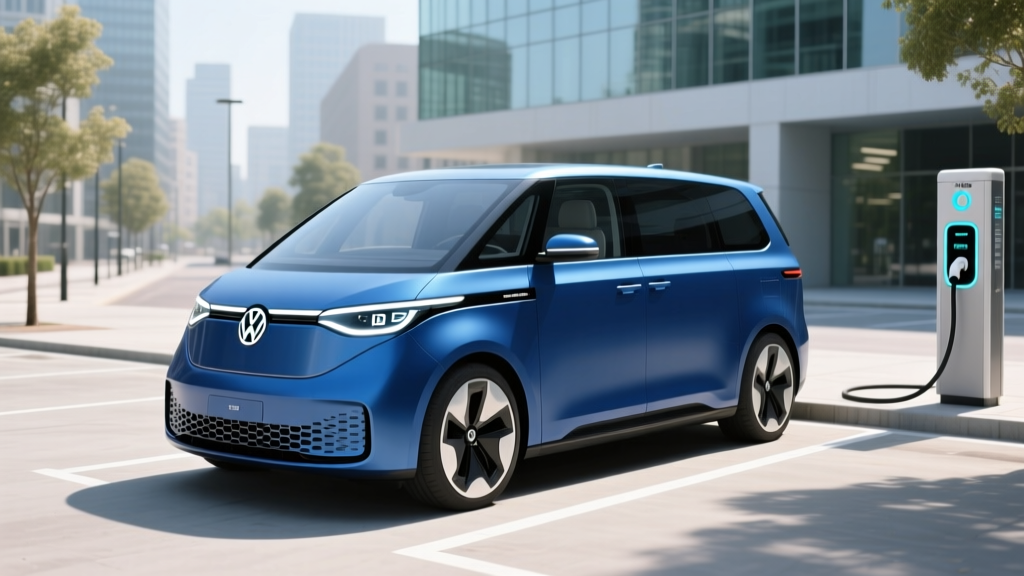
The VW ID. Buzz is Volkswagen's all-electric reinterpretation of the classic Microbus, and for 2026 it remains the only retro-styled electric van on the US market. With an EPA-estimated 231 miles of range (RWD Pro S trim), a 91 kWh usable battery (NMC chemistry), and a starting MSRP around $61,495 (including destination), it positions itself as a premium family hauler and light adventure rig — not a full Class B motorhome. If you're searching for a "vw camper electric," the ID. Buzz is the closest production vehicle VW sells in the US, though true camper conversions with pop-tops and kitchens require third-party upfitters.
What the VW ID. Buzz Actually Is (and Isn't)
Let's clear up a widespread misconception right away. The VW ID. Buzz sold in the United States is a three-row electric passenger van, not a factory camper. European markets received a shorter-wheelbase "California" concept with a pop-top roof and kitchenette, but as of 2026, VW has not confirmed a US-spec California camper variant. What American buyers get is the long-wheelbase (LWB) ID. Buzz with seating for up to seven, generous cargo volume, and a flat load floor that lends itself to aftermarket camper builds.
For context, the ID. Buzz rides on VW's MEB platform — the same architecture underpinning the ID.4 crossover. It shares much of its powertrain and battery hardware with that vehicle but in a heavier, more aerodynamically challenged body.
Range, Battery, and Charging: The Numbers That Matter
Range is the first question every EV buyer asks, and the ID. Buzz's boxy shape exacts a real penalty on the highway.
| Spec | 2025/2026 VW ID. Buzz (RWD Pro S) | AWD Pro S Plus |
|---|---|---|
| EPA Range | 231 miles | 220 miles (est.) |
| Battery (usable) | 91 kWh, NMC | 91 kWh, NMC |
| Motor Output | 282 hp / 406 lb-ft | 335 hp (dual motor) |
| 0–60 mph | ~7.9 sec | ~6.5 sec |
| Max DC Fast Charge | 200 kW peak | 200 kW peak |
| 10–80% DCFC Time | ~26 minutes | ~26 minutes |
| Level 2 (AC) Rate | 11 kW (~7 hrs 0–100%) | 11 kW |
| MPGe (combined) | ~80 MPGe (est.) | ~76 MPGe (est.) |
| Base MSRP | $61,495 | $69,995 (est.) |
| Battery Warranty | 8 yr / 100,000 mi | 8 yr / 100,000 mi |
Real-World Range Reality Check
The EPA sticker says 231 miles, but the ID. Buzz's upright profile (drag coefficient around 0.29) means highway range suffers. Expect roughly 190–205 miles at 70 mph in mild weather. In cold conditions (below 32°F), range can drop to 160–175 miles due to cabin heating demands and reduced battery efficiency. For road trips, plan charging stops every 150–170 miles to keep a comfortable buffer and stay in the faster portion of the charge curve.
On charging: the 200 kW peak rate is competitive, but like all EVs, the ID. Buzz doesn't sustain that rate for long. The charge curve tapers significantly above 80% SoC, which is why VW quotes a 10–80% time rather than 0–100%. On a 350 kW Electrify America station, you'll see the full 200 kW only briefly before it ramps down. At home on a Level 2 charger (240V, 48A), a full overnight charge takes about 7 hours — practical for daily use if you have home charging access.
ID. Buzz vs. Gas Minivan vs. Hybrid: Cost & Efficiency Showdown
How does the electric VW van stack up against the gas and hybrid minivans it competes with? Here's a data-driven comparison using the Chrysler Pacifica Hybrid (PHEV) and Toyota Sienna (HEV) as benchmarks.
| Metric | VW ID. Buzz (BEV) | Chrysler Pacifica Hybrid (PHEV) | Toyota Sienna (HEV) |
|---|---|---|---|
| Powertrain | Battery Electric | Plug-in Hybrid | Hybrid |
| EPA Range / MPG | 231 mi / ~80 MPGe | 32 mi electric + 30 MPG gas | 36 MPG combined |
| Base MSRP | $61,495 | $51,095 | $39,485 |
| Fuel/Energy Cost (15k mi/yr) | ~$600–$900/yr | ~$1,200–$1,800/yr | ~$1,400–$1,700/yr |
| Annual Maintenance | ~$300–$400 | ~$700–$900 | ~$500–$700 |
| Federal Tax Credit (§30D) | Up to $7,500* | Up to $7,500* | Not eligible |
| Seating | 7 | 7 | 7–8 |
*§30D credit eligibility depends on MSRP caps (vans capped at $80,000), buyer income limits ($300k MFJ / $150k single), and battery component/critical-mineral sourcing requirements. The ID. Buzz is assembled in Germany, which may affect sourcing compliance. Verify current-year rules at IRS.gov before purchasing. Point-of-sale transfer is available at participating dealers.
5-Year Estimated Total Cost of Ownership
| Cost Category | VW ID. Buzz | Toyota Sienna |
|---|---|---|
| Purchase (after est. credit) | ~$53,995 | $39,485 |
| Energy/Fuel (5 yrs) | $3,000–$4,500 | $7,000–$8,500 |
| Maintenance (5 yrs) | $1,500–$2,000 | $2,500–$3,500 |
| Insurance (5 yrs, avg) | $9,000–$12,000 | $6,500–$9,000 |
| Depreciation (est. 5 yr) | ~$22,000–$27,000 | ~$14,000–$18,000 |
| Total (approx.) | $89,500–$99,500 | $69,500–$79,000 |
The ID. Buzz costs roughly $15,000–$25,000 more over five years, driven primarily by higher purchase price, insurance premiums (EVs typically cost 15–25% more to insure), and steeper depreciation. Energy savings offset some of that gap, but the math doesn't flip in the EV's favor unless gas prices exceed $5/gallon consistently or you drive significantly more than 15,000 miles per year. Source: fueleconomy.gov for efficiency data.
Real-World Ownership: What First-Time EV Buyers Need to Know
If the ID. Buzz is your first EV, here are the practical realities that spec sheets don't capture:
Home Charging Is Almost Essential
With 231 miles of range, the ID. Buzz can handle most daily driving without a mid-day charge — but only if you start each morning with a full battery. A Level 2 home charger installation typically costs $800–$2,500 (equipment + electrician) if your panel has capacity. If you need a 200-amp panel upgrade, add $1,500–$3,000. Relying solely on public DC fast charging is possible but adds time, cost (often $0.35–$0.55/kWh vs. $0.12–$0.18/kWh at home), and inconvenience.
Road Trips Require Planning
With real-world highway range around 190–205 miles, you'll be stopping every 2.5 to 3 hours on long drives. The CCS connector gives access to Electrify America, EVgo, and other networks. However, VW's boxy van shape means you'll spend more time at chargers than an ID.4 owner on the same route. Preconditioning the battery via the navigation system before arriving at a DC fast charger helps you hit that 200 kW peak faster.
Cargo and Camper Conversion Potential
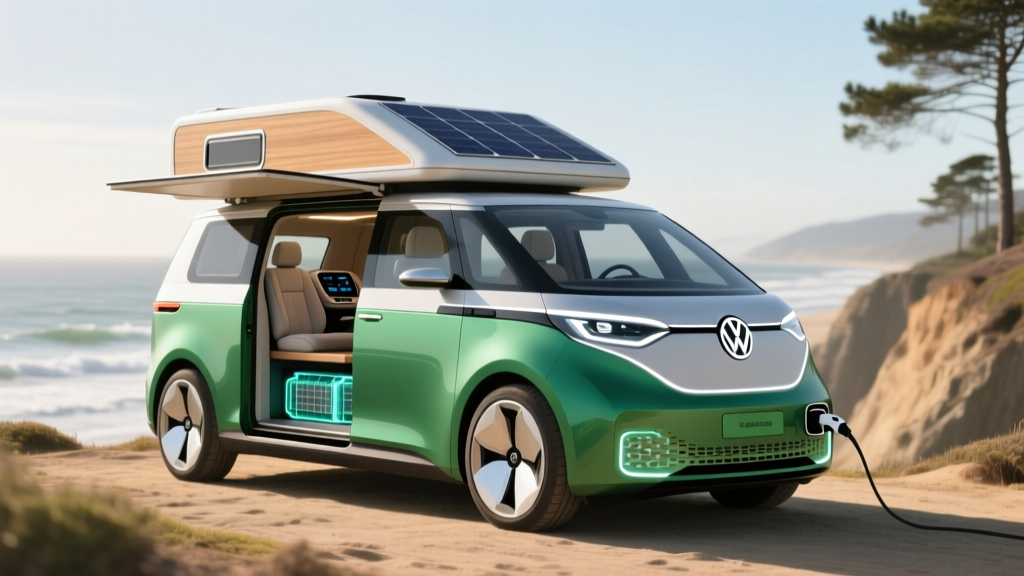
Behind the third row, the ID. Buzz offers roughly 18.5 cubic feet of cargo space. Fold the third row and you get about 75 cu ft — enough for bikes, surfboards, or camping gear. Third-party companies like Peace Vans and others have shown camper conversion concepts with pull-out galleys and rooftop tents, but these add $10,000–$25,000+ to the total cost and may affect warranty coverage. Always confirm with your dealer before modifying the roof or electrical system.
Common Misconceptions About the VW Electric Camper
| Myth | Fact |
|---|---|
| "The ID. Buzz is a full camper van from VW." | It's a 3-row passenger van. The California camper variant is not confirmed for the US market as of 2026. |
| "231 miles of range means I can drive 231 miles before charging." | Highway driving at 70 mph yields ~190–205 real miles. Cold weather drops this further. Plan for 150–170 miles between stops. |
| "It qualifies for the full $7,500 federal tax credit." | Eligibility depends on MSRP, buyer income, and battery sourcing rules. German assembly may limit critical-mineral compliance. Verify at IRS.gov before purchase. |
| "Charging is as fast as filling up with gas." | 10–80% takes ~26 minutes on a 200+ kW charger. Total trip time includes pulling in, plugging, and waiting. Budget 30–40 minutes per stop. |
| "EVs need no maintenance at all." | Tires, cabin filters, brake fluid, wipers, and 12V battery still need attention. But no oil changes, spark plugs, or transmission fluid. |
Decision Framework: Is the VW ID. Buzz Right for You?
Choose the VW ID. Buzz If:
- You want a distinctive, spacious electric family van and are willing to pay a premium for style and the VW badge.
- You have reliable home charging (garage or driveway with 240V access) and most daily trips are under 100 miles round-trip.
- You value zero tailpipe emissions for school runs, carpools, and urban driving where air quality matters.
- You're open to aftermarket camper conversion for weekend adventures and accept the cost and potential warranty implications.
- You qualify for some or all of the §30D tax credit, which narrows the price gap with gas alternatives.
Choose a Gas/Hybrid Minivan Instead If:
- You frequently drive 300+ miles between stops in rural areas with sparse charging infrastructure.
- You cannot install a home charger (apartment living, street parking only) and public charging options near you are limited.
- Budget is the primary concern — the Sienna at ~$39K and 36 MPG delivers dramatically lower total cost of ownership.
- You need a true factory camper — consider a used VW Westfalia, a Winnebago Revel (diesel), or wait for VW to potentially bring the California variant stateside.
- You tow regularly — the ID. Buzz is not rated for significant towing, while gas minivans can handle 3,500+ lbs.
Frequently Asked Questions
Does VW sell an electric camper van in the US?
Not directly. The VW ID. Buzz sold in the US is a three-row passenger van. VW has shown a "California" camper concept in Europe, but no US release has been confirmed for 2026. Third-party upfitters offer camper conversions for the ID. Buzz, but these are aftermarket modifications.
What is the real-world range of the VW ID. Buzz?
The EPA rates the RWD Pro S at 231 miles. In real-world highway driving at 70 mph, expect 190–205 miles. In freezing temperatures, range can drop to 160–175 miles. For road-trip planning, assume 150–170 miles between charging stops.
How long does it take to charge the ID. Buzz?
On a DC fast charger rated 200 kW or higher, 10–80% takes approximately 26 minutes. On a Level 2 home charger (11 kW / 48A), a full 0–100% charge takes about 7 hours. A standard 120V outlet (Level 1) adds roughly 2–3 miles of range per hour and is impractical for daily use.
Is the ID. Buzz eligible for the $7,500 federal EV tax credit?
Potentially, but it depends on several factors. The van must stay under the $80,000 MSRP cap for vans/SUVs (which it does), the buyer must meet income limits ($300,000 MFJ / $150,000 single), and the battery must meet critical-mineral and component sourcing thresholds. Because the ID. Buzz is assembled in Hanover, Germany, it may not meet all sourcing requirements. Check the latest eligibility list at IRS.gov or ask your dealer for a point-of-sale credit determination.
Can I convert the ID. Buzz into a camper?
Yes, through aftermarket companies. Conversions typically include pull-out sleeping platforms, portable galleys, and sometimes rooftop tents. Costs range from $10,000 to $25,000+ depending on complexity. Confirm with VW that planned modifications won't void the high-voltage battery or powertrain warranty before proceeding.
How does the ID. Buzz compare to the Tesla Model X for family use?
The Model X offers more range (330+ miles EPA), faster charging, and access to the Supercharger network, but starts around $80,000+ and has falcon-wing doors that can be impractical in tight spaces. The ID. Buzz offers more interior headroom, a friendlier aesthetic, and a lower starting price, but sacrifices range and charging convenience. For families prioritizing space and character over maximum range, the ID. Buzz holds its own.
Final Take: Who Should Buy the VW ID. Buzz?
The VW ID. Buzz fills a niche no other EV currently occupies in the US: a stylish, spacious, electric van with genuine family-hauling capability and camper-conversion potential. Its 231-mile EPA range is adequate for daily life and manageable on road trips with planning, but it can't match the efficiency or range of sleeker crossovers. The $61,495 starting price places it firmly in premium territory, and total ownership costs will exceed those of a Toyota Sienna hybrid by a significant margin over five years.
Buy it if you want something distinctive, have home charging, and value the driving experience and zero-emission operation enough to pay the premium. Look elsewhere if you need maximum range, true factory camper amenities, or the lowest possible cost per mile. Either way, test-drive one with your actual cargo — car seats, bikes, dogs — before signing. The ID. Buzz rewards honest expectations and punishes wishful thinking about range.