The VW ID Beetle Arrives With Retro Charm and MEB Underpinnings
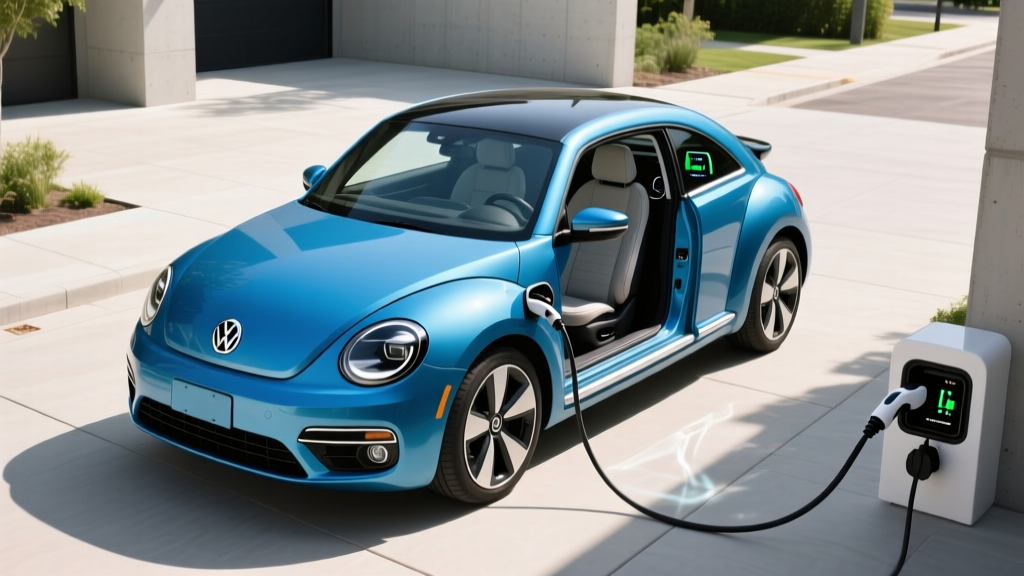
Volkswagen has finally pulled the wraps off the production version of the VW ID Beetle, a retro-styled electric hatchback that trades the iconic Beetle silhouette for the group's MEB (Modular Electric Drive Matrix) platform. After years of concept teasers and trademark filings, the 2026 ID Beetle is now reaching U.S. dealerships — and we've spent time with the specs, the charging data, and the pricing breakdown to tell you exactly what this EV delivers and where it falls short.
The ID Beetle enters a compact EV segment crowded with strong competitors: the Hyundai Kona Electric, Nissan Ariya, Volvo EX30, and VW's own ID.4. VW is betting that emotional design, practical range, and competitive pricing can carve out a niche. Here's the full data-driven picture.
Spec Sheet: 2026 VW ID Beetle at a Glance
| Specification | Value |
|---|---|
| EPA Estimated Range | 245 miles |
| Battery (Usable / Gross) | 77 kWh usable / 82 kWh gross |
| Battery Chemistry | NMC (Nickel Manganese Cobalt) |
| Drivetrain | Rear-Wheel Drive (single motor) |
| Horsepower | 201 hp |
| 0–60 mph | 7.1 seconds |
| Max DC Fast-Charge Rate | 175 kW (peak) |
| 10–80% DC Charge Time | ~29 minutes |
| Level 2 Home Charge Rate | 11 kW (~35 miles/hr) |
| EPA Efficiency | 110 MPGe combined / 30 kWh/100 mi |
| Cargo Volume (rear seats up / folded) | 14.2 cu ft / 42.8 cu ft |
| Rear Legroom | 34.6 inches |
| Base MSRP (Pro trim) | $34,990 |
| As-Tested (Pro S w/ packages) | $41,280 |
| Battery / Powertrain Warranty | 8 years / 100,000 miles |
| Federal Tax Credit (§30D) | Up to $7,500 (eligibility varies) |
Range & Efficiency: What the EPA Number Doesn't Tell You
The EPA rates the 2026 VW ID Beetle Pro S at 245 miles of combined range. That figure comes from the 77 kWh usable battery paired with the 201-hp rear-mounted APP550 electric motor — the same updated drivetrain VW introduced in the refreshed ID.4 and ID.7. Efficiency lands at 110 MPGe combined, or roughly 30 kWh per 100 miles driven.
EPA sticker: 245 miles. In mixed suburban/highway driving at 70°F, expect 220–235 miles before hitting 10% SoC. On sustained 75-mph highway runs, plan for 200–215 miles. In freezing temperatures (below 32°F), range can drop to 170–190 miles due to battery thermal losses and cabin heating demand. The ID Beetle includes a standard heat pump on Pro S trims, which mitigates cold-weather loss by roughly 8–10% compared to resistive heating — but physics still wins in deep winter.
VW's thermal management system actively conditions the battery during navigation-routed DC charging sessions, which is critical for achieving peak charge rates. Without preconditioning — say, pulling up to a charger with 20% SoC on a cold day without a navigation waypoint set — peak charge rates may be limited to 90–110 kW until the pack warms up.
Charging Speed: DC Fast, Level 2, and the Curve Reality
The ID Beetle supports a peak DC fast-charge rate of 175 kW via its CCS1 connector (NACS adapter availability is expected via VW's partnership announcements for Supercharger access). Under ideal conditions — battery preconditioned, ambient temps above 60°F, starting at 10% SoC — VW claims a 10–80% charge in approximately 29 minutes.
| Charging Level | Power (kW) | Speed (Miles Added/Hr) | Notes |
|---|---|---|---|
| Level 1 (120V household) | 1.4 kW | ~4 mi/hr | Emergency/trickle only |
| Level 2 (240V home, 48A) | 11 kW | ~35 mi/hr | Full charge in ~7.5 hours |
| DC Fast Charge (peak) | 175 kW | ~580 mi/hr (peak) | 10–80% in ~29 min; tapers above 80% |
The charging curve matters more than the peak number. The ID Beetle sustains above 150 kW from roughly 10% to 45% SoC, then steps down to ~120 kW through 65%, and further tapers to ~75 kW by 80%. Above 80%, charging slows dramatically to protect cell longevity — a 80–100% top-off can add another 25–30 minutes. For road trips, plan your stops around 10–80% sessions and move on.
For home charging, the 11 kW onboard charger means a 48-amp Level 2 circuit (hardwired, 60-amp breaker) delivers a full overnight charge. Most owners will need a 200-amp electrical panel — if yours is 100-amp, budget $1,500–$3,000 for a panel upgrade on top of the $500–$1,200 charger installation. According to fueleconomy.gov, the ID Beetle's annual charging cost is approximately $600 based on 15,000 miles and national average electricity rates.
Performance & Driving Dynamics
The single rear-mounted motor produces 201 hp and 229 lb-ft of torque. The 0–60 mph sprint takes 7.1 seconds — adequate for merging and passing but not thrilling by EV standards. VW has not announced an AWD dual-motor variant for the U.S. market at launch, though the MEB platform supports it and a GTX performance trim may follow for 2027.
Driving dynamics lean comfort over sport. The suspension absorbs highway imperfections well, and the low center of gravity (battery pack under the floor) keeps body roll controlled through corners. Regenerative braking offers three levels via steering-wheel paddles, but VW has not implemented true one-pedal driving to a full stop — you'll still need the friction brakes at the very end. This is a deliberate VW choice across the ID family, and it frustrates some EV veterans accustomed to Chevrolet or Nissan's aggressive regen implementations.
Interior, Cargo, and Technology
The ID Beetle's cabin blends retro design cues — a body-color dashboard panel, round air vents, ambient lighting themes — with VW's latest ID.Software 4.0 infotainment on a 12.9-inch center touchscreen. A 10.25-inch digital driver display sits behind the steering wheel. Wireless Apple CarPlay and Android Auto are standard.
Cargo space: 14.2 cubic feet behind the rear seats, expanding to 42.8 cubic feet with the 60/40 split rear bench folded. There is no front trunk (frunk) — the MEB platform's electronics occupy that space. For comparison, the Hyundai Kona Electric offers 25.8 cu ft behind the rear seats, making the ID Beetle notably less practical for cargo-heavy buyers.
Rear legroom measures 34.6 inches — tight for adults on longer trips but fine for children or short commutes. The sloping roofline, faithful to the Beetle silhouette, cuts into rear headroom for passengers over 6 feet.
Driver assistance: VW's IQ.Drive suite is standard and includes adaptive cruise control with stop-and-go, lane-keeping assist, automatic emergency braking, and blind-spot monitoring. This is SAE Level 2 driver assistance — you must keep your hands on the wheel and remain fully engaged. VW has not yet enabled hands-free highway driving (unlike Ford's BlueCruise or GM's Super Cruise) in the ID Beetle, though Travel Assist with capacitive steering-wheel detection is included.
The ID Beetle's IQ.Drive is a Level 2 driver-assist system. It does not drive itself. The driver must remain alert, keep hands on the steering wheel, and be prepared to take over at any moment. It will not navigate construction zones, respond to all traffic signals, or handle unmapped roads reliably.
Pricing, Trims, and Federal Tax Credit Eligibility
| Trim | Base MSRP | Destination | Total Before Credit | Est. After §30D Credit |
|---|---|---|---|---|
| Pro | $34,990 | $1,395 | $36,385 | ~$28,885* |
| Pro S | $38,490 | $1,395 | $39,885 | ~$32,385* |
| Pro S Plus | $42,990 | $1,395 | $44,385 | ~$36,885* |
*Tax credit estimates assume full $7,500 eligibility. Actual credit depends on buyer income, battery sourcing, and MSRP cap compliance. See IRS rules below.
The ID Beetle qualifies as a "passenger car" under IRS §30D clean vehicle credit rules, meaning the MSRP cap is $55,000 (all trims clear this). However, the full $7,500 credit is split into two halves:
- $3,750 — Battery Components Requirement: At least a specified percentage of battery components must be manufactured or assembled in North America. VW's MEB batteries for U.S.-spec vehicles are currently assembled in Georgia, which is expected to satisfy this requirement for 2026.
- $3,750 — Critical Minerals Requirement: A percentage of critical minerals must be sourced from the U.S. or a free-trade-agreement partner. This threshold tightens annually and may limit partial credit for some model years.
Buyer income caps also apply: modified adjusted gross income (MAGI) cannot exceed $150,000 (single), $225,000 (head of household), or $300,000 (joint filing). The credit is now transferable at the point of sale, meaning qualified buyers can apply it as an immediate purchase-price reduction rather than waiting for a tax refund.
Always confirm eligibility with your tax professional and check the latest IRS guidance before purchasing — battery sourcing requirements shift annually.
Pros and Cons: The Honest Verdict
- Iconic retro design with genuine road presence
- Competitive pricing under $35K before credits
- Heat pump standard on Pro S (cold-weather efficiency)
- Comfortable ride quality, well-damped suspension
- 8-year/100,000-mile battery warranty
- Strong dealer network for service access
- Cargo space (14.2 cu ft) trails segment rivals significantly
- Rear headroom and legroom tight for tall adults
- No frunk — limited small-item storage
- No one-pedal driving to a full stop
- 175 kW peak charge rate lags Hyundai/Kia's 800V architecture
- No AWD option at launch
Who Should Buy the VW ID Beetle?
The ID Beetle is best suited for style-conscious urban and suburban commuters who prioritize design and daily drivability over maximum cargo capacity and road-trip range. If your typical drive is under 60 miles round-trip, you charge at home, and you want an EV that turns heads in the grocery-store parking lot, the ID Beetle delivers.
It is not the right choice for:
- Families needing cargo space: The Kona Electric and ID.4 both offer substantially more room.
- Frequent road-trippers: 245 miles of EPA range (closer to 200 on the highway) means more charging stops than a Tesla Model Y (320+ mi) or Hyundai Ioniq 5 (303 mi).
- Cold-climate buyers without home charging: Range drops significantly in winter, and public-charging reliance becomes stressful.
Look elsewhere if: You need 300+ miles of range, maximum cargo utility, AWD capability, or the fastest DC charging speeds in the segment.
Frequently Asked Questions
What is the real-world range of the 2026 VW ID Beetle?
The EPA rates it at 245 miles combined. In real-world mixed driving, expect 220–235 miles. Highway-only driving at 75 mph drops that to roughly 200–215 miles, and freezing winter conditions can reduce range to 170–190 miles.
How fast does the VW ID Beetle charge?
On a DC fast charger, it peaks at 175 kW and charges from 10–80% in about 29 minutes under ideal conditions. At home on a Level 2 (240V, 48A) charger, it adds roughly 35 miles of range per hour, fully charging overnight in about 7.5 hours.
How much does the VW ID Beetle cost after tax credits?
The base Pro trim starts at $36,385 including destination. With the full $7,500 federal tax credit (if you qualify based on income, battery sourcing, and MSRP rules), the effective price drops to approximately $28,885. The credit can now be applied at the point of sale as an instant discount.
Does the VW ID Beetle qualify for the federal EV tax credit?
It is expected to qualify for up to $7,500 under IRS §30D, but eligibility depends on: (1) buyer income under the MAGI caps, (2) MSRP under $55,000 (all trims qualify), and (3) battery component and critical-mineral sourcing requirements that change annually. Confirm with your tax professional and the IRS clean vehicle credit page before purchasing.
Is the VW ID Beetle worth buying vs. the competition?
If design and emotional appeal matter to you, the ID Beetle has no direct rival. But purely on specs, the Hyundai Kona Electric offers more range (261 mi EPA), more cargo space (25.8 cu ft), and faster charging for a similar price. The VW ID.4 offers more room and AWD. The ID Beetle wins on style and personality; it compromises on practicality.
Is the ID Beetle self-driving?
No. The IQ.Drive system is SAE Level 2 driver assistance. It provides adaptive cruise and lane-keeping, but you must remain fully engaged, hands on the wheel, at all times. It does not navigate autonomously.