Quick Verdict: A Sensible Electric Crossover That Punches Above Its Price
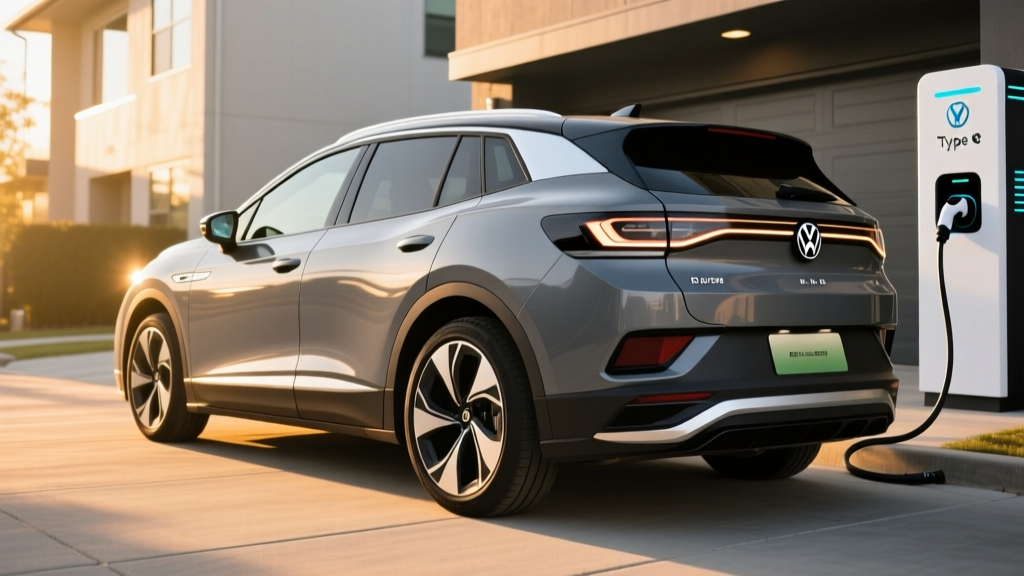
The VW ID.4 Pro RWD occupies a narrow but important lane in the 2026 EV market: a mainstream electric crossover that doesn't try to be a tech showcase or a performance machine. It tries to be a practical, comfortable daily driver with enough range for most commutes and road trips — and at a base MSRP of $42,690 (before any incentives), it undercuts most competitors with comparable interior space.
After spending time with the Pro RWD trim, the ID.4's strengths are clear: a composed ride, generous cargo room, and DC fast-charging that holds up on highway trips. Its weaknesses are equally clear: infotainment that still lags behind rivals, and acceleration that feels adequate rather than exciting. If you're shopping for an electric family hauler and don't need 0-60 times under five seconds, the ID.4 Pro RWD deserves a serious look.
Range and Efficiency: EPA Numbers vs. Real-World Reality
The 2026 VW ID.4 Pro RWD carries an EPA-estimated range of 275 miles. That figure comes from the 82 kWh battery pack (77 kWh usable), which uses NMC (nickel manganese cobalt) lithium-ion chemistry — the same chemistry VW has used since the ID.4's launch, prioritizing energy density and cold-weather performance over the longer cycle life of LFP cells.
EPA sticker: 275 miles. Real-world results vary significantly by condition:
- City/suburban mixed driving (60-70°F): 260-280 miles — regenerative braking recovers energy in stop-and-go traffic
- Highway cruising (70-75 mph, 60-70°F): 230-250 miles — aerodynamic drag dominates at speed
- Cold weather (below 32°F, mixed driving): 195-225 miles — battery heating and cabin climate draw reduce usable capacity by 15-25%
- Cold weather highway: 175-200 miles — worst-case scenario for road-trip planning
For daily commuting under 60 miles round-trip, you'll charge at home every 3-4 days. For road trips, plan stops at roughly 180-200 mile intervals to stay in the fast-charging sweet spot (10-80% SoC).
Efficiency lands at an EPA-rated 104 MPGe combined (city 110 / highway 98), which translates to roughly 32 kWh per 100 miles. That's mid-pack for the compact electric SUV segment — the Hyundai Ioniq 5 edges it out at 114 MPGe combined, while the Ford Mustang Mach-E Standard Range trails slightly at 101 MPGe.
| Spec | Value |
|---|---|
| EPA Range | 275 miles |
| Battery (total / usable) | 82 kWh / 77 kWh (NMC) |
| EPA Efficiency | 104 MPGe combined (32 kWh/100 mi) |
| Max DC Fast Charge | 170 kW |
| 10-80% DC Charge Time | ~30 minutes |
| Level 2 Home Charge Rate | 11 kW (~37 mi/hr) |
| Motor Output | 282 hp / 339 lb-ft torque |
| Drivetrain | Rear-wheel drive (single motor) |
| 0-60 mph | 7.7 seconds |
| Cargo (behind rear seats / folded) | 30.3 cu ft / 64.2 cu ft |
| Rear Legroom | 37.6 inches |
| Base MSRP (Pro RWD) | $42,690 |
| Battery/Powertrain Warranty | 8 years / 100,000 miles |
Charging Speed: DC Fast Charging and Home Setup
The ID.4 Pro RWD supports a peak DC fast-charge rate of 170 kW via its CCS1 connector (a NACS adapter is available for Tesla Supercharger access, expanding the public network significantly). On a compatible 175 kW+ station, the 10-80% charge takes approximately 30 minutes — competitive but not class-leading. The Hyundai Ioniq 5's 800-volt architecture manages 10-80% in roughly 18 minutes at up to 240 kW.
| Level | Power | Speed | Use Case |
|---|---|---|---|
| Level 1 (120V) | ~1.4 kW | ~4-5 mi/hr | Emergency / overnight top-off |
| Level 2 (240V, 48A) | 11 kW | ~37 mi/hr | Home daily charging — full charge in ~7.5 hrs |
| DC Fast (peak) | 170 kW | ~190 mi/hr (peak) | Road trips — 10-80% in ~30 min |
The charging curve matters more than peak numbers. The ID.4 sustains close to 170 kW between roughly 10-30% SoC, then tapers progressively. By 60% SoC, expect roughly 100-110 kW; above 80%, it drops below 50 kW. This is why VW (and every manufacturer) quotes 10-80% times — charging past 80% is painfully slow and rarely worth the wait on a road trip.
For home charging, the onboard 11 kW AC charger means a full Level 2 session (using a 48-amp hardwired wallbox on a 60-amp circuit) replenishes the battery from empty in about 7.5 hours. Most owners who plug in nightly at 20-30% remaining SoC wake up to a full battery. Home Level 2 installation typically runs $800-$2,000 depending on panel capacity and run length — factor this into your first-year budget. According to fueleconomy.gov, home charging on a national average electricity rate of $0.17/kWh costs roughly $5.44 for a full 77 kWh charge, or about $0.054 per mile — roughly one-third the per-mile fuel cost of a comparable gas crossover.
Performance and Driving Dynamics
The single rear-mounted permanent-magnet synchronous motor produces 282 horsepower and 339 lb-ft of torque. That's a meaningful bump over the ID.4's original 201 hp launch spec — VW upgraded the APP550 drive unit for recent model years, and the improvement is noticeable. The 0-60 mph time of 7.7 seconds won't embarrass you at a merge ramp, but it won't thrill you either. This is a crossover tuned for comfort, not sport.
The RWD layout gives the ID.4 a planted feel through corners that front-drive crossovers can't match, and the low center of gravity (battery pack under the floor) keeps body roll well-controlled. Ride quality is genuinely impressive — VW's suspension tuning absorbs highway expansion joints and city potholes with a maturity that rivals luxury-brand SUVs. Road noise is moderate; wind noise around the A-pillars becomes noticeable above 70 mph.
Regenerative braking in the ID.4 remains a mild disappointment. The "B" mode on the shift drum increases regen but doesn't approach true one-pedal driving — you'll still need the brake pedal for final stops. Competitors like the Nissan Ariya and Hyundai Ioniq 5 offer stronger, more configurable regen settings. The ID.4's approach is conservative, which some buyers will appreciate for its natural feel.
Interior, Tech, and Daily Livability
Step inside and the ID.4 delivers a spacious, minimalist cabin with materials that match its price point — soft-touch surfaces on the dash and door tops, harder plastics lower down. The panoramic fixed glass roof (standard on Pro and above) floods the cabin with light and adds a sense of openness, though it does eat about an inch of front headroom compared to the solid-roof S trim.
Cargo space is a genuine strength: 30.3 cubic feet behind the rear seats, expanding to 64.2 cu ft with the 60/40 split rear seats folded. That's competitive with the Toyota RAV4 and beats the Ioniq 5 (27.2 / 59.3 cu ft). A small front trunk (frunk) is absent — the ID.4 RWD models have no front cargo area, which is a missed opportunity for storing charging cables or a small bag.
The 12.9-inch infotainment touchscreen runs VW's ID.Software 4.0, which has improved substantially since launch but still trails the responsiveness and menu logic of systems from Hyundai/Kia and Tesla. Wireless Apple CarPlay and Android Auto are standard, which mitigates many of the native software frustrations. The touch-sensitive steering wheel controls and climate sliders remain divisive — they look clean but lack the tactile feedback of physical buttons, and it's too easy to accidentally adjust volume when reaching for the temperature slider.
Driver assistance comes via VW's IQ.DRIVE suite, which includes adaptive cruise control with stop-and-go, lane centering, blind-spot monitoring, and rear cross-traffic alert. This is a solid Level 2 system (per SAE classification) — it assists with steering and speed on highways but requires continuous driver attention and hands-on-wheel input. It works well for reducing fatigue on long drives but is not autonomous driving in any sense.
Pricing, Trims, and Federal Tax Credit Eligibility
The 2026 VW ID.4 lineup starts at $39,730 for the Standard Range S trim (206 hp, 63 kWh battery, 206-mile range). The Pro RWD — the focus of this review — starts at $42,690 including destination. Key trim steps:
| Trim | MSRP (incl. dest.) | Est. After §30D Credit* |
|---|---|---|
| Standard Range S | $39,730 | ~$32,230 |
| S RWD | $41,430 | ~$33,930 |
| Pro RWD | $42,690 | ~$35,190 |
| Pro S RWD | $46,190 | ~$38,690 |
| Pro S Plus AWD | $52,690 | ~$45,190 |
*Federal §30D credit eligibility requires meeting all criteria: buyer AGI under $150K single / $300K joint, vehicle MSRP under $80,000 (SUVs), and battery critical-mineral and component sourcing thresholds set by the IRS. The ID.4's battery is assembled at VW's Chattanooga, TN plant, which has historically helped meet domestic content requirements, but critical-mineral sourcing rules tighten annually. Always verify current eligibility at irs.gov before purchase. The credit can now be transferred to the dealer as a point-of-sale rebate, reducing your out-of-pocket cost at signing.
Our as-tested Pro RWD with the Gradient Package (20-inch wheels, two-tone paint, panoramic roof) came to $44,480 — still well under the $80K MSRP cap. With the full $7,500 credit applied, effective price drops to roughly $36,980, placing the ID.4 Pro in direct competition with well-equipped gas crossovers on total cost of ownership when you factor in fuel savings and lower maintenance.
Warranty and Long-Term Battery Outlook
VW covers the ID.4's high-voltage battery and electric powertrain for 8 years or 100,000 miles, whichever comes first. The warranty guarantees the battery will retain at least 70% of its original capacity during that period. The bumper-to-bumper limited warranty runs 4 years / 50,000 miles.
NMC battery degradation data from ID.4 owners in Europe and North America (where the vehicle has been on sale since 2021) shows typical capacity loss of 5-8% over the first 60,000 miles, with the curve flattening considerably afterward. This is consistent with industry-wide NMC data. The 77 kWh usable buffer (from the 82 kWh total) gives VW headroom to mask early degradation — a common strategy that keeps the driver-facing range relatively stable for the first several years.
For buyers concerned about battery replacement cost out of warranty: current NMC pack replacement pricing for the ID.4 runs in the $15,000-$20,000 range at a dealership. However, given the degradation trajectory, most packs will retain 80%+ capacity well beyond 150,000 miles. The risk is low, but not zero.
Who Should Buy the VW ID.4 Pro RWD — and Who Shouldn't
- You want a comfortable, spacious electric crossover for daily commuting and occasional 200-mile road trips
- Ride quality and cabin quietness matter more to you than sporty handling or quick acceleration
- You need 30+ cu ft of cargo space for family gear, groceries, or dog crates
- You plan to charge primarily at home and want predictable, moderate DC fast-charging for road trips
- You value the Chattanooga-built domestic assembly for potential tax credit qualification
- You want class-leading DC fast-charging — the Hyundai Ioniq 5 (240 kW, 10-80% in ~18 min) is significantly faster
- You need AWD for snow or towing — step up to the ID.4 AWD Pro (dual motor, 335 hp) or consider the Ford Mach-E
- You prioritize cutting-edge infotainment — Tesla's UI and Hyundai/Kia's systems are more responsive
- One-pedal driving is important to you — the ID.4's regen is mild by segment standards
- You regularly drive in extreme cold — consider an EV with a heat pump and LFP chemistry, or budget for 25% range loss
- Comfortable, mature ride quality that punches above its price
- Generous cargo space (30.3 / 64.2 cu ft)
- 275-mile EPA range covers most daily and weekend use
- Competitive pricing before and after tax credits
- Domestic assembly aids §30D credit eligibility
- Strong safety ratings (IIHS Top Safety Pick+)
- Infotainment UI still lags behind competitors in responsiveness
- DC fast-charging at 170 kW is mid-pack, not class-leading
- No front trunk (frunk) on RWD models
- Weak regenerative braking — no true one-pedal driving
- Touch-sensitive steering controls prone to accidental inputs
- No standard heat pump (reduces cold-weather efficiency)
Frequently Asked Questions
What is the real-world range of the VW ID.4 Pro RWD?
The EPA rates it at 275 miles. In real-world mixed driving at moderate temperatures, expect 250-270 miles. Highway-only driving at 75 mph drops that to roughly 230-250 miles. In sub-freezing temperatures, plan for 195-225 miles mixed, and as low as 175-200 miles on cold highway trips.
How fast does the ID.4 Pro RWD charge?
On a DC fast charger, it peaks at 170 kW and charges from 10-80% in about 30 minutes. At home on a Level 2 (240V, 48A) wallbox, it charges at up to 11 kW, adding roughly 37 miles of range per hour — a full charge from empty takes about 7.5 hours.
How much does the ID.4 Pro RWD cost after tax credits?
The base MSRP is $42,690. If you qualify for the full $7,500 federal §30D credit (subject to income limits, MSRP caps, and battery sourcing requirements verified at irs.gov), the effective price drops to roughly $35,190. The credit can be applied as a point-of-sale rebate at the dealer. State and local incentives may reduce the price further.
Is the VW ID.4 Pro RWD worth buying over the Hyundai Ioniq 5 or Tesla Model Y?
It depends on your priorities. The Ioniq 5 charges faster (240 kW vs 170 kW), has a more modern interior, and slightly better efficiency — but offers less cargo space. The Model Y has superior range, faster Supercharger access, and a more advanced software experience — but costs more, has a firmer ride, and its minimal interior isn't for everyone. The ID.4 wins on ride comfort, cargo volume, and value pricing after incentives. Test-drive all three and let cabin comfort and charging access in your area decide.
Does the VW ID.4 Pro RWD qualify for the federal EV tax credit?
The ID.4 is assembled in Chattanooga, Tennessee, which helps it meet domestic battery component requirements. However, full $7,500 credit eligibility depends on annual critical-mineral sourcing thresholds that tighten each year, plus buyer income caps ($150K single / $300K joint AGI) and the $80K MSRP cap for SUVs. Always confirm current eligibility on irs.gov and with your dealer before signing. Point-of-sale transfer is available if you qualify.
Does the ID.4 have a heat pump for cold weather?
The heat pump is available as part of an optional cold-weather package on higher trims but is not standard on the Pro RWD. Without it, cabin heating draws directly from the battery, which increases range loss in freezing temperatures. If you live in a climate with sustained below-freezing winters, prioritize the heat pump option or consider a competitor that includes it standard.
What is the ID.4's battery warranty?
VW covers the high-voltage battery for 8 years or 100,000 miles, guaranteeing at least 70% capacity retention over that period. The general powertrain warranty is also 8 years / 100,000 miles. Bumper-to-bumper coverage is 4 years / 50,000 miles.