Quick Verdict: Who Should Lease the VW ID.4?
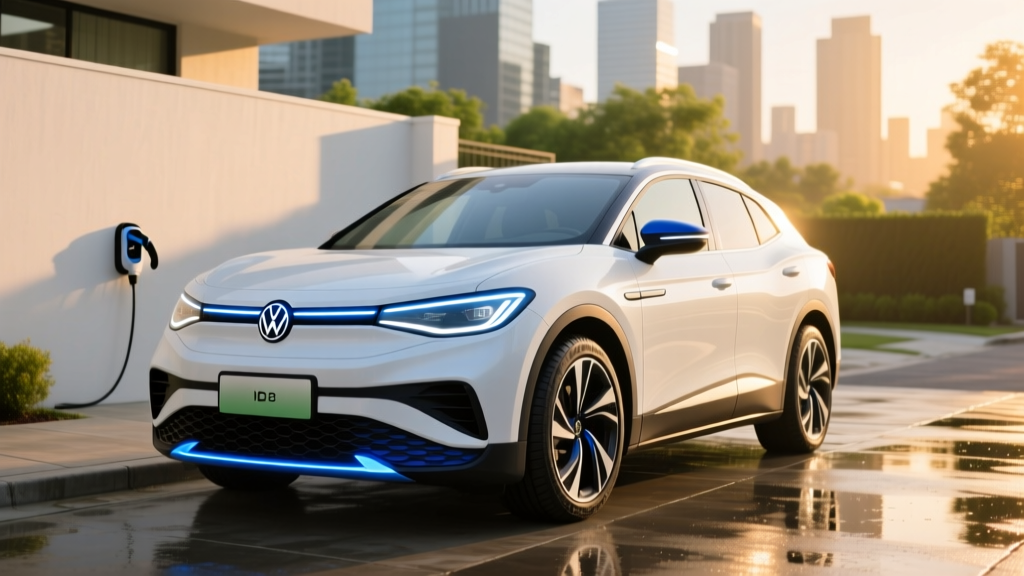
The 2026 Volkswagen ID.4 occupies a pragmatic middle ground in the compact electric SUV segment. It's not the fastest, doesn't have the longest range, and its infotainment still draws criticism. But with a starting MSRP around $40,000, federal tax credit eligibility, and competitive lease pricing, the ID.4 delivers solid value for families who want a no-drama daily driver with room for cargo and decent charging speeds. A VW ID.4 lease can make particular sense for buyers who want to sidestep long-term depreciation concerns while testing EV ownership.
Real-World Range Reality Check
EPA Estimated Range: 275 miles (Standard Range RWD) / 263 miles (AWD Pro S)
Real-World Expectation: Expect 220-245 miles on highway-heavy trips at 70+ mph. In cold weather (below 32°F), range drops to roughly 190-210 miles. City driving with regenerative braking can push toward 260+ miles.
Range, Battery & Efficiency
The 2026 ID.4 offers two battery configurations. The Standard Range model uses a 62 kWh usable lithium-ion NMC (nickel-manganese-cobalt) battery pack, while the Pro and Pro S trims step up to an 82 kWh usable pack. Volkswagen has stuck with NMC chemistry rather than LFP, prioritizing energy density over the longer cycle life that LFP offers.
| Specification | Standard Range RWD | Pro RWD | Pro S AWD |
|---|---|---|---|
| EPA Range | 275 miles | 291 miles | 263 miles |
| Battery (usable) | 62 kWh NMC | 82 kWh NMC | 82 kWh NMC |
| Efficiency | 104 MPGe (33 kWh/100mi) | 107 MPGe (31 kWh/100mi) | 98 MPGe (34 kWh/100mi) |
| 0-60 mph | 7.7 sec | 7.3 sec | 5.4 sec |
| Horsepower | 201 hp | 282 hp | 335 hp |
| Drivetrain | RWD | RWD | AWD (dual-motor) |
| Base MSRP | $39,735 | $43,735 | $52,235 |
Efficiency peaks at 107 MPGe combined for the Pro RWD, which translates to roughly 31 kWh per 100 miles driven. That's competitive with rivals like the Hyundai Ioniq 5 and slightly behind the Tesla Model Y's class-leading efficiency. The AWD Pro S drops to 98 MPGe due to the second motor's weight and friction losses.
Charging Speed: DC Fast & Home Level 2
Charging performance is where the ID.4 shows its age relative to newer 800V architectures. The Pro and Pro S models peak at 175 kW on DC fast chargers, while the Standard Range maxes out at 135 kW. Volkswagen claims a 10-80% charge time of approximately 30 minutes for the larger battery at a 175 kW-capable station.
| Charging Method | Power | Standard Range (62 kWh) | Pro/Pro S (82 kWh) |
|---|---|---|---|
| DC Fast Charge (10-80%) | 175 kW peak (Pro) | ~28 minutes (135 kW peak) | ~30 minutes |
| Level 2 Home (240V, 48A) | 11.5 kW | ~5.5 hours (0-100%) | ~7.5 hours (0-100%) |
| Level 2 Home (240V, 32A) | 7.7 kW | ~8 hours | ~11 hours |
| Level 1 (120V) | 1.4 kW | ~44 hours | ~58 hours |
The charge curve matters here. The ID.4 sustains its peak 175 kW only between roughly 10-30% state of charge, then tapers progressively. By 60% SoC, you're down to around 100 kW, and above 80% it drops below 50 kW. This is typical for 400V NMC packs but slower than Hyundai/Kia's 800V Ioniq 5 and EV6, which can sustain higher rates longer and hit 10-80% in 18 minutes.
For home charging, the ID.4 accepts up to 11.5 kW on Level 2, which requires a 48-amp hardwired wallbox on a 60-amp circuit. At this rate, you'll add roughly 35-40 miles of range per hour of charging—enough to fully replenish overnight for most daily driving needs.
Performance & Driving Dynamics
The ID.4 was never designed to be a performance SUV, and that shows in its acceleration figures. The base Standard Range RWD model hits 60 mph in 7.7 seconds with 201 horsepower—adequate for merging and passing but unexciting. The Pro RWD improves to 7.3 seconds and 282 hp thanks to a more powerful rear motor.
The dual-motor AWD Pro S is the performance outlier, delivering 335 horsepower and a 5.4-second 0-60 time. That puts it in the same ballpark as the Tesla Model Y Long Range. The instant torque delivery makes the ID.4 feel quicker around town than the numbers suggest, and the low center of gravity (battery pack under the floor) keeps body roll reasonable in corners.
Ride quality is a strong point. The suspension tuning prioritizes comfort over sportiness, absorbing bumps and road imperfections well. Steering is light and numb—typical for VW's electric platform—but acceptable for an SUV focused on daily commuting rather than canyon carving. The turning radius is tight at 33.8 feet, making the ID.4 surprisingly maneuverable in urban environments.
Interior Space, Cargo & Tech Features
The ID.4's cabin is spacious for its class. Front legroom measures 41.1 inches, and rear legroom is a generous 37.6 inches—enough for adults on longer trips. Cargo volume behind the rear seats is 30.3 cubic feet, expanding to 64.2 cubic feet with the rear seats folded. That's competitive with the Hyundai Ioniq 5 but trails the Tesla Model Y's 34.3/72.1 cubic feet.
There's no front trunk (frunk) in the ID.4, which is a missed opportunity for small-item storage. The rear cargo area is well-shaped with a low load floor, and the 60/40-split rear seats fold nearly flat.
The 12.9-inch touchscreen infotainment system runs VW's latest software, which is improved over earlier ID.4 model years but still draws criticism for sluggish response times and confusing menu structures. Wireless Apple CarPlay and Android Auto are standard. The digital instrument cluster is small (5.3 inches) and mounted on the steering column, which some drivers find awkward.
Driver-assistance tech includes adaptive cruise control, lane-keeping assist, automatic emergency braking, and blind-spot monitoring as standard equipment. VW's Travel Assist combines these into a Level 2 highway driving system that works well but requires hands on the wheel. It's not as capable as Tesla's Autopilot or GM's Super Cruise, but it's adequate for reducing fatigue on long drives.
Pricing, Lease Deals & Federal Tax Credit Eligibility
The 2026 ID.4 lineup starts at $39,735 for the Standard Range RWD (including destination) and climbs to $52,235 for the Pro S AWD. Mid-range Pro RWD models land around $43,735. These prices position the ID.4 as one of the more affordable compact electric SUVs, undercutting the Tesla Model Y and Hyundai Ioniq 5 in base form.
| Trim | Base MSRP | Federal Tax Credit (§30D) | Effective Price (if eligible) |
|---|---|---|---|
| Standard Range RWD | $39,735 | Up to $7,500 | $32,235 |
| Pro RWD | $43,735 | Up to $7,500 | $36,235 |
| Pro S AWD | $52,235 | Up to $7,500 | $44,735 |
Federal Tax Credit Eligibility: The ID.4 qualifies for the full $7,500 §30D Clean Vehicle Credit as of early 2026, provided you meet income limits ($150,000 single / $300,000 married filing jointly) and the vehicle's MSRP is below the $80,000 SUV cap. Battery component and critical mineral sourcing requirements also apply, and VW has confirmed the ID.4 meets these thresholds. The credit can be transferred to the dealer at point of sale, reducing your upfront cost or monthly lease payment.
Lease Considerations: Leasing the ID.4 can be attractive because the lessor (the leasing company) claims the tax credit and can pass the savings to you as a capitalized cost reduction. As of early 2026, VW is offering 36-month leases starting around $299-$399 per month depending on trim, with the tax credit factored in. Lease terms typically include 10,000-12,000 miles per year; excess mileage costs $0.20-$0.25 per mile. At lease end, you can purchase the vehicle at the residual value or return it.
Leasing makes sense if you want to avoid long-term battery degradation risk, plan to upgrade to newer EV tech in 3 years, or don't want to worry about resale value. Buying makes more sense if you drive high annual miles, want to keep the vehicle 5+ years, or want to build equity.
Battery Warranty & Long-Term Ownership
Volkswagen backs the ID.4's battery pack with an 8-year/100,000-mile warranty that guarantees at least 70% capacity retention. The powertrain (motors, power electronics) carries the same 8-year/100,000-mile coverage. The basic vehicle warranty is 4 years/50,000 miles.
NMC battery degradation in the ID.4 has been moderate based on early owner data. Expect roughly 10-15% capacity loss over 5 years and 60,000-80,000 miles under normal use. Frequent DC fast charging, regularly charging to 100%, and extreme heat exposure accelerate degradation. VW recommends setting a daily charge limit of 80% and using DC fast charging sparingly for optimal longevity.
Battery replacement cost out of warranty is significant—roughly $12,000-$15,000 for the 82 kWh pack based on current parts pricing. However, most owners will never need a full replacement, and individual module repairs are possible at lower cost.
Pros, Cons & Competitor Comparison
Pros
- Competitive pricing with federal tax credit eligibility
- Comfortable ride quality and quiet cabin
- Spacious rear seat and cargo area
- Good maneuverability with tight turning radius
- Adequate DC fast-charging speed for road trips
Cons
- Infotainment system still lags behind rivals in responsiveness
- No front trunk (frunk) for extra storage
- Slower 10-80% charging than 800V competitors
- Base model acceleration is leisurely
- Regenerative braking lacks true one-pedal driving mode
vs. Tesla Model Y: The Model Y offers superior efficiency, faster charging (via Supercharger network), and more cargo space, but costs more and has a firmer ride. The ID.4 wins on comfort and traditional dealership service.
vs. Hyundai Ioniq 5: The Ioniq 5 charges faster (18-minute 10-80% on 800V), has more distinctive styling, and offers similar range. The ID.4 counters with a lower base price and more rear-seat legroom.
vs. Ford Mustang Mach-E: The Mach-E is sportier to drive and has better infotainment, but its rear seat is tighter and cargo space is smaller. The ID.4 is the better family hauler.
Who Should Lease the VW ID.4?
The ID.4 lease makes the most sense for:
- Suburban families who need rear-seat space for kids and cargo room for gear, and who can charge at home overnight
- Commuters with round trips under 100 miles who want a comfortable, quiet daily driver
- First-time EV buyers who want to test electric ownership without long-term commitment or depreciation risk
- Budget-conscious shoppers who want an affordable compact EV SUV with federal tax credit eligibility
The ID.4 is not ideal for:
- Enthusiasts who prioritize acceleration and sporty handling (look at Mach-E or Model Y Performance)
- High-mileage drivers who exceed 15,000 miles/year (lease penalties add up)
- Road-trippers who want the fastest possible charging (Ioniq 5 or Model Y are quicker)
- Tech-focused buyers who demand cutting-edge infotainment (Tesla or Rivian)
Frequently Asked Questions
What is the real-world range of the 2026 VW ID.4?
The EPA rates the ID.4 Pro RWD at 291 miles, but expect 230-250 miles in mixed driving and 200-220 miles on highway trips at 70+ mph. Cold weather (below freezing) reduces range by 15-25%, so winter range drops to roughly 180-210 miles for the Pro trim.
How fast does the ID.4 charge at home and on road trips?
On a 175 kW DC fast charger, the Pro/Pro S models hit 10-80% in about 30 minutes. At home on a 48-amp Level 2 charger (11.5 kW), you'll add 35-40 miles per hour and fully charge the 82 kWh battery in 7-8 hours overnight.
Does the VW ID.4 qualify for the $7,500 federal tax credit?
Yes, as of 2026 the ID.4 qualifies for the full $7,500 §30D Clean Vehicle Credit if you meet income limits ($150k single / $300k married) and the vehicle's MSRP is under the $80,000 SUV cap. The credit can be transferred to the dealer at purchase or factored into a lease.
Is it better to lease or buy the ID.4?
Leasing makes sense if you want lower monthly payments, plan to upgrade in 3 years, or want to avoid battery degradation risk. Buying is better if you drive 15,000+ miles annually, want to keep the vehicle 5+ years, or want to build equity. Lease deals often include the tax credit as a capitalized cost reduction.
How does the ID.4 compare to the Tesla Model Y?
The Model Y offers better efficiency (120+ MPGe), faster Supercharger charging, and more cargo space, but costs $5,000-$10,000 more and has a stiffer ride. The ID.4 wins on comfort, traditional dealership service, and lower entry price after tax credits.
What's the battery warranty on the ID.4?
Volkswagen provides an 8-year/100,000-mile battery warranty guaranteeing at least 70% capacity retention. The powertrain (motors, electronics) has the same coverage. The basic vehicle warranty is 4 years/50,000 miles.
Sources: EPA Fuel Economy, IRS Clean Vehicle Credit, Volkswagen USA specifications.