Quick Verdict: The Sensible Electric Compact SUV
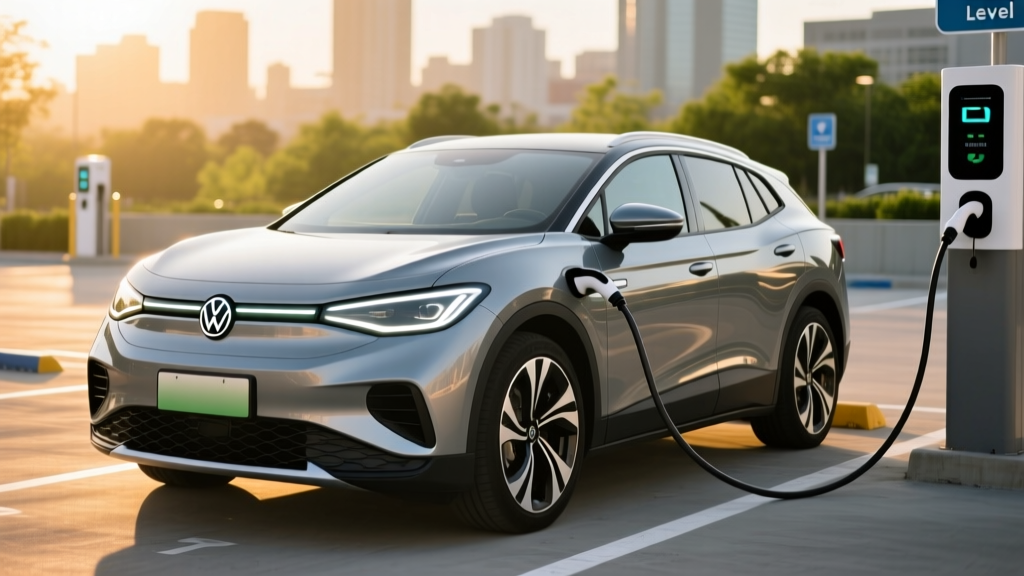
The Volkswagen ID.4 occupies a specific niche in the EV market: it's the electric crossover for buyers who want something that feels familiar, spacious, and practical without chasing headline-grabbing performance numbers. For 2026, the ID.4 continues with the 82 kWh usable battery pack (Pro trims), improved infotainment software, and a starting MSRP that undercuts many rivals — especially once the federal tax credit is applied. It won't win drag races against a Model Y Performance, but it will comfortably handle a family's daily commute, weekend road trips, and grocery runs with room to spare.
After spending time with the ID.4 across multiple model years and charging it on everything from home Level 2 setups to Electrify America's 350 kW stations, the picture is clear: this is a competent, if unremarkable, electric SUV that prioritizes ride comfort and interior space over tech flash. The 2026 model year brings incremental software refinements and a slightly revised trim structure, but the core formula remains.
Range, Battery & Real-World Efficiency
| Spec | Pro / Pro S (RWD) | AWD Pro / Pro S |
|---|---|---|
| EPA Estimated Range | 291 miles | 263 miles |
| Battery (usable) | 82 kWh | 82 kWh |
| Battery Chemistry | NMC (Nickel Manganese Cobalt) | NMC |
| MPGe (city / hwy / combined) | 104 / 93 / 99 MPGe | 97 / 87 / 93 MPGe |
| Energy Consumption | 34 kWh / 100 mi | 36 kWh / 100 mi |
Real-World Range Reality Check
EPA Sticker: 291 miles (RWD Pro)
Expect in practice: 240–265 miles on a mixed highway/city drive at 70–75 mph. In sustained cold weather (below 30°F), plan for 190–220 miles on a full charge — the ID.4's resistive heating element (PTC heater) is less efficient than a heat pump, which VW does not offer on US-spec models. City driving with frequent regen braking can push range closer to or slightly above the EPA estimate.
Bottom line: The ID.4's range is adequate for most commutes and day trips but falls short of the 300+ mile benchmarks set by the Hyundai Ioniq 5 and Tesla Model Y Long Range. Plan charging stops accordingly on road trips over 200 miles.
The 82 kWh NMC battery pack is supplied by SK On and assembled at VW's Chattanooga, Tennessee plant. NMC chemistry offers higher energy density than LFP, which keeps the pack weight manageable, but it does mean VW recommends charging to 80% for daily use and reserving 100% for road trips — unlike LFP packs that tolerate regular full charges.
Efficiency of 34 kWh/100 miles (RWD) puts the ID.4 in the middle of the compact EV SUV pack. The Hyundai Ioniq 5 achieves roughly 30 kWh/100 mi, while the Ford Mustang Mach-E Extended Range sits around 33 kWh/100 mi. The difference translates to roughly $50–$80 per year in electricity costs at national average rates, so it's meaningful but not a dealbreaker.
Charging Speed: DC Fast & Home Level 2
| Charging Level | Max Rate | Speed / Time |
|---|---|---|
| Level 1 (120V household) | 1.4 kW | ~3–4 miles per hour |
| Level 2 (240V home / public) | 11 kW (AC onboard charger) | ~27–30 miles per hour; 0–100% in ~8.5 hours |
| DC Fast Charge (CCS) | 170 kW peak | 10–80% in ~30 minutes (optimal conditions) |
The ID.4's 170 kW peak DC fast-charging rate is where the vehicle shows its age relative to newer competitors. The Hyundai Ioniq 5 and Kia EV6, built on 800-volt architectures, peak at 240+ kW and complete a 10–80% charge in roughly 18 minutes. The ID.4 uses a conventional 400-volt platform, which caps its charge speed and produces a more gradual charging curve.
In real-world DC fast-charging testing at Electrify America and other networks, the ID.4 typically sustains 120–150 kW between 10–40% SoC, then tapers to 80–100 kW through the 40–70% range, and drops further above 80%. A 10–80% session takes approximately 30–34 minutes in warm weather, and can stretch to 40+ minutes in cold conditions without adequate battery preconditioning.
The ID.4 does include battery preconditioning when you navigate to a DC fast charger using the built-in navigation — this warms the pack to optimize charge acceptance. However, the preconditioning window is shorter and less aggressive than Tesla's or Hyundai's systems, so cold-weather charging remains noticeably slower.
One genuine advantage: VW includes three years of unlimited complimentary charging on the Electrify America network with every new ID.4. At current EA pricing (roughly $0.43–$0.56/kWh depending on region), this can save frequent road-trippers $1,500–$3,000 over the complimentary period. After three years, you pay standard rates.
For home charging, the 11 kW onboard AC charger is competitive. On a 48-amp Level 2 circuit (hardwired, 60-amp breaker), you'll add roughly 27–30 miles of range per hour — enough to fully replenish the battery overnight. A NEMA 14-50 outlet on a 50-amp circuit will deliver about 9.6 kW, adding roughly 24 miles per hour.
Performance, Drivetrain & Ride Quality
| Spec | Pro (RWD) | AWD Pro S |
|---|---|---|
| Powertrain | Single rear motor | Dual motor (front + rear) |
| Horsepower | 282 hp | 335 hp |
| Torque | 339 lb-ft | 339 lb-ft (rear) / 100 lb-ft (front) |
| 0–60 mph | 7.3 seconds | 5.4 seconds |
| Top Speed | 99 mph (electronically limited) | 112 mph |
| Towing Capacity | 2,200 lbs (w/ factory hitch) | 2,700 lbs (w/ factory hitch) |
The RWD ID.4's 282 hp and 7.3-second 0–60 time are perfectly adequate for merging and passing but won't excite anyone coming from a performance EV. The rear-motor layout does give it a relatively tight turning radius (31.5 feet curb-to-curb), which makes it genuinely easy to maneuver in parking garages and city streets.
The AWD variant's 5.4-second sprint is brisk and more in line with buyer expectations for a dual-motor EV. The additional front motor provides confident traction in rain and snow, and the AWD system can disconnect the front motor under light-load cruising to preserve efficiency.
Ride quality is where the ID.4 genuinely excels. VW tuned the suspension for comfort over sportiness — it absorbs highway imperfections and potholes with a composed, planted feel that's very much in the Volkswagen tradition. Steering is light and numb, which some enthusiasts criticize but most daily drivers appreciate. Road noise is well-managed, though not class-leading compared to the quieter Hyundai Ioniq 5.
Interior, Cargo Space & Technology
The ID.4's cabin prioritizes minimalist design and practicality. Materials are a mix of soft-touch surfaces on the dashboard and harder plastics on the lower door panels and center console — a common cost-saving measure in this price segment. The panoramic glass roof (standard on Pro S and above) floods the cabin with light and makes the interior feel larger than its exterior dimensions suggest.
| Dimension | Measurement |
|---|---|
| Cargo Volume (behind 2nd row) | 30.3 cu ft |
| Cargo Volume (2nd row folded) | 64.2 cu ft |
| Front Legroom | 41.1 inches |
| Rear Legroom | 37.6 inches |
| Front Headroom (with glass roof) | 40.7 inches |
| Rear Headroom | 38.4 inches |
Cargo space is competitive with the Mach-E (29.9 cu ft behind the rear seats) but falls short of the Model Y (30.2 cu ft with a deeper load floor and available frunk). Notably, the ID.4 does not have a front trunk (frunk) — the space under the hood houses the HVAC system and power electronics. For a vehicle built on a dedicated EV platform, this is a missed opportunity that rivals like the Ioniq 5 (which does offer a small frunk on RWD models) capitalize on.
The 12.9-inch infotainment touchscreen (upgraded from the earlier 12-inch unit) runs VW's latest ID. Software 4.0, which addresses many of the sluggishness complaints from early model years. Response times are improved, the interface is more intuitive, and wireless Apple CarPlay and Android Auto are standard. However, VW's reliance on touch-capacitive sliders for volume and climate temperature — without physical buttons or haptic feedback — remains a frustration for many drivers, especially when wearing gloves or driving at night.
The ID.4 comes equipped with VW's IQ.DRIVE suite, which includes adaptive cruise control with stop-and-go, lane centering assist, front assist with automatic emergency braking, and blind-spot monitoring. This is an SAE Level 2 driver-assistance system — it requires the driver to remain fully engaged with hands on the wheel and eyes on the road. It's competent for highway cruising but does not offer hands-free operation like GM's Super Cruise or Ford's BlueCruise.
Pricing, Trims & Federal Tax Credit
| Trim | MSRP | Est. Price After §30D Credit |
|---|---|---|
| Standard Range S (RWD, 62 kWh) | $39,735 | ~$32,235* |
| Pro (RWD, 82 kWh) | $43,735 | ~$36,235* |
| Pro S (RWD, 82 kWh) | $47,235 | ~$39,735* |
| AWD Pro (82 kWh) | $47,735 | ~$40,235* |
| AWD Pro S Plus (82 kWh) | $53,235 | ~$45,735* |
*Estimated prices assume full $7,500 federal tax credit eligibility. Actual credit depends on individual tax liability, income limits, and battery sourcing compliance. Destination charges ($1,395) not included.
§30D Federal Tax Credit Eligibility Checklist
- MSRP Cap: The ID.4 qualifies as an SUV under IRS rules, so the MSRP cap is $80,000 — all trims clear this easily.
- Buyer Income Limits: Adjusted gross income must not exceed $150,000 (single), $225,000 (head of household), or $300,000 (married filing jointly).
- Battery Sourcing: The ID.4's battery is assembled in Tennessee, and VW has worked to comply with critical-mineral and battery-component sourcing requirements under IRS §30D rules. Verify current-year compliance on the IRS eligible vehicle list before purchasing, as sourcing rules tighten annually.
- Point-of-Sale Transfer: Buyers can elect to transfer the credit to the dealer at purchase, reducing the vehicle's price by up to $7,500 at the point of sale — you don't need to wait until tax filing.
- Tax Liability: If claiming the credit on your tax return (not point-of-sale), the credit is non-refundable — it can only reduce your federal tax liability to zero, not generate a refund beyond that.
The ID.4's pricing positions it aggressively against the Hyundai Ioniq 5 (starting ~$42,000 for the SEL trim with the larger battery) and the Ford Mustang Mach-E (starting ~$43,000 for the Select trim). After the tax credit, the ID.4 Pro at roughly $36,000 is one of the most affordable 290-mile-range electric SUVs available in the US market.
Warranty & Long-Term Ownership
| Coverage | Term |
|---|---|
| Basic Vehicle Warranty | 4 years / 50,000 miles |
| Powertrain Warranty | 4 years / 50,000 miles |
| Battery Warranty | 8 years / 100,000 miles (retains ≥70% capacity) |
| Corrosion Perforation | 7 years / 100,000 miles |
| Roadside Assistance | 4 years / 50,000 miles |
| Complimentary EA Charging | 3 years / unlimited |
The 8-year/100,000-mile battery warranty with a 70% capacity retention threshold is industry-standard — matching Hyundai, Ford, and most other manufacturers. VW's basic and powertrain warranty at 4 years/50,000 miles is slightly shorter than Hyundai's 5-year/60,000-mile basic coverage, which is worth noting for high-mileage drivers.
NMC battery degradation data from early ID.4 owners (2021–2024 models) suggests approximately 5–8% capacity loss over the first 60,000 miles under typical use patterns. This is within the normal range for liquid-cooled NMC packs and well within the warranty threshold. Following best practices — charging to 80% daily, avoiding prolonged storage at 100% or below 10%, and minimizing repeated DC fast-charging sessions — should keep degradation manageable over a 150,000+ mile ownership cycle.
Pros, Cons & Who Should Buy the ID.4
Pros
- Competitive pricing after federal tax credit — Pro trim under $37K
- Comfortable, compliant ride quality that excels on rough roads
- Spacious cabin with generous rear legroom (37.6 in)
- Three years of free Electrify America charging included
- Tight turning radius makes city driving easy
- Built in the USA (Chattanooga, TN) — supports domestic manufacturing
- Standard IQ.DRIVE safety suite across all trims
Cons
- No front trunk (frunk) despite dedicated EV platform
- 170 kW peak DC charging is slower than 800V rivals (Ioniq 5, EV6)
- Touch-capacitive climate/volume sliders are frustrating in daily use
- No heat pump — cold-weather range loss is significant (~25–30%)
- Infotainment still lags behind Tesla, Hyundai in responsiveness
- Rear drum brakes (unusual for the segment, though regenerative braking reduces wear)
- Driver-assist system is competent but lacks hands-free capability
Who Is the VW ID.4 Best For?
Choose the ID.4 if: You want a comfortable, practical electric SUV under $40K (after credits) for daily commuting and occasional road trips. You value ride comfort over performance, appreciate the included EA charging, and don't need cutting-edge charging speeds or a frunk. It's ideal for families who prioritize interior space and a car-like driving experience.
Look elsewhere if: You need 300+ miles of range (consider the Ioniq 5 or Model Y Long Range), frequently drive in extreme cold (the lack of a heat pump is a real drawback), want the fastest possible DC charging for road trips, or prefer a more tech-forward cabin with physical controls. Performance-oriented buyers should look at the Model Y Performance or Mach-E GT.
Frequently Asked Questions
What is the real-world range of the 2026 VW ID.4?
The EPA rates the RWD Pro at 291 miles, but real-world highway driving at 70–75 mph typically yields 240–265 miles in moderate temperatures. In cold weather (below 30°F), expect 190–220 miles due to cabin heating demands and reduced battery efficiency. City driving with regenerative braking can approach or slightly exceed the EPA figure.
How fast does the ID.4 charge at home and on the road?
On a home Level 2 charger (240V, 48 amps), the ID.4 charges at up to 11 kW, adding roughly 27–30 miles of range per hour and fully charging in about 8.5 hours. On a DC fast charger, it peaks at 170 kW and reaches 10–80% in approximately 30–34 minutes under optimal conditions — slower than 800V competitors like the Ioniq 5 (~18 min).
Does the 2026 VW ID.4 qualify for the $7,500 federal tax credit?
The ID.4 is assembled in Tennessee and has historically qualified for the full §30D federal tax credit of $7,500, which can be transferred to the dealer at point of sale. However, eligibility depends on your income (under $150K single / $300K joint), the vehicle's battery component and critical-mineral sourcing compliance for the current tax year, and the $80,000 MSRP cap for SUVs (which the ID.4 easily meets). Always verify on the IRS eligible vehicle list before purchasing.
How does the ID.4 compare to the Hyundai Ioniq 5 and Tesla Model Y?
The ID.4 offers a more comfortable ride and lower entry price than the Ioniq 5, but the Hyundai charges significantly faster (800V architecture, ~18 min 10–80%), offers more cargo space, and has a more modern interior. The Tesla Model Y Long Range delivers 310+ miles of range, access to the Supercharger network, and more cargo volume, but has a firmer ride and higher starting price. The ID.4 is the comfort-and-value play in this segment.
Is the VW ID.4 good for cold climates?
It's adequate but not ideal. The ID.4 lacks a heat pump, relying instead on a resistive PTC heater that draws significantly more battery power in cold weather. Range loss of 25–30% in sub-freezing temperatures is common. If you live in a cold climate and regularly drive more than 150 miles in winter, the reduced range and slower cold-weather DC charging may be frustrating. Preconditioning the battery before charging helps but isn't as effective as systems in the Model Y or Ioniq 5.
What is the ID.4's towing capacity?
The RWD ID.4 can tow up to 2,200 pounds with the factory-installed hitch, while the AWD model is rated for 2,700 pounds. This is sufficient for a small utility trailer or a pair of jet skis but not for a camper or boat. Towing will reduce range by approximately 30–40% depending on trailer weight and aerodynamics.