The Case for White: Inside Tesla's Most Debated Interior Option
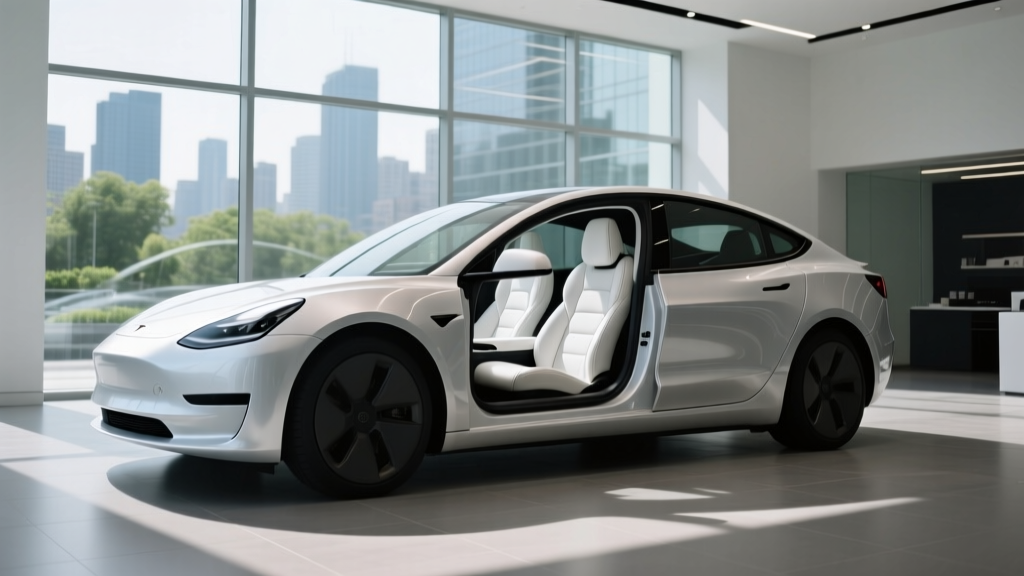
Order a Tesla Model 3 in 2026 and you'll face a deceptively simple choice at checkout: stick with the no-cost black interior or pay $1,000 extra for the white and black premium interior — the configuration that includes Tesla's now-iconic white vegan leather seats. It's a choice that splits owners, dominates Reddit threads, and has spawned an entire cottage industry of cleaning tutorials.
But beyond the aesthetics, the 2026 Tesla Model 3 (refreshed as the "Highland" generation) remains one of the most efficient, best-charging, and most technologically dense electric sedans on the market. This review covers the full ownership picture — range, charging, pricing, tax credits, and whether those white seats survive real life — so you can decide if the premium interior is a smart upgrade or a maintenance headache.
2026 Tesla Model 3: Full Spec Sheet
| Spec | RWD (Base) | Long Range AWD | Performance |
|---|---|---|---|
| EPA Range | 272 mi | 341 mi | 315 mi |
| Battery (usable) | ~57.5 kWh (LFP) | ~75 kWh (NMC) | ~75 kWh (NMC) |
| Drivetrain | Rear-Wheel Drive | Dual-Motor AWD | Dual-Motor AWD |
| Horsepower | 271 hp | 346 hp | 510 hp |
| 0–60 mph | 5.8 sec | 4.1 sec | 2.9 sec |
| Max DC Fast Charge | 170 kW | 250 kW | 250 kW |
| 10–80% DCFC Time | ~25 min | ~18 min | ~18 min |
| Level 2 Home Charge | 11.5 kW (~30 mi/hr) | 11.5 kW (~44 mi/hr) | 11.5 kW (~44 mi/hr) |
| MPGe (combined) | 132 MPGe | 132 MPGe | 119 MPGe |
| kWh/100 mi | 25 | 25 | 28 |
| Base MSRP | $38,990 | $44,990 | $52,990 |
| White Interior Upcharge | +$1,000 | +$1,000 | +$1,000 |
| Battery Warranty | 8 yr / 100,000 mi | 8 yr / 120,000 mi | 8 yr / 120,000 mi |
Source: EPA / fueleconomy.gov and Tesla.com. Figures reflect 2025–2026 model-year data. Specs subject to change by production batch.
Real-World Range: What the EPA Sticker Doesn't Tell You
EPA estimate: 341 miles
Real-world highway (70–75 mph, 72°F): ~285–310 miles
Cold-weather highway (30°F, heater on): ~230–260 miles
City / mixed commuting: ~310–330 miles
The Model 3 Long Range's 341-mile EPA figure is among the highest in its class, but EPA tests use moderate speeds and temperatures. On a sustained 75-mph interstate run in fair weather, expect to use roughly 280–310 of those miles before hitting a charger. The Model 3's excellent efficiency (25 kWh/100 mi) helps, but aerodynamic drag at highway speed is physics — no firmware update fixes it.
Cold weather hits harder. LFP batteries (in the RWD trim) lose more range in freezing temps than NMC packs, partly because LFP chemistry has higher internal resistance at low temperatures. The Model 3's heat pump — standard on all trims — mitigates cabin energy draw significantly compared to resistive heaters, but battery chemistry itself still sags. Plan for 20–30% range reduction in sustained sub-40°F driving, especially on the RWD.
The RWD's smaller LFP pack yields an EPA 272 miles. Real-world highway driving nets closer to 220–240 miles, and winter commuting may drop that to ~190 miles. If your daily round-trip commute exceeds 80 miles or you road-trip frequently, the Long Range AWD's extra capacity is worth the premium.
Charging Speed: DC Fast, Level 2, and the Charge-Curve Reality
| Charging Level | Power / Rate | Miles Added per Hour | Notes |
|---|---|---|---|
| Level 1 (120V outlet) | ~1.2 kW | ~3–4 mi/hr | Emergency / trickle only |
| Level 2 (240V, 48A) | 11.5 kW | ~30–44 mi/hr | Full charge overnight (8–10 hrs) |
| DC Fast (V3 Supercharger) | Peak 250 kW (LR/Perf) Peak 170 kW (RWD) | ~175 mi in 15 min (LR) | 10–80% in ~18 min (LR) |
Tesla's Supercharger network remains the gold standard for reliability and ease of use. On a V3 Supercharger (250 kW capable), the Long Range and Performance trims peak at 250 kW and sustain above 150 kW through roughly 50% State of Charge (SoC), then taper progressively. A 10–80% session takes approximately 18 minutes under ideal conditions — battery preconditioned, ambient temperature above 60°F, and a stall not shared with another vehicle.
Charge-curve reality check: That 250 kW peak is not sustained. Average power over a 10–80% session is closer to 140–160 kW. The last 10% (80–90%) adds another 8–10 minutes due to aggressive tapering — a trait of all lithium-ion chemistries. On road trips, charge to 80% and move on; the time penalty for topping off is rarely worth it.
The RWD trim's LFP battery tops out at 170 kW on DCFC. However, LFP chemistry tolerates frequent 100% charging better than NMC — Tesla actually recommends periodic full charges on LFP packs for battery calibration. This is a genuine ownership advantage for RWD owners who charge at home daily.
For home Level 2 charging, Tesla's Wall Connector ($475) or any J1772 adapter-compatible unit delivers up to 11.5 kW on a 60-amp circuit (48A continuous). A full overnight charge from 20% to 100% takes roughly 7–9 hours on the Long Range. Installation costs vary widely — expect $500–$1,500 for a straightforward panel-to-garage run from a licensed electrician, or $2,000+ if your panel needs a 200-amp upgrade.
The White Seats: Durability, Maintenance, and the Real Owner Experience
Let's address the keyword directly. The Tesla Model 3 white interior uses a vegan leather (polyurethane-coated synthetic) material that is genuinely more stain-resistant than many buyers expect — and more stain-prone than Tesla's marketing implies.
What holds up well: The white seats resist liquid spills effectively. Coffee, water, and most food spills wipe clean with a damp microfiber cloth within minutes. The material doesn't absorb liquids the way cloth or unsealed leather does. After two years of daily use, most owners report the seat surfaces remain largely intact without cracking or peeling.
What shows wear: Denim dye transfer is the primary enemy. New dark jeans will leave blue-gray shadows on white seats, especially in warm weather when the material softens slightly. This transfer is not permanent — it cleans off with isopropyl alcohol or a dedicated interior cleaner — but it requires attention every few weeks if you wear dark denim regularly. The seat bolsters (where you slide in and out) show the most wear, developing a faint gray patina over 12–18 months.
The steering wheel: The white synthetic steering wheel on the premium interior is the weak link. Hand oils, sunscreen, and grip friction discolor it faster than the seats. Many owners switch to an aftermarket wheel wrap or accept that it will darken over time.
Resale value: Anecdotally, well-maintained white interiors photograph better in listings and attract a slight premium on the used market — but a visibly stained white interior hurts more than a black one. If you're diligent about cleaning, the white option pays aesthetic dividends. If you're not, save the $1,000.
Pricing, Trims, and Federal Tax Credit Eligibility
| Trim | Base MSRP | With White Interior | Est. Federal Credit (§30D) | Effective Price |
|---|---|---|---|---|
| RWD | $38,990 | $39,990 | Up to $7,500* | ~$32,490 |
| Long Range AWD | $44,990 | $45,990 | Up to $7,500* | ~$38,490 |
| Performance | $52,990 | $53,990 | Up to $7,500* | ~$46,490 |
*Federal tax credit eligibility under IRS §30D depends on multiple criteria. The credit is not automatic.
The federal EV tax credit (IRC §30D) offers up to $7,500 for qualifying new EVs, but eligibility for the 2026 Model 3 depends on three moving targets:
- MSRP cap: Sedans must have an MSRP at or below $55,000. The RWD and Long Range qualify; the Performance trim ($52,990 base) qualifies at base but may exceed the cap with options including the white interior, FSD, and wheels.
- Buyer income cap: Modified adjusted gross income must not exceed $150,000 (single), $225,000 (head of household), or $300,000 (joint). This is a hard cutoff.
- Battery sourcing: The $7,500 credit splits into two $3,750 halves — one for critical-minerals sourcing and one for battery-component manufacturing. Tesla's North American battery supply chain (primarily Panasonic cells from the Nevada Gigafactory) has historically qualified for both halves, but sourcing rules tighten annually. Always verify current eligibility on fueleconomy.gov before purchasing.
As of 2026, the credit can be transferred to the dealer at point of sale, reducing your out-of-pocket cost at purchase rather than waiting for a tax refund. This is a significant cash-flow advantage — confirm the dealer supports point-of-sale transfer at the time of order.
Performance, Efficiency, and Daily Driving
The Model 3's efficiency is its quiet superpower. At 25 kWh/100 mi (Long Range), it consumes less electricity per mile than nearly any competing EV sedan. For context, the Hyundai Ioniq 6 SE Long Range achieves a similar ~25 kWh/100 mi, while the BMW i4 eDrive40 uses roughly 29 kWh/100 mi. Over 15,000 miles per year at $0.14/kWh (national average residential rate), the Model 3 Long Range costs approximately $525 annually in electricity — versus roughly $1,800 in gasoline for a comparable 30-MPG sedan.
Performance varies dramatically by trim. The RWD's 271 hp and 5.8-second 0–60 time is adequate for commuting and merging but won't surprise anyone at a stoplight. The Long Range AWD's 346 hp and 4.1-second sprint is genuinely quick for daily driving. The Performance trim's 2.9-second 0–60 puts it in supercar territory — and the updated Highland chassis, with revised damping and a stiffer body structure, handles that power with noticeably less body roll than the pre-refresh Model 3.
Ride quality on the Highland generation is markedly improved. The previous Model 3's crashy low-speed ride was a common complaint; the 2024+ refresh added frequency-selective dampers and additional sound deadening, making it genuinely comfortable on rough pavement. Road noise is still higher than a BMW i4 or Mercedes EQB at highway speed, but it's no longer a dealbreaker.
Tech, Driver Assistance, and What's Missing
The Model 3's 15.4-inch center touchscreen handles virtually every vehicle function — climate, mirrors, glovebox, media, navigation, and vehicle settings. There are no physical buttons for climate or volume (a steering-wheel scroll wheel handles volume, and a swipe along the screen's bottom edge handles temperature). This minimalism is either elegant or infuriating depending on your tolerance for screen-based controls.
The rear-seat 8-inch touchscreen (added in the Highland refresh) lets passengers control rear climate, seat heaters, and media — a welcome addition for families.
Tesla's Autopilot and Full Self-Driving (Supervised) are SAE Level 2 driver-assistance systems. They require continuous driver attention, hands on or near the wheel, and do not make the vehicle self-driving. Tesla's camera-only "Tesla Vision" approach handles highway lane-keeping, adaptive cruise, and auto lane changes competently, but city-street FSD behavior remains inconsistent. Always remain engaged.
Notable tech strengths:
- Over-the-air updates that add features post-purchase (recent: adaptive high beams, improved trip planner, battery preconditioning refinements)
- Tesla's navigation with real-time Supercharger routing and preconditioning
- Dashcam and Sentry Mode (surveillance recording while parked)
- Phone-as-key with walk-up unlock
Notable drawbacks:
- No Apple CarPlay or Android Auto — Tesla's native apps only
- No heads-up display
- No ultrasonic parking sensors (Tesla Vision camera-based parking assist is less reliable than ultrasonic in tight spots)
- Turn-signal stalk removal (signals are on the steering wheel rim — a love-it-or-hate-it Highland change)
- Limited rear-seat headroom for passengers over 6'2"
Cargo, Space, and Practicality
The Model 3 is a compact sedan, and its dimensions reflect that priority:
- Rear trunk: 21.0 cu ft (including under-floor storage)
- Front trunk (frunk): 3.1 cu ft — useful for charging cables, a small bag, or groceries
- Total cargo: 24.1 cu ft (rear seats up); ~43 cu ft with 60/40 rear seats folded
- Rear legroom: 34.9 inches — adequate for adults under 6'0", tight for taller passengers
- Front headroom: 40.3 inches (without glass roof tint reducing clearance)
The glass panoramic roof is a signature feature — it floods the cabin with light and creates an airy feel, especially with the white interior. However, in hot climates (Arizona, Texas, Southern California), the glass roof radiates noticeable heat into the cabin even with UV-blocking tint. Many owners in sunbelt states add an aftermarket ceramic tint film or a removable sunshade panel ($40–$80) for summer months.
Pros and Cons: The Honest Summary
- Best-in-class efficiency (25 kWh/100 mi)
- Supercharger network reliability
- 250 kW DCFC on Long Range/Performance (10–80% in ~18 min)
- Over-the-air updates keep the car current
- Strong resale value relative to other EVs
- Highland ride quality is a genuine improvement
- White interior is striking and photographically appealing
- White seats require active maintenance (denim transfer, cleaning)
- No Apple CarPlay / Android Auto
- Turn-signal stalk removal is polarizing
- Camera-only parking assist less precise than ultrasonic sensors
- Rear-seat space is tight for tall adults
- Glass roof heat in hot climates
- FSD (Supervised) remains Level 2 — not autonomous
Who Should Buy the Model 3 (and Who Shouldn't)
- You're a commuter or couple who values efficiency, charging speed, and a minimalist aesthetic
- You have home Level 2 charging access and a daily drive under 80 miles
- You're willing to wipe down white seats weekly and avoid dark denim on hot days
- You want access to the Supercharger network for road trips
- You prefer a tech-forward cabin over traditional luxury materials
- You regularly carry rear-seat adults over 6'0" (consider the Model Y or Hyundai Ioniq 5)
- You need Apple CarPlay or physical climate controls (consider BMW i4 or Hyundai Ioniq 6)
- You want a hands-off interior that hides wear (choose the black interior or a competitor with cloth/leatherette)
- You need towing capability (the Model 3 is not rated for towing in the US market)
Frequently Asked Questions
Do Tesla Model 3 white seats stain easily?
They resist liquid stains well but are prone to denim dye transfer, especially in warm weather. A quick wipe with a microfiber cloth and mild cleaner every 1–2 weeks keeps them looking fresh. Neglect for months will result in visible gray discoloration on the bolsters.
Does the 2026 Tesla Model 3 qualify for the $7,500 federal tax credit?
The RWD and Long Range trims generally qualify for up to $7,500 under IRS §30D, subject to buyer income caps ($150K single / $300K joint), MSRP caps ($55K for sedans), and battery-sourcing requirements. The Performance trim may exceed the MSRP cap with options. Verify current eligibility on fueleconomy.gov and consult a tax professional.
How much does it cost to charge a Model 3 at home?
At the US average residential rate of ~$0.14/kWh, a full charge of the Long Range (75 kWh) costs roughly $10.50 for 341 miles of range — about $0.03 per mile. Over 15,000 miles/year, that's approximately $525 in electricity, compared to ~$1,800 in gasoline for a 30-MPG sedan at $3.60/gallon.
Is the white interior worth the $1,000 upcharge?
Aesthetically, yes — the white cabin with the panoramic glass roof is the Model 3's most photogenic configuration and holds appeal on the used market. Practically, it demands more maintenance than the black interior. If you're a meticulous car keeper, the premium is justified. If you'd rather not think about your seats, skip it.
How does the Model 3 compare to the Hyundai Ioniq 6 or BMW i4?
The Model 3 leads in charging infrastructure (Supercharger network), efficiency, and OTA updates. The Ioniq 6 matches its efficiency and offers 800V ultra-fast charging (10–80% in ~18 min on 350 kW chargers). The BMW i4 wins on build quality, ride refinement, and Apple CarPlay — but costs significantly more and charges slower on DCFC. Your priority (charging network vs. luxury vs. value) determines the winner.
Can I get the white interior on any Model 3 trim?
Yes. The $1,000 white and black premium interior is available on all three trims — RWD, Long Range AWD, and Performance. It includes white vegan leather seats, white door panel inserts, and a white steering wheel.
Editorial note: Pricing, tax credit eligibility, and specifications reflect data available as of mid-2026. Tesla adjusts pricing and features periodically. Always confirm final specifications and credit eligibility with Tesla and the IRS before purchasing.