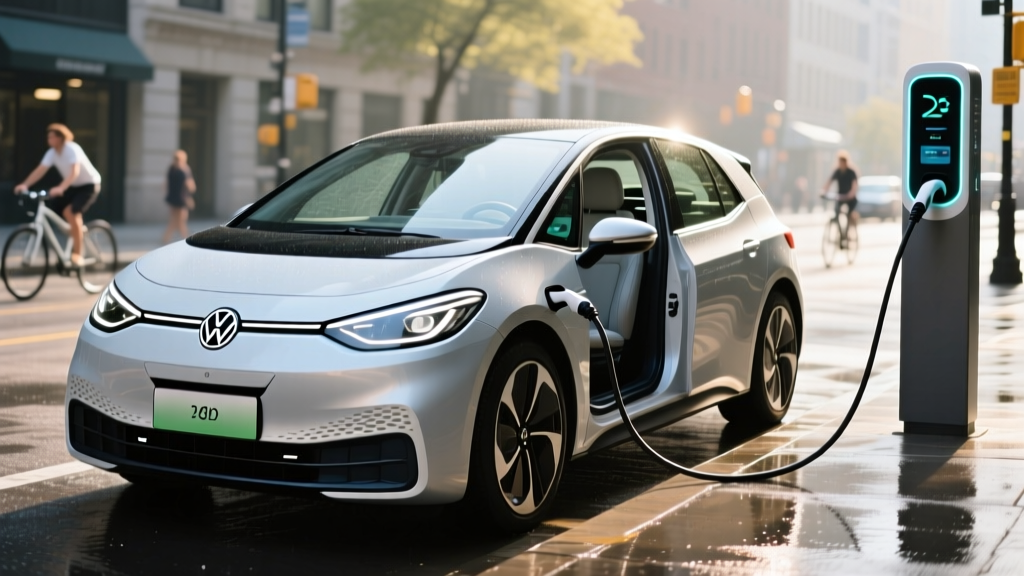
The Volkswagen ID.3 has been Europe's electric hatchback benchmark since its 2020 launch, but the ID.3 Neo arrives as a comprehensive mid-cycle refresh rather than a simple facelift. VW has addressed nearly every criticism leveled at the original — from sluggish infotainment to mediocre interior materials — while upgrading the battery pack and charging architecture. The result is a compact EV that competes directly with the Renault Mégane E-Tech, MG4, and upcoming Opel Astra Electric in Europe's most contested segment.
For buyers outside Europe, the ID.3 Neo remains unavailable in the United States (VW sells the ID.4 crossover stateside instead). This review focuses on European-spec models, WLTP range figures, and EU pricing — with notes on how the ID.3 Neo might translate if VW ever revisits a US hatchback strategy.
Quick Verdict: Who the VW ID.3 Neo Is For
The ID.3 Neo targets urban commuters and small families who need a practical daily driver with enough range for weekend trips. If you live in a European city with access to home or workplace charging, the 58 kWh Pro trim offers the best value-to-range ratio. The 77 kWh Pro S suits those who regularly drive 200+ miles between charges, though the added weight slightly dulls the driving dynamics. Buyers prioritizing the latest infotainment will appreciate VW's upgraded software; those seeking Tesla-level driver assistance will find the Travel Assist system competent but firmly SAE Level 2 — meaning you must remain engaged at all times.
Range, Battery, and Real-World Efficiency
The ID.3 Neo launches with two battery options, both using nickel-manganese-cobalt (NMC) chemistry for higher energy density compared to LFP alternatives. VW has improved cell-level thermal management, which should help sustain charging speeds and reduce long-term degradation.
| Trim | Usable Battery (kWh) | Chemistry | WLTP Range (mi) | Real-World Range (mi) | Efficiency (kWh/100 km) |
|---|---|---|---|---|---|
| Pro | 58 kWh | NMC | 263 mi (423 km) | 200–230 mi | 15.1 |
| Pro S | 77 kWh | NMC | 348 mi (560 km) | 270–310 mi | 15.8 |
Real-World Range Reality: The WLTP cycle tends to overestimate range compared to the US EPA test and real-world driving. Expect the 58 kWh Pro to deliver approximately 200–230 miles in mixed driving, dropping to 160–180 miles on sustained highway runs at 75 mph or in freezing winter conditions. The 77 kWh Pro S typically returns 270–310 miles mixed, with highway efficiency around 220–250 miles.
VW claims a 15.1 kWh/100 km consumption figure for the Pro trim — competitive with the Renault Mégane E-Tech (15.3 kWh/100 km) but slightly higher than the Tesla Model 3 RWD (14.0 kWh/100 km WLTP). In our experience, achieving the rated efficiency requires moderate speeds and mild weather; expect 17–19 kWh/100 km in colder months or aggressive driving.
Charging Speed: DC Fast Charge and Home Level 2
VW has upgraded the ID.3 Neo's charging hardware to remain competitive as public fast-charging networks deploy 350 kW chargers. The Pro trim now accepts up to 135 kW peak DC charging, while the Pro S peaks at 175 kW — a meaningful improvement over the pre-refresh ID.3's 125 kW cap.
| Charging Level | Power (kW) | Time or Rate | Notes |
|---|---|---|---|
| Level 1 (120V / Schuko) | 2.3 kW | ~10 mi/hr (Pro) | Emergency/trickle only |
| Level 2 (AC home/public) | 11 kW | ~35 mi/hr (Pro), ~45 mi/hr (Pro S) | Full charge in 6–8 hours |
| DC Fast Charge (Pro) | 135 kW peak | 10–80% in ~28 min | Tapers above 80% |
| DC Fast Charge (Pro S) | 175 kW peak | 10–80% in ~25 min | Sustains peak longer |
Like all modern EVs, the ID.3 Neo does not sustain peak charging speed throughout the session. The charge curve peaks between 10–40% state of charge, then tapers progressively. Expect average charging speeds closer to 90–100 kW for the Pro and 120–130 kW for the Pro S across a full 10–80% session. Battery preconditioning activates automatically when you navigate to a DC charger via the built-in sat-nav, warming the pack for optimal charging speed — essential in cold weather.
For home charging, an 11 kW wallbox (common in European three-phase installations) adds roughly 35 miles of range per hour on the Pro trim. A full overnight charge from 20% to 100% takes about 6 hours — convenient for off-peak electricity tariffs.
Performance and Driving Dynamics
The ID.3 Neo retains the rear-wheel-drive layout that gives the ID.3 family its engaging, balanced handling character. VW offers two motor outputs:
- Pro (58 kWh): 201 hp (150 kW), 229 lb-ft torque, 0–62 mph in 7.3 seconds
- Pro S (77 kWh): 228 hp (170 kW), 229 lb-ft torque, 0–62 mph in 6.7 seconds
Neither variant offers all-wheel drive — VW reserves dual-motor AWD for the ID.4 GTX and ID.5 GTX models. The single-motor RWD setup keeps weight lower and preserves cargo space, but limits traction in heavy snow compared to AWD competitors like the Volvo EX30 Twin Motor.
On the road, the ID.3 Neo feels planted through corners thanks to its low center of gravity and 50:50 weight distribution. The 77 kWh Pro S's extra 100 kg of battery mass is noticeable in tight urban maneuvering, making the lighter Pro trim the more agile choice. Regenerative braking offers three levels selectable via steering-wheel paddles, plus a "B" mode for stronger regen — but VW still doesn't offer true one-pedal driving that brings the car to a complete stop without touching the brake pedal.
Interior, Tech, and Cargo Space
The Neo refresh transforms the ID.3's cabin, addressing the original model's most-criticized elements. VW has replaced the piano-black surfaces (magnet for fingerprints) with matte-finish recycled materials, upgraded the steering wheel touch controls to physical buttons, and installed the latest ID. Software 4.0 infotainment system.
The 12.9-inch central touchscreen is larger and significantly more responsive than the outgoing 12-inch unit, with improved voice recognition and wireless Apple CarPlay/Android Auto. The digital instrument cluster remains compact (5.3 inches) but now displays a configurable augmented-reality head-up display projection on higher trims.
Cargo capacity stands at 13.6 cubic feet (385 liters) behind the rear seats, expanding to 44.7 cubic feet (1,267 liters) with the 60:40 split rear bench folded. That's competitive with the Renault Mégane E-Tech (13.2 cu ft) but trails the MG4's 14.0 cu ft. Rear legroom measures 35.4 inches — adequate for adults on shorter trips but tight for six-footers on long journeys.
Driver-assistance features include Travel Assist (adaptive cruise + lane centering), Park Assist Plus with memory parking, and Car2X communication for hazard warnings. Travel Assist is a competent SAE Level 2 system: it handles highway cruising well but requires hands-on-wheel supervision and does not navigate complex interchanges or stoplights autonomously.
Pricing, Trims, and Tax Incentives
European pricing for the 2026 ID.3 Neo starts at approximately €36,990 for the Pro trim and €42,990 for the Pro S, before national incentives. VW offers three equipment levels:
- Pro: 58 kWh battery, 18-inch alloys, LED matrix headlights, 12.9-inch touchscreen, heated front seats, Travel Assist
- Pro S: 77 kWh battery, 19-inch alloys, panoramic glass roof, heat pump, power tailgate
- Pro S Max: Adds 20-inch alloys, augmented-reality HUD, premium audio, leather-free sports seats
| Trim | MSRP (€) | Approx. GBP | After Incentives (Germany) |
|---|---|---|---|
| Pro | €36,990 | £31,500 | €33,990 (€3,000 BAFA) |
| Pro S | €42,990 | £36,600 | €39,990 (€3,000 BAFA) |
| Pro S Max | €47,490 | £40,400 | €44,490 (€3,000 BAFA) |
US Availability Note: The ID.3 Neo is not sold in the United States and does not qualify for the IRS §30D federal tax credit. American buyers seeking a VW electric vehicle should consider the ID.4, which starts around $40,000 and may qualify for up to $7,500 in federal credits depending on MSRP caps, buyer income limits, and battery-sourcing requirements (see IRS.gov §30D guidelines).
In Europe, incentive eligibility varies by country. Germany's BAFA program offers up to €3,000 for EVs under €45,000 (net list price), while France's bonus écologique provides €4,000 for vehicles under €47,000. UK buyers benefit from zero VED road tax and lower company-car BIK rates but no direct purchase grant. Always verify current incentive rules with your national transport authority before purchasing.
Battery Warranty and Long-Term Ownership
VW backs the ID.3 Neo's high-voltage battery with an 8-year/100,000-mile (160,000 km) warranty, guaranteeing at least 70% state of health (SoH) retention. This matches industry-standard coverage from Hyundai, Kia, and Tesla, though some competitors now offer 8-year/unlimited-mileage battery warranties.
NMC battery degradation typically follows a curve: expect 5–8% capacity loss in the first two years, then a slower 1–2% annual decline. Real-world data from early ID.3 owners shows most vehicles retaining 90%+ SoH after 60,000 miles — encouraging for long-term durability. VW's improved thermal management in the Neo should further reduce degradation, particularly for owners who frequently use DC fast charging.
Maintenance costs remain low compared to combustion hatchbacks: no oil changes, fewer brake replacements (thanks to regen), and minimal drivetrain service. VW recommends a cabin-filter replacement every two years and a brake-fluid check every three years. Insurance premiums tend to run 10–15% higher than equivalent petrol hatchbacks, reflecting EV repair costs and parts pricing.
How the ID.3 Neo Stacks Up Against Competitors
The compact electric hatchback segment is fiercely competitive in 2026. Here's how the ID.3 Neo compares to key rivals:
- Renault Mégane E-Tech (60 kWh): 248 mi WLTP, 130 kW DC charging, €38,990. Slightly less range and slower charging than the ID.3 Neo Pro, but praised for sharper infotainment and more distinctive styling.
- MG4 (77 kWh Long Range): 323 mi WLTP, 135 kW DC charging, €36,490. Undercuts the ID.3 Neo Pro S on price by €6,500 with comparable range, though interior quality and refinement trail the VW.
- Volvo EX30 (Single Motor Extended Range): 298 mi WLTP, 153 kW DC charging, €42,900. Premium positioning with strong safety credentials, but significantly less cargo space and rear legroom than the ID.3.
- Peugeot e-308 (54 kWh): 258 mi WLTP, 100 kW DC charging, €39,990. Attractive design but hampered by slower charging and older infotainment.
The ID.3 Neo's combination of range, charging speed, interior quality, and practicality makes it the segment's most well-rounded choice — if not the cheapest or most exciting. Buyers prioritizing value should test-drive the MG4; those seeking premium materials and safety tech should consider the Volvo EX30.
Pros and Cons
Pros
- Class-leading cargo and passenger space for the segment
- Improved infotainment with faster response and better UX
- Competitive DC charging speeds (135–175 kW)
- Refined ride quality and low cabin noise
- Strong real-world efficiency in mild conditions
- Comprehensive driver-assistance suite standard
Cons
- No true one-pedal driving mode
- Rear visibility compromised by thick C-pillars
- Pro S's extra weight dulls handling agility
- Higher price than MG4 and some rivals
- Level 2 driver assist still requires full attention
- Not available in North America
Frequently Asked Questions
What is the real-world range of the VW ID.3 Neo?
Expect 200–230 miles from the 58 kWh Pro trim and 270–310 miles from the 77 kWh Pro S in mixed driving. Highway cruising at 75 mph reduces range by 15–20%, and cold winter weather can drop range by 25–30% without a heat pump (standard on Pro S, optional on Pro).
How fast does the ID.3 Neo charge at home and on DC fast chargers?
Home charging via an 11 kW wallbox adds roughly 35–45 miles of range per hour, with a full 0–100% charge taking 6–8 hours. DC fast charging peaks at 135 kW (Pro) or 175 kW (Pro S), delivering a 10–80% charge in approximately 25–28 minutes under optimal conditions.
Does the VW ID.3 Neo qualify for the US federal EV tax credit?
No. The ID.3 Neo is not sold in the United States and therefore does not qualify for the IRS §30D clean vehicle credit. US buyers should look at the VW ID.4 or other eligible models, keeping in mind that §30D has MSRP caps ($55,000 for cars), income limits, and battery-sourcing requirements.
Is the ID.3 Neo worth buying over the Renault Mégane E-Tech or MG4?
The ID.3 Neo offers the best balance of range, space, charging speed, and refinement in its class. Choose the Mégane E-Tech for sharper styling and infotainment, or the MG4 for significantly lower cost. The ID.3 Neo wins on practicality and long-distance comfort.
How long will the ID.3 Neo battery last?
VW warranties the battery for 8 years/100,000 miles with a 70% state-of-health guarantee. Real-world data from early ID.3 models suggests most batteries retain 90%+ capacity after 60,000 miles. With proper care (avoiding frequent 100% charges and extreme heat exposure), expect 150,000+ miles before significant degradation.
Sources: Volkswagen Newsroom, IRS.gov §30D Guidelines