Quick Verdict: Volkswagen's Entry-Level EV Aims at the Budget Segment
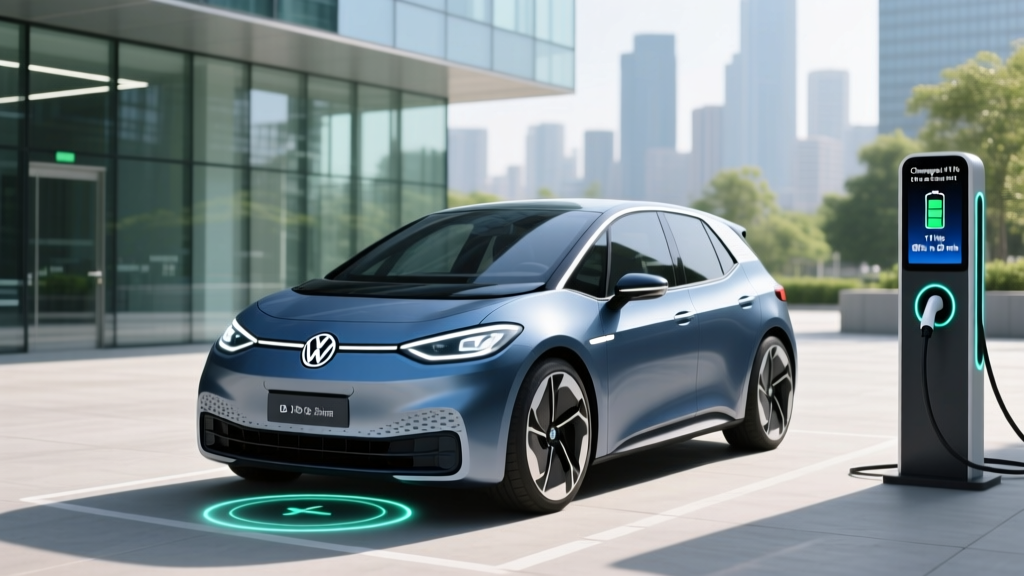
The Volkswagen ID.2 (also referred to in European markets as the ID.2all) is VW's answer to the sub-$30,000 electric vehicle gap — a segment where affordable options remain scarce in 2026. Built on the MEB Entry platform with a front-wheel-drive layout, the ID.2 targets urban commuters and cost-conscious buyers who want a practical hatchback with genuine daily-driver range. Volkswagen has confirmed the vehicle for European markets, but U.S. availability remains unconfirmed as of early 2026. This profile synthesizes all confirmed and projected specifications based on VW's official European disclosures and industry analysis.
Range, Battery & Efficiency: What to Expect from the MEB Entry Platform
Volkswagen has confirmed a usable battery capacity of approximately 58 kWh for the ID.2's primary variant, utilizing lithium iron phosphate (LFP) cell chemistry. The choice of LFP is significant: while it sacrifices some energy density compared to NMC (nickel manganese cobalt), it offers superior thermal stability, a longer cycle life (typically 3,000+ full cycles vs. ~1,500 for NMC), and lower raw-material costs. LFP also tolerates regular 100% charging without the degradation concerns that plague NMC packs, making it ideal for a budget-oriented daily driver.
VW claims a WLTP range of up to 450 km (approximately 280 miles) for the top-range European variant. However, WLTP testing tends to overstate range compared to the EPA's more conservative U.S. cycle by roughly 10-15%.
WLTP (Europe): ~280 miles (450 km)
Estimated EPA: ~235-250 miles
Real-world highway (70 mph): ~200-220 miles
Cold-weather (below 32°F): ~170-195 miles (expect 20-30% reduction due to cabin heating and battery resistance)
LFP chemistry partially offsets cold-weather loss through better low-temperature resilience, but the smaller battery means less thermal mass to retain heat. Preconditioning the battery via the VW app before driving will help recover 5-10% of range in winter.
Efficiency should land in the range of 28-32 kWh per 100 miles (roughly 105-120 MPGe combined), depending on final U.S. EPA certification. That puts the ID.2 in the same efficiency ballpark as the Chevrolet Bolt EV and slightly behind the Hyundai Kona Electric, which benefits from a more aerodynamic crossover profile.
| Specification | Value (Projected/Confirmed) |
|---|---|
| Battery Capacity (Usable) | ~58 kWh |
| Battery Chemistry | LFP (Lithium Iron Phosphate) |
| WLTP Range | ~280 mi (450 km) |
| Estimated EPA Range | ~235-250 mi |
| Projected MPGe (Combined) | 105-120 MPGe |
| Projected Efficiency | 28-32 kWh/100 mi |
| Drivetrain | FWD (single front motor) |
Charging Speed: DC Fast Charging & Home Level 2
Charging speed is often the make-or-break factor for EV buyers, and the ID.2's smaller battery presents both an advantage and a limitation. A smaller pack charges to full faster in absolute time, but peak charge rates are typically lower than larger-battery vehicles.
Volkswagen has indicated DC fast-charge capability of up to 125 kW on the MEB Entry platform. At that rate, a 10-80% charge should take approximately 25-30 minutes — respectable for the segment but noticeably slower than the 200+ kW rates available on the ID.4 and ID.7. The charge curve on LFP batteries tends to hold peak power slightly longer than NMC before tapering, which partially compensates for the lower peak rate.
For home Level 2 charging, expect an onboard charger rated at 11 kW (AC), consistent with VW's MEB family. On a 48-amp Level 2 home charger (the most common residential installation), you'll add roughly 35-40 miles of range per hour of charging. A full 0-100% charge overnight takes about 6-7 hours.
| Charging Method | Max Power | Speed / Time |
|---|---|---|
| Level 1 (120V household) | ~1.4 kW | ~4-5 mi/hr (~48 hr for full charge) |
| Level 2 (240V home, 48A) | ~11 kW | ~35-40 mi/hr (~6-7 hr full charge) |
| DC Fast Charge (CCS/NACS) | ~125 kW peak | 10-80% in ~25-30 min |
One practical note: if the ID.2 launches in the U.S. after 2026, it will likely ship with a NACS (Tesla-style) charge port rather than CCS, given VW's commitment to adopting NACS across its North American lineup. This would grant access to the Tesla Supercharger network — a major advantage for road-trip charging reliability. European models use CCS2.
Performance & Driving Dynamics
The ID.2 is positioned as a practical urban hatchback, not a performance vehicle. Volkswagen has confirmed a single front-mounted electric motor producing approximately 208 horsepower (155 kW) for the primary variant, with a lower-output option likely available in Europe. The front-wheel-drive layout is a departure from the rear-wheel-drive configuration of the ID.3 and ID.4, a cost-saving measure enabled by the MEB Entry platform's packaging flexibility.
Expect a 0-60 mph time in the range of 7.0-7.5 seconds — quick enough for confident highway merging and city driving, but not in the territory of the ID.4 AWD or performance-oriented EVs. Torque delivery will be instantaneous off the line, as with all single-motor EVs, giving the ID.2 a peppy feel around town that belies its modest power figures.
Top speed will likely be electronically limited to approximately 99 mph (160 km/h), consistent with VW's efficiency-first tuning philosophy for its entry-level models. Regenerative braking should offer multiple levels including a one-pedal driving mode, though VW's MEB software has historically been less aggressive with one-pedal regen than competitors like Nissan and Chevrolet.
Interior, Cargo & Technology
The ID.2 is a subcompact hatchback — think of it as the electric equivalent of the VW Polo in size. Exterior dimensions place it at roughly 163 inches long, 70 inches wide, and 62 inches tall, making it one of the smallest vehicles in VW's EV lineup.
Projected interior dimensions:
- Front legroom: ~41 inches
- Rear legroom: ~34-35 inches (tight for adults on long trips, adequate for children)
- Cargo volume (behind rear seats): ~14-16 cu ft
- Cargo volume (rear seats folded): ~42-45 cu ft
- Frunk: Small accessory compartment (~1-2 cu ft), not a full front trunk
The infotainment system will run VW's latest ID. Software 4.0, which addresses many of the lag and usability complaints that plagued earlier ID. models. Expect a 10.4-inch or 12.9-inch touchscreen (depending on trim), wireless Apple CarPlay and Android Auto, and over-the-air update capability. A compact digital instrument cluster replaces the traditional gauge pod, mounted on the steering column in a layout similar to the ID.3.
Driver-assistance features should include VW's IQ.DRIVE suite: adaptive cruise control with stop-and-go, lane-keeping assist, automatic emergency braking with pedestrian detection, and Travel Assist (a Level 2 combined lane-centering and adaptive cruise system). Per SAE classification, this is Level 2 automation — the driver must remain fully engaged and responsible at all times. This is not self-driving.
Pricing, Trims & Federal Tax Credit Outlook
Volkswagen has targeted a European starting price of under €25,000 for the ID.2. Translating that to U.S. pricing involves import duties, localization costs, and market positioning, but VW's stated goal for the American market (if launched) has been a sub-$30,000 base MSRP — potentially making it one of the most affordable new EVs available.
| Trim Level | Estimated MSRP | After Max §30D Credit |
|---|---|---|
| Base (estimated) | ~$27,000-$29,000 | ~$19,500-$21,500 |
| Mid-tier | ~$31,000-$33,000 | ~$23,500-$25,500 |
| Top trim | ~$35,000-$37,000 | ~$27,500-$29,500 |
Federal tax credit eligibility (IRS §30D): If the ID.2 launches in the U.S., its eligibility for the up-to-$7,500 federal clean vehicle credit will depend on several factors that remain fluid. Under current IRS §30D rules, the vehicle must:
- Have a base MSRP under $55,000 (the ID.2 clears this easily)
- Meet critical-mineral and battery-component sourcing thresholds (which tighten annually — VW's LFP supply chain is heavily China-sourced, which may disqualify some or all of the credit)
- Be purchased by a buyer with AGI below $150,000 (single) / $300,000 (joint)
- Be assembled in North America (VW's U.S. plant in Chattanooga, TN, is the likely production site if the ID.2 is Americanized)
The battery-sourcing requirement is the wildcard. LFP cells are overwhelmingly manufactured in China, and current rules phase out credits for vehicles with battery components from "foreign entities of concern." If VW sources LFP cells from a non-Chinese supplier (such as CATL's European operations or a future North American LFP plant), partial or full credit eligibility is possible. Buyers should verify current-year eligibility on fueleconomy.gov before purchasing.
Warranty & Ownership Costs
Volkswagen's EV warranty structure for its MEB vehicles currently includes:
- Battery warranty: 8 years / 100,000 miles (whichever comes first), with a capacity retention guarantee of 70% minimum state of health (SoH)
- Powertrain warranty: 8 years / 100,000 miles
- Bumper-to-bumper: 4 years / 50,000 miles
- Roadside assistance: 3 years / 36,000 miles
LFP chemistry should provide additional peace of mind beyond the warranty period. LFP cells degrade more slowly than NMC, with real-world data from fleet vehicles suggesting 85-90% capacity retention after 200,000 miles. Battery replacement cost for a ~58 kWh LFP pack would likely fall in the $8,000-$12,000 range if needed out of warranty — significantly less than equivalent NMC packs.
Projected annual maintenance costs are minimal: no oil changes, no spark plugs, reduced brake wear from regenerative braking. Expect to spend $200-$400 per year on cabin air filters, tire rotation, and wiper fluid. Insurance premiums for subcompact EVs tend to be 10-15% higher than comparable gas cars due to repair-cost complexity, but the ID.2's low MSRP should keep premiums moderate.
Pros, Cons & Who Should Consider the ID.2
✅ Pros
- Projected sub-$30,000 base price — one of the cheapest new EVs if U.S.-bound
- LFP battery offers long cycle life and 100% charge tolerance
- Compact size ideal for urban parking and tight streets
- VW's ID. Software 4.0 resolves earlier infotainment complaints
- Estimated 235-250 mi EPA range sufficient for most commutes
- Level 2 driver assists (IQ.DRIVE) included as standard
❌ Cons
- U.S. availability unconfirmed — European-only for now
- Tight rear legroom (~34 in) limits adult passenger comfort
- 125 kW peak DC charge rate is modest by 2026 standards
- LFP battery sourcing may limit federal tax credit eligibility
- FWD-only — no AWD option for snow-belt buyers
- Small cargo area (~15 cu ft) vs. crossover competitors
🎯 Who the VW ID.2 Suits Best
Ideal buyer: Urban or suburban commuter with home Level 2 charging access, who drives under 50 miles daily and wants the lowest possible entry price into a new EV. Single professionals, couples without children, or families needing a second car for local errands.
Not ideal for: Families needing rear-seat space for teens, road-trippers who prioritize fast DC charging, buyers in cold climates without garage parking, or anyone who needs AWD or towing capability (the ID.2 is not rated for towing).
Key Competitors & How the ID.2 Compares
If Volkswagen brings the ID.2 to the U.S., it would compete directly with a small but growing field of affordable EVs:
| Vehicle | EPA Range | DC Charge Rate | Base MSRP |
|---|---|---|---|
| VW ID.2 (projected) | ~235-250 mi | ~125 kW | ~$27,000-$29,000 |
| Chevrolet Bolt EV/EUV | 259 mi | ~55 kW | ~$26,500 |
| Hyundai Kona Electric | 261 mi | ~100 kW | ~$32,975 |
| Nissan Leaf (if still available) | 212 mi | ~50 kW (CHAdeMO) | ~$28,140 |
| Tesla Model 3 RWD | 272 mi | ~170 kW | ~$38,990 |
The ID.2's main advantage would be price. Its main vulnerability is charging speed — the Chevrolet Bolt's notoriously slow DC charging is a cautionary tale, and while the ID.2's 125 kW is better, it trails the 170+ kW rates buyers increasingly expect. For buyers who road-trip more than twice a year, the Hyundai Kona Electric or a used Tesla Model 3 may offer better overall value despite higher sticker prices.
Frequently Asked Questions
What is the real-world range of the VW ID.2?
Based on VW's WLTP rating of ~280 miles and typical EPA adjustment factors, expect an EPA estimate of approximately 235-250 miles. In real-world highway driving at 70 mph, plan for 200-220 miles. In cold weather below freezing, range may drop to 170-195 miles without preconditioning. The LFP battery's cold-weather resilience helps somewhat, but the smaller 58 kWh capacity means less energy reserve overall.
How fast does the VW ID.2 charge?
DC fast charging peaks at approximately 125 kW, delivering a 10-80% charge in about 25-30 minutes. At home on a 48-amp Level 2 charger (240V), expect roughly 35-40 miles of range added per hour, with a full charge taking 6-7 hours. Level 1 (120V) charging adds only about 4-5 miles per hour and is best used for overnight top-ups rather than full charges.
How much does the VW ID.2 cost after tax credits?
If launched in the U.S. with a base MSRP around $27,000-$29,000, and if it qualifies for the full $7,500 federal credit under IRS §30D, the effective price could drop to roughly $19,500-$21,500. However, LFP battery sourcing from China may reduce or eliminate credit eligibility. The point-of-sale transfer option allows dealers to apply the credit at purchase rather than waiting for tax filing. Always verify eligibility on the IRS website before committing.
Is the VW ID.2 worth buying vs. competitors?
If U.S. availability materializes and pricing hits the sub-$30,000 target, the ID.2 would be one of the most affordable new EVs on the market — compelling for budget-focused buyers who prioritize low purchase price over fast charging or spacious interiors. However, if you need more rear-seat room, faster DC charging, or a proven U.S. service network, the Hyundai Kona Electric or a certified pre-owned Tesla Model 3 may be stronger choices. The ID.2 is worth waiting for only if price is your primary constraint.
Does the VW ID.2 qualify for the federal EV tax credit?
This is unconfirmed and depends on several variables: North American assembly (likely Chattanooga, TN if U.S.-bound), battery-component and critical-mineral sourcing (LFP supply chains are China-dominant and may trigger FEOC disqualification), and buyer income limits ($150K single / $300K joint AGI). The MSRP cap of $55,000 for sedans/hatchbacks is easily met. Check fueleconomy.gov for the definitive eligibility list once the vehicle is on sale.
Will the VW ID.2 be sold in the United States?
As of early 2026, Volkswagen of America has not officially confirmed the ID.2 for the U.S. market. The vehicle is confirmed for Europe with deliveries expected to begin there in 2026. VW executives have expressed interest in offering an affordable EV in the U.S., and the Chattanooga, Tennessee plant has the capacity to produce MEB Entry vehicles, but no formal announcement has been made. We recommend monitoring VW's U.S. press site for updates.