The P100D Legacy: Why Tesla's 0-60 Benchmark Still Matters
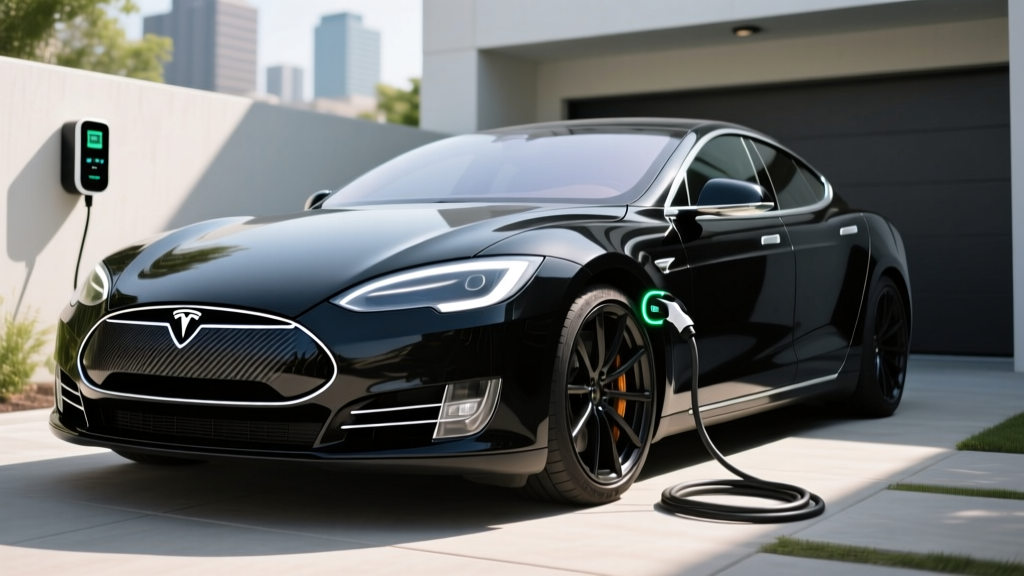
When Tesla launched the Model S P100D in late 2016, its 2.5-second 0-60 mph time in Ludicrous Mode shattered expectations for what a four-door sedan could do. It wasn't just quick — it was supercar-quick, wrapped in a premium electric package with over 300 miles of EPA range. Nearly a decade later, the Tesla P100D 0 to 60 record remains a touchstone for EV performance seekers, even as newer platforms from Lucid, Porsche, and Tesla itself have shifted the competitive landscape.
This review covers the P100D as a used EV purchase in 2026. Tesla discontinued the P100D trim after the 2019 model year, replacing it with the Performance and Plaid variants. If you're considering one on the secondary market, here's everything you need to know about range, charging, battery health, and ownership costs.
Performance: The Tesla P100D 0 to 60 Numbers That Started It All
The P100D's headline figure is its 0-60 mph time, but the full performance picture involves several modes and real-world variables:
| Specification | Tesla Model S P100D (2017–2019) |
|---|---|
| 0–60 mph (Ludicrous Mode) | 2.5 seconds |
| 0–60 mph (Sport Mode) | ~3.7 seconds |
| Quarter Mile | 10.9 seconds @ 125 mph |
| Horsepower (combined) | ~762 hp |
| Torque (combined) | ~791 lb-ft |
| Drivetrain | Dual Motor AWD |
| Top Speed | 155 mph (electronically limited) |
| Battery (usable) | ~100 kWh (NMC) |
| EPA Range (original) | 315 miles |
| MPGe (combined) | 102 MPGe |
| Efficiency | 33 kWh/100 mi |
| Curb Weight | ~4,941 lbs |
| Original Base MSRP | $134,500 (2017) |
The 2.5-second figure requires specific conditions: a fully charged battery (above 95% SoC), Ludicrous Mode enabled (which itself required a ~$10,000 option upgrade from Insane Mode on early builds), warm battery temperature, and a prepared surface. In everyday driving with a partial charge, expect 3.0–3.5 seconds — still blisteringly fast by any sedan standard.
The dual-motor setup uses an induction motor on the front axle and a larger induction motor on the rear. Unlike the permanent-magnet motors in Tesla's newer vehicles (Model 3, Model Y, and the 2021+ Model S Plaid), induction motors are slightly less efficient at part-load but offer robust peak power delivery without rare-earth magnets.
Real-World Range: What the 315-Mile EPA Sticker Actually Means
Real-World Expectations:
- Mixed driving (55–70 mph, moderate climate): 260–285 miles
- Sustained highway (75–80 mph): 230–255 miles
- Cold weather (below 32°F, heater on): 195–230 miles
- With battery degradation (8–10 years old): Subtract 8–15% from above figures
The P100D's 100 kWh NMC (nickel-manganese-cobalt) battery pack was the largest Tesla offered at the time. According to fueleconomy.gov, the original EPA combined rating was 102 MPGe with energy consumption of 33 kWh per 100 miles.
But real-world range depends heavily on driving style, speed, temperature, and — critically for a used purchase — battery degradation. NMC chemistry in early Tesla packs typically shows 8–12% capacity loss over the first 100,000 miles, with degradation rate slowing significantly after that. A 2017 P100D with 90,000 miles might realistically deliver 240–265 miles of mixed-use range on a full charge.
The P100D does not have a heat pump (that arrived with the 2021 Model S refresh). It uses resistive cabin heating, which draws substantially more energy in winter. Plan for meaningful range reduction in cold climates — a 30% drop is not unusual in sub-freezing highway driving.
Charging Speeds: Supercharger Access and Home Charging Reality
The P100D was built before Tesla's current Supercharger network speeds were available. Here's what you can expect at each charging level:
| Charging Level | Max Power | Speed | Notes |
|---|---|---|---|
| Level 1 (120V household) | ~1.4 kW | ~3–4 mi/hr | Emergency/trickle only |
| Level 2 (240V home, 48A) | 11.5 kW | ~31 mi/hr | Full charge in ~10 hours |
| Level 2 (240V home, 32A) | 7.7 kW | ~21 mi/hr | Common NEMA 14-50 setup |
| Tesla Supercharger V2 | 145 kW peak | ~170 mi in 30 min | 10–80% in ~35–40 min |
| Tesla Supercharger V3 | ~145 kW (limited) | ~170 mi in 30 min | P100D cannot use full 250 kW |
The P100D's charging architecture peaks at approximately 145 kW on DC fast charging, which was class-leading in 2017 but is now outpaced by the 250 kW capability of the refreshed Model S and the 350 kW architectures from Hyundai/Kia and Porsche. On a V3 Supercharger, the P100D will still draw its maximum ~145 kW, but the charge curve tapers significantly above 60% SoC. Expect a 10–80% session to take 35–40 minutes under ideal conditions.
For home charging, the onboard charger accepts up to 11.5 kW on a 48-amp Level 2 circuit (requiring a 60-amp breaker). This is adequate for overnight replenishment: a full 100 kWh charge from empty takes roughly 9–10 hours. Most owners charge from 20% to 80% daily, which takes about 5–6 hours on a standard Level 2 setup.
Connector note: The P100D uses Tesla's proprietary connector (now called NACS). With Tesla opening the Supercharger network to other manufacturers using NACS adapters, the P100D's native connector is now the de facto North American standard — an advantage for long-term charging access.
Pricing, Tax Credits, and Used Market Value in 2026
Tesla discontinued the P100D after the 2019 model year. The original MSRP ranged from $134,500 (base) to over $150,000 with options like Enhanced Autopilot, premium interior, and Ludicrous Mode. In the 2026 used market, P100D pricing varies significantly based on mileage, condition, and battery health:
| Condition | Mileage Range | Typical Used Price (2026) |
|---|---|---|
| Excellent (low miles, verified SoH >90%) | 30,000–50,000 | $48,000–$58,000 |
| Good (average wear, SoH 85–90%) | 60,000–85,000 | $38,000–$48,000 |
| Fair (higher miles, SoH 80–85%) | 90,000–120,000 | $28,000–$38,000 |
Federal Tax Credit Eligibility (Used EV Credit, IRS §25E)
The P100D does not qualify for the new-vehicle §30D credit (it's no longer sold new). However, it may qualify for the Used Clean Vehicle Credit (§25E), which provides up to $4,000 or 30% of the sale price (whichever is lower) for eligible used EVs. Key requirements per IRS guidelines:
- Sale price cap: The used vehicle must sell for $25,000 or less to qualify
- Buyer income limits: AGI cannot exceed $75,000 (single), $112,500 (head of household), or $150,000 (joint)
- Vehicle age: Must be at least 2 model years old (all P100Ds qualify)
- Dealer requirement: Must be purchased from a licensed dealer, not private party
- One-time use: The specific VIN can only claim this credit once every 3 years
Given current P100D market values, only higher-mileage examples in the $25,000-and-under range would qualify. Most P100D purchases will not meet the price cap. Always consult a tax professional before relying on credit eligibility.
Interior, Cargo, and Daily Practicality
The pre-refresh Model S (2012–2020) offers a spacious cabin that remains competitive with modern luxury sedans. Practicality highlights:
- Cargo volume: 26.3 cu ft (rear trunk) + 5.3 cu ft (frunk) = 31.6 cu ft total
- Rear legroom: 35.4 inches
- Front headroom: 38.8 inches
- Seating: 5 passengers standard (optional rear-facing third-row jump seats on earlier years, not available on P100D)
- Towing: Not rated for towing
The 17-inch center touchscreen (pre-refresh portrait orientation) controls nearly all vehicle functions. The P100D era introduced Tesla's MCU2 (Media Control Unit 2) with an Intel Atom processor — a meaningful upgrade over the sluggish MCU1 (Nvidia Tegra) found in 2012–2018 models. If you're shopping for a P100D, verify which MCU is installed, as MCU1 units are prone to failure and slow performance. Tesla offered a paid MCU upgrade program, and many owners have converted.
Build quality on pre-2020 Model S vehicles is a known weak point. Panel gaps, interior rattles, and cosmetic trim issues are common. These don't affect drivability but are worth inspecting carefully on any used example.
Warranty, Battery Health, and Long-Term Ownership Costs
The P100D shipped with Tesla's standard warranty coverage for its era:
- Battery & Drive Unit: 8 years / 150,000 miles, with a 70% minimum capacity retention guarantee
- New Vehicle Limited Warranty: 4 years / 50,000 miles
By 2026, nearly all P100Ds are beyond the basic vehicle warranty. Many are approaching or exceeding the 8-year battery warranty window (a 2017 model's 8-year coverage expired in 2025). This means battery replacement, if needed, will be an out-of-pocket expense.
A Model S 100 kWh battery replacement from Tesla currently costs between $13,000 and $22,000 depending on whether you receive a new or remanufactured pack. Third-party EV battery shops offer cell-level repairs for $5,000–$10,000. Before purchasing any P100D, request a battery health report (available through Tesla Service or third-party diagnostic tools like the Scan My Tesla app with an OBD-II adapter).
Known issues to inspect:
- Drive unit whine/failure: Early large-drive-unit (LDU) failures are documented, especially on high-mileage examples
- Air suspension: The P100D uses adaptive air suspension; struts and compressors wear and cost $1,500–$3,000 per corner to replace
- MCU1 screen delamination: The "yellowing" or bubbling of the screen is common on pre-MCU2 vehicles
- Door handles: The retractable handles are a known failure point across all pre-refresh Model S vehicles
Autopilot and Driver Assistance: Level 2, Not Self-Driving
The P100D's Autopilot and optional Enhanced Autopilot / Full Self-Driving (FSD) capability are SAE Level 2 systems. The driver must remain fully engaged, hands on the wheel, eyes on the road, at all times. These are not self-driving systems. Only Level 4 services like Waymo operate without a human driver — and those are limited to specific geofleets, not consumer vehicles.
The P100D launched with Tesla's Hardware 2.0 (HW2) suite of cameras and sensors. In 2017, Tesla began shipping HW2.5 with improved processing. Vehicles with HW2 or HW2.5 support basic Autopilot (lane centering, adaptive cruise) and Enhanced Autopilot features (auto lane change, navigate on Autopilot, summon), but they cannot run Tesla's latest FSD (Supervised) neural network stack, which requires HW3.0 or later.
If FSD capability is a priority, look for a P100D that Tesla has upgraded to HW3.0 (some were upgraded under warranty or through paid retrofit programs). Without HW3+, the vehicle is limited to legacy Autopilot features, which are functional but less capable than current systems.
P100D vs. the 2026 Competition: Is It Still Worth It?
The P100D occupies a unique niche: extreme straight-line performance with practical sedan packaging, available at a fraction of its original price. Here's how it stacks up against alternatives a buyer might cross-shop:
| Vehicle | 0–60 mph | EPA Range | Used/New Price | Key Trade-off |
|---|---|---|---|---|
| Tesla Model S P100D (2017–2019) | 2.5 sec | 315 mi (new) | $28K–$58K (used) | Outdated interior, aging battery |
| Tesla Model S Plaid (2025) | 1.99 sec | 396 mi | ~$89,990 (new) | 2–3× the price, but modern platform |
| Lucid Air Grand Touring (2025) | 3.0 sec | 516 mi | ~$109,900 (new) | Superior range and luxury, slower to 60 |
| Porsche Taycan Turbo S (2025) | 2.4 sec | 283 mi | ~$190,000+ (new) | Handles better, far more expensive |
| Tesla Model 3 Performance (2025) | 2.9 sec | 315 mi | ~$52,990 (new) | Smaller, less cargo, but modern + warranty |
The P100D's value proposition is clear: nothing else at its used price point delivers sub-3-second acceleration. But buyers must weigh that against aging hardware, potential battery replacement costs, and a pre-refresh interior that feels dated compared to a 2025 Model 3 Performance.
- You want supercar-level acceleration under $50,000
- You have home charging and don't rely on DC fast charging for daily needs
- You can budget $3,000–$5,000/year for potential maintenance (suspension, drive unit, MCU)
- You value the Supercharger network for road trips
- You want a warranty-backed battery with minimal degradation risk
- You need modern FSD hardware for daily commuting assistance
- You prioritize interior luxury and build quality over raw acceleration
- You drive in extreme cold and need maximum range retention
Pros and Cons at a Glance
- 2.5-second 0–60 mph remains elite even by 2026 standards
- 315-mile EPA range (new) was class-leading; still usable with degradation
- Tesla Supercharger network access for reliable road-trip charging
- Spacious sedan with 31.6 cu ft total cargo (trunk + frunk)
- NACS connector is now the North American standard
- Over-the-air updates still add features to older vehicles
- Dual motor AWD provides excellent all-weather traction
- Pre-refresh interior and build quality feel dated
- DC fast charging limited to ~145 kW (slower than modern EVs)
- No heat pump — significant cold-weather range loss
- Battery warranty expired or expiring; replacement costs $13K–$22K
- HW2/2.5 cannot run latest FSD (Supervised) software
- Air suspension and door handles are known failure points
- Used EV tax credit unlikely due to $25K price cap
Frequently Asked Questions
What is the real-world range of the Tesla P100D in 2026?
A well-maintained P100D with 85–90% battery health will deliver approximately 240–265 miles in mixed driving, 215–240 miles on the highway, and 180–210 miles in cold weather. The original 315-mile EPA figure assumed a brand-new battery under ideal conditions.
How fast does the P100D charge at home and on the road?
At home on a 48-amp Level 2 charger, the P100D adds about 31 miles of range per hour (11.5 kW), fully charging in roughly 10 hours. On a Tesla Supercharger, it peaks at approximately 145 kW, reaching 80% from 10% in about 35–40 minutes. It cannot utilize the 250 kW speeds of V3 Superchargers.
Does the Tesla P100D qualify for any federal tax credit?
Not the new-vehicle §30D credit, since it's no longer sold new. It may qualify for the Used Clean Vehicle Credit (§25E) of up to $4,000, but only if the sale price is $25,000 or less and the buyer meets income caps ($75K single / $150K joint). Most P100Ds sell above this threshold. Consult a tax professional for your specific situation. See IRS §25E guidelines.
Is the P100D worth buying over a new Model 3 Performance?
It depends on priorities. The P100D is faster to 60 (2.5 vs 2.9 seconds), roomier, and cheaper on the used market. But the Model 3 Performance comes with a full warranty, modern HW4.0 Autopilot hardware, a heat pump for better cold-weather range, faster 250 kW charging, and a new interior. If reliability and low maintenance matter more than having the absolute quickest 0–60 time, the Model 3 Performance is the safer buy.
What battery chemistry does the P100D use?
The P100D uses NMC (nickel-manganese-cobalt) lithium-ion cells, specifically Panasonic 18650-format cells arranged in a 100 kWh pack. NMC offers high energy density but degrades faster than LFP (lithium iron phosphate) chemistry used in some newer Tesla Standard Range models. Expect 8–15% capacity loss over the battery's first decade depending on charging habits and climate exposure.
Can the P100D be upgraded to Tesla's latest FSD hardware?
Some P100D vehicles received HW3.0 upgrades through Tesla's warranty or retrofit programs. If the car still has HW2 or HW2.5, it cannot run Tesla's current FSD (Supervised) neural network software. Verify the hardware version in the vehicle's Software menu before purchasing if FSD is important to you.
What should I inspect before buying a used P100D?
Prioritize: (1) a battery health report showing current capacity vs. original, (2) air suspension function at all ride heights, (3) drive unit noise under hard acceleration, (4) MCU version (MCU1 vs MCU2), and (5) service history for door handle and window regulator repairs. A pre-purchase inspection at a Tesla Service Center or qualified EV shop is strongly recommended.