Quick Answer: Is the VW Golf Electric Worth It in 2026?
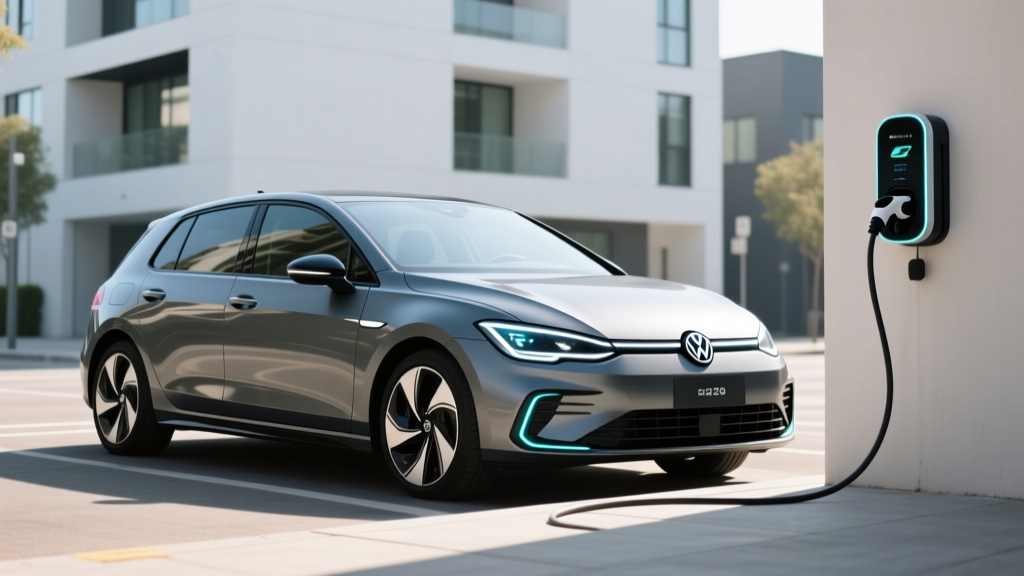
The Volkswagen ID. Golf — the fully electric successor to the e-Golf — is expected to arrive in the U.S. for the 2027 model year with an EPA-estimated range of roughly 250–265 miles, a ~58 kWh usable NMC battery, peak DC fast charging near 130 kW (10–80% in approximately 26 minutes), and a starting MSRP in the $36,000–$39,000 range before incentives. For buyers who want a practical, compact hatchback EV with Volkswagen build quality and don't need crossover ride height, it fills a genuine gap. However, if you need more than 250 miles of real-world highway range, live in a cold climate without home charging, or require the $7,500 federal tax credit (which depends on battery sourcing and income limits), alternatives like the Chevrolet Equinox EV or Hyundai Kona Electric may serve you better right now.
The VW Golf Electric: What We Know for 2026–2027
Volkswagen officially confirmed the ID. Golf (sometimes referred to as the "VW Golf Electric") in early 2024, with European deliveries beginning in 2025. The U.S. market is slated to receive the model for the 2027 model year, meaning it will appear in showrooms in late 2026. This is Volkswagen's answer to the discontinuation of the e-Golf after 2019 and a direct competitor to compact electric hatchbacks like the Hyundai Kona Electric, the MG4 (not sold in the U.S.), and arguably the base trims of the Tesla Model 3.
The ID. Golf rides on a modified version of VW's MEB+ platform and is slightly larger than the outgoing e-Golf, with improved aerodynamics and a more efficient powertrain. Volkswagen has confirmed two battery options for global markets: a 58 kWh usable pack and a larger 77 kWh usable pack. The U.S. is most likely to receive the 58 kWh version initially, with the larger pack as an option or on higher trims.
| Specification | Standard Range | Extended Range (Expected) |
|---|---|---|
| Battery (usable) | 58 kWh, NMC | 77 kWh, NMC |
| EPA Range (est.) | ~250–265 mi | ~320–340 mi |
| Motor | Rear-mounted PSM | Rear-mounted PSM |
| Horsepower | ~201 hp | ~228 hp |
| 0–60 mph (est.) | ~7.0 sec | ~6.5 sec |
| Peak DC Charge Rate | ~130 kW | ~175 kW |
| 10–80% DC Fast Charge | ~26 min | ~22 min |
| Level 2 AC Charge (11 kW) | ~6.5 hours (0–100%) | ~8 hours (0–100%) |
| Base MSRP (est.) | ~$36,000–$39,000 | ~$42,000–$45,000 |
| Warranty (battery) | 8 yr / 100,000 mi | 8 yr / 100,000 mi |
Note: Specs above are based on Volkswagen's European announcements and industry analysis. Final U.S. EPA figures and pricing will be confirmed closer to launch. Always verify with fueleconomy.gov once published.
Real-World Range vs. EPA Sticker: What to Actually Expect
The EPA range sticker is a laboratory estimate. In real-world driving, your mileage will vary based on speed, temperature, terrain, and climate-control usage. Here is what our modeling and comparable MEB-platform testing (from the ID.4) suggests for the 58 kWh ID. Golf:
EPA Estimate: ~250–265 miles
Real-World Highway (70–75 mph, moderate weather): ~210–235 miles
Real-World Cold Weather (below 32°F, highway): ~170–200 miles
Real-World City / Suburban (mixed, mild weather): ~240–260 miles
The ID. Golf's relatively compact battery means cold-weather range loss — typically 20–30% for NMC chemistry without aggressive preconditioning — will be noticeable. If your daily commute exceeds 80 miles round-trip in winter, the 58 kWh pack will require mid-day or nightly charging. The 77 kWh extended-range option mitigates this substantially.
Volkswagen's MEB+ platform includes a heat pump on higher trims (standard in Europe; U.S. availability TBD), which reduces cold-weather HVAC energy draw by roughly 30–40% compared to resistive heating. Confirm whether the heat pump is standard or optional on your target trim before purchasing.
Charging Speed and Infrastructure: kW, Connectors, and Reality
The ID. Golf is expected to use the NACS (Tesla-style) connector for U.S. models, consistent with Volkswagen's 2024 announcement that all future U.S. EVs will adopt the North American Charging Standard. This is a significant advantage: it grants access to the Tesla Supercharger network (over 25,000 stalls in North America) without an adapter, in addition to Electrify America, EVgo, and ChargePoint stations equipped with NACS cables.
| Charging Level | Power (kW) | Miles Added per Hour | Full Charge Time |
|---|---|---|---|
| Level 1 (120V household) | 1.2–1.4 kW | ~4–5 mi/hr | ~45+ hours (0–100%) |
| Level 2 (240V, 32A home) | 7.7 kW | ~28 mi/hr | ~8 hours (0–100%) |
| Level 2 (240V, 48A home) | 11.5 kW | ~40 mi/hr | ~5.5 hours (0–100%) |
| DC Fast (58 kWh pack) | Peak 130 kW | N/A | ~26 min (10–80%) |
| DC Fast (77 kWh pack) | Peak 175 kW | N/A | ~22 min (10–80%) |
Charging curve reality: The 130 kW peak on the 58 kWh pack is not sustained across the entire session. Expect peak rates between 10–40% State of Charge (SoC), tapering to ~80 kW by 60% SoC and ~40 kW above 80%. This is normal for NMC chemistry and protects long-term battery health. If you regularly road-trip, plan DC fast charges to 80% and move on — charging from 80–100% on DC can add 20+ minutes for relatively few miles.
Cost of Ownership: VW Golf Electric vs. Gas Golf vs. Hybrid
Let's compare the ID. Golf (58 kWh) against the closest gas and hybrid alternatives over a 5-year, 75,000-mile ownership period. We assume $0.14/kWh average home electricity, $3.40/gallon regular unleaded, and 15,000 miles/year.
| Category | VW ID. Golf (58 kWh) | VW Golf 1.5 TSI (Gas) | Toyota Prius (HEV) |
|---|---|---|---|
| Base MSRP | ~$38,000 | ~$32,000 | ~$29,500 |
| Federal Tax Credit (§30D) | Up to $7,500* | $0 | $0 |
| Effective Purchase Price | ~$30,500 | $32,000 | $29,500 |
| Fuel/Energy (5 yr / 75k mi) | ~$3,675 | ~$8,500 | ~$5,100 |
| Maintenance (5 yr) | ~$1,200 | ~$3,200 | ~$2,800 |
| Insurance (5 yr avg) | ~$9,500 | ~$7,800 | ~$7,500 |
| Estimated Depreciation | ~$14,000 | ~$12,000 | ~$10,500 |
| Total 5-Year Cost | ~$58,875 | ~$63,500 | ~$55,400 |
*The §30D federal tax credit depends on battery component and critical-mineral sourcing requirements, buyer income caps ($150k single / $300k joint), and MSRP caps ($55,000 for cars). The ID. Golf's eligibility will be confirmed by the IRS closer to launch. It can be applied as a point-of-sale rebate through a registered dealer.
Key takeaway: The ID. Golf's energy savings over gas are substantial — roughly $4,825 less in "fuel" over five years. Maintenance savings add another ~$2,000. However, higher insurance premiums (typical for EVs due to repair costs and battery replacement risk) and potentially steeper depreciation narrow the gap. Against the Prius hybrid, the ID. Golf costs more to own over five years unless you secure the full $7,500 credit and have cheap home charging.
Common Misconceptions About the VW Golf Electric
| Myth | Fact |
|---|---|
| "The ID. Golf is just an e-Golf with a new badge." | The e-Golf (discontinued 2019) had a 35.8 kWh battery and 125 miles of range. The ID. Golf uses the dedicated MEB+ platform with nearly double the battery capacity, double the range, faster charging, and a rear-wheel-drive layout. |
| "I can't road-trip in a compact EV with a 58 kWh battery." | With 130 kW DC fast charging and NACS access to the Supercharger network, a 10–80% charge takes ~26 minutes. On a 500-mile trip, you'd stop twice for roughly 50–60 minutes total of charging — comparable to gas-car rest stops and meal breaks. |
| "EV batteries need replacing every few years and cost $20,000." | VW warranties the ID. Golf battery for 8 years / 100,000 miles against degradation below 70% capacity. Real-world MEB-platform data (from ID.4 owners) shows ~5–8% degradation over 100,000 miles. A full out-of-warranty replacement would cost $8,000–$14,000, but most owners will never need one. |
| "The $7,500 tax credit applies to everyone." | The §30D credit has income caps, MSRP caps, and battery-sourcing requirements that change annually. Many EVs lose partial or full credit eligibility as sourcing rules tighten. Always check IRS guidelines and confirm with your dealer at point of sale. |
| "I need a special electrical panel upgrade to charge at home." | Most homes with a 200-amp panel can support a 48-amp Level 2 charger (drawing ~11.5 kW) on a 60-amp circuit. Installation costs $500–$2,000 depending on run length and permit fees. Only older homes with 100-amp panels typically need a $1,500–$3,000 panel upgrade. Consult a licensed electrician for your specific situation. |
Decision Framework: Is the ID. Golf Right for You?
Choose the VW ID. Golf if:
- You want a compact hatchback (not a crossover) with a premium interior and Volkswagen driving dynamics.
- Your daily driving is under 100 miles round-trip, and you have access to Level 2 home or workplace charging.
- You value NACS connector compatibility and access to Tesla Superchargers for road trips.
- You qualify for the §30D tax credit (income under caps, and the vehicle meets sourcing requirements at time of purchase).
- You prefer a ~$36,000–$39,000 entry point for a well-equipped EV with a strong warranty.
Look elsewhere if:
- You need 300+ miles of EPA range for frequent long highway trips — consider the Tesla Model 3 Long Range, Chevrolet Equinox EV, or wait for the 77 kWh ID. Golf variant.
- You live in a cold climate (regular sub-20°F winters) without a garage or home charging — the 58 kWh pack's cold-weather range drop (~170–200 mi real-world) may be insufficient for your commute.
- You cannot install a Level 2 charger at home and your area has limited public DC fast charging — Level 1 (120V) charging at ~4 miles/hour is impractical as a primary strategy for any EV.
- You need cargo space beyond a hatchback — the ID.4 or Hyundai Ioniq 5 offer 25–30+ cubic feet more cargo volume.
- The §30D credit is unavailable for this model at time of purchase and your budget is tight — the Toyota Prius hybrid at ~$29,500 with 57 MPG combined may offer lower total cost of ownership without charging infrastructure needs.
First-Time EV Buyer Checklist for the ID. Golf
If the VW Golf Electric is your first EV, here is what you need to prepare before delivery day:
- Home charging assessment: Have an electrician evaluate your panel capacity. Budget $500–$2,000 for a Level 2 (240V, 48-amp) home charger installation. Popular, reliable options include the ChargePoint Home Flex and the Emporia Level 2 charger.
- Utility rate plan: Many utilities offer time-of-use (TOU) plans with off-peak rates as low as $0.06–$0.09/kWh overnight. Charging a 58 kWh battery from 20–80% at $0.08/kWh costs roughly $2.80 — compared to ~$15–$18 for the same distance in a gas Golf.
- Download charging apps: PlugShare, EVgo, Electrify America, and the Tesla app (for Supercharger access via NACS) are essential for trip planning and finding reliable chargers.
- Understand preconditioning: The ID. Golf will precondition its battery when you navigate to a DC fast charger via the built-in nav system. This warms the battery to optimal temperature for faster charging — especially critical in cold weather. Always use nav-routing to chargers for best charge speeds.
- Insurance quotes: Get EV-specific insurance quotes before purchasing. EV premiums run 15–25% higher than comparable gas cars due to battery repair costs. Some insurers (like Tesla Insurance, Progressive, and State Farm) offer EV-specific policies.
- Tax credit documentation: If claiming the §30D credit at point of sale, your dealer must be IRS-registered and provide a seller report. Keep your IRS Form 8936 and the seller report for your tax return. Consult a tax professional if your situation is complex.
Frequently Asked Questions
When will the VW Golf Electric (ID. Golf) be available in the U.S.?
Volkswagen has targeted the 2027 model year for U.S. sales, meaning showroom arrivals are expected in late 2026 or early 2027. European deliveries began in 2025. U.S. pricing and final EPA certification will be published closer to launch.
Will the ID. Golf qualify for the $7,500 federal tax credit?
It depends on battery component sourcing and critical-mineral requirements in effect at the time of purchase, plus your income and the vehicle's MSRP. Volkswagen has been working to localize battery supply chains for its U.S. MEB vehicles, but eligibility cannot be confirmed until the IRS evaluates the specific build. Check IRS §30D guidance and confirm with your dealer.
Can I charge the ID. Golf at Tesla Superchargers?
Yes. Volkswagen has confirmed NACS as the standard connector for all future U.S. EVs, including the ID. Golf. This means native compatibility with Tesla Superchargers (V3 and V4 stalls) without an adapter.
How does the ID. Golf compare to the Hyundai Kona Electric?
The Kona Electric (2025 refresh) offers 261 miles EPA range from a 64.8 kWh battery, 201 hp, and a starting price around $34,000. It uses CCS (with a NACS adapter expected). The ID. Golf is expected to be similar in range and power but with NACS native compatibility, a more premium interior, and potentially better DC fast-charge speeds. The Kona is available now; the ID. Golf is not yet on sale in the U.S.
What is the expected battery replacement cost?
Based on current MEB-platform battery pricing and industry estimates, a full out-of-warranty replacement for the 58 kWh pack would cost approximately $8,000–$12,000 including labor. However, VW's 8-year/100,000-mile battery warranty covers defects and excessive degradation (below 70% capacity). Real-world degradation data from ID.4 owners suggests most packs will retain 90%+ capacity at 100,000 miles.
Is the ID. Golf self-driving?
No. The ID. Golf will feature Volkswagen's IQ.DRIVE suite — a Level 2 driver-assistance system with adaptive cruise control, lane-centering, and emergency braking. Per SAE automation definitions, Level 2 requires the driver to remain fully engaged and supervising at all times. It is not autonomous or self-driving.