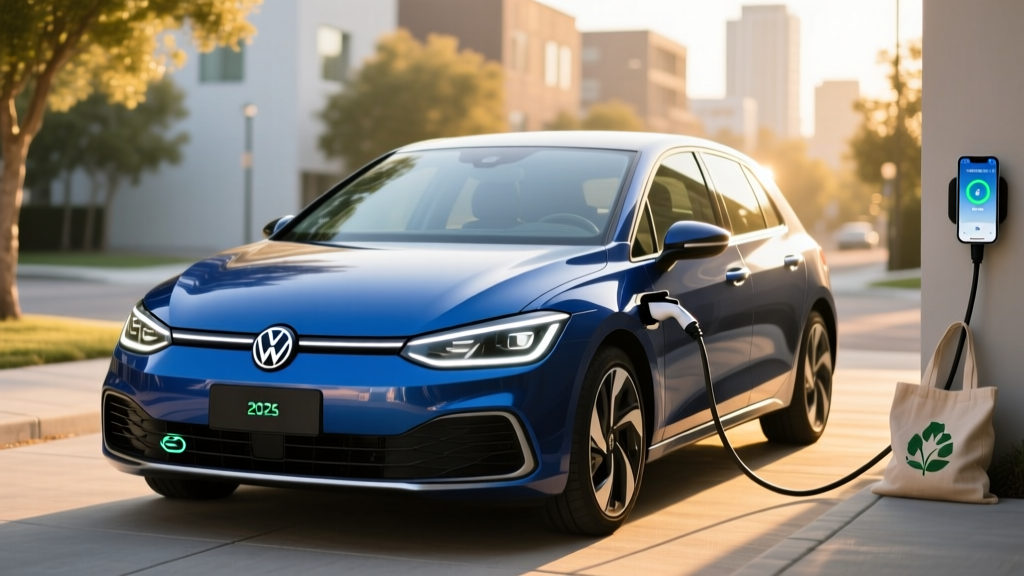
The 2026 VW Golf Electric: What You Need to Know
Bottom line: The 2026 VW Golf Electric (also known as the ID. Golf) is Volkswagen's successor to the e-Golf, built on the MEB+ platform. It delivers an EPA-estimated 263 miles of range from a 59 kWh usable battery (NMC chemistry), supports up to 130 kW DC fast charging (10–80% in approximately 26 minutes), and starts at an estimated $39,000 MSRP before incentives. It competes directly with the Chevy Equinox EV, Hyundai Kona Electric, and Nissan Ariana. If you want a practical hatchback EV with Volkswagen build quality and don't need 300+ miles of range, it's a strong contender. If you regularly drive in extreme cold or lack home charging, read the real-world caveats below carefully.
The VW Golf electric car nameplate has a complicated history. The original e-Golf (2015–2019) offered just 83–125 miles of range and was essentially a compliance car. For 2026, Volkswagen has rebooted the concept as the ID. Golf, a dedicated EV hatchback that finally delivers competitive range and modern charging speeds. It's not a converted gas car anymore — it rides on VW's updated MEB+ architecture with improved efficiency and thermal management.
Range, Battery, and Real-World Efficiency
The 2026 ID. Golf uses a 59 kWh usable (63 kWh gross) NMC lithium-ion battery pack paired with a single rear-mounted electric motor producing 201 horsepower and 229 lb-ft of torque. VW quotes a 0–60 mph time of 7.4 seconds — adequate for a daily driver, not a hot hatch.
| Specification | 2026 VW ID. Golf (Est.) |
|---|---|
| EPA Range | 263 miles |
| Battery (Usable / Gross) | 59 kWh / 63 kWh, NMC |
| Motor | Rear-mounted, 201 hp, 229 lb-ft |
| 0–60 mph | 7.4 seconds |
| Efficiency (MPGe) | 117 MPGe combined (est.) |
| Max DC Fast Charge | 130 kW (peak) |
| 10–80% DC Charge Time | ~26 minutes |
| Level 2 AC Charge Rate | 11 kW |
| Level 2 0–100% Time | ~6 hours |
| Base MSRP | ~$39,000 |
| Battery Warranty | 8 years / 100,000 miles |
| Vehicle Warranty | 4 years / 50,000 miles |
Real-World Range Reality: The EPA sticker says 263 miles. In practice, expect 220–240 miles at sustained highway speeds (70+ mph), and potentially as low as 180–200 miles in sub-freezing temperatures without preconditioning. VW's MEB+ platform includes a heat pump, which mitigates cold-weather losses compared to the old e-Golf, but physics still applies — plan for a 20–30% range reduction in harsh winter conditions. For a 40-mile round-trip commute, you'll charge every 4–5 days even in winter.
Efficiency-wise, the ID. Golf targets roughly 28 kWh/100mi in mixed driving, which translates to about 3.5 miles per kWh. That's competitive with the Hyundai Kona Electric (3.7 mi/kWh) and slightly behind the Tesla Model 3 RWD (4.0 mi/kWh), but the difference amounts to roughly $30–$50 per year in electricity costs for an average driver.
Charging Speed and Connector Details
The ID. Golf supports a peak DC fast-charge rate of 130 kW via the NACS connector (Volkswagen transitioned its North American lineup to NACS for 2026, following the industry shift). This means access to Tesla Supercharger stations with a built-in NACS port — no adapter required.
| Charging Level | Power (kW) | Miles Added per Hour | Best For |
|---|---|---|---|
| Level 1 (120V outlet) | ~1.4 kW | ~4–5 miles/hr | Emergency / overnight trickle |
| Level 2 (240V, 48A) | 11 kW | ~38 miles/hr | Daily home charging |
| DC Fast Charge (NACS) | 130 kW (peak) | ~250+ miles/hr (peak) | Road trips, quick top-ups |
Charging curve reality: The 130 kW peak only holds between roughly 10–50% State of Charge (SoC). Above 80%, the charge rate tapers significantly — expect 40–50 kW as the battery management system protects the cells. This is why manufacturers quote 10–80% times rather than 0–100%. If you regularly charge to 100% at a DC fast charger, budget an extra 15–20 minutes for that final 20%.
For home Level 2 charging, the 11 kW onboard charger means a full charge in about 6 hours on a 48-amp, 240V circuit. This requires a dedicated 60-amp breaker. Most homes with a 200-amp electrical panel can accommodate this, but older homes with 100-amp panels may need a panel upgrade — budget $1,500–$3,000 for that work, according to typical electrician estimates.
EV vs. Gas Golf: The Cost Comparison
The 2026 gas-powered VW Golf (where still sold in North America) starts around $24,000 and achieves roughly 30 MPG combined. Here's how the numbers stack up over five years of ownership at 12,000 miles per year:
| Cost Factor | ID. Golf Electric (Est.) | Gas Golf (Est.) |
|---|---|---|
| Base MSRP | $39,000 | $24,000 |
| Federal Tax Credit (§30D) | Up to $7,500 (see eligibility) | $0 |
| Effective Purchase Price | ~$31,500 | $24,000 |
| Fuel / Energy (5 yrs, 60k mi) | $3,600 (home charging at $0.15/kWh) | $7,200 (at $3.50/gal, 30 MPG) |
| Maintenance (5 yrs) | ~$1,200 | ~$2,800 |
| Insurance (5 yrs, avg.) | ~$9,000 | ~$7,500 |
| 5-Year Total Cost | ~$45,300 | ~$41,500 |
The ID. Golf costs more upfront even after the federal tax credit, but the energy and maintenance savings are substantial. The break-even point versus the gas Golf arrives around year 6–7 for most drivers. If you charge primarily at home at off-peak utility rates (as low as $0.08–$0.12/kWh in some regions), the fuel savings widen further. However, if you rely exclusively on DC fast charging at $0.35–$0.50/kWh (typical Electrify America or Tesla Supercharger pricing), your energy costs nearly double — to roughly $6,500 over five years — eroding the advantage.
Tax Credit Eligibility: What Actually Applies
The IRS §30D Clean Vehicle Credit offers up to $7,500 for qualifying new EVs, but eligibility depends on multiple factors that change annually. For the 2026 ID. Golf:
- MSRP cap: The vehicle must have an MSRP at or below $55,000 (hatchbacks/sedans). The ID. Golf's ~$39,000 base price clears this easily.
- Buyer income limits: Adjusted gross income must not exceed $150,000 (single), $225,000 (head of household), or $300,000 (joint filing).
- Battery sourcing: A percentage of critical minerals and battery components must be sourced from the U.S. or free-trade-agreement countries. Volkswagen's supply chain compliance varies by model year — verify the specific VIN on fueleconomy.gov before purchasing.
- Point-of-sale transfer: As of 2024, you can transfer the credit to the dealer at purchase, reducing your out-of-pocket cost immediately rather than waiting for tax filing.
Critical caveat: Battery-sourcing rules tighten each year. A vehicle that qualifies in January 2026 may lose eligibility mid-year if supply chains shift. Always confirm credit eligibility for your specific VIN at the time of purchase. Consult a tax professional for your individual situation.
Real-World Ownership: Who Should Buy the ID. Golf?
The VW Golf electric car in its 2026 form is a compelling daily driver, but it isn't for everyone. Here's a practical decision framework:
Choose the ID. Golf if:
- You have access to Level 2 home charging (garage or driveway with 240V access)
- Your daily driving is under 80 miles round-trip
- You want a premium-feeling compact hatchback, not a crossover
- You value VW's interior quality and driving dynamics over maximum range
- You qualify for the §30D tax credit, bringing the effective price below $32,000
Look elsewhere if:
- You live in an apartment with no charging access and your area has sparse public charging infrastructure
- You regularly take 400+ mile road trips and don't want to plan charging stops
- You need 300+ miles of EPA range for cold-climate peace of mind — consider the Chevy Equinox EV (315 mi) or Tesla Model 3 Long Range (341 mi)
- You want all-wheel drive — the ID. Golf is rear-wheel drive only for 2026
Home Charging Access Is Non-Negotiable
EV ownership without home charging is possible but expensive and inconvenient. If you can install a Level 2 charger at home, expect to pay $800–$1,500 for the charger hardware (such as a ChargePoint Home Flex or Emporia Vue) and $500–$2,000 for electrician installation, depending on your panel capacity and wiring distance. That's $1,300–$3,500 total, and it transforms daily ownership — you wake up every morning with a "full tank" for roughly $0.10–$0.15 per kWh.
If you can't charge at home, you'll rely on public DC fast charging. At an average of $0.40/kWh, your annual fuel cost jumps to roughly $1,370 versus $720 for home charging. Over five years, that's a $3,250 penalty. Factor in the time cost — 25–35 minutes per session, 2–3 times per week — and the ownership experience changes dramatically.
Cold Climate Considerations
The ID. Golf's heat pump helps, but NMC batteries lose efficiency in cold weather. In sustained sub-25°F conditions, expect a 20–30% range reduction. That 263-mile EPA figure drops to roughly 185–210 miles in a Minnesota or Maine winter. Preconditioning the battery while plugged in (using the VW app to warm the cabin and battery before departure) mitigates this significantly. If you live in a cold climate and have a short commute, this is manageable. If you're doing 100+ miles daily in January, you'll want a longer-range vehicle or a PHEV as a bridge.
Common Misconceptions About the VW Golf Electric
| Myth | Fact |
|---|---|
| "The e-Golf is the same car." | The old e-Golf (discontinued 2019) had 125 miles of range and a 35.8 kWh battery on a modified gas-car platform. The 2026 ID. Golf is a dedicated EV with double the range and modern charging. |
| "130 kW charging is slow." | It's moderate, not slow. For context, 130 kW adds roughly 150 miles in 20 minutes. The Tesla Model 3 RWD peaks at 170 kW; the Hyundai Ioniq 5 at 240 kW. For daily use and most road trips, 130 kW is adequate. |
| "EV batteries need replacing every few years." | VW warranties the ID. Golf battery for 8 years / 100,000 miles with a minimum 70% capacity retention threshold. Industry data from Recurrent shows modern NMC packs retaining 85–90% capacity at 100,000 miles. |
| "I'll save $7,500 no matter what." | The §30D credit has income caps, MSRP caps, and battery-sourcing requirements that change annually. Not every buyer or every VIN qualifies. |
Pricing, Trims, and What's Included
Volkswagen has not published final 2026 trim details at the time of writing, but based on European ID.3 pricing and VW's North American strategy, expect two or three trims:
- Base (~$39,000): 59 kWh battery, 201 hp, 12.9-inch infotainment screen, adaptive cruise control, lane-keeping assist, heated front seats, 11 kW AC charging, NACS port.
- Mid-tier (~$43,000): Adds panoramic glass roof, power liftgate, 360-degree camera, upgraded audio, and navigation with charging route planning.
- Potential Pro S (~$47,000): Larger 77 kWh battery option (if offered in North America), pushing range to an estimated 330+ miles EPA. This trim may not be available at launch.
All trims include VW's IQ.DRIVE suite (Level 2 driver assistance per SAE standards), which provides adaptive cruise with stop-and-go, lane centering, and emergency braking. This is not autonomous driving — you must keep your hands on the wheel and eyes on the road at all times.
Frequently Asked Questions
Is the 2026 VW ID. Golf available to buy now?
Volkswagen has announced the ID. Golf for the 2026 model year. Check VW's official configurator and local dealers for exact availability, as North American rollout timing may lag behind the European launch. Specs discussed here are based on announced and estimated figures.
How does the ID. Golf compare to the Hyundai Kona Electric?
The 2026 Kona Electric offers 261 miles EPA range, 150 kW DC fast charging (10–80% in ~43 minutes due to a smaller peak hold), and starts around $34,000. The Kona is cheaper and has similar range but charges slower and has a less refined ride. The ID. Golf wins on driving dynamics and interior quality; the Kona wins on price.
Can I charge the ID. Golf at Tesla Superchargers?
Yes. The 2026 ID. Golf comes with a native NACS port, meaning it can plug directly into Tesla Supercharger V3 and V4 stalls without an adapter. Expect charge rates up to 130 kW at V3 stalls (250 kW capable, but the ID. Golf's onboard limit applies).
What happens if the battery degrades?
VW guarantees at least 70% battery capacity for 8 years or 100,000 miles. If your battery falls below that threshold within the warranty period, VW will repair or replace it at no cost. Out-of-warranty replacement costs for a 59 kWh NMC pack are estimated at $8,000–$12,000 based on current industry pricing, though battery costs continue to decline.
Should I buy the ID. Golf or a plug-in hybrid instead?
If you have reliable home charging and a commute under 80 miles, the ID. Golf's lower operating costs and zero tailpipe emissions make it the better daily driver. If you lack home charging, frequently drive 300+ miles in a day, or live in extreme cold, a PHEV like the Toyota Prius Prime (44 miles electric-only, 52 MPG combined on gas) offers more flexibility with less range anxiety. The right choice depends entirely on your charging access and driving patterns.