Quick Answer: The 2026 Volkswagen ID.3 (the EV Golf's global successor) and the upcoming ID.2all represent VW's electric hatchback play. If you're searching for an "EV Golf VW," you're likely looking at the used e-Golf (2015–2019, ~125-mile EPA range, ~$12,000–$18,000 used) or the newer ID.4 crossover as VW's current US electric offering. The e-Golf remains a solid used-city-EV pick if your daily commute is under 80 miles and you can charge at home. For a new VW EV in 2026, the ID.4 is the only option available stateside, starting around $39,735 with an EPA-estimated 291 miles of range.
What Happened to the VW e-Golf?
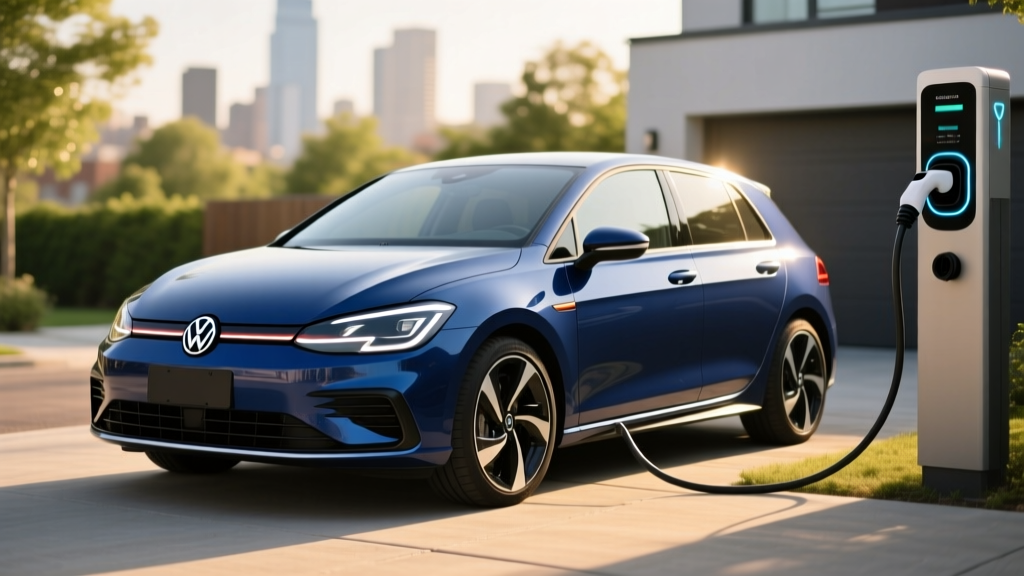
Volkswagen discontinued the e-Golf after the 2019 model year in the United States, replacing its electrified hatchback strategy with the MEB-platform ID. family. The e-Golf was built on the Mk7 Golf chassis with a 35.8 kWh battery pack (NMC chemistry) producing 134 horsepower and an EPA-estimated 125 miles of range. It was a compliance car in many ways, but owners loved its refined ride, Golf-normalcy, and adequate city efficiency.
In Europe, VW launched the ID.3 as the spiritual e-Golf successor, but it was never sold in the US. For 2026, VW's American EV lineup centers on the ID.4 compact crossover and the ID. Buzz retro van. The much-anticipated ID.2all — a true sub-$30,000 electric hatchback that would finally be the "EV Golf" American buyers want — remains in production planning, with US availability not confirmed before 2027 at the earliest.
Used e-Golf vs. New ID.4: Spec Comparison
If you're cross-shopping a used e-Golf against a new ID.4, the generational leap is significant. Here's how they stack up on the numbers that matter:
| Spec | 2019 VW e-Golf (Used) | 2026 VW ID.4 Pro S (New) |
|---|---|---|
| EPA Range | 125 miles | 291 miles |
| Battery Capacity | 35.8 kWh (NMC) | 82 kWh usable (NMC) |
| Horsepower | 134 hp | 282 hp (RWD) |
| 0–60 mph | 9.6 sec | 7.7 sec |
| DC Fast Charge Peak | 50 kW (CCS) | 170 kW (CCS) |
| 10–80% DC Fast Charge | ~40 min | ~29 min |
| Level 2 Charge Rate | 7.2 kW | 11 kW |
| Efficiency | 119 MPGe | 104 MPGe |
| Cargo Volume | 22.8 cu ft | 30.3 cu ft |
| Typical Price (2026) | $12,000–$18,000 | From $39,735 MSRP |
| Battery Warranty Remaining | Varies (8yr/100k from new) | 8 yr / 100,000 mi |
The ID.4 is a dramatically more capable road-trip vehicle. But if your need is purely urban commuting with home charging, the e-Golf's lower entry price and smaller footprint still have appeal.
Real Costs: e-Golf vs. Gas Golf vs. ID.4
The economics of going electric depend heavily on your local electricity rate, driving volume, and whether you can install a Level 2 charger at home. Below is a five-year cost comparison assuming 12,000 miles/year, $0.16/kWh home electricity, and $3.60/gallon regular unleaded.
| 5-Year Cost Factor | 2019 e-Golf (Used, $15k) | 2024 Golf GTI Gas (~$33k) | 2026 ID.4 Pro S ($39.7k) |
|---|---|---|---|
| Purchase Price | $15,000 | $33,000 | $39,735 |
| Fuel/Energy (60k mi) | $2,880 | $7,636 | $3,696 |
| Maintenance (5 yr) | ~$1,200 | ~$3,200 | ~$1,500 |
| Insurance (avg 5 yr) | ~$6,600 | ~$7,200 | ~$8,100 |
| Home Charger Install | $600 (Level 2) | — | $600 (Level 2) |
| Estimated Federal Credit | Up to $4,000 (used EV, §25E) | None | Varies (§30D — check IRS sourcing rules) |
| Approx. 5-Yr Total | ~$21,680 | ~$51,036 | ~$53,631 |
The used e-Golf is a cost-destroyer in the best way — low purchase price, minimal energy cost, and almost no drivetrain maintenance (no oil changes, no spark plugs, no transmission fluid). The ID.4 is more expensive upfront but slashes fuel spend versus gas. According to fueleconomy.gov, the ID.4's annual fuel cost is approximately $740 versus $1,900 for a comparable gas crossover.
Real-World Range and Charging: What the Sticker Doesn't Tell You
EPA range is a starting point, not a guarantee. Here's what real ownership looks like for both vehicles:
e-Golf (EPA 125 mi): Expect 95–110 miles in mixed driving, 75–90 miles in cold weather (below 35°F), and 80–95 miles at sustained 70 mph highway speeds. The 35.8 kWh pack is small by modern standards, and the 50 kW DC fast-charge peak means road trips require patience and planning.
ID.4 Pro S (EPA 291 mi): Expect 240–265 miles in real-world mixed driving, 190–220 miles in freezing temperatures, and 220–250 miles at 75 mph highway. The 170 kW peak charge rate is respectable but tapers significantly above 80% SoC — plan for 29 minutes from 10–80%, but a full 10–100% session takes closer to 55 minutes.
Cold-weather range loss is not a myth; it's physics. Lithium-ion batteries lose efficiency in low temperatures, and cabin heating draws significant energy. If you live in the upper Midwest or Northeast, budget for 25–35% range reduction in winter. A heat pump (available on some ID.4 trims) mitigates this somewhat.
First-Time EV Buyer: What You Must Know Before Purchasing
Whether you're eyeing a used e-Golf or a new ID.4, these ownership realities will shape your experience:
Home Charging Is Non-Negotiable for Daily Convenience
Over 80% of EV charging happens at home. A Level 2 (240V) home charger adds roughly 25–30 miles of range per hour for the ID.4, or about 20 miles/hour for the e-Golf. Installation typically costs $500–$1,500 depending on your electrical panel's capacity. If your panel needs a 200-amp upgrade, add $1,500–$3,000. Relying solely on public DC fast charging is more expensive ($0.30–$0.50/kWh vs. $0.12–$0.18 at home) and accelerates battery wear over time.
The Federal Tax Credit Is Not Guaranteed
For new EVs, the §30D credit offers up to $7,500, but eligibility hinges on battery component and critical mineral sourcing, MSRP caps ($55,000 for SUVs like the ID.4), and buyer income limits ($150k single / $300k joint). For 2026, always verify current eligibility on the IRS clean vehicle credits page before committing. For used EVs, the §25E credit offers up to $4,000 (30% of sale price) on vehicles under $25,000 — which many used e-Golfs qualify for.
Battery Degradation Is Real but Manageable
VW warranties the e-Golf and ID.4 batteries for 8 years / 100,000 miles against falling below 70% capacity. In practice, modern NMC packs typically lose 10–15% capacity over 100,000 miles. A 2019 e-Golf with 60,000 miles might show 88–92% State of Health (SoH). Always request a battery health report before buying used.
| Myth | Fact |
|---|---|
| "EV batteries need replacing every few years" | Most modern EV packs last 150,000–200,000+ miles before significant degradation. VW warranties 70% capacity for 8 years/100k miles. |
| "The e-Golf is just as good as a new EV" | The e-Golf's 125-mile range and 50 kW charging are limiting in 2026. Great city car, poor road-trip vehicle. |
| "EVs cost more to insure" | Sometimes true (10–20% higher premiums), but fuel and maintenance savings usually offset this within 1–2 years. |
| "Public charging is unreliable" | Improving, but still a valid concern. Electrify America and EVgo uptime averages ~85–90%. Home charging eliminates daily dependence. |
Decision Framework: Which VW Electric Option Fits You?
Choose the used e-Golf if:
- Your daily commute is under 60 miles round-trip
- You have reliable home Level 2 charging
- Your budget is under $20,000
- You rarely drive more than 100 miles in a single day
- You want a practical city hatchback with low running costs
Choose the new ID.4 if:
- You need 250+ miles of real-world range for road trips
- You want modern DC fast charging (170 kW, 10–80% in ~29 min)
- You need crossover cargo space and rear-seat room for family use
- You want a full factory warranty and the latest ADAS features
- Your budget is $38,000–$50,000
Wait for the ID.2all (or another compact EV) if:
- You want a new electric hatchback in the $25,000–$30,000 range
- You want Golf-sized dimensions with 250+ mile range
- You can hold off until 2027–2028 for potential US availability
Frequently Asked Questions
Can I still buy a new VW e-Golf in 2026?
No. VW discontinued the e-Golf after the 2019 model year in the US. The only new Volkswagen EVs currently available stateside are the ID.4 and ID. Buzz.
Does the used e-Golf qualify for any tax credits?
Possibly. The §25E used clean vehicle credit offers up to $4,000 (30% of the sale price, capped at $4,000) for EVs priced under $25,000, purchased from a dealer, by buyers meeting income requirements ($75k single / $150k joint). Confirm eligibility with your tax professional and reference IRS guidelines on used EV credits.
How long does it take to charge an e-Golf at home?
On a Level 2 (240V, 32-amp) charger delivering 7.2 kW, a full charge from empty takes roughly 5 hours. On a standard 120V Level 1 outlet (~1.2 kW), expect 26+ hours — impractical for daily use if you deplete the battery significantly.
Is the ID.4 really an "EV Golf" replacement?
Not directly. The ID.4 is a compact crossover, about 18 inches longer and 700 lbs heavier than the e-Golf. It trades hatchback agility for SUV practicality. VW has not confirmed a US-market electric hatchback successor to the e-Golf as of early 2026.
What's the e-Golf's battery replacement cost?
Out-of-warranty e-Golf battery replacement runs approximately $6,000–$9,000 including labor, though full replacements are rare. More commonly, individual modules can be serviced. Most e-Golf batteries are lasting well beyond 100,000 miles with gradual capacity loss rather than sudden failure.