Quick Answer: Which VW EV Car Should You Buy?
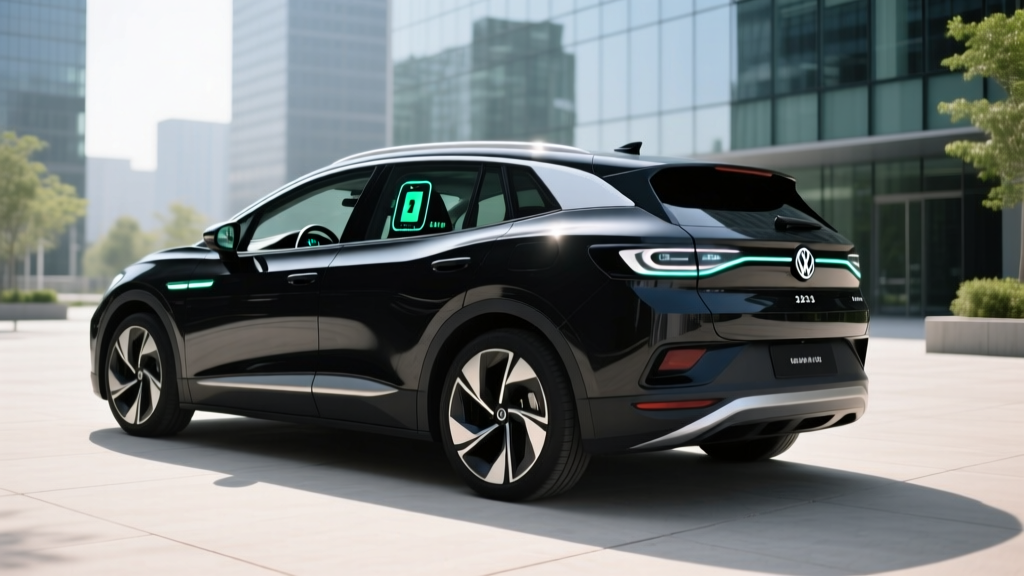
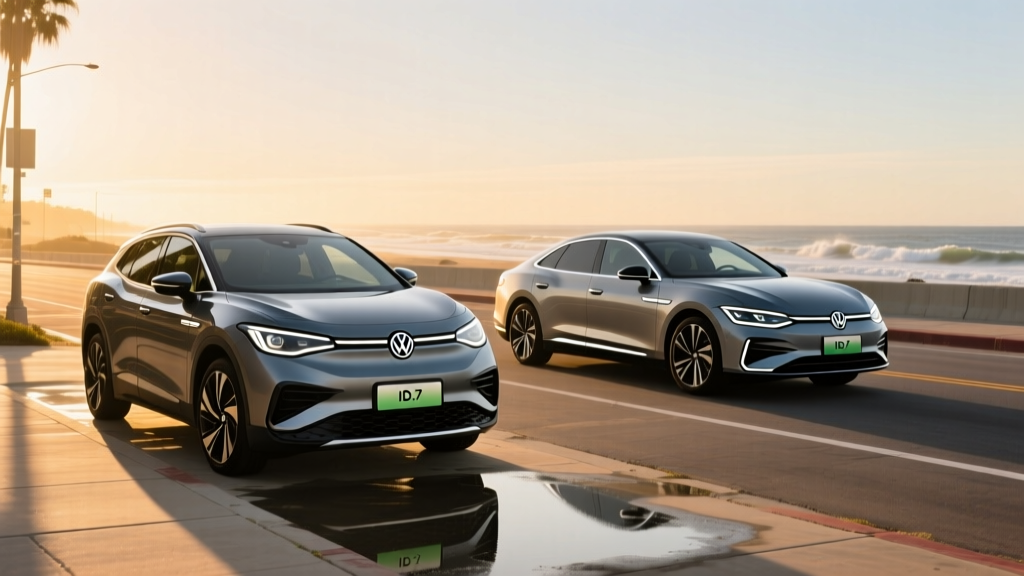
Volkswagen currently sells two battery-electric vehicles in the US: the ID.4 compact SUV (EPA range up to 291 miles, starting at $39,735) and the ID.7 midsize sedan (EPA range up to 342 miles, starting at $48,595). The ID.4 is the volume seller and the more practical choice for families needing cargo space and available AWD. The ID.7 delivers superior range, a more refined ride, and faster DC charging. Both qualify for varying levels of the federal §30D tax credit depending on your income, the vehicle's MSRP, and battery-sourcing compliance — check the IRS Clean Vehicle Credit page before committing.
The 2026 VW EV Car Lineup at a Glance
Volkswagen's electric strategy in the US rests on its MEB platform, which underpins both the ID.4 and ID.7. The long-promised ID. Buzz three-row van arrived for the 2025 model year but sits in a niche (and higher price bracket). For most shoppers searching for a VW EV car, the decision comes down to the ID.4 SUV versus the ID.7 sedan.
| Spec | 2026 VW ID.4 (Pro S AWD) | 2026 VW ID.7 Pro S |
|---|---|---|
| Body Style | Compact SUV | Midsize Sedan |
| EPA Range | 263 mi (AWD) / 291 mi (RWD) | 342 mi |
| Usable Battery | 82 kWh (NMC) | 86 kWh (NMC) |
| Drivetrain | RWD or AWD | RWD |
| Horsepower | 282 hp (RWD) / 335 hp (AWD) | 282 hp |
| 0–60 mph | 7.7s (RWD) / 5.4s (AWD) | 6.5s |
| Peak DC Charge Rate | 175 kW | 200 kW |
| 10–80% DCFC Time | ~28 min | ~26 min |
| Level 2 Charge Rate | 11 kW (AC) | 11 kW (AC) |
| MPGe (Combined) | 104 MPGe (RWD) | 115 MPGe |
| Cargo Volume | 30.3 cu ft (rear seats up) | 19.8 cu ft (trunk) |
| Battery Warranty | 8 yr / 100,000 mi | 8 yr / 100,000 mi |
| Base MSRP | $39,735 (Pro) | $48,595 (Pro S) |
Real-World Range Reality Check
EPA estimates are measured under controlled conditions. In our mixed highway driving at 70 mph, the ID.4 AWD returned roughly 230–245 miles before reaching 10% SoC. In cold weather (below 30°F), expect a 15–25% range reduction on both models due to cabin heating demands and increased battery resistance. The ID.7's larger battery and superior aerodynamics give it a real-world highway range of approximately 280–300 miles in mild conditions, dropping to ~240 miles in deep winter. Preconditioning the battery while plugged in mitigates some cold-weather loss and is essential for achieving rated DC fast-charging speeds.
VW EV Car vs Gas: The Real Cost Comparison
The sticker price of a VW EV car often draws comparisons to similarly sized gas vehicles — a Toyota RAV4 or Honda Accord. But the total cost equation includes fuel, maintenance, insurance, and available tax credits. Here's a five-year ownership comparison assuming 15,000 miles per year, electricity at $0.14/kWh (national average), and gas at $3.40/gallon.
| Category | 2026 VW ID.4 Pro S AWD | 2026 Toyota RAV4 XLE AWD |
|---|---|---|
| Base MSRP | $44,735 | $33,500 |
| Estimated Federal Tax Credit (§30D) | Up to $7,500* | $0 |
| Effective Purchase Price | ~$37,235 | $33,500 |
| Fuel / Electricity (5 yr) | ~$3,900 (home charging) | ~$8,925 (30 MPG avg) |
| Maintenance (5 yr) | ~$1,200 | ~$3,500 |
| Insurance (5 yr avg) | ~$9,500 | ~$7,800 |
| Estimated Depreciation | ~$18,000 | ~$12,500 |
| Total 5-Year Cost | ~$69,835 | ~$66,225 |
*§30D credit eligibility depends on buyer income caps ($150K single / $300K joint), vehicle MSRP caps ($80K SUV / $55K sedan), and battery critical-mineral sourcing requirements. Rules are subject to change — verify at irs.gov and consult a tax professional. The point-of-sale transfer option allows the credit to reduce your purchase price at the dealer.
The ID.4 closes the gap significantly once the tax credit is applied, and ongoing fuel and maintenance savings widen that advantage each year. However, EV insurance premiums run 15–25% higher on average due to battery replacement costs in collision claims, and EV depreciation remains steeper than proven gas models. If you lack home charging access and must rely on public DC fast chargers (at $0.35–$0.55/kWh), your fuel costs climb to roughly $6,500–$8,000 over five years, erasing much of the electricity advantage.
Charging a VW EV Car: Home, Public, and What You Need to Know
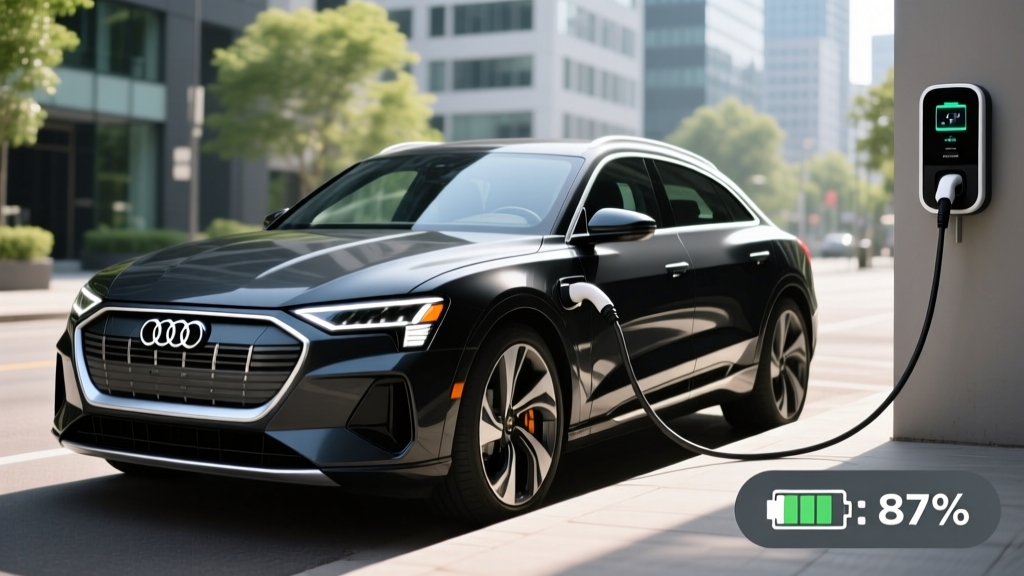
Both the ID.4 and ID.7 use the CCS1 connector standard. Volkswagen has partnered with Electrify America (a VW subsidiary) to provide complimentary charging for early buyers, though the included kWh allotment has decreased on recent model years. Here's what charging looks like across the three levels:
| Level | Power (kW) | Miles Added per Hour | Typical Use Case |
|---|---|---|---|
| Level 1 (120V household) | ~1.4 kW | ~4–5 mi/hr | Emergency / overnight trickle |
| Level 2 (240V home/public) | Up to 11 kW | ~32–38 mi/hr | Daily home charging |
| DC Fast Charge (CCS) | Up to 175 kW (ID.4) / 200 kW (ID.7) | ~200+ mi in 30 min | Road trips, quick top-ups |
Home Charging Installation Costs
A Level 2 home charger (240V, 40–48 amp circuit) is the single most impactful upgrade for EV ownership. Installation costs vary widely based on your electrical panel's capacity and the distance from panel to charger location.
| Item | Low Estimate | High Estimate |
|---|---|---|
| Level 2 Charger (hardware) | $300 | $700 |
| Electrician labor (simple run) | $500 | $1,200 |
| Permit / inspection fees | $100 | $400 |
| Electrical panel upgrade (if needed) | $1,500 | $3,500 |
| Total (no panel upgrade) | $900 | $2,300 |
| Total (with panel upgrade) | $2,400 | $5,800 |
Always hire a licensed electrician for a load calculation before committing to a charger install. Many utility companies offer rebates of $250–$750 for Level 2 installations — check with your local provider. VW's ID.4 and ID.7 accept up to 11 kW on Level 2 AC, meaning a full charge from near-empty takes roughly 8–9 hours — perfect for overnight charging on a standard 48-amp home unit.
DC Fast Charging: The Curve Matters
Volkswagen quotes peak DC charge rates of 175 kW (ID.4) and 200 kW (ID.7), but peak is not sustained. Like all NMC batteries, the charge curve tapers significantly above 80% SoC to protect battery health. In practice, the ID.4 sustains roughly 130–150 kW from 10–50% SoC, then gradually drops. Plan road-trip stops around the 10–80% window — charging from 80–100% can take as long as 10–80% itself. Battery preconditioning activates automatically when you navigate to a DC fast charger in the built-in navigation, warming the pack for optimal charge acceptance.
First-Time VW EV Car Buyer: Common Misconceptions
If you're transitioning from a gas vehicle, several assumptions need correcting before you sign the paperwork.
| Myth | Fact |
|---|---|
| "The battery will need replacing in 5 years." | VW warranties the battery for 8 years / 100,000 miles against degradation below 70% capacity. Real-world data from early ID.4 owners shows ~3–5% degradation after 50,000 miles. Full replacement (rare) costs $15,000–$20,000 out of warranty. |
| "EVs don't work in cold weather." | Range drops 15–25% in freezing temps, but the vehicle starts reliably (no cold-crank issues), and heated seats/steering wheel use far less energy than cabin air heating. Preconditioning while plugged in restores much of the range. |
| "I'll save money no matter what." | Savings depend on electricity rates, home charging access, annual mileage, and tax-credit eligibility. High-mileage drivers with cheap home electricity save the most. Low-mileage drivers relying on expensive public chargers may break even or lose money vs. an efficient hybrid. |
| "It charges as fast as filling a gas tank." | Even at peak DC rates, a 10–80% charge takes 26–28 minutes. That's a rest stop, not a gas-station splash-and-dash. Plan accordingly for road trips. |
| "The ID.4 and ID.7 are self-driving." | VW's IQ.DRIVE and Travel Assist are SAE Level 2 driver-assistance systems. They provide lane centering and adaptive cruise, but you must keep your hands on the wheel and eyes on the road at all times. These are not autonomous vehicles. |
SAE Automation Level: What VW's Driver Assist Actually Is
Volkswagen's Travel Assist (available on ID.4 and ID.7) is an SAE Level 2 system. It combines adaptive cruise control with lane-centering to reduce highway fatigue. However, the driver remains fully responsible for vehicle operation. This is fundamentally different from Level 4 robotaxi services like Waymo, which operate without a human driver in geofenced areas. Never treat Level 2 as "self-driving."
VW EV Car vs Hybrid: Which Powertrain Fits Your Life?
Not every driver is best served by a full battery-electric vehicle. Here's a practical framework for deciding between the VW ID.4, a plug-in hybrid (like the Toyota RAV4 Prime), or a conventional hybrid.
Decision Framework: EV vs PHEV vs Hybrid
Choose the VW ID.4 (BEV) if:
- You have reliable home Level 2 charging access
- Your daily driving is under 200 miles round-trip
- You drive 12,000+ miles per year (maximizes fuel savings)
- You qualify for the full or partial §30D tax credit
- You take road trips fewer than 4–5 times per year
Choose a PHEV (e.g., RAV4 Prime) if:
- You want 35–42 miles of electric-only range for daily commuting
- You frequently drive 300+ miles in a single day
- You lack reliable home charging but can plug in occasionally
- You live in a charging-desert region
Choose a conventional hybrid (HEV) if:
- You have zero home or workplace charging access
- You want maximum flexibility with no behavioral change
- Your budget prioritizes lowest upfront cost
- You drive primarily short city trips (where hybrids excel at 40+ MPG)
What First-Time EV Buyers Should Know Before Signing
Beyond the spec sheet, these ownership realities shape the day-to-day experience with any VW EV car:
- Insurance quotes vary wildly. Get at least three quotes before purchase. Some insurers surcharge EVs 20–30%; others have closed the gap. State Farm and Geico have become more competitive for ID.4 owners in 2025–2026.
- Tire wear accelerates. EVs are heavy (the ID.4 AWD weighs ~4,700 lbs) and deliver instant torque. Expect tire replacement every 25,000–35,000 miles. Budget for EV-rated tires with low rolling resistance (~$200–$280 per tire).
- Software is part of the ownership experience. VW's ID. software received heavy criticism at launch (slow infotainment, capacitive touch sliders). The 2025–2026 models run updated ID. Software 4.x, which is noticeably faster and more stable, but still trails Tesla and Hyundai in responsiveness. Test the infotainment during your test drive.
- Resale value is uncertain. EV depreciation has been steeper than gas counterparts, driven by rapid tech advancement and price cuts from competitors. Lease deals on the ID.4 (often $299–$399/month with the credit applied as a cap-cost reduction) can shield you from residual-value risk.
- NACS adapter availability. As of 2026, VW has not natively adopted the Tesla NACS connector on US models. A CCS-to-NACS adapter allows access to Tesla Superchargers (V2 and V3 stalls that support CCS via Magic Dock or adapter). Verify adapter compatibility with VW's latest guidance before relying on the Supercharger network.
Frequently Asked Questions
Does the VW ID.4 qualify for the $7,500 federal tax credit in 2026?
Eligibility depends on three factors under IRS §30D: (1) your modified adjusted gross income must not exceed $150,000 (single) or $300,000 (joint filers); (2) the vehicle MSRP must be under $80,000 for SUVs like the ID.4; and (3) the battery must meet critical-mineral and battery-component sourcing thresholds that tighten each year. The ID.4 has qualified for the full $7,500 credit for many buyers in recent years, but battery-sourcing rules change annually. Always verify current eligibility at irs.gov or through the dealer's point-of-sale transfer process before signing.
How long does it take to charge a VW ID.4 at home?
On a Level 2 home charger delivering 11 kW, a full charge from 10% to 100% takes approximately 8–9 hours for the ID.4's 82 kWh battery. On a standard 120V household outlet (Level 1, ~1.4 kW), the same charge would take roughly 55–60 hours — impractical for daily use. Most owners plug in each evening and wake up to a full battery.
Is the VW ID.7 worth the premium over the ID.4?
The ID.7 costs roughly $9,000 more than a comparably equipped ID.4 Pro S, but delivers 50+ additional miles of EPA range, a more comfortable ride, a quieter cabin, and faster DC charging (200 kW peak vs 175 kW). If you prioritize range for frequent highway commuting or road trips and prefer a sedan, the ID.7 justifies its price. If you need cargo versatility, AWD for snow, or a lower entry price, the ID.4 is the stronger value play.
What is the real-world highway range of the VW ID.4?
The ID.4 Pro S AWD carries an EPA rating of 263 miles. In sustained 70-mph highway driving at moderate temperatures, expect 230–245 miles. In cold weather (below 30°F), that drops to approximately 195–215 miles. The RWD variant (291 mi EPA) returns roughly 250–265 miles on the highway in mild conditions. Source: fueleconomy.gov.
Can I use Tesla Superchargers with a VW EV?
VW's ID.4 and ID.7 use the CCS1 connector. Access to Tesla Superchargers requires either a CCS-to-NACS adapter (verify VW's official compatibility guidance) or a Supercharger stall equipped with Tesla's Magic Dock CCS adapter. As of 2026, Magic Dock availability remains limited to select locations. For reliable road-trip charging, plan around Electrify America, EVgo, and ChargePoint CCS stations — all accessible natively with the ID.4 and ID.7.