Quick Verdict: The 6-Seat Model X Still Owns the Electric Family SUV Niche
The 2026 Tesla Model X configured with the optional six-seat interior remains one of the most capable electric SUVs on the market for families who refuse to compromise on performance, range, or access to the Supercharger network. With up to 320 miles of EPA-estimated range (Long Range AWD), dual-motor all-wheel drive, and a 10–80% DC fast-charge time around 28 minutes at 250 kW, it checks the boxes that matter most to road-tripping households. But at a starting MSRP of $81,630 before options—and with competitors like the Rivian R1S and Kia EV9 closing the gap in cabin quality and value—the six-seat Model X demands a hard look at whether its tech and charging ecosystem justify the premium.
| Spec | Value |
|---|---|
| EPA Range (Long Range AWD) | 320 mi |
| Plaid Range | 311 mi |
| Battery (usable, est.) | ~95 kWh, NMC |
| Peak DC Fast Charge | 250 kW (Supercharger V3/V4) |
| 10–80% DC Charge Time | ~28 min |
| Level 2 Home Charge | 11.5 kW / ~34 mi/hr |
| 0–60 mph (Long Range) | 3.8 sec |
| 0–60 mph (Plaid) | 2.5 sec |
| Horsepower (Long Range / Plaid) | 670 hp / 1,020 hp |
| Drivetrain | Dual-Motor AWD (tri-motor Plaid) |
| Efficiency (Long Range) | 104 MPGe / 32 kWh/100 mi |
| Cargo (behind 3rd row / max) | 14.5 cu ft / 77.5 cu ft |
| 2nd-Row Legroom (captain's chairs) | 38.4 in |
| Battery Warranty | 8 yr / 150,000 mi (≥70% retention) |
| Base MSRP (Long Range 6-seat) | $81,630 |
| Federal Tax Credit (§30D) | Up to $7,500 (eligibility varies) |
Real-World Range: What the 320-Mile EPA Sticker Actually Means
EPA Estimate: 320 miles (Long Range AWD) | 311 miles (Plaid)
Real-World Expectation: Expect 260–290 miles on a mixed highway/city loop at 70–75 mph. In cold weather (below 32°F), plan for 220–250 miles due to battery-resistance losses and cabin-heating demands. The Model X's standard heat pump mitigates some cold-weather penalty compared to resistive-heater EVs, but the SUV's large frontal area and ~5,100-lb curb weight work against highway efficiency.
According to fueleconomy.gov, the Long Range AWD achieves 104 MPGe combined (32 kWh/100 mi). On our observed highway-heavy drives at sustained 75 mph, efficiency typically settles around 34–36 kWh/100 mi, yielding a practical range closer to 265–280 miles before you'd want to find a Supercharger. The Plaid trim's tri-motor powertrain and stickier tires reduce that further—figure 240–260 miles highway.
For the six-seat buyer, the key takeaway: if your longest regular drive is under 250 miles one-way, the Model X covers it comfortably on a single charge with buffer. Beyond that, you'll rely on Tesla's Supercharger network, which remains a decisive advantage over CCS-dependent competitors in rural corridors.
Charging Speed: 250 kW Peak, but the Curve Tells the Full Story
| Charge Level | Power (kW) | Speed | Typical Use Case |
|---|---|---|---|
| Level 1 (120V) | ~1.4 kW | ~4 mi/hr | Emergency / trickle |
| Level 2 (240V, 48A) | 11.5 kW | ~34 mi/hr | Home overnight |
| DC Fast (V3 Supercharger) | Up to 250 kW | ~175 mi in 15 min | Road trips |
| DC Fast (CCS adapter) | Up to 150–250 kW | Varies by station | Non-Tesla networks |
Tesla's 250 kW V3 and newer V4 Superchargers deliver peak rates that hold from roughly 10% to 35% state of charge before tapering. By 60% SoC, you're typically seeing 120–150 kW; above 80%, the rate drops sharply to protect the NMC battery chemistry, falling below 50 kW. A 10–80% session takes approximately 28 minutes under ideal battery-preconditioned conditions.
Preconditioning matters. Navigate to a Supercharger using the built-in navigation, and the Model X will pre-warm the battery pack to optimize charge acceptance. Skip this step (or arrive at a charger with a cold-soaked pack in winter), and peak rates may be limited to 100–150 kW for the first several minutes, extending your stop by 10–15 minutes.
At home, the onboard 11.5 kW AC charger replenishes roughly 34 miles of range per hour on a 48-amp Level 2 circuit (e.g., Tesla Wall Connector on a 60-amp breaker). A full 10–100% charge takes about 9–10 hours. Home charging installation costs vary—expect $800–$2,500 depending on panel capacity and conduit run, per licensed electrician estimates.
Performance: Supercar Acceleration in a Three-Row SUV
The Long Range AWD's dual-motor setup produces 670 horsepower and rockets the Model X from 0–60 mph in 3.8 seconds—quicker than most sports sedans. The Plaid trim's tri-motor, 1,020-hp powertrain cuts that to a staggering 2.5 seconds, though at the cost of roughly 9 miles of EPA range and a significantly higher price tag (~$96,630 base for the Plaid).
Adaptive air suspension is standard, offering adjustable ride height for highway aero efficiency or ground clearance on rough driveways. The six-seat configuration doesn't alter performance metrics, but the ~5,100-lb curb weight does remind you of its mass during hard cornering. Steering is precise but numb—a Tesla hallmark—and the regenerative braking (now with a user-selectable intensity in recent OTA updates) enables near-one-pedal driving in daily use.
Six-Seat Interior: Captain's Chairs, Cargo Trade-Offs, and Tech
The six-seat layout replaces the standard second-row bench with two individually adjustable captain's chairs separated by a center console with storage and cupholders. This configuration sacrifices one seating position (seven-seat bench is standard) but delivers meaningfully better second-row comfort, easier third-row access via a walk-through gap, and a more premium feel.
Dimensions that matter:
- Second-row legroom: 38.4 inches (captain's chairs)
- Third-row legroom: 32.7 inches — best for children or adults on short trips
- Cargo behind third row: 14.5 cu ft (groceries for a family of five)
- Cargo with third row folded: 37.1 cu ft
- Maximum cargo (both rear rows folded): 77.5 cu ft
- Front trunk (frunk): 6.5 cu ft
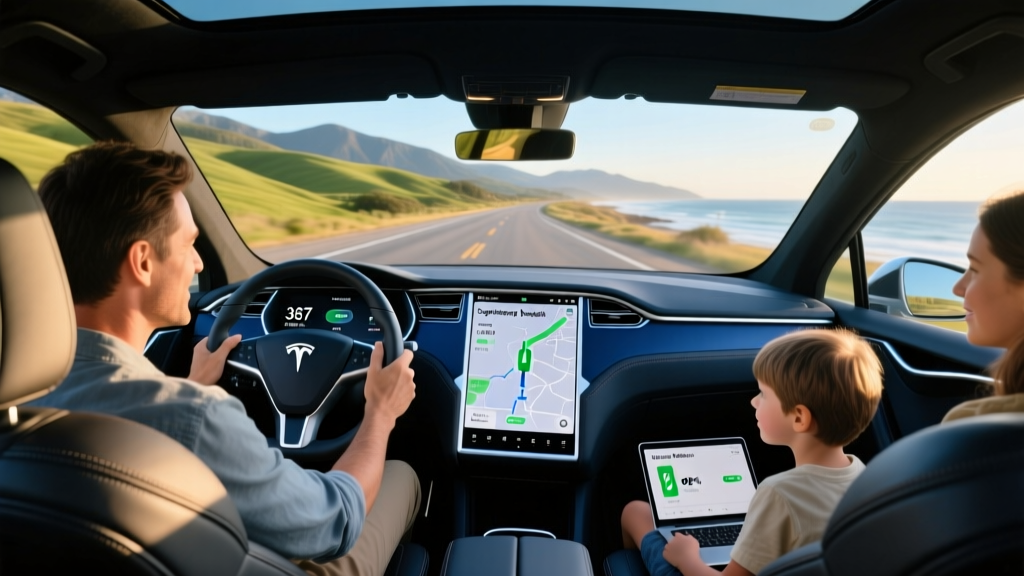
The 17-inch landscape touchscreen dominates the dash, running Tesla's latest software with Netflix/YouTube streaming while parked, a full gaming suite, and over-the-air updates that add features post-purchase. A secondary 8-inch rear touchscreen controls climate, media, and ventilation for second- and third-row passengers—a genuine differentiator for family road trips. The yoke steering wheel remains standard (a conventional round wheel is available at no cost), and the panoramic windshield creates an airy cabin.
Drawbacks: Panel-gap consistency has improved but still lags German competitors. The minimalist interior means no physical climate knobs—everything routes through the screen, which frustrates some drivers. Third-row space is tight for adults over 5'8". And while the falcon-wing rear doors are dramatic and genuinely useful for loading child seats in tight parking spots, they can be slow to open/close and occasionally finicky with low overhead clearance.
Pricing, Tax Credit Eligibility, and Total Cost
| Trim | Base MSRP | 6-Seat Option | Est. As-Tested* | Potential §30D Credit |
|---|---|---|---|---|
| Long Range AWD | $77,630 | +$4,000 | $81,630–$86,000 | Up to $7,500 |
| Plaid | $92,630 | +$4,000 | $96,630–$101,000 | Up to $7,500 |
*As-tested prices vary with wheels, paint, FSD, and destination fees.
Federal §30D EV Tax Credit — Key Rules for 2026:
- MSRP Cap: SUVs/vans/pickups must be ≤$80,000 MSRP. The Model X Long Range base MSRP of $77,630 qualifies; the Plaid at $92,630 does NOT.
- Buyer Income Cap: Modified AGI ≤$300,000 (joint), ≤$225,000 (head of household), ≤$150,000 (single).
- Battery Sourcing: Critical minerals and battery components must meet escalating domestic-content thresholds per IRS guidelines. Tesla's increasing North American battery sourcing improves eligibility, but confirm current-year compliance at purchase.
- Point-of-Sale Transfer: Eligible buyers can transfer the credit to the dealer for an immediate price reduction rather than claiming it at tax time.
- Long Range 6-seat at $81,630: The $4,000 six-seat option pushes MSRP above $80,000. However, IRS guidance treats the base MSRP (before options) for the cap—confirm with your tax professional, as interpretation can vary.
Bottom line: the Long Range 6-seat Model X likely qualifies for the full $7,500 credit if you meet income and sourcing requirements, effectively bringing the price to ~$74,130. The Plaid's MSRP exceeds the SUV cap and is ineligible. Always verify current rules with a tax advisor and the IRS before purchasing.
How It Stacks Up: Model X 6-Seat vs. Rivian R1S and Kia EV9
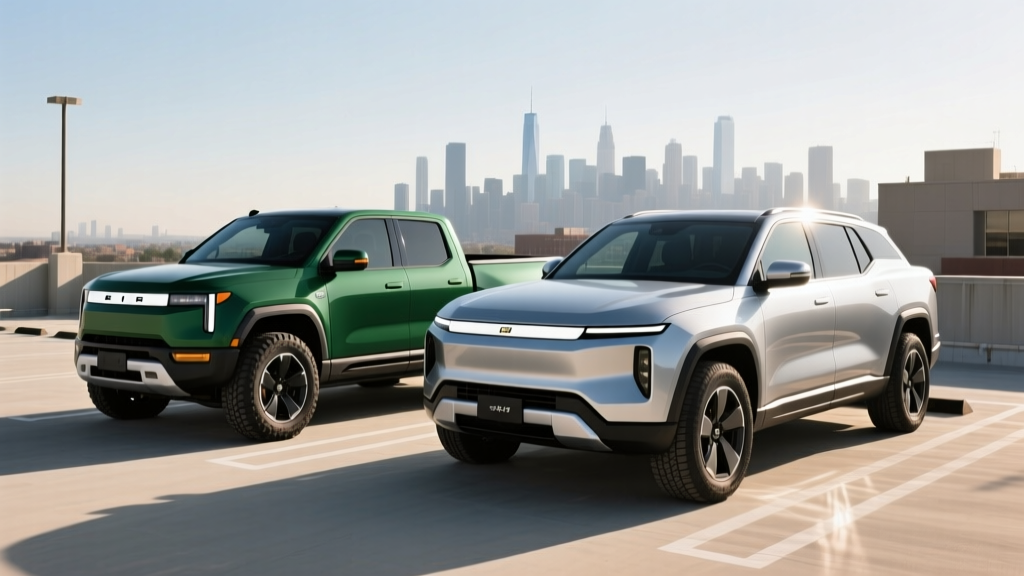
The six-seat electric SUV segment has real alternatives in 2026. The Rivian R1S Dual-Motor (~$79,900, 321 mi EPA) offers superior off-road capability, a more traditional SUV interior with physical controls, and better third-row space, though its CCS charging network is less robust than Tesla's Superchargers (though NACS adoption is expanding access). The Kia EV9 GT-Line AWD (~$68,000, 270 mi EPA) undercuts the Model X by over $13,000 with strong build quality, 800V-class fast charging (10–80% in ~20 min at 230+ kW), and a more conventional, family-friendly cabin—but with 50 fewer miles of range and no falcon-wing drama.
The Model X wins on range, the Supercharger ecosystem, raw acceleration, and tech-forward features. It loses on price-to-interior-quality ratio, third-row space, and the polarizing yoke-and-screen-only interface.
Pros
- 320-mi EPA range among the best for 3-row EVs
- Supercharger network reliability (250 kW+ at thousands of stations)
- Supercar-level acceleration even in Long Range trim
- Falcon-wing doors ease child-seat loading
- Rear touchscreen for passenger climate/media control
- Strong OTA update track record adding features over time
Cons
- $81,630+ starting price for 6-seat config
- Tight third row for adults
- No physical climate controls — screen-dependent
- Panel gaps still inconsistent vs. luxury competitors
- Plaid trim ineligible for §30D tax credit
- Autopilot/FSD requires subscription or high upfront cost and remains Level 2 (driver must supervise)
Who Should Buy the 6-Seat Model X?
Choose the Model X 6-seat if: You regularly drive 200+ miles and value the Supercharger network for road trips; you want sports-car acceleration in a family hauler; you prioritize tech-forward features and OTA improvements; you need easy child-seat access via falcon-wing doors.
Look at the Rivian R1S if: You need more third-row and cargo space, prefer physical controls, or plan light off-roading.
Look at the Kia EV9 if: Budget is a primary concern and 270 miles of range covers your needs, or you prefer faster 800V charging at non-Tesla networks.
The six-seat Model X is best for affluent families who road-trip frequently, value acceleration and tech, and live within the Supercharger ecosystem. It's not the best value in the segment, but no competitor yet matches its combination of range, charging infrastructure, and performance in a single package.
Driver-Assist Note: Tesla Autopilot and Full Self-Driving (Supervised) are SAE Level 2 systems. The driver must remain attentive, keep hands available, and supervise at all times. These are not autonomous or self-driving systems. Only Level 4 services (e.g., Waymo robotaxis in limited geofenced areas) operate without driver supervision.
Frequently Asked Questions
What is the real-world range of the Tesla Model X Long Range?
Expect 260–290 miles in mixed driving at highway speeds. In cold weather (below freezing), plan for 220–250 miles. The 320-mile EPA figure assumes ideal conditions and moderate speeds.
How fast does the Model X charge at home and on road trips?
At home on Level 2 (11.5 kW), you'll add ~34 miles per hour, fully replenishing overnight. On a V3/V4 Supercharger at 250 kW, 10–80% takes ~28 minutes with battery preconditioning.
Does the 6-seat Model X qualify for the $7,500 federal tax credit?
The Long Range base MSRP ($77,630) falls under the $80,000 SUV cap, making it potentially eligible if you meet income limits (≤$300K joint) and battery-sourcing requirements. The Plaid ($92,630) exceeds the cap and is ineligible. Confirm with a tax professional per IRS §30D rules.
Is the six-seat layout worth the $4,000 option?
If you regularly carry four or five passengers and value second-row comfort and third-row walk-through access, yes. If you need maximum seating (seven) or cargo flexibility, the standard bench is more practical.
How does Autopilot work, and is it self-driving?
Autopilot and FSD (Supervised) are Level 2 driver-assist features providing steering, lane changes, and speed management on mapped roads. You must remain fully engaged and ready to take over. They are not self-driving systems.
What is the battery warranty?
Tesla covers the Model X battery and drive unit for 8 years or 150,000 miles (whichever comes first), guaranteeing at least 70% capacity retention over that period.