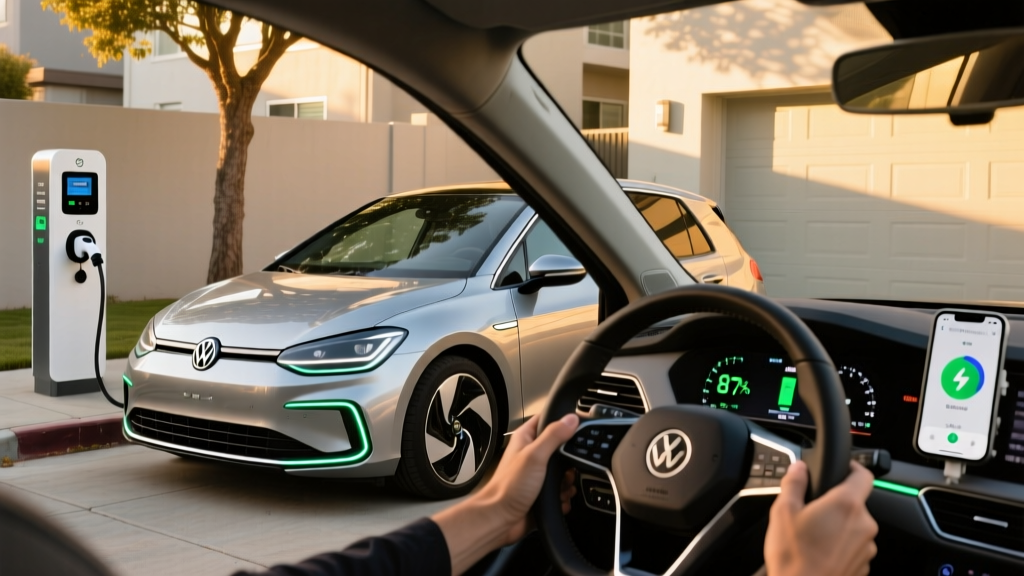
Quick Answer: The Volkswagen e-Golf was discontinued after the 2019 model year, so in 2026 you'll only find it on the used market. Expect to pay between $9,000 and $16,000 depending on mileage and battery condition. The later 2017–2019 models with the 35.8 kWh battery offer an EPA-rated 125 miles of range and remain practical commuter EVs — but only if you can charge at home and your daily driving stays under 80 miles round-trip. The federal used-EV tax credit (§25E) can knock up to $4,000 off the price if you qualify, making it one of the cheapest ways into EV ownership.
Why the e-Golf Still Matters in 2026
The VW e-Golf occupies a unique niche: it's one of the last affordable, well-built, fully electric hatchbacks you can buy used for under $15,000. Volkswagen stopped producing the e-Golf after 2019 to pivot to its ID.4 platform, but thousands of these cars remain on the road — and in the used-EV market, they've become an entry point for budget-conscious buyers who want a real electric car without taking on a new-car payment.
Unlike the Nissan Leaf of the same era, the e-Golf uses a liquid-cooled battery pack, which means far less degradation over time. Unlike the BMW i3, it looks and drives like a normal car. And unlike a used Tesla Model 3, maintenance and parts are straightforward through any VW dealer.
But buying a discontinued EV that's now 7–9 years old requires careful homework. This guide covers what you need to know.
e-Golf Specs: Two Generations, Big Differences
Volkswagen sold the e-Golf in the US across two distinct battery generations. The difference is substantial — and it should drive your purchasing decision.
| Specification | 2015–2016 e-Golf | 2017–2019 e-Golf |
|---|---|---|
| Battery (usable) | 21.2 kWh (NMC) | 35.8 kWh (NMC) |
| EPA Range | 83 miles | 125 miles |
| Motor Output | 115 hp / 199 lb-ft | 134 hp / 214 lb-ft |
| 0–60 mph | ~10.0 sec | ~9.6 sec |
| DC Fast Charge (peak) | 50 kW (CCS) | 50 kW (CCS) |
| Level 2 Charge Rate | 7.2 kW | 7.2 kW |
| 10–80% DCFC Time | ~25 min | ~38 min |
| EPA Efficiency | 116 MPGe | 119 MPGe |
| Battery Warranty (new) | 8 yr / 100,000 mi | 8 yr / 100,000 mi |
| Typical 2026 Used Price | $9,000–$12,000 | $12,000–$16,000 |
The 2017+ refresh added more than just battery capacity: VW included a standard DC fast-charging port on all trims (some 2015–2016 models had it only as an option), upgraded the interior infotainment, and added available driver-assistance features like adaptive cruise control and lane-keeping assist.
Bottom line: If your budget allows, the 2017–2019 e-Golf is substantially more livable. The 2015–2016 cars work only for very short commutes with reliable home charging.
Real-World Range: What the EPA Number Doesn't Tell You
EPA Sticker (2017–2019): 125 miles
Real-World Expectation (2026): 95–115 miles in moderate weather; 75–95 miles in freezing temps or sustained highway driving at 70+ mph.
When evaluating a 7-year-old EV, you need to account for two factors that reduce range below the original EPA estimate:
1. Battery degradation. The e-Golf's NMC pack is liquid-cooled, which gives it an advantage over the passively-cooled Nissan Leaf. Based on owner-reported data and fleet analysis, expect a 2017–2019 e-Golf to retain roughly 88–94% of its original capacity in 2026, depending on climate history and charging habits. A car that started at 125 EPA miles may now deliver 110–118 miles on a full charge in ideal conditions.
2. Driving conditions. The e-Golf has no heat pump — it uses resistive electric heating, which draws heavily from the battery in cold weather. In testing and owner reports, winter range drops of 20–30% are typical at temperatures below 32°F. Highway driving at 75 mph also cuts range by roughly 15–20% compared to the EPA combined cycle.
For a 2018 e-Golf in Minnesota in January, a realistic expectation is 80–90 miles on a full charge. That same car in San Diego in April might deliver 115 miles. Know your climate and your commute before committing.
Charging the e-Golf: Speeds, Connectors, and Home Setup
The e-Golf uses the CCS1 connector for DC fast charging and the J1772 connector for Level 1 and Level 2 AC charging. In 2026, CCS1 remains widely supported across Electrify America, EVgo, and ChargePoint networks — though the industry is shifting toward NACS (Tesla's standard). Adapters are available if needed.
| Charging Level | Power | Connector | Miles Added per Hour | Full Charge Time (35.8 kWh) |
|---|---|---|---|---|
| Level 1 (120V) | 1.2 kW | J1772 | ~4 mi/hr | ~30 hours |
| Level 2 (240V) | 7.2 kW | J1772 | ~25 mi/hr | ~5 hours |
| DC Fast Charge | 50 kW (peak) | CCS1 | ~150 mi/hr (peak) | 10–80% in ~38 min |
Important charging realities for e-Golf buyers:
- 50 kW is the hard ceiling. The e-Golf cannot accept higher charge rates. Even plugged into a 350 kW Electrify America station, you'll peak at 50 kW. This means road-trip charging stops take 35–40 minutes for a 10–80% session — noticeably longer than modern EVs that accept 150–250 kW.
- Level 2 is essential. With a 5-hour Level 2 charge, overnight home charging is practical. But a Level 1 trickle (30 hours for a full charge) is only viable if you drive fewer than 25 miles per day and can plug in every night.
- Home charger installation for a 240V Level 2 setup typically costs $500–$1,800 total (equipment plus electrician), assuming your electrical panel has capacity. If you need a panel upgrade, add $1,500–$3,000.
e-Golf vs. Gas Car vs. Hybrid: Cost Comparison
How does owning a used e-Golf compare financially to a used gas-powered Golf or a used hybrid like the Toyota Prius? Here's a 5-year ownership projection assuming 12,000 miles/year.
| Cost Category | 2018 e-Golf (Used) | 2018 VW Golf 1.4T (Gas) | 2018 Toyota Prius (Hybrid) |
|---|---|---|---|
| Purchase Price (avg) | $13,500 | $13,000 | $16,000 |
| Federal Used-EV Credit (§25E) | –$4,000 (if eligible) | $0 | $0 |
| Effective Purchase Price | $9,500 | $13,000 | $16,000 |
| Fuel/Energy (5 yr, 60k mi) | $2,700 (at $0.14/kWh avg) | $8,400 (at $3.50/gal, 29 MPG) | $5,100 (at $3.50/gal, 52 MPG) |
| Maintenance (5 yr) | $1,200 | $3,500 | $2,800 |
| Insurance (5 yr avg) | $6,500 | $5,800 | $5,500 |
| Total 5-Year Cost | $19,900 | $30,700 | $29,400 |
| Cost per Mile | $0.33 | $0.51 | $0.49 |
Key takeaways:
- The e-Golf's effective purchase price can be the lowest of the three thanks to the §25E used clean vehicle credit — up to $4,000 or 30% of the sale price, whichever is less, for used EVs purchased from a dealer. Income caps apply ($75,000 single / $150,000 joint), and the car must be at least 2 model years old with a sale price under $25,000.
- Fuel savings are dramatic: electricity at $0.14/kWh costs roughly $0.045/mile in the e-Golf versus $0.12/mile in the gas Golf and $0.067/mile in the Prius.
- Maintenance on the e-Golf is minimal — no oil changes, no spark plugs, no transmission fluid, and regenerative braking extends brake pad life significantly.
- Insurance tends to run slightly higher on the e-Golf, though the gap has narrowed as EVs have become more common.
Sources: Efficiency data via fueleconomy.gov; tax credit rules via IRS §25E.
What a First-Time EV Buyer Must Know About the e-Golf
If the e-Golf is your first EV, here are the ownership realities that no spec sheet will tell you:
Battery Health Is Your #1 Priority
Before purchasing any used e-Golf, request a battery State of Health (SoH) reading. Some VW dealers can pull this via OBD-II diagnostics; third-party tools like Carista or LeafSpy (with an appropriate adapter) can also read the data. Look for SoH above 90%. A car at 85% SoH is still drivable but has lost meaningful range. Avoid anything below 80% unless the price reflects a near-term battery concern.
VW's original battery warranty was 8 years/100,000 miles with a capacity-retention threshold of 70%. For a 2017 e-Golf, that warranty expired in 2025. For a 2019 model, you may have coverage through 2027 — but only if the pack hasn't been damaged or improperly serviced.
Home Charging Is Almost Mandatory
The e-Golf's 50 kW DC fast-charging speed and 125-mile range make public-charging-only ownership impractical for most people. If you cannot install a Level 2 charger at home (or at minimum have reliable overnight Level 1 access), a plug-in hybrid like the Prius Prime is a more realistic electrified option.
Cold Weather Demands a Range Buffer
Without a heat pump, the e-Golf's resistive heater can consume 3–5 kW of battery power in cold weather — that's 20–35% of your battery capacity diverted to cabin heating on a 20-mile trip. If you live where winters regularly drop below freezing, plan for 80–90 miles of real winter range and size your commute accordingly.
Check for CCS Fast-Charging Capability
Some 2015–2016 e-Golfs were sold without the DC fast-charge port — it was part of an optional package. If you see a cheap early e-Golf with only a J1772 port and no CCS connector below it, you're limited to Level 2 charging at 7.2 kW maximum. That's fine for overnight home charging but eliminates road-trip viability entirely.
Common Misconceptions About the e-Golf
| Myth | Fact |
|---|---|
| "The battery will need replacing soon and it'll cost $20,000." | Liquid-cooled NMC packs in the e-Golf degrade slowly. Most 2017–2019 examples still retain 88–94% capacity. A full battery replacement, if needed, runs $8,000–$12,000 from independent EV shops — not $20,000. |
| "It can't handle road trips." | It can, but with planning. Expect 35–40 minute DC fast-charge stops every 80–100 miles on the highway. For 1–2 road trips per year, it's manageable. For frequent long-distance driving, it's not the right car. |
| "Since VW discontinued it, parts will be impossible to find." | The e-Golf shares its body, interior, suspension, and most non-powertrain components with the gas Golf Mk7. Body panels, interior trim, brakes, and suspension parts are widely available. EV-specific parts (motor, inverter) are more specialized but supported through VW's dealer network and independent EV shops. |
| "It qualifies for the $7,500 federal tax credit." | It does not. The §30D new vehicle credit applies only to new EVs. The e-Golf is only available used. However, the §25E used-EV credit offers up to $4,000 with income and price caps. |
| "50 kW charging is too slow to be useful." | 50 kW adds roughly 80 miles of range in 30 minutes — enough for a highway rest stop. It's slower than modern EVs, but it's functional for occasional road trips. For daily driving, home Level 2 is all you need. |
Decision Framework: Is the e-Golf Right for You?
Choose the e-Golf if:
- Your daily round-trip commute is under 80 miles (under 60 miles in cold climates)
- You can install a Level 2 charger at home
- You want the lowest possible cost-per-mile in an EV
- You want a normal-driving hatchback, not a futuristic pod
- You qualify for the §25E used-EV credit (income under $75K single / $150K joint)
- You take road trips fewer than 3–4 times per year
Look elsewhere if:
- Your commute exceeds 90 miles round-trip — consider a used Chevrolet Bolt EV (238 miles EPA) or used Tesla Model 3
- You can't charge at home — a plug-in hybrid like the Prius Prime is more practical
- You drive long distances frequently — the 50 kW charge rate and 125-mile range will frustrate you
- You live in extreme cold (regularly below 0°F) and have no garage — the range loss and resistive heating draw are significant
- You need more than 5 passenger seats or substantial cargo space — consider a used ID.4 or Model Y
Frequently Asked Questions
What's the best model year for a used e-Golf?
The 2017–2019 models with the 35.8 kWh battery are significantly more practical than the 2015–2016 cars. Within that range, 2018 and 2019 models often have better-equipped interiors and lower average mileage. A 2019 SEL Premium includes leather, navigation, and the full driver-assistance suite.
How do I check the e-Golf's battery health before buying?
Ask the seller or a VW dealer to run an OBD-II battery diagnostic showing the State of Health (SoH) percentage. You can also do this yourself with a Bluetooth OBD-II adapter and an app like Carista. Look for 90%+ SoH. Cross-reference by fully charging the car and checking the dashboard's estimated range — a healthy 35.8 kWh pack should show 115–125 miles at 100% SoC.
Can I charge an e-Golf at Tesla Superchargers?
Not directly. The e-Golf uses the CCS1 connector, while Tesla Superchargers use the NACS connector. A CCS-to-NACS adapter (such as those from Lectron or A2Z) can enable access to Superchargers that support non-Tesla vehicles through Tesla's "Open Supercharging" program, but availability varies by station and adapter compatibility isn't guaranteed at every stall.
What happens if the e-Golf's battery fails out of warranty?
Full battery replacement at a VW dealer typically costs $10,000–$15,000 including labor. Independent EV repair shops often offer refurbished or salvaged packs for $6,000–$9,000. Module-level repair (replacing only degraded cells within the pack) is possible for $2,000–$4,000 at specialized shops. Given that most e-Golf packs degrade slowly, outright failure is uncommon — gradual capacity loss is the more realistic concern.
Does the e-Golf qualify for any tax credits in 2026?
It can qualify for the §25E used clean vehicle credit: up to $4,000 or 30% of the sale price (whichever is less). Requirements include purchasing from a licensed dealer, sale price under $25,000, buyer AGI under $75,000 (single) or $150,000 (joint), and the vehicle must be at least 2 model years old. The credit can be transferred to the dealer at point of sale for an immediate price reduction. Consult a tax professional to confirm your eligibility.
How does the e-Golf compare to a used Chevy Bolt EV?
The Bolt EV offers far more range (238 miles EPA for 2017–2022 models) and a larger battery (60 kWh), making it a better choice for anyone who drives more than 80 miles daily or takes regular road trips. However, the Bolt's real-world used prices tend to run $3,000–$5,000 higher than a comparable e-Golf, and its interior quality is noticeably cheaper. If range is your priority, the Bolt wins. If build quality and budget are paramount, the e-Golf holds up better.