The Quick Answer: Is the e-Golf Worth Buying in 2026?
The Volkswagen e-Golf was discontinued after the 2019 model year, so you'll only find it on the used market today. With an EPA range of 125 miles (2017–2019 models) and a 35.8 kWh battery, it remains a solid budget commuter EV if you can charge at home and your daily round-trip stays under 80 miles. Expect to pay $10,000–$16,000 for a clean 2017–2019 example. It does not qualify for the federal §30D new-EV tax credit, but you may be eligible for the up-to-$4,000 used clean vehicle credit if you buy from a dealer and meet income caps.
What Is the e-Golf and Why Are People Still Searching for It?
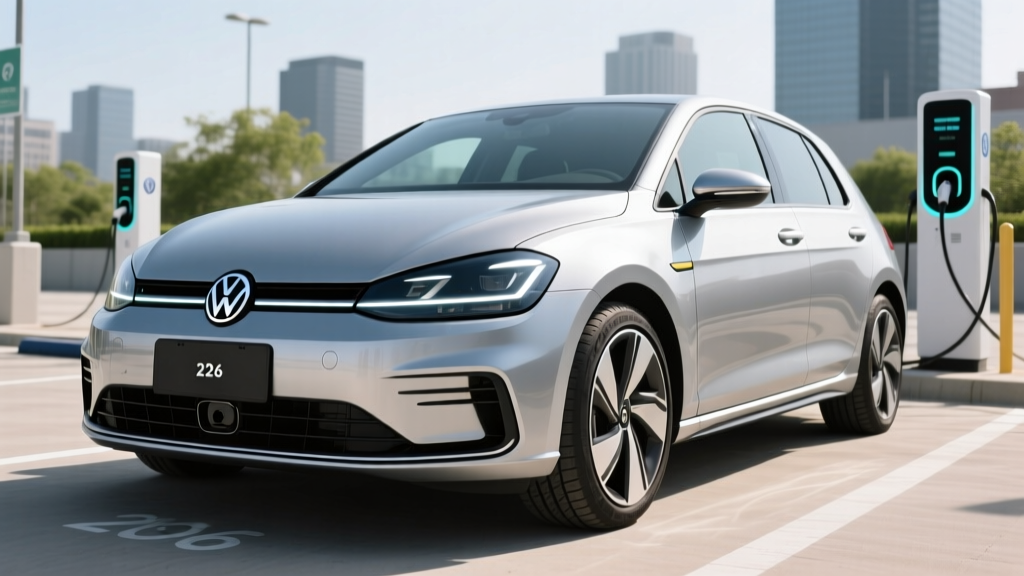
The VW e-Golf electric car was Volkswagen's first mass-market battery-electric vehicle sold in the United States, spanning the 2015–2019 model years. It replaced the gas engine in the familiar Golf hatchback with an electric motor and lithium-ion battery pack. Early 2015–2016 models carried a 24.2 kWh battery with just 83 miles of EPA range. The significantly updated 2017–2019 models bumped the usable battery to 35.8 kWh (NMC chemistry) and the motor to 134 horsepower and 214 lb-ft of torque, earning a 125-mile EPA range rating.
Buyers still search for the e-Golf in 2026 because it represents one of the most affordable entry points into EV ownership. A well-maintained 2018 or 2019 e-Golf SEL Premium can be found for $12,000–$15,000, undercutting nearly every other used EV with comparable build quality. The Golf platform is well-regarded for ride comfort, interior materials, and practicality — qualities that carry over to the electric version.
Real-World Range: What to Actually Expect
The EPA rated the 2017–2019 e-Golf at 125 miles per full charge, with a combined efficiency of 119 MPGe (28 kWh/100 miles). Those numbers were measured under ideal conditions. Here's what real-world driving actually looks like:
EPA Sticker: 125 miles (2017–2019) | 83 miles (2015–2016)
Real-World City/Commuting (55°F+): 105–120 miles
Highway (70 mph sustained): 85–100 miles
Cold Weather (below 32°F): 70–90 miles (30–40% loss without a heat pump)
The e-Golf does not have a dedicated heat pump; it uses resistive cabin heating, which draws significant power from the traction battery in winter. If you live in a cold-weather climate and need the full 125 miles, plan for a realistic 80-mile winter range. Preconditioning the cabin while plugged in at home helps recover some of that lost range before you depart.
Also factor in battery degradation. A 2017–2019 e-Golf is now 7–9 years old. Most owners report State of Health (SoH) readings between 85% and 93% at this age, meaning your actual full-charge range may be 105–115 miles even in fair weather. Always ask for a battery health report or have a VW dealer run a diagnostic before purchasing.
Charging Speeds and Connector Compatibility
The e-Golf uses a CCS1 connector for DC fast charging and a J1772 connector for Level 1 and Level 2 AC charging. Here's the breakdown by charging level:
| Level | Power (kW) | Time | Miles Added |
|---|---|---|---|
| Level 1 (120V household) | ~1.2 kW | ~30 hours (0–100%) | ~4 mi/hr |
| Level 2 (240V, 32A) | 7.2 kW | ~5.5 hours (0–100%) | ~25 mi/hr |
| DC Fast Charge (CCS1) | Peak 50 kW | ~35 min (10–80%) | ~100 mi/hr (peak) |
The e-Golf's 50 kW peak DC fast-charge rate is its biggest limitation in 2026. Modern EVs charge at 150–350 kW, meaning a 10–80% session takes 15–20 minutes. The e-Golf will keep you at a fast charger for 35–40 minutes for the same session, and the charge curve tapers significantly above 80% SoC. This makes the e-Golf poorly suited for frequent road trips but perfectly adequate for overnight home charging.
If you rely on public charging, note that Electrify America and most major networks still support CCS1, so connector compatibility isn't an issue. However, NACS (Tesla-style) adapters are not available for the e-Golf, so Tesla Supercharger access is not possible.
Used e-Golf Cost Breakdown vs. Gas and Hybrid Alternatives
To understand whether the e-Golf saves you money, let's compare five-year ownership costs against a comparable used gas hatchback (2018 Honda Civic) and a used hybrid (2018 Toyota Prius). All figures assume 12,000 miles/year, national average electricity at $0.16/kWh, and gas at $3.40/gallon.
| Category | 2018 VW e-Golf SEL | 2018 Honda Civic (Gas) | 2018 Toyota Prius (HEV) |
|---|---|---|---|
| Purchase Price (avg. used) | $13,000 | $14,500 | $16,000 |
| Fuel/Energy (5 yrs) | $2,740 | $6,800 | $4,080 |
| Maintenance (5 yrs) | $1,200 | $3,000 | $2,800 |
| Insurance (5 yrs, avg.) | $6,500 | $5,800 | $5,600 |
| Estimated Depreciation | -$4,000 | -$5,500 | -$5,000 |
| 5-Year Total Cost | $19,440 | $24,600 | $23,480 |
| Cost Per Mile | $0.32 | $0.41 | $0.39 |
The e-Golf wins on fuel and maintenance. You'll save roughly $4,000 in fuel and $1,600–$1,800 in maintenance over five years compared to the gas Civic — no oil changes, no spark plugs, no transmission fluid, and regenerative braking extends pad life substantially. Insurance runs slightly higher for the e-Golf due to EV repair-cost premiums, but the overall five-year total still comes out $4,000–$5,000 cheaper than the gas alternative.
The caveat: these numbers assume home charging at residential electricity rates. If you rely exclusively on public DC fast charging at $0.35–$0.50/kWh, your five-year energy cost jumps to $5,900–$8,500, erasing most of the savings. Home charging access is essentially a prerequisite for the e-Golf to make financial sense.
Common Misconceptions About the e-Golf
| Myth | Fact |
|---|---|
| "The e-Golf qualifies for the $7,500 federal tax credit." | The §30D new-vehicle credit expired for the e-Golf when it was discontinued. As a used purchase, you may qualify for the used clean vehicle credit of 30% of the sale price, up to $4,000, if the car costs $25,000 or less, you buy from a licensed dealer, and your AGI is under $75,000 (single) / $150,000 (married filing jointly). |
| "125 miles of range is useless." | The average American drives 37 miles per day (FHWA data). With home charging, 125 miles covers 95%+ of daily driving for most commuters. |
| "The battery will need replacing soon." | VW warranties the e-Golf battery for 8 years/100,000 miles against dropping below 70% capacity. Real-world data shows NMC packs of this era retaining 85–93% SoH at 7–9 years. A full replacement (if needed out of warranty) runs $6,000–$9,000, but most packs outlast the car's economic life. |
| "It charges on Tesla Superchargers." | The e-Golf uses CCS1/J1772. There is no NACS adapter available, and Tesla Superchargers remain incompatible with the e-Golf as of 2026. |
| "Any electrician can install a Level 2 charger." | A Level 2 charger requires a 240V/40A dedicated circuit. Older homes may need a panel upgrade ($1,500–$3,000). Always get a licensed electrician to assess your panel capacity before purchasing a charger. |
Who Should Buy the e-Golf in 2026 — and Who Shouldn't
Buy the e-Golf if:
- Your daily round-trip commute is under 80 miles
- You have access to Level 2 home charging (garage or driveway with 240V circuit)
- You want an EV under $15,000 with premium hatchback build quality
- You live in a mild climate or have a second car for long trips and cold days
- You value low running costs and don't need road-trip capability
Skip the e-Golf and consider alternatives if:
- You regularly drive more than 100 miles in a single day
- You rely solely on apartment or street parking with no charging access
- You live in a severe cold-weather climate and need this as your only vehicle
- You want DC fast charging over 100 kW for road trips (look at a used Chevy Bolt EV or Hyundai Kona Electric instead)
- You need more than 53 cubic feet of cargo space (consider a used Tesla Model 3 or Model Y)
What a First-Time EV Buyer Must Know Before Purchasing
If the e-Golf is your first EV, here are the ownership realities that differ from a gas car:
Home charging is non-negotiable for this car. With only 50 kW DC fast-charge capability and 125 miles of range, relying on public charging is expensive and time-consuming. Budget $500–$1,200 for a quality Level 2 home charger (ChargePoint Home Flex, Emporia Vue, or Wallbox Pulsar Plus) plus $500–$2,000 for electrician installation, depending on your panel and wiring run. If your home has a 100-amp panel, you may need an upgrade to support a 40-amp EV circuit.
Learn to read your battery's State of Health. Use an OBD-II dongle with an app like Carista or Car Scanner to pull SoH data before buying. A reading below 85% on a 2017–2019 e-Golf is a negotiation point or a walk-away signal.
Plan for winter. Without a heat pump, cabin heating can cut range by 30–40%. Precondition the car while it's still plugged in, use seat heaters instead of cabin heat when possible, and accept that winter range will be closer to 80 miles.
Check for open recalls. Search the VIN at NHTSA's recall database before purchasing. Some e-Golf model years had recalls related to the battery management system and 12V battery software.
Frequently Asked Questions
Can I get a federal tax credit on a used e-Golf?
Yes, potentially. The IRS used clean vehicle credit provides 30% of the sale price, up to $4,000, for qualifying used EVs purchased from a licensed dealer. The car must be priced at $25,000 or below, at least two model years old, and your modified adjusted gross income must not exceed $75,000 (single), $112,500 (head of household), or $150,000 (married filing jointly). The credit can be transferred to the dealer at the point of sale as a down-payment reduction. Consult a tax professional for your specific eligibility.
How much does it cost to charge an e-Golf at home?
Charging a 35.8 kWh battery from empty to full at the national average of $0.16/kWh costs about $5.73. For a typical daily commute of 37 miles consuming roughly 10.4 kWh, your daily home charging cost is about $1.66 — roughly one-third the cost of fueling a 30-MPG gas car the same distance at $3.40/gallon ($4.19).
Is the e-Golf reliable?
The e-Golf's electric powertrain is simpler than a gas engine with far fewer moving parts. Common issues include 12V battery failures (a frequent complaint across all EVs of this era), occasional onboard charger faults, and infotainment software glitches. The traction battery itself has proven durable. VW's 8-year/100,000-mile battery warranty has now expired on 2015–2017 models, so factor potential out-of-warranty risk into your purchase decision.
How does the e-Golf compare to a used Chevy Bolt EV?
The 2017–2019 Chevy Bolt EV offers 238 miles of EPA range, a 60 kWh battery, and 55 kW DC fast charging — nearly double the e-Golf's range. Used Bolt prices in 2026 typically run $13,000–$18,000. If range is your priority, the Bolt is the stronger buy. If interior quality, ride refinement, and hatchback practicality matter more and your commute is short, the e-Golf holds its own.
What happens if the e-Golf battery fails?
Complete battery failure is rare; gradual degradation is the norm. If the pack drops below 70% capacity within the 8-year/100,000-mile warranty window, VW replaces it. Out of warranty, a refurbished replacement pack costs $6,000–$9,000 including labor. At that price point, many owners of older e-Golfs opt to sell or trade the vehicle rather than invest in a new battery — something to consider when evaluating a high-mileage example.