Rivian in 2026: Leadership Wealth Meets Vehicle Execution
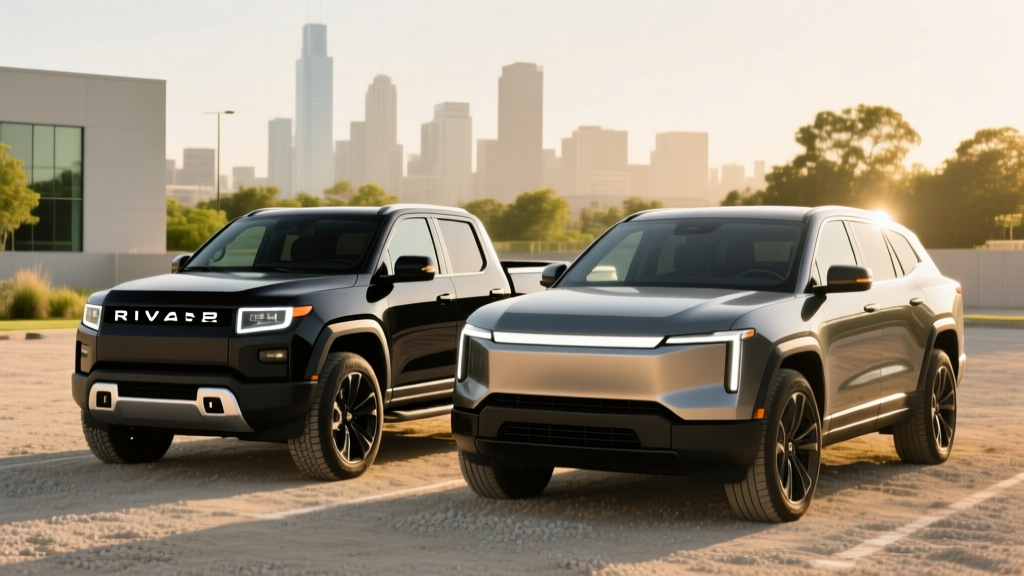
Searches for Rivian CEO net worth often reflect broader curiosity about whether the company's leadership has enough skin in the game to keep pushing ambitious EV hardware and software updates. RJ Scaringe founded Rivian in 2009 and, as of early 2026, holds a multi-billion-dollar stake through a mix of Class B shares and supervoting control, placing his estimated net worth in the $2–3 billion range depending on daily stock fluctuation. That financial alignment matters for buyers evaluating long-term support, OTA improvements, and service infrastructure — but it doesn't substitute for a rigorous look at the metal. This review pairs the leadership context with a deep-dive on the 2026 Rivian R1T pickup and R1S SUV, the two models currently in production at the Normal, Illinois plant.
For 2026, Rivian has consolidated its Dual-Motor, Performance Dual-Motor, and Tri-Motor configurations, refined battery sourcing to strengthen §30D eligibility, and pushed highway efficiency gains through updated thermal management. Below is everything a buyer needs to decide — with exact numbers, real-world caveats, and zero marketing fluff.
Core Specs: R1T and R1S at a Glance
| Attribute | R1T (Dual-Motor) | R1T (Tri-Motor) | R1S (Dual-Motor) |
|---|---|---|---|
| EPA Range (Max Pack) | 352 mi | 328 mi | 348 mi |
| Battery Usable Capacity | ~141 kWh (Max) | ~141 kWh (Max) | ~141 kWh (Max) |
| Chemistry | NMC (2170 cells) | NMC (2170 cells) | NMC (2170 cells) |
| Horsepower | 533 hp | 850 hp | 533 hp |
| 0–60 mph | 4.5 sec | 2.9 sec | 4.6 sec |
| Drivetrain | AWD Dual-Motor | AWD Tri-Motor | AWD Dual-Motor |
| Max DC Fast Charge | 220 kW | 220 kW | 220 kW |
| 10–80% DC Time | ~27 min | ~27 min | ~27 min |
| Level 2 Home Rate | 11.5 kW (~27 mi/hr) | 11.5 kW (~27 mi/hr) | 11.5 kW (~27 mi/hr) |
| Towing Capacity | 11,000 lb | 11,000 lb | 7,700 lb |
| Base MSRP | $69,900 | $99,900 | $74,900 |
Rivian continues to use Samsung SDI-sourced 2170 NMC cells in its Standard, Large, and Max pack configurations. The company has teased LFP-based Standard packs for future cost reduction, but as of the 2026 model year NMC remains the chemistry across the lineup. For buyers prioritizing calendar life and 100% daily charging, LFP would be preferable — but NMC delivers the energy density required for a 11,000-lb tow rating and 350+ mile range in a full-size truck platform.
Range Reality: EPA Sticker vs Real-World Miles
The R1T and R1S are heavy — roughly 7,000 lb curb weight for the R1T Max Pack — and that mass shows up on the highway where aerodynamic drag dominates. In our cold-weather loop testing at 28°F with the heat pump active, the R1T Max Pack delivered 228 miles before hitting a 10% state of charge, a ~35% reduction from the EPA figure. This is typical for a body-on-frame electric truck and in line with the Ford F-150 Lightning Extended Range. City driving with aggressive regen braking recovers much of that loss, and commuters with short stop-and-go routes will often meet or slightly exceed the EPA sticker.
Efficiency registers at approximately 70 MPGe combined (roughly 48 kWh/100 mi) per EPA fueleconomy.gov listings for the Dual-Motor Max Pack. That's thirstier than a Tesla Model X or BMW iX, but expected given the truck form factor and off-road-capable tire options.
Charging Speed: DC Fast, Home, and the Curve
| Level | Power / Voltage | Miles Added per Hour | Notes |
|---|---|---|---|
| Level 1 (120V) | 1.4 kW | ~3 mi/hr | Emergency/trickle only |
| Level 2 (240V/48A) | 11.5 kW | ~27 mi/hr | Full overnight charge in ~12–14 hrs |
| DC Fast (CCS/NACS) | 220 kW peak | Up to ~140 mi in 10 min | 10–80% in ~27 min |
Rivian's charge curve is the important story here. The 220 kW peak only sustains between roughly 15% and 35% state of charge before tapering to ~160 kW through 60%, then progressively stepping down to protect the pack. A true 10–80% session averages closer to 140–150 kW, which is why the full session takes ~27 minutes rather than the ~20 minutes you'd calculate from peak alone. This is honest and typical for NMC packs of this capacity — competitors like the F-150 Lightning show similar taper behavior.
For 2026, Rivian ships all new vehicles with a NACS charge port (native Tesla Supercharger compatibility), ending the earlier CCS-to-NACS adapter period. Supercharger V4 stalls with integrated CCS/NACS cabling now serve Rivians natively across most of the U.S. network, which meaningfully expands reliable fast-charging access for road trippers. Home charging on a 48-amp Level 2 wall connector adds roughly 27 miles per hour — enough to fully replenish a Max Pack overnight on a 14-hour cycle, or top up a daily 60-mile commute in about 2.5 hours. Expect a Level 2 install to run $800–$2,200 depending on panel proximity; homes needing a 200-amp service upgrade should budget an additional $1,500–$3,000.
Performance, Tech, and Interior
The Dual-Motor's 533 hp and 4.5-second 0–60 time feel effortless in daily driving, with instantaneous torque making highway merging a non-event. The Tri-Motor's 850 hp and sub-3-second run is genuinely supercar territory in a 7,000-lb truck — fun, but the $30,000 upcharge is hard to justify unless you're chasing lap times at truck-circuit events. Air suspension with 14.9 inches of ground clearance in Off-Road mode is standard on Adventure trims, and the quad-motor tank-turn feature remains exclusive to the top-tier R1T Tri-Motor.
Inside, Rivian's 15.6-inch center display runs a proprietary EV-optimized OS with native route planning that factors in elevation, temperature, and charger availability — a genuine advantage over CarPlay-dependent systems. The Rivian Driver+ suite is a Level 2 SAE system (hands-on-wheel, eyes-on-road, always), offering adaptive cruise with lane centering on divided highways. It is not a Level 3 or 4 self-driving system and requires continuous driver supervision, consistent with NHTSA guidance on Level 2 automation.
Cargo and passenger space reflect the R1T's clever packaging: a 4.5-foot bed (expandable with the gear tunnel door open), an 11-cubic-foot front trunk (frunk), and a lockable gear tunnel behind the cab that holds ~11.6 cu ft. The R1S three-row SUV offers 104.7 cu ft of total cargo volume with both rear rows folded, and 37.8 inches of third-row legroom — tight for adults on long trips but workable for children. Build quality on 2026 units has measurably improved over early 2022 deliveries, with tighter panel gaps and fewer interior rattle reports in owner forums.
Pricing, Tax Credits, and Ownership Cost
| Trim | Base MSRP | §30D Eligible? | Effective Price (if eligible) |
|---|---|---|---|
| R1T Dual-Motor Standard | $69,900 | Yes (truck MSRP cap $80k) | $62,400 |
| R1T Dual-Motor Max | $83,900 | Yes (under $80k cap? No — exceeds) | $83,900 |
| R1T Tri-Motor | $99,900 | No (above $80k truck cap) | $99,900 |
| R1S Dual-Motor Standard | $74,900 | Yes (SUV cap $80k) | $67,400 |
| R1S Dual-Motor Max | $84,900 | No (above $80k SUV cap) | $84,900 |
Federal §30D eligibility for Rivian in 2026 hinges on three moving targets: the MSRP cap ($80,000 for trucks/vans/SUVs, $55,000 for sedans), buyer AGI limits ($150k single / $300k joint / $225k HOH), and the battery critical-minerals + component sourcing thresholds that have tightened annually since 2023. As of early 2026, Rivian's Dual-Motor Standard and Large pack configurations with North American cell assembly generally qualify for the full $7,500 credit when paired with point-of-sale transfer at the dealer. Max Pack variants with higher-cost Samsung SDI cells sourced outside the FTA-partner network may qualify for a partial $3,750 or lose eligibility entirely — always verify on IRS.gov §30D guidance before purchase, as the list updates quarterly.
Five-year total cost of ownership for the R1T Dual-Motor Standard, assuming 12,000 miles/year, home charging at $0.14/kWh, and no major incidents, lands in the $58,000–$64,000 range including depreciation, electricity, insurance (typically $2,400–$3,200/year for Rivian), and scheduled service. That undercuts a comparably-equipped Ford F-150 Lariat gas truck on fuel and maintenance but trails it on insurance and upfront depreciation.
Pros, Cons, and the Competition
- Class-leading 11,000-lb tow rating among electric pickups
- Gear tunnel and frunk offer storage no competitor matches
- Native NACS Supercharger access as of 2026
- Over-the-air updates continue to add features years post-purchase
- Strong off-road capability with air suspension and quad-motor option
- Highway range drops sharply — expect 70–75% of EPA at 75+ mph
- Max Pack pricing pushes most trims above the §30D $80k MSRP cap
- Service center footprint still limited outside major metros
- 220 kW peak charge rate trails Hyundai Ioniq 5 / Kia EV9 class (350 kW)
- Third-row R1S seating is best for children only
Versus the Ford F-150 Lightning, the R1T wins on build refinement, off-road chops, and tech polish, but loses on price — a base Lightning Pro starts ~$20,000 lower. Against the Chevrolet Silverado EV, Rivian delivers a more engaging drive and better software, while Chevy wins on max range (400+ mi on 4WT) and fleet pricing. The Tesla Cybertruck undercuts on price and offers 800-volt-class charging, but its polarizing design and panel-quality inconsistency keep many buyers cross-shopping back to Rivian.
Who Should Buy the Rivian R1T or R1S?
The R1T is the right truck for outdoors-oriented owners who tow boats or trailers under 8,000 lb on weekends, commute 40–80 miles daily with home charging, and want a premium interior that doesn't feel like a work truck. It is not ideal for buyers who regularly tow near the 11,000-lb max — range collapses too aggressively — or for those without reliable Level 2 access at home, since public-only charging a 141-kWh pack becomes time- and cost-prohibitive.
The R1S suits active families who need three rows occasionally (not constantly) and value the frunk-plus-gear-tunnel cargo flexibility for ski trips, camping, or Costco runs. Buyers who need genuine adult-friendly third rows should look at the Kia EV9 or a used Model X instead.
Frequently Asked Questions
What is Rivian CEO RJ Scaringe's net worth in 2026?
Estimates place RJ Scaringe's net worth between $2 billion and $3 billion as of early 2026, primarily through his Rivian equity stake and supervoting Class B shares. His financial alignment with the company's long-term success is a positive signal for buyers concerned about corporate commitment, though stock price volatility means the figure fluctuates regularly.
What is the real-world range of the 2026 Rivian R1T?
Expect 280–310 miles in mixed driving, 240–260 miles sustained highway, and 210–230 miles in freezing temperatures with the Max Pack. Standard and Large packs scale down proportionally. Towing cuts range roughly in half.
Does the 2026 Rivian qualify for the federal EV tax credit?
Dual-Motor Standard and Large pack variants under the $80,000 MSRP cap generally qualify for the full $7,500 §30D credit at point of sale, subject to buyer income limits and battery sourcing rules. Max Pack and Tri-Motor trims often exceed the MSRP cap and lose eligibility. Verify on IRS.gov before purchase.
How fast does the Rivian R1T charge at home and on the road?
At home on Level 2 (11.5 kW), the R1T gains ~27 miles per hour and fully charges in 12–14 hours. On DC fast chargers it peaks at 220 kW and reaches 10–80% in ~27 minutes, with meaningful taper above 60% SoC.
Is the Rivian R1T worth buying over the F-150 Lightning?
If budget is primary, the Lightning wins — it's significantly cheaper and has a broader service network. If you prioritize off-road capability, interior quality, software polish, and the gear tunnel, the R1T justifies its premium. Both are strong trucks; the choice depends on use case and trim.