Why Volkswagen Is Discontinuing the Touareg and ID.5
Volkswagen's recent product strategy has drawn a clear line: streamline the lineup, double down on high-volume EVs, and cut models that cannibalize each other. Two casualties of this consolidation are the long-running Touareg SUV and the ID.5, the coupe-styled variant of the ID.4. For shoppers researching the Volkswagen discontinuing Touareg ID.5 news, the practical question is what this means for availability, pricing, and which alternatives fill the gap in 2026.
The Touareg has been winding down in the U.S. market for several years, effectively replaced by the three-row Atlas and, for electrified buyers, the ID.4 and upcoming ID.7 wagon. The ID.5, meanwhile, was always a niche play—a sloped-roof version of the ID.4 that traded cargo practicality for styling flair. VW's decision to discontinue it globally reflects slow uptake and the company's pivot toward the ID.2, ID.7, and refreshed ID.4 as its core EV pillars.
For buyers who were eyeing either model, the good news is that VW's remaining EV lineup covers most of the same ground—often at better value. Here's a detailed look at what the ID.5 offered, why it's going away, and where to direct your attention now.
VW ID.5: Final Model-Year Specs at a Glance
Before examining alternatives, let's document what the ID.5 brought to the table in its final production run. These figures reflect the most recent U.S.-market configuration before discontinuation.
| Specification | ID.5 Pro S (RWD) | ID.5 Pro S AWD |
|---|---|---|
| EPA Range | 275 miles | 260 miles |
| Battery (Usable) | 77 kWh (NMC) | 77 kWh (NMC) |
| Horsepower | 282 hp | 335 hp |
| 0–60 mph | 6.5 sec | 5.2 sec |
| Max DC Fast Charge | 175 kW | 175 kW |
| 10–80% DC Time | ~29 min | ~29 min |
| Level 2 Home Charge | 11 kW (~37 mi/hr) | 11 kW (~37 mi/hr) |
| MPGe (Combined) | 104 MPGe | 98 MPGe |
| Cargo (behind 2nd row) | 28.8 cu ft | 28.8 cu ft |
| Cargo (seats folded) | 59.6 cu ft | 59.6 cu ft |
| Base MSRP | $51,000 | $54,500 |
Real-World Range: What the EPA Number Doesn't Tell You
EPA Estimate: 275 miles (RWD) / 260 miles (AWD)
Real-World Expectation: 230–250 miles highway at 70 mph; 200–220 miles in sub-30°F winter conditions
The ID.5's 77 kWh NMC (nickel-manganese-cobalt) battery delivered competitive range on paper, but real-world highway driving at sustained speeds consistently pulled 3.2–3.5 kWh per mile, yielding roughly 230–250 miles before hitting a comfortable 10% buffer. In cold weather, the resistance heater and battery thermal conditioning can cut that to 200 miles or slightly below, particularly on short trips where the cabin and pack never fully warm up.
Compared to the Hyundai Ioniq 5 (303 miles EPA, Long Range RWD) or the Tesla Model Y (308 miles EPA, Long Range AWD), the ID.5 was always a half-step behind on efficiency. VW's MEB platform prioritized ride comfort and interior volume over aerodynamic optimization, and the coupe roofline of the ID.5 didn't meaningfully improve the drag coefficient enough to close the gap.
Charging Performance: Adequate but Not Class-Leading
| Charging Level | Power / Rate | Speed |
|---|---|---|
| Level 1 (120V) | 1.4 kW | ~4 mi/hr |
| Level 2 (240V, 48A) | 11 kW | ~37 mi/hr |
| DC Fast Charge (peak) | 175 kW | 10–80% in ~29 min |
| DC Sustained (50–80%) | ~90–120 kW | Charge curve tapers significantly above 60% |
The ID.5's 175 kW peak DC charge rate was competitive at launch but fell behind by 2025–2026 standards. The Hyundai Ioniq 5 and Kia EV6, built on 800-volt architectures, sustain higher charge rates longer and complete 10–80% in roughly 18 minutes. The Tesla Model Y on V3 Superchargers peaks at 250 kW and typically completes 10–80% in 22–25 minutes.
On a typical road trip, the ID.5's charge curve meant you'd spend closer to 35 minutes at a 150 kW Electrify America station accounting for taper above 60% state of charge. For daily home charging on a Level 2 wallbox, the 11 kW onboard charger replenished the battery in roughly 7.5 hours from empty—plenty for overnight top-ups.
Tax Credit Eligibility and Final Pricing
The ID.5's pricing placed it in an awkward position relative to the IRS §30D federal tax credit rules. Here's the eligibility picture as of the final model year:
- MSRP Cap: SUVs must be under $80,000 — the ID.5 cleared this at ~$51,000–$54,500 base
- Buyer Income Cap: AGI must not exceed $150,000 (single) / $300,000 (joint)
- Battery Sourcing: Critical minerals and battery component requirements phased in annually — VW's supply chain partially qualified, with credit amounts varying by build date
- Point-of-Sale Transfer: Eligible buyers could apply the credit at purchase, reducing the effective price at the dealership
In practice, qualifying buyers could access up to $7,500, bringing the effective price of the RWD Pro S to approximately $43,500. However, the battery sourcing requirements tightened each year, and VW's evolving supply chain meant eligibility was not guaranteed for every build. Buyers should always verify current credit status via the IRS clean vehicle credit lookup tool before committing.
Why VW Killed the ID.5 (and What Replaces It)
The ID.5's discontinuation came down to three factors:
- Sales cannibalization: The ID.4 offered nearly identical mechanicals, more cargo space, and a lower starting price. Most buyers chose the practical option.
- Platform economics: Maintaining two body styles on the MEB platform for a single market segment diluted production efficiency.
- Competitive pressure: The ID.5's 275-mile range and 175 kW charge rate couldn't match rivals like the Ioniq 5, Model Y, or Ford Mustang Mach-E on the metrics that mattered most to EV shoppers.
VW's U.S. EV strategy now centers on:
- ID.4 (refreshed): Updated infotainment, improved charge rates, and continued production at the Chattanooga, TN factory—making it more likely to qualify for full §30D credits
- ID.7 (upcoming wagon/sedan): Targeting the Tesla Model 3 and Hyundai Ioniq 6 with a longer wheelbase, ~350-mile EPA target, and 200 kW DC charging
- ID.2/ID.3 successors: Smaller, more affordable EVs for global markets (U.S. availability TBD)
Pros and Cons of the ID.5 (Final Assessment)
Pros
- Comfortable, well-damped ride quality superior to most crossover EVs
- Spacious rear seat with generous legroom (37.6 inches)
- Standard heat pump on AWD models (improves cold-weather range)
- Quiet cabin at highway speeds
- IQ.Drive Level 2 ADAS with lane centering and adaptive cruise
Cons
- Range and charging speed trail key competitors by 30–50 miles and 10+ minutes
- Coupe roofline cuts cargo vs. ID.4 (59.6 vs. 64.2 cu ft max)
- Infotainment software drew consistent criticism for lag and menu complexity
- Higher base price than ID.4 with no mechanical advantage
- Limited NACS adapter availability at launch (CCS1 native port)
What to Buy Instead: VW ID.4 vs. Key Competitors
If you were considering the ID.5, here's how the logical alternatives compare on the metrics that matter:
| Model | EPA Range | DC Charge (10–80%) | Base MSRP | Cargo Max |
|---|---|---|---|---|
| VW ID.4 Pro S AWD | 275 mi | ~28 min (175 kW) | $49,000 | 64.2 cu ft |
| Hyundai Ioniq 5 SEL AWD | 290 mi | ~18 min (350 kW) | $50,500 | 59.3 cu ft |
| Tesla Model Y Long Range | 308 mi | ~23 min (250 kW) | $47,000 | 76.2 cu ft |
| Ford Mustang Mach-E Premium AWD | 290 mi | ~28 min (150 kW) | $51,000 | 59.7 cu ft |
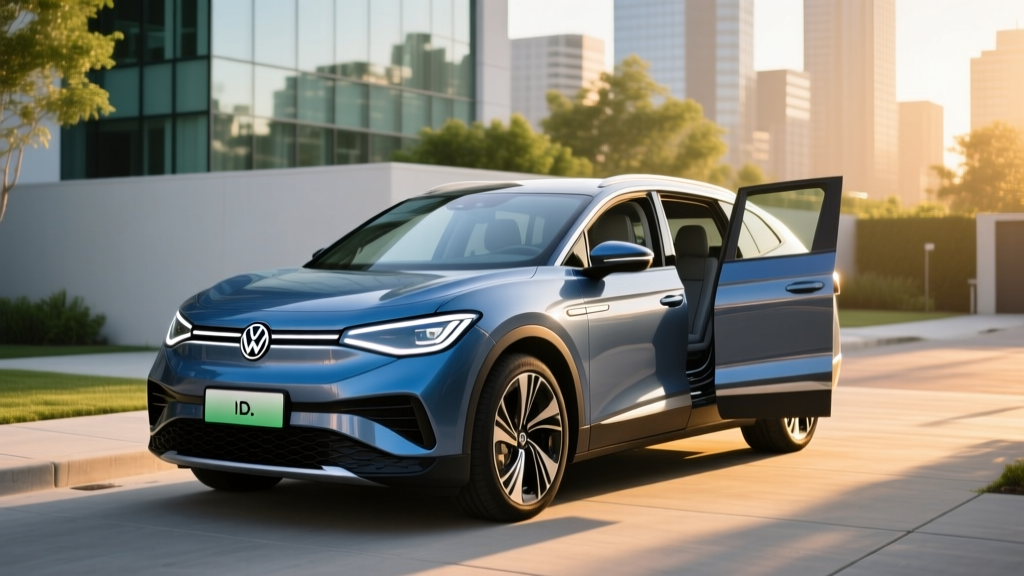
The ID.4 is the most direct replacement—it shares the ID.5's platform, battery, and powertrain but offers more cargo room and a slightly lower price. If charging speed is your priority, the Ioniq 5's 800-volt architecture is unmatched. If range and Supercharger access matter most, the Model Y remains the benchmark.
Who the ID.5 Suited—and Who Should Look Elsewhere
The ID.5 made sense for: Style-conscious buyers who valued ride comfort over maximum range, drove primarily in moderate climates, and had reliable home Level 2 charging. It was a comfortable commuter and weekend cruiser, not a road-trip optimizer.
Look elsewhere if: You need maximum cargo volume (ID.4 or Model Y), fastest possible charging (Ioniq 5/EV6), longest range for cold climates (Model Y Long Range or Ioniq 5 Long Range), or full §30D credit certainty (prioritize U.S.-built models like the ID.4 or GM Ultium vehicles).
Frequently Asked Questions
Is the VW ID.5 still available to buy?
VW has discontinued the ID.5. Some dealers may have remaining new inventory from the final model year, but no new production is scheduled. Certified pre-owned examples will appear on the used market.
What was the ID.5's real-world highway range?
Expect 230–250 miles at sustained highway speeds (70–75 mph) in moderate temperatures. In sub-freezing conditions, plan for 200–220 miles. The EPA's 275-mile estimate assumes a mix of city and highway driving.
Does the ID.5 qualify for the $7,500 federal tax credit?
Eligibility depended on build date and the buyer's adjusted gross income (under $150K single / $300K joint). Battery sourcing requirements under §30D tightened annually. Always verify via the IRS clean vehicle credit lookup before purchasing remaining dealer stock.
How does ID.5 charging speed compare to competitors?
The ID.5 peaked at 175 kW DC, completing 10–80% in roughly 29 minutes. The Hyundai Ioniq 5 (800V architecture) does the same in ~18 minutes at up to 350 kW. The Tesla Model Y peaks at 250 kW and typically finishes in 22–25 minutes.
Should I buy a remaining ID.5 or get an ID.4 instead?
The ID.4 offers nearly identical driving dynamics with more cargo space (64.2 vs. 59.6 cu ft), a lower starting price, and ongoing production (meaning better parts availability and software support). Unless the ID.5's styling is a dealbreaker, the ID.4 is the more practical choice.
What battery chemistry did the ID.5 use?
The ID.5 used an NMC (nickel-manganese-cobalt) lithium-ion pack with 77 kWh usable capacity. NMC offers higher energy density than LFP but requires more careful state-of-charge management for long-term health. VW's battery warranty covers 8 years/100,000 miles with a 70% capacity retention threshold.