The Short Answer on the VW Bug EV
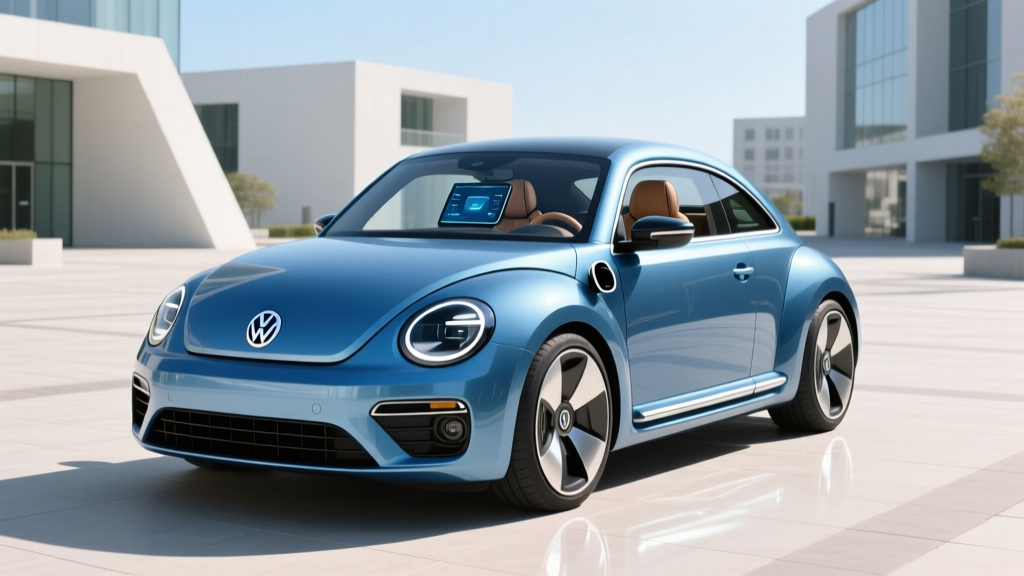
As of mid-2026, Volkswagen has not announced a production electric Beetle. The ID.2all concept (unveiled 2023) remains the closest VW has come to a retro-styled affordable EV, and VW executives have confirmed it will enter production as the ID.2 hatchback — but without Beetle styling. If you're searching for a "VW Bug EV" because you want a retro, affordable, city-friendly electric car, your real-world options in 2026 are the VW ID.3 (Europe only), the upcoming ID.2 (expected ~€25,000 / ~$27,000, arriving late 2026 or 2027), or converting a classic Beetle through an aftermarket EV-swap shop. No factory-new electric Beetle exists on any VW dealer lot today.
Why the VW Bug EV Search Keeps Trending
The original Beetle is one of the most iconic cars ever built — over 21 million units sold globally across its production run. When VW retired the Beetle in 2019, speculation about an electric revival began almost immediately. That speculation intensified when VW's then-CEO Herbert Diess publicly floated the idea of an electric Beetle based on the MEB platform in 2021, and again when the ID.2all concept debuted in March 2023 with a starting price target of under €25,000.
However, VW's subsequent strategy shift under CEO Oliver Blume prioritized the ID.2 as a Golf-segment hatchback rather than a retro tribute. The production ID.2 will ride on the MEB+ (MEB Entry) platform with front-wheel drive — a departure from the rear-motor, rear-drive layout of existing ID models — but its design language follows VW's current ID family, not the Beetle's rounded silhouette.
The result: search interest in "VW Bug EV" persists because buyers want the idea — an affordable, charming, city-sized electric car with heritage — even though the product doesn't exist.
What VW's ID.2 Actually Offers (The Closest Thing)
The production ID.2, expected to arrive in European markets in late 2026 or early 2027, is the spiritual successor to what a VW Bug EV might have been. Here's what we know from VW's preliminary disclosures:
| Specification | VW ID.2 (Preliminary / Announced) |
|---|---|
| Platform | MEB+ (MEB Entry), front-wheel drive |
| Battery (estimated) | ~48-58 kWh usable, LFP chemistry likely |
| WLTP Range (est.) | ~280-340 miles (WLTP); expect ~230-280 EPA if US-spec |
| Peak DC Charge Rate | ~100-125 kW (est.) |
| 10-80% DC Charge Time | ~25-30 minutes (est.) |
| Motor Output | ~130-150 kW (~175-200 HP) |
| 0-62 mph (0-100 km/h) | ~7.0-8.0 seconds (est.) |
| Starting Price (Europe) | Under €25,000 (~$27,000 USD) |
| US Availability | Not confirmed — VW has not committed to US ID.2 sales |
Critical caveat: These are preliminary figures based on VW's concept disclosures and industry estimates. Final EPA range, pricing, and US availability remain unconfirmed. VW has historically been reluctant to bring its smallest EVs stateside — the ID.3 is not sold in the US, and the ID.1 (city car) was never announced for American markets.
Real Options for Retro EV Buyers in 2026
If the VW Bug EV concept is what drew you here, you're likely shopping for an EV that's compact, affordable, and has personality. Here's how the actual market stacks up:
| Vehicle | EPA Range | Battery | Starting MSRP | Style Factor |
|---|---|---|---|---|
| Mini Cooper SE (2025/26) | ~114 mi (current gen) | 32.6 kWh (NMC) | ~$30,900 | High — retro-modern icon |
| Fiat 500e (2024+) | 149 mi | 42 kWh (NMC) | ~$32,500 | High — Italian charm |
| Hyundai Ioniq 5 (retro-pixel design) | 303 mi (Long Range) | 77.4 kWh (NMC) | ~$42,600 | Medium — retro-futurist |
| VW ID.4 (closest US VW EV) | 275 mi (Pro S AWD) | 82 kWh (NMC) | ~$40,700 | Low — conventional SUV |
| Classic Beetle EV Conversion | 80-150 mi (varies) | 20-40 kWh (varies) | $35,000-$65,000+ | Maximum — genuine Beetle |
The Mini Cooper SE and Fiat 500e are the closest mainstream equivalents to what a production VW Bug EV would represent: small, stylish, city-oriented EVs with heritage branding. The Mini's range is its Achilles' heel — 114 miles EPA is limiting for anything beyond commuting. The Fiat 500e does better at 149 miles but still falls short of the 250+ mile threshold most American buyers want.
EV Conversion: The Actual VW Bug EV You Can Own
Several specialty shops offer electric conversions of classic VW Beetles (1960s-1970s air-cooled models). Companies like Zelectric Motors (San Diego), EV West, and various European converters install modern electric powertrains into original Beetle bodies. Here's what that looks like in practice:
Classic Beetle EV Conversion — Typical Cost Breakdown
| Component | Cost Range |
|---|---|
| Donor Beetle (running, decent body) | $8,000 - $18,000 |
| EV conversion kit (motor, controller, charger) | $8,000 - $15,000 |
| Battery pack (20-40 kWh, typically NMC or recycled Tesla modules) | $6,000 - $14,000 |
| Labor (professional conversion, 200-400 hours) | $15,000 - $25,000 |
| Miscellaneous (wiring, adapters, gauges, safety systems) | $2,000 - $5,000 |
| Total (professional conversion) | $39,000 - $77,000 |
What you get: A genuine Beetle with 80-150 miles of range (depending on battery size), 60-100 HP, and a 0-60 time of roughly 8-12 seconds. The driving experience is uniquely charming — original Beetle chassis dynamics with instant electric torque. The tradeoffs are real: no DC fast charging (most conversions are Level 2 only, at 3.3-7.2 kW), no modern safety systems, limited range, and no manufacturer warranty on the powertrain.
Federal tax credit note: Converted classic vehicles do not qualify for the IRS §30D new EV tax credit. The vehicle must be new, from a qualified manufacturer, and meet battery-sourcing and MSRP requirements. A converted Beetle is classified as a modified used vehicle. Check IRS §30D guidelines for full eligibility rules.
Cost Reality: Small EV vs. Gas Compact Car
Let's compare what you'd actually spend owning a small EV (using the Fiat 500e as a stand-in for the "VW Bug EV" concept) versus a comparable gas-powered compact over five years:
| Cost Factor (5-Year / 75,000 Miles) | Fiat 500e (EV) | Honda Civic (Gas) |
|---|---|---|
| Purchase Price (MSRP) | $32,500 | $24,500 |
| Federal Tax Credit (§30D) | $0 (Stellantis credit exhausted / sourcing limits apply) | $0 |
| Fuel/Energy Cost | ~$2,625 (home charging at $0.14/kWh, 3.5 mi/kWh) | ~$9,375 (32 MPG avg at $4.00/gal) |
| Maintenance | ~$1,500 (tires, cabin filter, wipers) | ~$3,500 (oil changes, brakes, filters, belts) |
| Insurance (avg) | ~$8,500 | ~$7,200 |
| Estimated Depreciation | ~$14,000 | ~$9,500 |
| Total 5-Year Cost | ~$61,125 | ~$54,075 |
The EV saves roughly $6,750 on fuel and $2,000 on maintenance over five years, but those savings don't fully offset the higher purchase price, steeper depreciation, and slightly higher insurance premiums. The math flips in the EV's favor if you qualify for a tax credit, have access to cheap off-peak electricity, or drive significantly more than 15,000 miles per year. Source: efficiency data via fueleconomy.gov.
Common Misconceptions About a VW Electric Beetle
| Myth | Fact |
|---|---|
| "VW is releasing an electric Beetle in 2025/2026." | No production electric Beetle has been announced. The ID.2 is a conventional hatchback, not a Beetle revival. |
| "The ID.2all concept IS the electric Beetle." | The ID.2all was a design study. The production ID.2 drops the retro styling and follows VW's current ID design language. |
| "An EV-converted Beetle qualifies for the $7,500 tax credit." | It does not. §30D requires a new vehicle from a qualified manufacturer with compliant battery sourcing. Conversions are modified used vehicles. |
| "VW's MEB platform can easily support a Beetle shape." | Technically possible, but MEB's skateboard architecture has fixed wheelbase and battery dimensions that constrain the short-overhang, rounded-body Beetle silhouette without significant custom engineering. |
| "I can import a European ID.2 or ID.3 to the US." | Federal import regulations (NHTSA, EPA, DOT) make importing non-US-spec vehicles extremely difficult and expensive. The 25-year import rule applies to most exemptions. |
Decision Framework: What Should You Actually Buy?
Choose Your Path
Choose the Mini Cooper SE if: You prioritize style and city driving, have reliable home Level 2 charging, commute under 60 miles round-trip, and accept the 114-mile EPA range as sufficient.
Choose the Fiat 500e if: You want a charming, compact EV with slightly better range (149 mi EPA), and your driving is primarily urban/suburban with occasional 100-mile trips.
Choose the Hyundai Ioniq 5 if: You want retro-futurist styling with genuine long-range capability (303 mi EPA), DC fast charging at up to 240 kW (10-80% in ~18 minutes), and the practicality of a crossover.
Choose a Beetle EV conversion if: You're an enthusiast who values the original Beetle experience, accepts range and charging limitations, has a $40,000-$75,000 budget, and views the car as a passion project rather than a primary commuter.
Wait for the VW ID.2 if: You're in Europe, want a sub-€25,000 EV, and don't need Beetle styling. US availability remains unconfirmed — don't plan a purchase around it until VW formally announces American sales.
What First-Time EV Buyers Should Know
If the VW Bug EV search is your entry point into EV ownership, here are the non-negotiable realities that apply to whatever small EV you end up choosing:
- Home charging is essential. Public-only charging in a small-range EV (under 150 miles) is frustrating and expensive. A Level 2 home charger installation typically costs $800-$2,500 (equipment + electrician + permit), and may require a panel upgrade ($1,500-$3,000) if your home has a 100-amp service.
- EPA range ≠ real-world range. Expect 15-25% range loss in sustained highway driving (above 70 mph) and 20-40% loss in freezing temperatures. A 149-mile EPA car may deliver only 90-110 miles on a cold winter highway trip.
- kW vs. kWh — know the difference. kW (kilowatts) measures power — how fast you charge. kWh (kilowatt-hours) measures energy — how big your battery is. A 42 kWh battery charged at 7.2 kW takes about 6 hours from empty to full.
- Small EVs have small batteries and slower DC charging. The Fiat 500e peaks at roughly 85 kW DC — adequate but not fast. Charging curves taper significantly above 80% state of charge. Plan 30-40 minute stops on road trips.
- Insurance can be 15-30% higher for EVs. Get quotes before purchasing. Insurers cite higher repair costs and parts pricing for EVs.
Frequently Asked Questions
Is VW making an electric Beetle?
Not as of 2026. VW has not announced a production electric Beetle. The ID.2, based on the ID.2all concept, is a conventional hatchback expected in Europe in late 2026 or 2027, but it does not carry Beetle styling or branding.
Can I buy a VW electric car in the US in 2026?
Yes — VW sells the ID.4 (compact SUV) and ID. Buzz (electric van) in the US. The ID.4 starts around $40,700 with up to 291 miles of EPA range. The ID. Buzz offers three rows and ~231 miles of range starting around $59,995. Neither resembles a Beetle.
How much does a Beetle EV conversion cost?
A professional electric conversion of a classic VW Beetle typically runs $39,000 to $77,000 all-in (donor car + parts + labor). DIY conversions using kits from EV West or similar suppliers can reduce cost to $20,000-$35,000 if you have significant mechanical and electrical skills.
Does a converted Beetle EV qualify for any tax credits?
No. The federal §30D credit requires a new vehicle from a qualified manufacturer. Converted classic cars do not qualify. Some states may offer separate incentives for EV registration or conversion — check your state's energy office or AFDC state law database for local programs.
What's the cheapest small EV I can buy new in 2026?
The Mini Cooper SE starts around $30,900 and the Fiat 500e around $32,500. The Nissan Leaf (if still available in your market) starts near $28,140. For a practical, longer-range compact, the Chevrolet Equinox EV and Hyundai Kona Electric both start in the $33,000-$34,000 range with 250+ miles of EPA range.
Will the VW ID.2 come to the United States?
VW has not confirmed US availability for the ID.2. The company has historically kept its smallest EVs (ID.1, ID.3) in European and Asian markets. Given US consumer preference for larger vehicles and VW's current American lineup focused on the ID.4 and ID. Buzz, a US ID.2 launch is possible but far from certain.