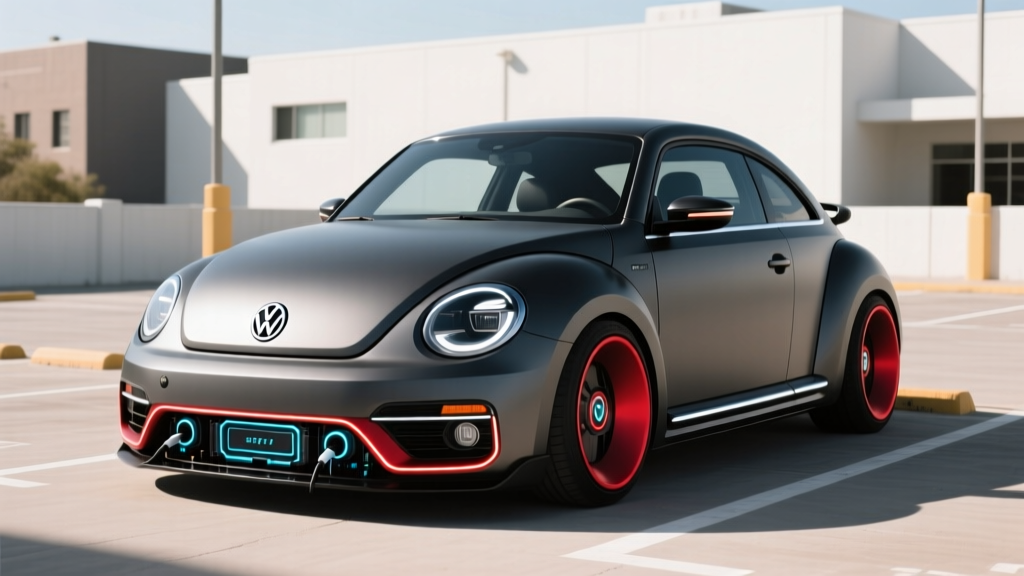
Quick Answer: What Does a VW Bug Electric Conversion Cost?
A professional VW Bug electric conversion typically costs between $15,000 and $35,000 on top of the donor vehicle price, yielding 60–120 miles of real-world range depending on battery capacity (usually 20–40 kWh). DIY kits start around $8,000–$12,000 in parts alone but require significant electrical and fabrication skill. The converted Bug will charge on standard Level 1 (120V) or Level 2 (240V) home chargers — most conversions do not support DC fast charging. Compared to buying a new 2026 EV like a Chevrolet Equinox EV ($33,000, EPA 319 mi), a conversion is a passion project, not a cost-saving move.
Why Convert a Classic VW Beetle to Electric?
The original Volkswagen Beetle — produced from 1938 through 2003 in various markets — is one of the most popular donor cars for EV conversions. The reasons are mechanical and practical:
- Light weight: A classic Beetle weighs roughly 1,800–2,000 lbs, meaning a modest battery pack (20–30 kWh) can deliver usable range without overtaxing the suspension or brakes.
- Simple drivetrain: The rear-engine, rear-wheel-drive layout with a manual transaxle makes it straightforward to couple an electric motor to the existing transmission.
- Abundant donor cars: Rust-free Beetle shells and rolling chassis are available for $2,000–$8,000 depending on condition and year.
- Strong community: Forums like EV-Customs and the DIY Electric Car community have documented dozens of Beetle conversions with wiring diagrams, motor mounts, and battery box designs.
But the appeal is largely emotional and aesthetic. If your goal is economical daily transportation, a new or used production EV will almost always be cheaper per mile of range and come with warranties, safety systems, and DC fast charging that a conversion cannot match.
VW Bug Electric Conversion Cost Breakdown
Here is a realistic line-item budget for a typical VW Beetle EV conversion using a 25–35 kWh battery pack, a 50–80 kW AC induction or permanent magnet motor, and a Level 2 onboard charger:
| Component | DIY Cost | Professional Shop Cost |
|---|---|---|
| Donor VW Beetle (running, decent body) | $3,000–$8,000 | $3,000–$8,000 |
| Electric motor + controller (e.g., NetGain Hyper9, Tesla SDU) | $2,500–$5,000 | $3,500–$7,000 |
| Battery pack (20–40 kWh, used Nissan Leaf or Tesla modules) | $3,000–$8,000 | $5,000–$12,000 |
| BMS (Battery Management System) | $500–$1,500 | $800–$2,000 |
| Onboard charger (Level 2, 3.3–6.6 kW) | $800–$1,800 | $1,200–$2,500 |
| DC-DC converter, wiring, contactors, fuses | $800–$1,500 | $1,200–$2,000 |
| Fabrication (motor mount, battery boxes, cooling) | $500–$2,000 (if DIY-skilled) | $3,000–$8,000 |
| Labor (professional shop, 80–200 hours) | $0 | $8,000–$20,000 |
| Registration, inspection, titling as EV | $200–$800 | $200–$800 |
| Total Estimated Cost | $11,300–$28,600 | $25,900–$62,300 |
Key takeaway: a DIY conversion can come in under $20,000 all-in if you source used EV battery modules and do your own fabrication. A turnkey professional conversion of a show-quality Beetle can easily exceed $50,000.
Range, Charging & Performance: What to Expect
A converted Beetle is not going to rival a Tesla Model 3 on any spec sheet. Here's what realistic numbers look like for a typical build:
| Spec | VW Bug EV Conversion (Typical) | Original VW Beetle (Gas, Late Model) | 2026 Chevy Equinox EV 2LT (Reference) |
|---|---|---|---|
| Battery / Fuel | 25–35 kWh (NMC or LFP modules) | 10.5-gallon tank | 85 kWh (usable), NMC |
| EPA Range | N/A (no EPA testing) | ~280 miles | 319 miles |
| Real-World Range | 60–120 miles (varies by pack size, driving, weather) | ~260 miles | ~260–290 miles (highway/cold) |
| Efficiency | ~250–350 Wh/mile | ~26 MPG combined | ~290 Wh/mile (3.4 mi/kWh) |
| Charging (Level 1, 120V) | ~1.4 kW → ~4–5 mi/hr | N/A | ~1.4 kW → ~4 mi/hr |
| Charging (Level 2, 240V) | 3.3–6.6 kW → 12–25 mi/hr (full charge in 5–10 hrs) | N/A | 11.5 kW → ~36 mi/hr |
| DC Fast Charging | Almost never supported | N/A | 150 kW peak, 10–80% in ~25 min |
| 0–60 mph | 8–14 seconds (depends on motor) | ~16 seconds (1970s 1600cc) | ~7.6 seconds |
| Horsepower | 60–120 HP (motor-dependent) | ~48 HP (late air-cooled) | 213 HP |
Real-World Range Reality Check
A 30 kWh pack in a Beetle that averages 300 Wh/mile gives you ~100 miles of range in mild conditions. In cold weather (below 40°F), expect a 20–35% reduction due to battery chemistry limitations and cabin heating — potentially dropping to 65–80 miles. Highway driving at 70+ mph also cuts range significantly compared to city driving with regenerative braking. Most conversion owners treat their EV Bugs as around-town cars, not road-trip vehicles.
Charging at Home: What You'll Need
Virtually all VW Bug conversions rely on home charging. Here's what that entails:
Level 1 (120V Standard Outlet)
If your onboard charger supports 120V input (most do via a standard J1772 inlet), you can plug into any household outlet. At ~1.4 kW, a 30 kWh pack takes roughly 21 hours for a full charge — fine if you drive under 30 miles per day and can charge overnight.
Level 2 (240V Dedicated Circuit)
A 240V / 30–50 amp circuit with a Level 2 EVSE (like a ChargePoint Home Flex or Emporia Level 2) is the practical choice. Installation costs vary:
| Item | Estimated Cost |
|---|---|
| Level 2 EVSE unit (hardwired or NEMA 14-50) | $350–$750 |
| Electrician: 240V/50A circuit run (50 ft avg) | $800–$2,500 |
| Electrical panel upgrade (if needed, 100A→200A) | $1,500–$3,500 |
| Permit and inspection | $100–$400 |
| Total (no panel upgrade) | $1,250–$3,650 |
| Total (with panel upgrade) | $2,750–$7,150 |
Have a licensed electrician assess your panel capacity before committing. A converted Beetle drawing 6.6 kW continuously for hours needs a circuit with adequate headroom.
Converted VW Bug vs. Buying a New EV: The Honest Comparison
This is where most prospective converters need a reality check. Here's a five-year cost comparison assuming 8,000 miles/year driven:
| Cost Category | VW Bug EV Conversion (DIY, $18K all-in) | 2026 Chevy Equinox EV 2LT (~$33K MSRP) |
|---|---|---|
| Purchase / Build Cost | $18,000 | $33,000 |
| Federal Tax Credit (§30D) | $0 (not eligible — custom conversion) | Up to $7,500 (subject to income, MSRP, and battery sourcing rules per IRS §30D) |
| Effective Purchase Price | $18,000 | ~$25,500 (if full credit applies) |
| Charging Cost (5 yrs, 40,000 mi @ $0.15/kWh) | ~$2,000 (at ~333 Wh/mi) | ~$1,740 (at ~290 Wh/mi) |
| Maintenance (5 yrs) | $500–$1,500 (simple drivetrain, but custom parts) | $1,200–$2,000 (warranty-covered early years) |
| Insurance (5 yrs) | $3,500–$6,000 (specialty/classic car EV insurance) | $4,500–$7,500 (new EV premiums) |
| Battery Replacement Risk | $3,000–$8,000 (used modules may degrade faster) | $0 (8 yr / 100,000 mi warranty) |
| Estimated 5-Year Total | $27,000–$35,500 | $32,940–$43,740 |
The conversion can be cheaper over five years — but only if you do the work yourself, avoid major battery issues, and don't need DC fast charging or modern safety features. The Equinox EV gives you 319 miles of EPA range, automatic emergency braking, lane-keeping, a warranty, and DC fast charging — none of which a converted Beetle offers.
Common Misconceptions About VW Bug EV Conversions
| Myth | Fact |
|---|---|
| "Converting my Beetle will save me money vs. buying a new EV." | Only if you DIY and already own the donor car. Professional conversions often exceed $40,000 total — more than a tax-credit-adjusted new EV with 300+ miles of range. |
| "I can use Tesla Superchargers with my converted Bug." | No. Tesla's NACS Supercharger network requires authenticated communication protocols that aftermarket conversion systems don't support. You're limited to Level 1 and Level 2 AC charging. |
| "Electric conversions are maintenance-free." | The drivetrain is simpler, but conversions require BMS monitoring, coolant system maintenance, contactor inspection, and eventual battery module replacement. Used battery cells degrade unpredictably. |
| "I'll get 150+ miles of range easily." | Realistic range for a Beetle-sized battery bay (25–35 kWh) is 60–120 miles. Achieving 150+ miles requires 45+ kWh, which adds weight that the Beetle's suspension and brakes aren't designed for. |
| "Any mechanic can service my EV conversion." | Most shops won't touch custom high-voltage systems. You'll likely be your own technician or rely on niche EV-conversion specialists. |
| "The federal EV tax credit applies to conversions." | It does not. IRS §30D applies only to new qualified plug-in electric vehicles from certified manufacturers. Conversions are ineligible. |
Legal, Registration & Safety Considerations
Before you start tearing into a Beetle, understand the regulatory landscape:
- State registration varies wildly. Some states (California, Oregon, Washington) have clear processes for registering a converted vehicle as an EV — often requiring a brake inspection, weight certification, and high-voltage system check. Other states have no clear pathway, which can mean titling headaches.
- No crash safety. A 1960s–1970s Beetle has no airbags, no crumple zones, and no electronic stability control. Converting it to electric doesn't change that. If you plan to drive in modern traffic regularly, weigh this seriously.
- Insurance requires specialty carriers. Standard insurers often won't cover a custom EV conversion. Companies like Hagerty or Grundy offer agreed-value classic car policies, but you'll need to document the conversion components and their value. Expect annual premiums of $700–$1,200.
- Emissions inspections become irrelevant. Most states exempt EVs from smog checks — one small perk of the conversion.
Decision Framework: Should You Convert a VW Bug to Electric?
Convert Your VW Bug If:
- You already own a Beetle and it's a passion project you want to enjoy for years
- You have electrical/fabrication skills (or a trusted conversion shop) and a realistic budget of $15K–$40K
- Your daily driving is under 50 miles round-trip and you have reliable home Level 2 charging
- You value the classic aesthetic and driving experience over modern safety, range, and convenience
- You understand you will not qualify for any federal or state EV tax incentives
Buy a Production EV Instead If:
- You need 200+ miles of range, DC fast charging, and road-trip capability
- You want warranty coverage, modern ADAS (automatic emergency braking, lane-keeping), and crash safety
- You lack home charging access and need reliable public charging infrastructure
- Your budget is under $30,000 and you want the most practical transportation per dollar
- You live in a cold climate where a conversion's already-limited range will drop 20–35% in winter
Frequently Asked Questions
How long does a VW Bug electric conversion take?
A DIY conversion typically takes 200–500 hours spread over 3–12 months, depending on your skill level and fabrication needs. Professional shops quote 2–6 months turnaround for a complete build.
Can I use a Tesla motor and battery in my Beetle conversion?
Yes — Tesla drive units (from Model S or Model 3) are popular in the conversion community, often sourced from salvage vehicles for $2,000–$5,000. However, integrating Tesla's proprietary BMS and controller requires aftermarket solutions like the EV West or OpenInverter stack. Tesla battery modules are heavier and physically larger, which can be a packaging challenge in a Beetle's compact chassis.
What's the difference between kW and kWh in a conversion?
kW (kilowatts) measures power — how fast the motor can deliver energy or how fast the charger can replenish the battery. A 6.6 kW onboard charger delivers 6.6 kilowatts of power. kWh (kilowatt-hours) measures energy capacity — the size of your "fuel tank." A 30 kWh battery holds 30 kilowatt-hours of energy. Confusing the two is the most common mistake in EV conversion planning.
Will a converted Beetle qualify for HOV lane access?
It depends on your state. California's Clean Air Vehicle sticker program, for example, requires the vehicle to appear on the EPA's qualified vehicle list — custom conversions generally don't qualify. Check your state DMV for specifics.
What battery chemistry is best for a VW Bug conversion?
Most builders use NMC (nickel manganese cobalt) modules salvaged from Nissan Leaf, Chevy Bolt, or Tesla packs because of their high energy density — critical in a small, light car. LFP (lithium iron phosphate) cells offer longer cycle life and better thermal stability but are heavier and bulkier per kWh, which makes them less ideal for a Beetle's limited battery space. If weight and packaging aren't your primary concern, LFP is the safer, longer-lasting choice.
Is it cheaper to convert a Beetle or buy a used EV?
A used 2020–2023 Chevy Bolt EV with 100–150 miles of range can be found for $12,000–$18,000 — often less than a comparable conversion, and with factory warranty remaining on the battery. If practicality is the goal, a used production EV wins. If the goal is a one-of-a-kind classic with zero tailpipe emissions, the conversion is the point.