The Quick Answer: Does a VW Beetle Electric Car Exist in 2026?
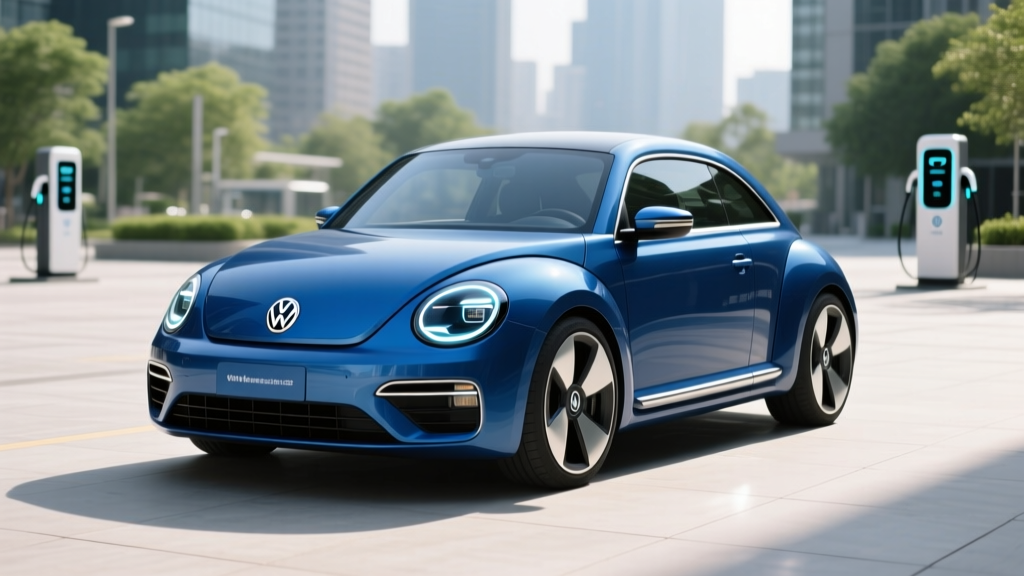
No. Volkswagen does not sell a factory-built electric Beetle in 2026. The Beetle was discontinued after the 2019 model year, and VW has not announced a production electric Beetle as of early 2026. What does exist: (1) a thriving aftermarket of classic Beetle EV conversions costing $30,000–$70,000+, (2) VW's MEB-platform EVs like the ID.4 and upcoming ID.2all that carry the brand's affordable-EV torch, and (3) concept teasers (the 2022 ID. Life concept) that hint at a retro-styled small EV — but nothing wearing the Beetle nameplate is confirmed for production.
If you're searching for a "VW Beetle electric car" because you want a stylish, affordable, retro-flavored EV, this guide breaks down your real options, the economics of conversions versus buying a modern VW EV, and a decision framework to help you choose.
Why VW Killed the Beetle — and Why an Electric Version Hasn't Returned
The Beetle's second generation (1998–2011 as the New Beetle, 2012–2019 as simply "Beetle") was built on VW's A5/A6 platform, which shared underpinnings with the Jetta and Golf. It was a low-volume, emotionally driven product: peak U.S. sales hit roughly 37,000 units in 2013 before tapering to under 17,000 by its final year.
VW's electrification strategy since 2020 has been ruthlessly platform-focused. The company invested over €30 billion in its MEB (Modular Electric Drive Matrix) architecture, which underpins the ID.3, ID.4, ID.5, ID.7, and ID.Buzz. Every dollar has gone toward vehicles that share components at massive scale. A low-volume retro coupe like the Beetle doesn't fit that economics model — at least not yet.
VW CEO Thomas Schäfer has publicly floated the idea of heritage-inspired EVs (including a potential electric Beetle or electric Golf hatchback on the MEB platform), but as of 2026, no production timeline or commitment exists. The closest analog is the ID.Buzz, which successfully revived VW's microbus as a modern electric van — proving VW can do heritage EVs, but only when the business case supports it.
Classic Beetle EV Conversions: What They Cost and What You Get
Several specialty shops — including Zelectric Motors (San Diego), EV West (Oceanside, CA), and European firms like Electric Classic Cars (UK) — convert 1960s–1970s air-cooled Beetles to electric powertrains. Here's what a typical conversion delivers:
| Specification | Typical Range |
|---|---|
| Battery Capacity | 20–36 kWh (LFP or NMC) |
| EPA-Equivalent Range | 80–140 miles |
| Motor Output | 50–110 kW (67–147 HP) |
| 0–60 mph | 6.5–10.0 seconds |
| DC Fast Charging | Rarely included (most are Level 2 only) |
| Level 2 Charge Time (0–100%) | 4–7 hours at 6.6–7.2 kW |
| Total Conversion Cost | $30,000–$70,000+ (plus donor car) |
| Warranty | Shop-dependent; typically 1–2 years on powertrain |
Real-world ownership reality: These conversions are weekend cars, not daily commuters for most owners. The 80–140 mile range is usable for city driving, but the absence of DC fast charging (on most builds) means road trips are impractical. You're also driving a 50+ year-old chassis with modern electric guts — safety features like airbags, ABS, and crumple zones are absent or minimal compared to any 2026 production EV.
The Closest Production VW EVs to a "Beetle" Experience
If you want a modern VW electric vehicle with character, here's what the 2026 lineup actually offers:
| Model | Battery (usable) | EPA Range | Peak DC Charge | 0–60 mph | Base MSRP |
|---|---|---|---|---|---|
| VW ID.4 (RWD) | 77 kWh (NMC) | 291 mi | 175 kW | 7.7 sec | $40,790 |
| VW ID.4 (AWD Pro S) | 77 kWh (NMC) | 263 mi | 175 kW | 5.4 sec | $49,990 |
| VW ID.Buzz | 86 kWh (NMC) | 231 mi | 175 kW | 7.9 sec | $59,995 |
| VW ID.7 (sedan) | 77 kWh (NMC) | ~320 mi (est.) | 200 kW | 6.5 sec | ~$52,000 (est.) |
Real-World Range Reality: The ID.4's 291-mile EPA rating assumes mixed driving at moderate temperatures. On a 75-mph highway run in 40°F weather, expect roughly 215–235 miles before needing to charge. The ID.Buzz, with its boxy aerodynamics, drops even more on the highway — plan for 175–195 miles in cold-weather highway driving.
Cost Breakdown: EV Conversion vs. Production VW EV vs. Used Gas Beetle
This is where the math gets real. Below is a 5-year total cost of ownership comparison for three paths a Beetle-curious buyer might consider:
| Cost Category | EV Beetle Conversion ($45K avg) | 2026 VW ID.4 Pro ($40,790) | 2019 VW Beetle (used, gas) (~$22,000) |
|---|---|---|---|
| Purchase Price | $45,000 | $40,790 | $22,000 |
| Federal Tax Credit (§30D) | $0 (not eligible — conversion) | Up to $7,500* | $0 |
| Effective Purchase | $45,000 | ~$33,290 | $22,000 |
| Fuel/Energy (5 yrs, 60K mi) | ~$2,700 (home charging) | ~$3,000 (home charging) | ~$7,200 (gas at $3.40/gal, 28 MPG) |
| Maintenance (5 yrs) | ~$800 | ~$1,500 | ~$4,500 |
| Insurance (5 yrs avg) | ~$9,000 (specialty) | ~$7,500 | ~$6,000 |
| Depreciation (est.) | ~$12,000 | ~$16,000 | ~$8,000 |
| 5-Year Total | ~$69,500 | ~$61,290 | ~$47,700 |
*The IRS §30D credit requires meeting battery sourcing, MSRP caps ($55,000 for SUVs), and buyer income limits ($150K single / $300K joint). Verify eligibility with a tax professional. Point-of-sale transfer is available at participating dealers.
Key takeaway: The EV conversion is the most expensive path by far — it's a passion project, not an economic decision. The ID.4 with the tax credit applied is actually cheaper to own over 5 years than a used gas Beetle once fuel and maintenance are factored in.
Common Misconceptions About an Electric VW Beetle
| Myth | Fact |
|---|---|
| "VW is releasing an electric Beetle in 2026." | VW has not confirmed any electric Beetle production. The ID.2all (subcompact EV, ~€25,000) is VW's affordable EV play, not a Beetle revival. |
| "An EV-converted Beetle qualifies for the $7,500 tax credit." | The §30D credit applies only to new qualifying vehicles from OEMs. Aftermarket conversions of classic cars do not qualify. |
| "Electric conversions are maintenance-free." | You eliminate oil changes and exhaust work, but you inherit battery monitoring, inverter servicing, and the maintenance demands of a 50-year-old suspension, brakes, and body. |
| "A converted Beetle can road-trip like a Tesla." | Most conversions lack DC fast charging and offer 80–140 miles of range. Highway road trips require overnight Level 2 stops — not a 20-minute Supercharger session. |
| "VW's ID.4 is basically an electric Beetle." | The ID.4 is a compact crossover SUV sharing no design DNA with the Beetle. It's practical and efficient, but it's not a retro coupe. |
What First-Time EV Buyers Should Know Before Chasing a Retro EV
If the Beetle search is your entry point into EVs, here are the non-negotiable ownership realities to internalize:
Home Charging Is the Foundation
Roughly 80% of EV charging happens at home. A Level 2 home charger (240V, 32–48 amps / 7.7–11.5 kW) adds 25–37 miles of range per hour and costs $500–$1,500 for the unit plus $800–$2,500 for electrician installation (more if your panel needs a 200-amp upgrade). Without home charging, EV ownership becomes significantly less convenient — you're dependent on public infrastructure, which varies wildly by region.
Cold Weather Cuts Range 20–35%
Battery chemistry slows in cold temperatures, and cabin heating draws significant power. A 291-mile ID.4 might deliver only 200–230 miles in sustained 25°F driving. VW's ID.4 includes a heat pump (standard on most trims since 2024), which reduces but doesn't eliminate this penalty.
Charging Speed Is About the Curve, Not the Peak
The ID.4 peaks at 175 kW on DC fast chargers but only sustains that rate between roughly 10–30% state of charge. From 10–80%, expect about 28–30 minutes at a capable 175+ kW station (Electrify America, Tesla Supercharger with Magic Dock). Above 80%, charging slows dramatically to protect battery health — the last 20% can take as long as the first 70%.
Federal Tax Credits Are Complicated
The §30D clean vehicle credit is not a guaranteed $7,500. For 2026, eligibility depends on:
- MSRP caps: $55,000 for sedans, $80,000 for SUVs/vans
- Buyer income limits: $150,000 (single) / $225,000 (head of household) / $300,000 (joint)
- Battery sourcing: Increasing percentages of critical minerals and battery components must be sourced from the U.S. or free-trade-agreement countries — this eliminates some trims/models
- Point-of-sale transfer: You can apply the credit as a down-payment reduction at the dealer rather than waiting for a tax refund
Always verify current eligibility at fueleconomy.gov and consult a tax professional.
Decision Framework: Which Path Is Right for You?
Choose a Classic Beetle EV Conversion If:
- You already own or can source a clean 1960s–70s Beetle donor car
- You want a weekend/show car, not a daily commuter
- You have $40,000–$70,000+ in discretionary budget beyond your primary vehicle
- You can charge at home and your typical drives are under 70 miles
- You accept the safety limitations of a vintage chassis
Choose a 2026 VW ID.4 (or ID.Buzz) If:
- You need a practical daily driver with real cargo space and 5 seats
- You want factory warranty (ID.4: 4yr/50,000 mi vehicle, 8yr/100,000 mi battery)
- You plan road trips and need DC fast charging (175 kW, 10–80% in ~28 min)
- You want to qualify for the §30D federal tax credit
- You value NHTSA/IIHS safety ratings and modern ADAS (Travel Assist, adaptive cruise, lane-keeping)
Wait for a Potential Retro VW EV If:
- You're not in a rush to buy and can monitor VW announcements through 2027
- A retro-styled VW on the MEB platform (ID.2all or a Beetle successor) is your dream car
- You have a current vehicle that meets your needs while you wait
Frequently Asked Questions
Will VW ever make an electric Beetle?
VW executives have expressed openness to heritage-inspired EVs, and the ID.Buzz proves the company can successfully revive iconic nameplates. However, no electric Beetle has been confirmed for production as of 2026. VW's near-term priority is scaling its ID. family and launching the affordable ID.2all in Europe.
How much does it cost to convert a classic Beetle to electric?
Professional conversions typically range from $30,000 to $70,000+, depending on battery size, motor spec, and finish quality. That's on top of the donor vehicle cost ($5,000–$25,000 for a clean 1960s–70s Beetle). Total project cost often lands between $40,000 and $90,000.
Can I get a federal tax credit on a Beetle EV conversion?
No. The IRS §30D clean vehicle credit applies only to new qualifying vehicles purchased from an OEM. Aftermarket EV conversions of classic cars do not meet eligibility requirements.
What's the best VW electric car to buy in 2026?
For most buyers, the VW ID.4 Pro (291 miles EPA, ~$40,790 before incentives) is the value pick. If you want maximum character and space, the ID.Buzz ($59,995, 231 miles) delivers retro vibes with modern practicality. The ID.7 sedan is VW's premium electric offering for those cross-shopping a Tesla Model 3 or Hyundai Ioniq 6.
Is an EV-converted Beetle safe to drive daily?
Converted classic Beetles lack modern safety structures: no airbags (in most builds), no ABS, no electronic stability control, and minimal crumple zones. They're best suited for low-speed city and suburban driving, not highway commuting. For daily driving, a production EV like the ID.4 (5-star NHTSA ratings available) is far safer.
What VW EV has the longest range in 2026?
The rear-wheel-drive VW ID.4 Pro achieves an EPA-estimated 291 miles, the longest range in VW's current U.S. lineup. The upcoming ID.7 sedan is estimated to reach approximately 320 miles, though final EPA certification is pending.