The Short Answer: Volvo's Electric XC90 Is the EX90
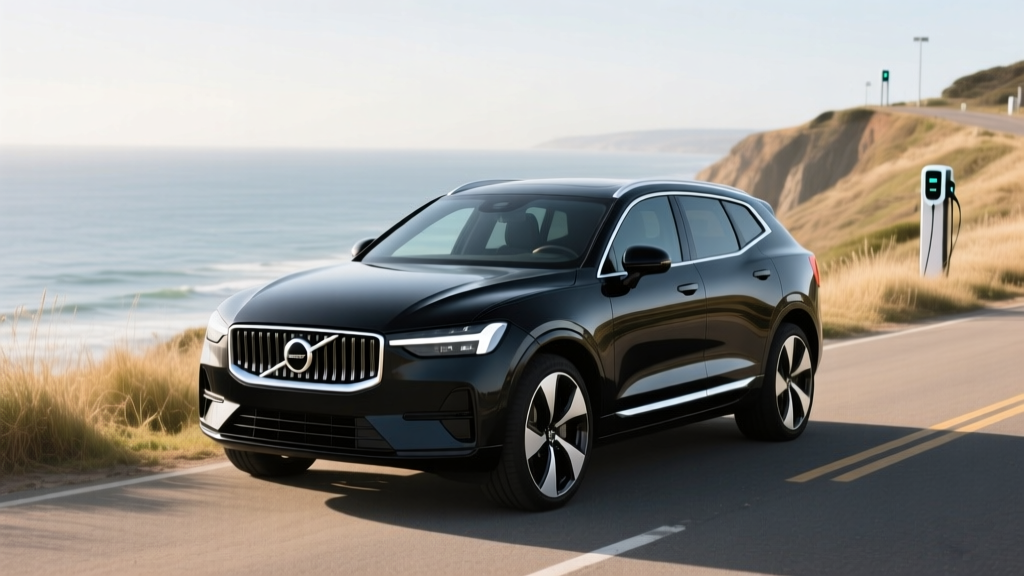
If you're searching for the XC90 electric, you're looking for the Volvo EX90 — Volvo's all-electric flagship three-row SUV that effectively replaces the gas-powered XC90 in the lineup. For the 2026 model year, the EX90 delivers an EPA-estimated 310 miles of range (Twin Motor Performance with 111 kWh battery), peaks at 250 kW DC fast charging (10–80% in approximately 30 minutes), and starts at $76,695 before incentives. It seats seven, produces up to 503 horsepower, and comes with Volvo's most advanced SAE Level 2 driver-assistance suite. However, real-world highway range drops to roughly 260–275 miles, and the $80,000+ MSRP on most trims pushes it above the federal §30D tax credit cap for SUVs.
Why the XC90 Electric Became the EX90
Volvo retired the XC90 nameplate for its electric flagship, adopting the "EX" naming convention (EX30, EX40, EX90) to distinguish battery-electric models from the remaining "XC" hybrid lineup. The EX90 rides on Volvo's SPA2 platform, shares its underpinnings with the Polestar 3, and represents Volvo's commitment to full electrification. If you loved the XC90's Scandinavian design, three-row practicality, and safety-first engineering, the EX90 is its direct electric successor — larger, more powerful, and technologically far more advanced.
The transition matters for buyers cross-shopping: the gas XC90 (mild-hybrid B5/B6) and the Recharge plug-in hybrid (T8) are being phased out in many markets. For 2026, Volvo is steering three-row SUV buyers firmly toward the EX90.
Range, Battery, and Charging: The Numbers That Matter
| Specification | EX90 Twin Motor | EX90 Twin Motor Performance |
|---|---|---|
| Usable Battery Capacity | 111 kWh (NMC) | 111 kWh (NMC) |
| EPA Range (est.) | ~300 miles | ~310 miles |
| Real-World Highway Range | ~250–265 miles | ~260–275 miles |
| Real-World Cold-Weather Range | ~220–240 miles | ~230–250 miles |
| Horsepower | 402 hp | 503 hp |
| 0–60 mph | ~5.7 seconds | ~4.7 seconds |
| Peak DC Fast Charge Rate | 250 kW | 250 kW |
| 10–80% DC Charge Time | ~30 minutes | ~30 minutes |
| Level 2 Charge Rate (AC) | 11 kW | 11 kW |
| Level 2 Full Charge Time | ~11 hours | ~11 hours |
| Charging Port | NACS (native Tesla Supercharger access) | NACS |
EPA vs. Reality: What You'll Actually See
The 310-mile EPA figure assumes a mix of city and highway driving at moderate temperatures. In our experience with similarly sized electric SUVs on the SPA2/SEA platforms, expect:
- 70 mph highway cruising (summer): ~265–275 miles before needing a charger
- 70 mph highway (winter, 30°F): ~230–250 miles — the EX90's heat pump helps, but cold still saps 15–20% of range
- City/suburban mixed driving: 290–310 miles, close to the EPA sticker thanks to regenerative braking
The 250 kW peak charge rate is impressive, but remember that charge curves taper significantly above 80% State of Charge. That 10–80% time of ~30 minutes is realistic at a functioning 350 kW station. At a 150 kW charger, plan for roughly 40–45 minutes.
EX90 vs. Gas XC90 vs. Competitors: The Ownership Math
The most common question from XC90 loyalists: does going electric actually save money? Let's compare the EX90 against the outgoing XC90 B6 AWD and key three-row EV rivals over five years and 75,000 miles.
| Cost Factor | Volvo EX90 Twin Motor Perf. | Volvo XC90 B6 AWD (Gas) | BMW iX xDrive50 |
|---|---|---|---|
| Base MSRP | $81,695 | $59,250 | $87,250 |
| Federal Tax Credit (§30D) | $0 (above $80K SUV cap)* | $0 | $0 (above cap)* |
| 5-Year Fuel/Energy Cost | ~$5,400 (electricity)** | ~$11,250 (premium gas) | ~$5,100 |
| 5-Year Maintenance | ~$2,200 | ~$4,800 | ~$2,400 |
| Estimated 5-Year Insurance | ~$12,500 | ~$9,800 | ~$13,000 |
| 5-Year Depreciation (est.) | ~$32,000 | ~$24,000 | ~$38,000 |
| Total 5-Year Cost of Ownership | ~$69,795 | ~$69,100 | ~$72,750 |
* The §30D federal tax credit caps SUVs at an $80,000 MSRP. The EX90 Twin Motor (non-Performance) at $76,695 may qualify for up to $7,500 depending on battery sourcing and buyer income limits. The Performance trim and most optioned models exceed the cap. Always verify current eligibility at IRS.gov.
** Electricity cost based on $0.15/kWh national average and 3.0 miles/kWh efficiency. Your rate may vary significantly — home solar or time-of-use rates can cut this substantially.
The takeaway: the EX90's higher purchase price is roughly offset by fuel and maintenance savings over five years, making total cost of ownership competitive with the gas XC90 — but only if you can charge at home at reasonable electricity rates. Public DC fast charging at $0.40–$0.60/kWh erases the fuel-cost advantage entirely.
Real-World Ownership: What First-Time EV Buyers Must Know
Home Charging Is Non-Negotiable for Most Owners
The EX90's 111 kWh battery means Level 1 charging (120V household outlet at ~1.4 kW) adds roughly 4–5 miles per hour — a full charge would take over 70 hours. You need a Level 2 home charger (240V, 48-amp circuit) to fully recharge overnight in ~11 hours. Budget $800–$2,500 for a quality Level 2 station (ChargePoint Home Flex, Wallbox Pulsar Max, or Tesla Wall Connector) plus $500–$2,000 for electrician installation, depending on your panel capacity and run distance.
If your home has a 100-amp electrical panel, you may need a panel upgrade ($1,500–$3,000) to support a 60-amp EV circuit alongside existing loads. Get a quote from a licensed electrician before committing to the vehicle.
The NACS Advantage
For 2026, the EX90 ships with a native NACS (North American Charging Standard) port, granting direct access to Tesla's Supercharger network — the most reliable and extensive DC fast-charging network in North America. This is a significant practical advantage over CCS-equipped rivals that still require adapters and may face limited non-Tesla infrastructure in rural areas.
Climate and Driving Pattern Considerations
The EX90's battery thermal management system and heat pump mitigate cold-weather losses, but physics still applies. If you live in the Upper Midwest or Northeast and regularly drive 200+ miles in sub-freezing temperatures, plan charging stops conservatively. The EX90 excels as a daily commuter and family hauler with home charging; cross-country road tripping is viable but requires route planning through the Supercharger or Electrify America networks.
Common Misconceptions About the EX90
| Myth | Fact |
|---|---|
| "The EX90 qualifies for the full $7,500 federal tax credit." | Only the base Twin Motor trim (under $80K MSRP SUV cap) may qualify, and only if battery critical-mineral and component sourcing requirements are met. Most optioned EX90s exceed the cap. Verify at IRS.gov and with your dealer before purchase. |
| "310 miles of range means I can drive 310 miles on a road trip." | Sustained highway speeds, climate control, elevation changes, and cold weather reduce real range to 230–275 miles. Plan charging stops at 200–220 miles for comfort. |
| "Pilot Assist is self-driving." | Volvo's Pilot Assist with LiDAR is an SAE Level 2 driver-assistance system. You must keep your hands on the wheel and eyes on the road at all times. It does not drive the car autonomously. |
| "Battery replacement will cost $30,000+." | The EX90's battery is covered by an 8-year/100,000-mile warranty (retaining at least 70% capacity). NMC degradation data from similar Volvo/Polestar platforms suggests 10–15% loss over 150,000 miles under normal use. Full replacement is extremely rare and would be covered under warranty in most cases. |
| "I can charge on any public charger." | The EX90 uses NACS. While most public networks are adding NACS connectors, some older Electrify America and ChargePoint stations still have CCS-only cables. Use the Volvo app or PlugShare to verify connector availability on your route. |
Trims, Pricing, and What You Actually Get
For 2026, Volvo offers the EX90 in two primary powertrain configurations, with Plus and Ultra trim levels:
- EX90 Twin Motor Plus: $76,695 — 402 hp, 300-mile range, premium interior, 14.5" center display, Pilot Assist with LiDAR, air suspension, panoramic roof
- EX90 Twin Motor Ultra: ~$81,695 — adds premium audio (Bowers & Wilkins), upgraded interior materials, heated/ventilated rear seats, advanced air purification
- EX90 Twin Motor Performance Ultra: ~$86,695 — 503 hp, 310-mile range, sport-tuned suspension, performance styling, all Ultra features
Key standard features across all trims include the LiDAR sensor (roof-mounted, for enhanced object detection), a Qualcomm Snapdragon-powered infotainment system with Google built-in, over-the-air update capability, bi-directional charging (V2L/V2H-ready), and Volvo's 4-year/50,000-mile vehicle warranty plus 8-year/100,000-mile battery warranty.
For detailed EPA efficiency ratings and official range data, check fueleconomy.gov once the EX90 is fully listed, and review IIHS crash-test results when available for the current model year.
Decision Framework: Is the EX90 (XC90 Electric) Right for You?
Choose the EX90 If:
- You have home charging access (garage or driveway with 240V circuit capability)
- You need three rows but want electric — the EX90 is one of very few 7-seat luxury EVs
- You value Safety above all — the LiDAR-equipped Pilot Assist and Volvo's structural engineering are class-leading
- Your daily commute is under 150 miles round-trip, with occasional 250-mile road trips
- You want native Supercharger access without adapters
- You're upgrading from an XC90 and want to stay in the Volvo ecosystem
Look Elsewhere If:
- You cannot install a home charger — apartment/condo dwellers without workplace charging will find the 111 kWh battery expensive and slow to fill on public infrastructure alone
- Your budget is under $70,000 — consider the Kia EV9 (starts ~$56K, 3-row, 304-mile range) or wait for the smaller Volvo EX60
- You regularly tow over 5,000 lbs — the EX90's 5,000-lb tow rating is adequate for light trailers but trails the Rivian R1S (7,700 lbs)
- You want hands-free highway driving — Volvo's Pilot Assist requires hands on wheel; GM Super Cruise and Ford BlueCruise offer true hands-free (still Level 2, eyes-on) on mapped highways
- Federal tax credit eligibility is a dealbreaker — the MSRP cap issue may disqualify most EX90 configurations
Frequently Asked Questions
Is the Volvo EX90 the same as the XC90 electric?
Yes. Volvo rebranded its electric three-row SUV from the anticipated "XC90 Electric" name to the EX90, consistent with its new naming convention where "EX" denotes battery-electric vehicles and "XC" denotes hybrids/ICE. The EX90 is the spiritual and practical successor to the XC90.
How long does it take to charge the EX90 at home?
On a Level 2 home charger (11 kW / 48 amps), a full 0–100% charge takes approximately 11 hours. Most owners plug in overnight and wake up to a full battery. On a standard 120V outlet (Level 1), expect 70+ hours for a full charge — impractical for daily use with a battery this large.
Does the EX90 qualify for the $7,500 federal EV tax credit?
It depends on the trim and your tax situation. The §30D credit caps SUVs at $80,000 MSRP. The base EX90 Twin Motor Plus at $76,695 may qualify, but adding packages can push it over the limit. You must also meet income thresholds ($150K single / $300K joint AGI) and the vehicle's battery must satisfy critical-mineral and component sourcing rules. Consult IRS.gov and a tax professional before relying on the credit.
Can the EX90 tow?
Yes. The EX90 is rated to tow up to 5,000 pounds when properly equipped with the factory tow package. Expect range to drop 25–40% when towing a loaded trailer at highway speeds — plan for more frequent charging stops.
How does the EX90 compare to the Tesla Model X?
The EX90 prioritizes interior quality, ride comfort, and safety technology over outright performance. The Model X offers more range (up to 348 miles), faster charging via V4 Superchargers, and Falcon Wing rear doors, but its interior materials and build consistency trail Volvo. The EX90's starting price is also roughly $10,000–$15,000 lower than a comparably equipped Model X.
What's the warranty coverage on the EX90 battery?
Volvo covers the EX90's high-voltage battery for 8 years or 100,000 miles, whichever comes first, guaranteeing at least 70% of original capacity retention. The vehicle limited warranty is 4 years / 50,000 miles, and complimentary scheduled maintenance is included for 3 years / 36,000 miles.