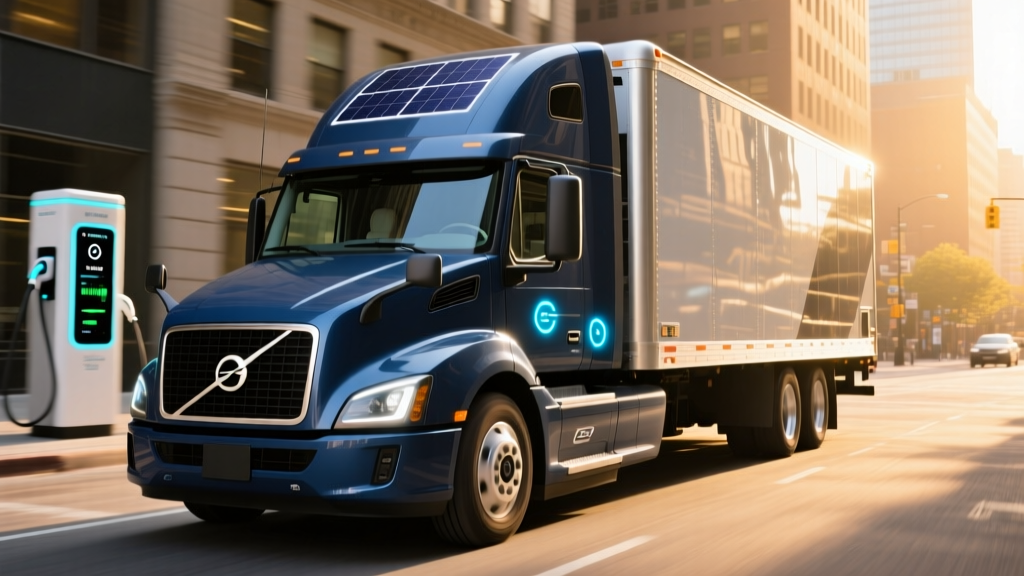
The Volvo VNR Electric is a Class 8 battery-electric day-cab and sleeper tractor designed for regional haul, drayage, and distribution routes. For fleet operators evaluating the switch from diesel, the core answer is straightforward: the VNR Electric delivers between 150 and 275 miles of real-world range depending on battery configuration (4-battery or 6-battery pack), supports DC fast charging up to 250 kW (10–80% in roughly 60–90 minutes depending on pack size), and eliminates diesel fuel costs and diesel exhaust fluid (DEF) purchases while introducing new infrastructure and duty-cycle planning requirements.
Quick Verdict: Is the Volvo VNR Electric Right for Your Fleet?
The VNR Electric works best for fleets running predictable routes under 250 miles per shift with depot-based charging access. If your trucks return to base nightly and your daily mileage fits within the usable battery envelope, the VNR Electric offers a compelling total-cost-of-ownership (TCO) advantage over diesel. If you run long-haul, irregular routes, or operate in extreme cold without route-margin planning, a diesel or hybrid-electric alternative remains the pragmatic choice today.
Volvo VNR Electric: Specs at a Glance
Volvo offers the VNR Electric in multiple axle configurations (4×2, 6×2, 6×4) with two battery-pack options. Below are the key engineering figures that matter for procurement decisions.
| Specification | 4-Battery Pack | 6-Battery Pack |
|---|---|---|
| Usable Battery Capacity | ~264 kWh (NMC) | ~396 kWh (NMC) |
| EPA-Estimated Range | ~150 miles | ~275 miles |
| Real-World Range (loaded, mixed) | 110–140 miles | 200–250 miles |
| Motor Output | 450 hp (335 kW) peak / 250 hp continuous | |
| Peak Torque | 4,051 lb-ft at rear wheels | |
| Max DC Fast Charge Rate | 250 kW (CCS1) | |
| 10–80% DC Charge Time | ~60 minutes | ~90 minutes |
| Level 2 AC Charge (19.2 kW) | ~14 hours (full) | ~21 hours (full) |
| GVWR | Up to 82,000 lbs (GCWR) | |
| Base MSRP (estimated) | $350,000–$420,000 (varies by config & incentives) | |
| Battery Warranty | 5 years / unlimited miles (performance guarantee) | |
Sources: Volvo Trucks USA VNR Electric, EPA Green Vehicles – Medium & Heavy Duty.
Real-World Range: What the EPA Number Doesn't Tell You
The headline 275-mile figure for the 6-battery VNR Electric assumes ideal conditions: moderate temperatures, flat terrain, and a partially loaded trailer. In real-world fleet operations, several factors compress usable range significantly.
Range Reality Check
EPA estimate (6-battery): 275 miles
Real-world loaded (80,000 lbs GCW, highway): 200–250 miles
Cold weather (below 20°F, loaded): 150–200 miles
Hot weather (above 95°F with cab HVAC): 220–260 miles
Rule of thumb: plan routes at 70% of the EPA figure to maintain a safety buffer for traffic, detours, and seasonal temperature swings.
Unlike passenger EVs, heavy-duty electric trucks face range penalties that scale with payload. A fully loaded 80,000-lb combination at sustained 65 mph highway speeds will draw significantly more energy than a lighter, stop-and-go distribution load at 35 mph averages. Regenerative braking recovers meaningful energy in urban and port-drayment cycles but offers minimal benefit on flat interstate runs.
The VNR Electric uses NMC (nickel-manganese-cobalt) lithium-ion cells. NMC chemistry provides higher energy density than LFP (lithium iron phosphate), which is critical for fitting enough capacity into a Class 8 chassis. However, NMC batteries degrade faster under sustained high-temperature operation and repeated 100% state-of-charge cycles. Volvo's thermal management system actively conditions the pack, but fleet operators should expect gradual capacity loss over 5–7 years of daily cycling — typically 1.5–2.5% per year under normal use, based on industry data from early-adopter fleets.
Charging Infrastructure: Depot Power Is Your Biggest Hurdle
The single most underestimated cost and timeline risk in VNR Electric ownership is depot charging infrastructure. You cannot simply plug a Class 8 electric truck into a standard commercial outlet.
| Level | Power (kW) | Miles Added per Hour | Use Case |
|---|---|---|---|
| Level 2 AC (19.2 kW) | 19.2 kW | ~12–18 mi/hr | Overnight depot top-off |
| DC Fast (50 kW) | 50 kW | ~35–50 mi/hr | Opportunity charging (smaller depots) |
| DC Fast (150 kW) | 150 kW | ~100–130 mi/hr | Mid-shift opportunity charging |
| DC Fast (250 kW peak) | 250 kW | ~160–200 mi/hr | Rapid depot turnaround |
Important kW vs kWh distinction: kW (kilowatts) measures charging power — how fast energy flows into the battery. kWh (kilowatt-hours) measures battery capacity — how much total energy the pack stores. A 250 kW charger delivers energy at a rate that can add roughly 200 miles of range per hour to the VNR Electric's pack, but the actual charge rate tapers as the battery approaches full state of charge.
Depot Charging Installation Costs
Installing even a single 150 kW DC fast charger at a commercial depot typically requires:
| Component | Cost Range |
|---|---|
| DC Fast Charger Hardware (150 kW) | $80,000–$130,000 |
| Electrical Switchgear & Transformer | $30,000–$80,000 |
| Trenching, Conduit & Wiring | $15,000–$50,000 |
| Utility Service Upgrade (if needed) | $50,000–$250,000+ |
| Permits & Engineering | $10,000–$30,000 |
| Total Per Stall | $185,000–$540,000 |
Utility service upgrades are the wildcard. If your depot's existing electrical service cannot support simultaneous charging of multiple trucks, a new medium-voltage transformer and service drop can add six to eighteen months of lead time and substantial cost. Engage your utility provider and a licensed electrical contractor during the earliest planning phase — do not wait until trucks are on order.
Federal and state incentives can offset infrastructure costs. The IRS §30C Alternative Fuel Vehicle Refueling Property Credit provides up to 30% of charging equipment and installation costs (capped at $100,000 per item of property for commercial installations), subject to prevailing-wage and census-tract requirements. Many states, including California's HVIP program, offer additional point-of-purchase vouchers that stack with federal incentives.
Total Cost of Ownership: VNR Electric vs. Diesel
The purchase price of a VNR Electric is roughly 2–3× that of a comparable diesel VNR. The ownership math only works when you account for fuel savings, maintenance reduction, incentive stacking, and operational lifespan.
| Cost Category | VNR Electric | VNR Diesel |
|---|---|---|
| Purchase Price (before incentives) | $380,000 | $155,000 |
| Federal + State Incentives | –$120,000 to –$180,000 | $0 |
| Net Acquisition Cost | $200,000–$260,000 | $155,000 |
| Fuel/Energy (500k miles) | $45,000–$70,000 (electricity) | $175,000–$210,000 (diesel) |
| DEF Costs | $0 | $8,000–$12,000 |
| Maintenance (oil, filters, exhaust, brakes) | $15,000–$25,000 | $45,000–$65,000 |
| Charging Infrastructure (amortized per truck) | $25,000–$60,000 | $0 |
| Insurance (5 years) | $35,000–$50,000 | $30,000–$45,000 |
| Estimated 5-Year TCO | $320,000–$465,000 | $413,000–$487,000 |
Key takeaways from the TCO comparison:
- Fuel savings are the primary lever. Electricity at $0.12–$0.18/kWh (typical commercial/industrial rate) costs roughly $0.35–$0.55 per mile equivalent vs. diesel at $3.80–$4.50/gallon costing $0.60–$0.85 per mile for a 6–7 MPG Class 8 tractor.
- Maintenance savings are real but smaller than fuel. No engine oil changes, no DPF/EGR/SCR system service, no DEF. Regenerative braking extends brake life substantially. However, suspension, steering, tire, and HVAC maintenance remain.
- Incentives determine the breakeven timeline. Without California HVIP or similar state vouchers, the payback period extends to 7–10 years. With maximum incentive stacking, breakeven can occur within 3–4 years of operation.
- Insurance premiums run 10–20% higher for electric heavy-duty trucks due to specialized repair requirements and battery replacement cost exposure.
Common Misconceptions About the VNR Electric
| Myth | Fact |
|---|---|
| "Electric trucks can't pull heavy loads" | The VNR Electric is rated for 82,000 lbs GCWR and delivers peak torque from zero RPM. Drivability under load is excellent — the limitation is range, not pulling power. |
| "Charging takes too long for commercial use" | At 250 kW, a 10–80% charge takes ~90 minutes for the 6-battery pack. For depot-based overnight charging at Level 2, the truck is fully replenished during a standard driver rest period. |
| "The battery will need replacing in 3 years" | NMC packs in commercial service typically retain 80%+ capacity after 5–7 years of daily cycling. Volvo's battery warranty covers performance for 5 years. Full pack replacement costs $80,000–$140,000 but is rarely needed within the first ownership cycle. |
| "You can charge from any public truck stop" | Public DC fast-charging infrastructure for Class 8 trucks is still extremely limited. The VNR Electric ecosystem is depot-centric. Public Megawatt Charging System (MCS) infrastructure is in pilot stages as of 2026. |
| "Electric trucks don't work in cold climates" | They work, but range drops 20–35% in sub-20°F conditions. The VNR Electric's thermal management system preconditioning the battery helps, but fleet planners must derate range expectations and size routes accordingly. |
Decision Framework: Should Your Fleet Go VNR Electric?
Choose the Volvo VNR Electric If:
- Your trucks run predictable, repeatable routes under 200 miles (6-battery) or under 120 miles (4-battery) per shift
- Trucks return to a depot nightly where charging infrastructure can be installed
- Your depot has or can obtain sufficient electrical service (ideally 480V three-phase)
- You operate in a state with significant purchase incentives (CA HVIP, NY Truck Voucher, NJ, CO, etc.)
- Your fleet has sustainability mandates or operates in zero-emission zones (e.g., CARB Advanced Clean Fleets rule compliance)
- You plan to hold trucks 7+ years to capture full TCO advantage
Stick with Diesel (or Wait) If:
- Your routes regularly exceed 250 miles per shift or are highly unpredictable
- Your operation is long-haul or cross-country with no mid-route charging access
- Your depot is leased short-term or lacks electrical upgrade feasibility
- You operate in extreme cold (sustained below 0°F) without route-margin flexibility
- You need to tow at maximum GCWR on mountainous routes daily — range derating may be unacceptable
- Your fleet turns over trucks every 3–4 years (insufficient time to recoup acquisition premium)
What First-Time Electric Fleet Buyers Need to Know
Transitioning even a portion of your fleet from diesel to battery-electric is as much an infrastructure and operations project as it is a vehicle purchase. Here are the non-obvious realities that early adopters consistently report:
1. Utility engagement must start 12–18 months before truck delivery. Medium-voltage service upgrades can take over a year. Do not order trucks until your utility has confirmed service capacity and provided a timeline.
2. Charge management software is essential. Simultaneously plugging in 10 trucks at full power could demand 1.5+ MW of electrical service. Smart charging software (e.g., Volvo's connected services, or third-party platforms like Amply/ChargePoint) staggers charging to stay within your service limit and optimize time-of-use electricity rates.
3. Driver training matters more than you expect. Regenerative braking behavior, one-pedal driving modes, and range-conscious driving techniques require orientation. Drivers accustomed to diesel's unlimited range and 15-minute refueling need to understand state-of-charge management.
4. Plan for battery end-of-life from day one. While battery replacement is unlikely in the first ownership cycle, residual values for electric Class 8 trucks are still establishing. Some fleets negotiate battery buyback or guaranteed residual programs with Volvo or leasing partners.
5. Federal tax incentives have specific requirements. The IRS §45W Commercial Clean Vehicle Credit provides up to $40,000 for qualifying commercial clean trucks (or 30% of the incremental cost over a comparable ICE vehicle, whichever is less). Eligibility requires meeting domestic content and battery-sourcing requirements that evolve annually. Consult a tax professional familiar with commercial fleet credits before finalizing purchase orders.
Frequently Asked Questions
What is the real-world range of the Volvo VNR Electric with a full load?
With a loaded trailer at highway speeds, expect 110–140 miles (4-battery) or 200–250 miles (6-battery) in moderate temperatures. Cold weather reduces these figures by 20–35%. Plan routes at 70% of the EPA estimate to maintain a safe buffer.
How long does it take to charge the VNR Electric overnight?
On a 19.2 kW Level 2 depot charger, the 4-battery pack charges fully in approximately 14 hours, and the 6-battery pack in approximately 21 hours. Most fleet operators install 50–150 kW DC fast chargers for faster overnight cycles and mid-shift opportunity charging.
Does the VNR Electric qualify for federal tax incentives?
Yes. The IRS §45W Commercial Clean Vehicle Credit offers up to $40,000 for qualifying heavy-duty electric trucks. Additional incentives include the §30C charging infrastructure credit (up to 30%, capped at $100,000 per item for commercial property), plus state-level programs. Eligibility depends on battery sourcing, vehicle weight class, and buyer tax status. Always verify current-year rules with the IRS and a qualified tax advisor.
What does a VNR Electric battery replacement cost?
A full battery pack replacement is estimated at $80,000–$140,000 depending on configuration and labor. However, NMC packs in commercial truck service are designed for 5,000+ equivalent full cycles, which typically translates to 7–10 years of daily use before reaching 80% state of health. Most fleets will not need a full replacement within the first ownership cycle.
Can the VNR Electric handle drayage and port operations?
Yes — drayage is one of the strongest use cases. Short, predictable routes (typically 40–80 miles per shift), frequent stops that maximize regenerative braking, and depot return for overnight charging align well with the VNR Electric's capabilities. California's HVIP program and port-specific incentive programs make drayage electrification among the most economically viable Class 8 EV applications.
How does the VNR Electric compare to competitors like the Freightliner eCascadia or Tesla Semi?
The Freightliner eCascadia offers similar range (150–230 miles) and targets the same regional-haul and drayage segments. The Tesla Semi claims up to 500 miles of range (8-battery configuration) but has limited production availability and a different service/support network. Volvo's advantage lies in its established dealer and service network, Volvo Group's global heavy-duty platform support, and mature telematics integration. Your choice should weigh route requirements, dealer proximity, and incentive availability in your operating region.