Quick Answer: What Is the Kia Carens Clavis EV?
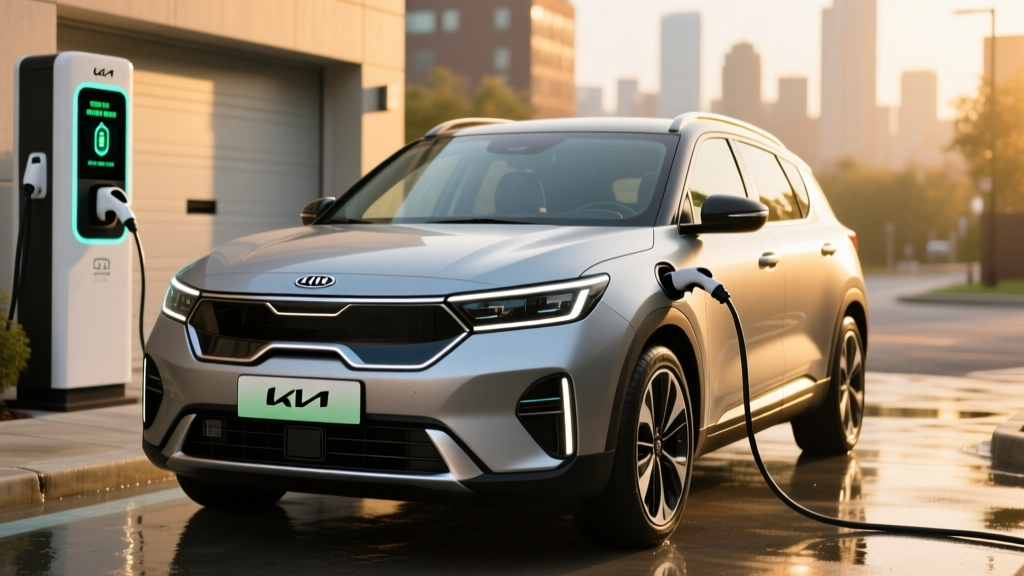
The Kia Carens Clavis EV (also badged as the Carens EV in select markets) is Kia's electrified compact MPV aimed at families who need three-row practicality without the footprint of a large SUV. For 2026, Kia has confirmed the Clavis EV will launch in select Asian and European markets; US availability has not been officially announced as of early 2026. Buyers in markets where it is sold can expect an EPA-equivalent range of approximately 260–290 miles (WLTP), a ~65–75 kWh battery pack, DC fast charging up to roughly 150 kW, and pricing starting near the equivalent of $32,000–$38,000 before incentives. If and when it reaches the US, federal §30D tax credit eligibility would depend on battery sourcing, MSRP caps, and buyer income limits per IRS rules.
Specs at a Glance: Kia Carens Clavis EV (2026 Announced)
Because the Carens Clavis EV is not yet sold in the United States, the figures below are based on Kia's international press releases and WLTP testing. EPA numbers typically run 10–15% lower than WLTP for the same vehicle, so we provide estimated EPA equivalents where applicable.
| Specification | Value |
|---|---|
| Battery Capacity (usable) | ~65–75 kWh (NMC chemistry) |
| WLTP Range | ~280–310 miles |
| Estimated EPA Range | ~260–290 miles |
| Motor Output | ~150–160 kW (201–215 hp) |
| 0–100 km/h (0–62 mph) | ~8.5–9.5 seconds (est.) |
| DC Fast Charge (peak) | ~150 kW |
| 10–80% DC Charge Time | ~28–35 minutes (est.) |
| Level 2 AC Charge Rate | 11 kW (onboard charger) |
| Level 2 Full Charge Time | ~7–8 hours |
| Drivetrain | FWD, single motor |
| Seating | 6- or 7-passenger |
| Cargo (behind 3rd row) | ~7–10 cu ft (est.) |
| Starting Price (intl. markets) | ~$32,000–$38,000 equivalent |
| Battery/Powertrain Warranty | 8 years / 100,000 miles (Kia std.) |
Real-World Range Reality: The WLTP figure of ~310 miles is optimistic for mixed driving. In real-world highway use at 70 mph, expect closer to 240–260 miles. In cold weather (below 30°F), range can drop an additional 15–25% due to cabin heating demands and reduced battery efficiency — bringing usable range to roughly 200–220 miles on a full charge. The Carens Clavis EV's MPV body shape (taller, less aerodynamic than a sedan) contributes to higher highway energy consumption, likely around 33–38 kWh/100mi.
How Does the Carens Clavis EV Compare to Gas and Hybrid Alternatives?
The Carens has historically competed with compact MPVs and small crossovers. In the Kia lineup, the closest gas-powered alternative is the Kia Carens (ICE) sold internationally, while in the US, buyers cross-shop vehicles like the Kia Seltos, Hyundai Tucson Hybrid, or the three-row Kia Sorento Hybrid. Here's how the numbers stack up:
| Metric | Carens Clavis EV (est.) | Kia Carens 1.5T Gas (Intl.) | Kia Sorento HEV (US) |
|---|---|---|---|
| Powertrain | Battery Electric | Turbo Gasoline | Hybrid (HEV) |
| Combined Efficiency | ~110–120 MPGe | ~28–30 MPG | ~37 MPG combined |
| Range / Tank | ~260–290 mi (EPA est.) | ~380–420 mi | ~480 mi |
| Fuel/Energy Cost per Mile | ~$0.04–$0.06 (home L2) | ~$0.12–$0.15 | ~$0.09–$0.11 |
| Annual Fuel/Energy (15k mi) | ~$600–$900 | ~$1,800–$2,250 | ~$1,350–$1,650 |
| Base Price (est.) | ~$32,000–$38,000 | ~$22,000–$28,000 | ~$38,090 (US MSRP) |
| Maintenance (5-yr est.) | ~$1,200–$1,800 | ~$2,500–$3,500 | ~$2,200–$3,000 |
The takeaway: The Clavis EV costs more upfront than a gas Carens, but energy and maintenance savings can close the gap over 5–7 years — especially if you charge at home on off-peak electricity rates. Against the Sorento Hybrid, the EV wins on per-mile cost but loses on total range and refueling convenience for road trips.
Real Ownership Costs: Purchase, Charging, Insurance, and Maintenance
Understanding the true cost of owning the Carens Clavis EV requires looking beyond the sticker price. Below is an estimated 5-year total cost of ownership (TCO) breakdown assuming 15,000 miles/year, US-equivalent pricing, and home Level 2 charging.
| Cost Category (5 Years) | Carens Clavis EV (est.) | Gas Carens 1.5T (est.) |
|---|---|---|
| Purchase Price | $35,000 | $25,000 |
| Tax Credit / Incentive | –$0 to $7,500 (varies*) | $0 |
| Home Charger Install (L2) | $800–$2,000 | $0 |
| Energy / Fuel (75,000 mi) | $3,000–$4,500 | $9,000–$11,250 |
| Maintenance | $1,200–$1,800 | $2,500–$3,500 |
| Insurance (5-yr avg.) | $7,500–$9,500 | $5,500–$7,000 |
| Depreciation (est.) | $14,000–$17,000 | $10,000–$12,500 |
| Total 5-Year Cost | $35,000–$53,000 | $52,000–$59,250 |
*Federal §30D tax credit eligibility requires the vehicle to meet battery critical-mineral and component sourcing rules, the buyer to fall under income caps ($150K single / $300K joint), and the MSRP to be under $55,000 for SUVs/vans or $80,000 for other vehicles. If the Carens Clavis EV is imported from a plant without a US free-trade agreement, it may not qualify. Always verify current rules at irs.gov and consult a tax professional.
Charging Cost Breakdown
Assuming a usable battery of ~70 kWh:
- Home Level 2 (off-peak, $0.12/kWh): ~$8.40 per full charge → ~$0.035/mile
- Home Level 2 (peak, $0.22/kWh): ~$15.40 per full charge → ~$0.064/mile
- Public DC Fast (avg. $0.35–$0.48/kWh): ~$24.50–$33.60 per full charge → ~$0.10–$0.14/mile
If you rely exclusively on public DC fast charging, the per-mile energy cost approaches that of a fuel-efficient hybrid. Home charging access is the single biggest economic variable in EV ownership.
Charging in Practice: What to Expect
The Carens Clavis EV's ~150 kW peak DC fast-charge rate is respectable but not class-leading. Here's what that means in practice:
| Charging Level | Power | Miles Added per Hour | Typical Use Case |
|---|---|---|---|
| Level 1 (120V household) | ~1.4 kW | ~4–5 mi/hr | Overnight top-up only |
| Level 2 (240V home/public) | ~11 kW | ~32–38 mi/hr | Daily primary charging |
| DC Fast Charge | Up to ~150 kW | ~180–220 mi/hr (peak) | Road trips, quick top-ups |
Charging curve reality: The 150 kW peak rate is only sustained between roughly 10–40% state of charge. Above 60%, the rate tapers significantly — likely dropping to 60–80 kW, and below 30 kW past 80%. A 10–80% session should take approximately 28–35 minutes at a compatible 150+ kW station, but an 80–100% top-off can add another 25–30 minutes. For road-trip planning, plan stops around the 10–80% window and avoid charging past 80% unless necessary.
Preconditioning matters: If the Carens Clavis EV includes battery preconditioning (common on Kia's E-GMP and related platforms), navigating to a fast charger will warm the battery for optimal charge acceptance. In cold weather, preconditioning can shave 10–15 minutes off a fast-charge session — always enable it when possible.
Common Misconceptions About the Carens Clavis EV
| Myth | Fact |
|---|---|
| "The battery will need replacing in 5 years." | Modern NMC batteries retain 85–90% capacity after 100,000+ miles. Kia's 8-year/100,000-mile battery warranty covers defects and excessive degradation (typically below 70% capacity). |
| "It charges as fast as you can fill a gas tank." | A 10–80% DC fast charge takes ~30 minutes — much longer than a 5-minute gas fill. Plan accordingly for road trips. |
| "EVs don't work in cold weather." | EVs work in cold weather but lose 15–30% range. With a heat pump (if equipped) and preconditioning, winter driving is practical — just plan for shorter intervals between charges. |
| "The tax credit is $7,500 for everyone." | §30D credit eligibility depends on battery sourcing, vehicle MSRP caps, buyer income, and assembly location. Many EVs qualify for partial or no credit. Always check IRS guidance. |
| "Electricity is always cheaper than gas." | Home charging on off-peak rates is far cheaper. Public DC fast charging at $0.35–$0.48/kWh can cost as much per mile as a 35 MPG hybrid. |
Who Should Buy the Kia Carens Clavis EV? A Decision Framework
Choose the Carens Clavis EV if:
- You need 6–7 seats in a compact footprint for school runs, carpools, and city driving
- You have reliable home or workplace Level 2 charging access
- Your daily driving is under 80 miles round-trip (covering ~95% of trips on a single charge)
- You live in a market where the Clavis EV is available and incentives reduce the effective price below $30,000
- You want lower per-mile operating costs and minimal scheduled maintenance
Look elsewhere (gas or hybrid) if:
- You regularly drive 300+ miles between charging opportunities (rural areas, frequent road trips in charging deserts)
- You lack access to home or workplace charging and would rely entirely on public DC fast chargers
- You live in an extremely cold climate (sustained sub-20°F winters) and cannot install a garage charger
- You need to tow — the Clavis EV is not designed for significant towing loads
- The vehicle is not yet sold in your market (US buyers should monitor Kia's announcements; the Kia US site lists current models)
What First-Time EV Buyers Should Know
If the Carens Clavis EV is your first electric vehicle, here are the ownership fundamentals:
- Install a Level 2 home charger before delivery. A 240V/32–48A wallbox costs $500–$800 for equipment plus $500–$2,000 for electrician installation (more if your panel needs a 200A upgrade). This is the single most important EV ownership investment.
- Learn kW vs. kWh. kWh measures battery energy capacity (the "tank size" — e.g., 70 kWh). kW measures power flow rate (the "pump speed" — e.g., 150 kW DC fast charge). Confusing them is the most common new-owner mistake.
- Don't charge to 100% daily. For NMC batteries, keeping daily charge between 20–80% extends long-term battery health. Reserve 100% charges for road-trip departure days.
- Use regenerative braking. Max-regen or one-pedal driving modes recapture kinetic energy and reduce brake wear. EV brake pads often last 100,000+ miles.
- Plan road trips around chargers, not gas stations. Apps like PlugShare, A Better Routeplanner, and the Kia Connect navigation system help you locate DC fast chargers along your route.
- Budget for higher insurance. EVs typically cost 15–25% more to insure than equivalent gas vehicles due to higher repair costs and battery replacement value. Get quotes before purchasing.
Frequently Asked Questions
Is the Kia Carens Clavis EV available in the United States?
As of early 2026, Kia has not confirmed US availability for the Carens Clavis EV. It is being introduced in select international markets. US buyers interested in a similar three-row Kia EV should look at the Kia EV9, which is currently available stateside with EPA ranges up to 304 miles.
What battery chemistry does the Carens Clavis EV use?
Kia has indicated NMC (nickel manganese cobalt) chemistry for the Clavis EV, which offers higher energy density than LFP (lithium iron phosphate) at the cost of slightly faster long-term degradation and higher raw-material costs. NMC is standard for vehicles prioritizing range in a compact package.
How long will the battery last?
Based on data from Kia's existing EV fleet, expect 85–90% capacity retention at 100,000 miles and roughly 80–85% at 150,000 miles under normal use. Kia's battery warranty covers 8 years or 100,000 miles, with a typical capacity-retention threshold of 70%. Full battery replacement (if ever needed outside warranty) currently costs $8,000–$14,000 depending on pack size and labor.
Can I charge the Carens Clavis EV on a regular household outlet?
Yes, but slowly. A standard 120V Level 1 outlet adds roughly 4–5 miles of range per hour. A full charge from empty would take 60+ hours. Level 1 is only practical for overnight top-ups if your daily driving is under 30 miles. A 240V Level 2 home charger is strongly recommended.
Does the Carens Clavis EV support V2L (vehicle-to-load)?
Kia has offered V2L on several E-GMP-based vehicles (EV6, EV9). Whether the Clavis EV includes V2L capability depends on the platform and market. If equipped, V2L allows you to power external devices (laptops, camping equipment, small appliances) from the vehicle's battery through an interior or exterior outlet, typically at up to 3.6 kW.
How does cold weather affect range?
In sustained temperatures below 30°F, expect 15–25% range reduction due to increased cabin heating demand and reduced battery charge/discharge efficiency. At 0°F, losses can reach 30%. Using seat/steering-wheel heaters instead of cabin air heating, and preconditioning while plugged in, can mitigate some of this loss.