Quick Answer: Is the Volvo EX60 Worth Waiting For?
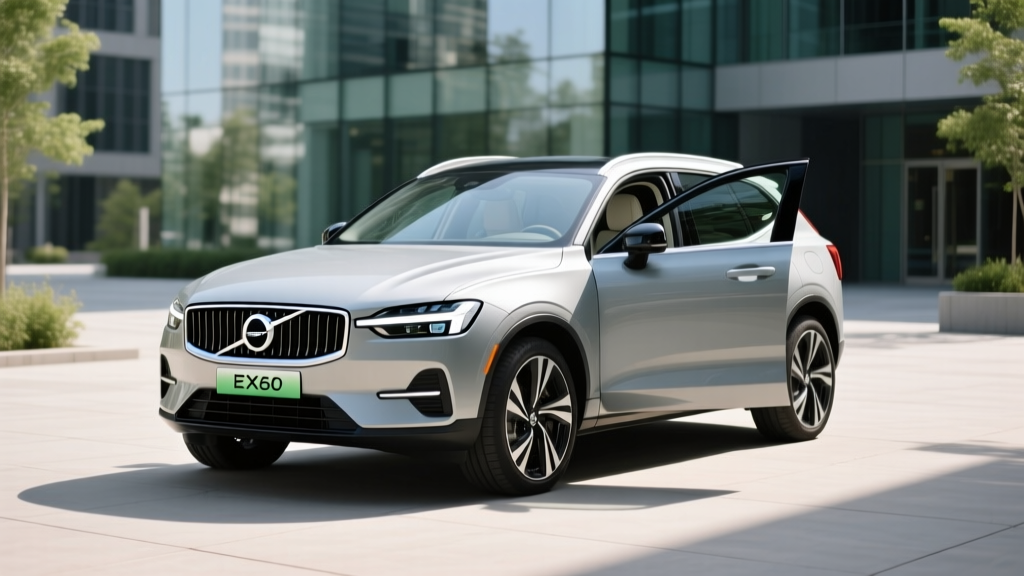
The Volvo EX60 electric SUV is Volvo's upcoming mid-size electric crossover, expected to slot between the EX30 and EX90 in the brand's EV lineup. Built on the next-generation SPA3 platform, the EX60 targets the heart of the luxury EV market — competing directly with the Tesla Model Y, BMW iX3, and Mercedes GLC EQ. Based on Volvo's announced architecture and industry projections, expect an EPA range near 300–330 miles, DC fast charging up to ~220 kW, and a starting MSRP in the $52,000–$58,000 range before incentives. As of early 2026, Volvo has not published final EPA-certified specs or confirmed US pricing — treat all figures here as preliminary estimates based on Volvo's stated platform capabilities and the EX90/EX30 benchmarks.
What We Know About the Volvo EX60 So Far
Volvo confirmed the EX60 as part of its full-electric roadmap, built on the SPA3 (Scalable Product Architecture 3) platform — a dedicated EV skateboard that also underpins the next-generation XC60 successor. The SPA3 platform uses an 800-volt electrical architecture, which enables faster DC charging and more efficient power delivery compared to the 400V systems in older Volvo PHEVs.
Key announced details:
- Platform: SPA3 with 800V architecture
- Body style: Mid-size two-row luxury electric SUV
- Battery chemistry: Expected NMC (nickel manganese cobalt) for energy density, with a usable capacity likely between 82–100 kWh
- Drivetrain: Single-motor RWD and dual-motor AWD variants anticipated
- ADAS: Core Computing architecture with LiDAR-equipped Pilot Assist (SAE Level 2 — driver supervision required at all times)
- Manufacturing: Volvo's Torslanda, Sweden plant (US-market vehicles may also source from Ridgeville, South Carolina depending on tax-credit battery-sourcing requirements)
Estimated Specs: How the EX60 Stacks Up
Since final specifications remain unconfirmed, the table below reflects projected figures based on Volvo's platform disclosures, the EX90's known specs, and competitive benchmarks in the segment. Update your expectations once Volvo releases official EPA data.
| Specification | Single Motor (RWD) | Twin Motor (AWD) |
|---|---|---|
| Battery (usable) | ~85 kWh (NMC) | ~100 kWh (NMC) |
| EPA Range (est.) | ~330 mi | ~300 mi |
| Horsepower | ~295 hp | ~490 hp |
| 0–60 mph (est.) | ~6.5 sec | ~4.5 sec |
| Peak DC Charge Rate | ~220 kW | ~220 kW |
| 10–80% DC Charge | ~22 min | ~25 min |
| Level 2 (AC) Charge Rate | ~11 kW | ~11 kW |
| Connector | NACS (native) | NACS (native) |
| Est. Base MSRP | ~$52,000 | ~$58,000 |
Sources: Volvo Cars press releases, SPA3 platform disclosures. Final EPA figures pending. Check fueleconomy.gov for certified data once available.
EX60 vs. Gas SUV: Real Cost Comparison
The most common question from mid-size luxury SUV buyers: does going electric actually save money? Let's compare the projected EX60 AWD against the current gasoline Volvo XC60 (B5 AWD, mild-hybrid) over a 5-year, 60,000-mile ownership period.
| Cost Category | EX60 AWD (Electric) | XC60 B5 AWD (Gas) |
|---|---|---|
| Purchase Price (MSRP) | ~$58,000 | ~$49,500 |
| Federal Tax Credit (§30D)* | Up to $7,500 | $0 |
| Effective Purchase Price | ~$50,500 | $49,500 |
| Fuel / Electricity (60k mi) | ~$4,200** | ~$9,600*** |
| Maintenance (5 years) | ~$1,800 | ~$3,500 |
| Insurance (5 years, avg.) | ~$10,500 | ~$8,800 |
| Total 5-Year Cost | ~$67,000 | ~$71,400 |
*§30D credit eligibility depends on MSRP cap ($80,000 for SUVs), buyer income limits ($300k MFJ / $150k single), battery critical-mineral and component sourcing rules, and point-of-sale transfer availability. Verify at IRS.gov.
**Assumes 75% home charging at $0.16/kWh, 25% public DC at $0.40/kWh, and ~3.0 mi/kWh efficiency.
***Assumes 26 MPG combined at $3.80/gallon (national avg. projection).
The takeaway: Even with a higher sticker price and pricier insurance, the EX60 is projected to save roughly $4,000–$4,500 over five years compared to the gas XC60 — primarily through fuel and maintenance savings. The gap widens further if you charge mostly at home on off-peak rates or have access to workplace charging.
Charging the EX60: Home and Public Realities
The EX60's 800V architecture is its most practical advantage. Here's what charging looks like across different scenarios:
| Charging Level | Power | Miles Added per Hour | Full Charge Time (100 kWh) |
|---|---|---|---|
| Level 1 (120V household) | ~1.4 kW | ~4 mi/hr | ~70+ hours |
| Level 2 (240V, 48A home) | ~11.5 kW | ~35 mi/hr | ~9 hours |
| DC Fast (220 kW peak) | ~220 kW peak | ~650+ mi/hr | 10–80% in ~25 min |
Home Charging Setup
Most EX60 owners will charge at home overnight on a Level 2 (240V) circuit. Budget $800–$2,500 for a quality Level 2 charger (e.g., ChargePoint Home Flex, Emporia Level 2) plus professional installation by a licensed electrician. If your home's electrical panel is already near capacity (common in older homes with 100A service), a panel upgrade to 200A can add $1,500–$3,500.
Critical note: Always have a licensed electrician evaluate your panel before purchasing a charger. The EX60's ~11 kW onboard charger requires a 50A or 60A dedicated circuit for optimal Level 2 speeds.
Public DC Fast Charging
With a native NACS (North American Charging Standard) port, the EX60 will access Tesla Superchargers directly — the most reliable public charging network in the US — plus Electrify America, EVgo, and other NACS-equipped stations. The 800V system allows sustained high-power charging, but remember that the charge curve tapers above 80% SoC to protect battery health. A 10–80% session will take ~25 minutes; pushing from 80–100% can add another 20+ minutes. For road trips, plan stops at 80% and move on.
Federal Tax Credit: Will the EX60 Qualify?
The §30D Clean Vehicle Credit can reduce your effective purchase price by up to $7,500, but eligibility hinges on several requirements that change periodically. As of 2026, the key criteria include:
- MSRP Cap: SUVs must have an MSRP at or below $80,000 — the EX60 should clear this easily at its projected $52K–$58K starting price.
- Buyer Income Limits: Modified adjusted gross income (MAGI) must not exceed $300,000 (married filing jointly), $225,000 (head of household), or $150,000 (single).
- Battery Sourcing: The credit is split into two $3,750 halves — one for critical minerals and one for battery components. Both have escalating domestic-content and free-trade-agreement sourcing thresholds that tighten annually. Volvo's Swedish manufacturing and likely Asian battery cell sourcing may complicate full $7,500 eligibility.
- Point-of-Sale Transfer: Eligible buyers can transfer the credit to the dealer at purchase, reducing the sale price upfront rather than waiting for a tax refund.
- FEOC Restriction: Vehicles with battery components from a "foreign entity of concern" (primarily Chinese suppliers) may be disqualified from one or both halves of the credit.
Honest assessment: Because Volvo sources battery cells from suppliers like CATL and Northvolt, and because critical-mineral sourcing rules are strict, the EX60 may qualify for $3,750 (half credit) or potentially the full $7,500 depending on Volvo's supply-chain adjustments for the US market. Confirm eligibility on the IRS Clean Vehicle Credit page and with your dealer before purchasing. Consult a tax professional for your specific situation.
Volvo EX60 vs. the Competition
The mid-size luxury electric SUV segment is crowded. Here's how the EX60 is projected to compare against key rivals:
| Model | EPA Range | Peak DC kW | 10–80% | Base MSRP |
|---|---|---|---|---|
| Volvo EX60 AWD (est.) | ~300 mi | ~220 kW | ~25 min | ~$58,000 |
| Tesla Model Y LR AWD | 320 mi | 250 kW | ~20 min | $48,990 |
| BMW iX xDrive50 | 307 mi | 200 kW | ~31 min | $87,250 |
| Genesis GV70 EV | 236 mi | 240 kW | ~18 min | $66,950 |
| Mercedes EQB 350 | 205 mi | 100 kW | ~32 min | $54,500 |
Range and pricing from fueleconomy.gov and manufacturer MSRPs as of early 2026. EX60 figures are projections.
The EX60's projected positioning is compelling: it undercuts the BMW iX and Genesis GV70 EV significantly on price while offering competitive range and charging speed. The Tesla Model Y remains the efficiency and charging-speed benchmark, but the EX60 targets buyers who prioritize Scandinavian interior design, Volvo's safety reputation, and a more traditional luxury cabin experience over Tesla's minimalist approach.
Common Misconceptions About the EX60
| Myth | Fact |
|---|---|
| "The EX60 is available to order now." | As of early 2026, the EX60 is announced but not yet on sale in the US. Volvo has not opened reservations. Final EPA specs and pricing are unconfirmed. |
| "It'll definitely get the full $7,500 tax credit." | Credit eligibility depends on battery sourcing rules that tighten annually. Volvo's supply chain may qualify for $3,750 or $7,500 — confirm with the IRS and your dealer at time of purchase. |
| "Pilot Assist means the car drives itself." | Volvo's Pilot Assist is SAE Level 2 — an advanced driver-assistance system. You must keep your hands on the wheel and eyes on the road at all times. It is not autonomous driving. |
| "The battery will need replacing in 5 years." | Volvo warranties its EV batteries for 8 years / 100,000 miles (whichever comes first) with a capacity retention threshold of ~70%. Real-world NMC degradation data from similar platforms shows ~10–12% capacity loss at 100,000 miles under normal use. |
| "I need a special charger for the NACS port." | NACS is becoming the standard. Most new Level 2 home chargers ship with NACS connectors, and Tesla Superchargers are now open to NACS-equipped non-Tesla EVs. CCS adapters are available if you need legacy station access. |
Decision Framework: Should You Wait for the EX60?
Choose the Volvo EX60 if:
- You want a luxury mid-size EV SUV with a traditional, high-quality interior — not Tesla's minimalist aesthetic
- Safety is your top priority (Volvo's LiDAR-equipped ADAS and structural safety reputation)
- You need 300+ miles of EPA range and 800V fast charging for road trips
- You can wait — the EX60 likely won't reach US dealers until late 2026 or 2027
- You have (or plan to install) Level 2 home charging
Look Elsewhere if:
- You need to buy now — the Tesla Model Y, BMW iX3, or Hyundai Ioniq 5 are available today with known specs
- You're on a strict budget under $45,000 — consider the Hyundai Ioniq 5, Kia EV6, or Chevrolet Equinox EV
- You lack home charging access and live in an area with sparse public DC infrastructure — a PHEV like the Volvo XC60 Recharge may be a better bridge
- Maximum federal tax credit is essential — verify EX60 sourcing compliance before committing, or consider vehicles with confirmed $7,500 eligibility
First-Time EV Buyer Checklist
If the EX60 is your first electric vehicle, prepare for ownership with these steps:
- Assess your home electrical panel. A licensed electrician can tell you if a 50A/60A circuit is feasible or if you need a panel upgrade.
- Install Level 2 charging before delivery. Budget $800–$2,500 for equipment and installation. This is where 80%+ of your charging will happen.
- Download charging apps now. PlugShare, ChargePoint, EVgo, and the Tesla app (for Supercharger access) — familiarize yourself with station locations on your common routes.
- Understand preconditioning. The EX60 will warm or cool its battery before a fast-charge stop, optimizing charge speed. Navigate to a charger using the car's built-in nav for best results.
- Check your insurance rates early. EVs typically cost 15–25% more to insure than comparable gas vehicles due to higher repair costs and battery replacement risk. Get quotes before committing.
- Verify tax credit eligibility. Use the IRS VIN-check tool and consult a tax professional. Do not assume you qualify for the full $7,500.
Frequently Asked Questions
When will the Volvo EX60 be available in the US?
Volvo has not announced an exact US on-sale date. Based on the brand's production timeline and the SPA3 platform rollout, expect the EX60 to reach US dealerships in late 2026 or early 2027. Reservations may open several months before deliveries begin.
Will the EX60 have a frunk (front trunk)?
Volvo has not confirmed frunk availability. The SPA3 platform is a dedicated EV architecture, which typically enables front storage, but Volvo's design choices prioritize cabin space. We'll update this when details are confirmed.
What is the EX60's battery warranty?
Based on Volvo's current EV warranty structure, expect 8 years / 100,000 miles of battery coverage with a minimum capacity retention threshold (typically 70%). This covers defects and excessive degradation — not damage from accidents or misuse.
Can the EX60 tow?
Towing capacity has not been published. Comparable electric SUVs in this class typically offer 3,500–5,000 lbs of towing capacity. Keep in mind that towing significantly reduces range — expect a 30–50% range reduction when towing near maximum capacity.
Is the EX60 all-wheel drive?
The Twin Motor variant will offer AWD. A single-motor RWD variant is also anticipated for buyers prioritizing maximum range over traction. AWD is recommended for buyers in snow-belt states.
How does the EX60 compare to the Volvo EX90?
The EX90 is a larger, three-row flagship SUV (107 kWh battery, ~300 mi range, ~$76,600+ MSRP). The EX60 will be a smaller, two-row mid-sizer at a lower price point — think of it as the electric equivalent of the XC60 vs. XC90 relationship.