Quick Answer: Are Volvo Electric Trucks Worth It in 2026?
Volvo's 2026 electric truck lineup — the VNR Electric (regional haul, ~150 mi range) and the FH Electric (longer-haul, up to ~275 mi with full battery option) — is best suited for fleet operators running predictable, depot-based routes under 200 miles per day with access to overnight Level 2 charging or DC fast-charging depots. Expect purchase prices starting around $250,000 for the VNR Electric before incentives, with potential fuel and maintenance savings of $30,000–$50,000+ per year per truck vs. diesel, depending on duty cycle and electricity rates. The IRA's Commercial Clean Vehicle Credit (§45W) can offset up to $40,000 per Class 8 vehicle for qualifying commercial buyers.
Volvo's 2026 Electric Truck Lineup at a Glance
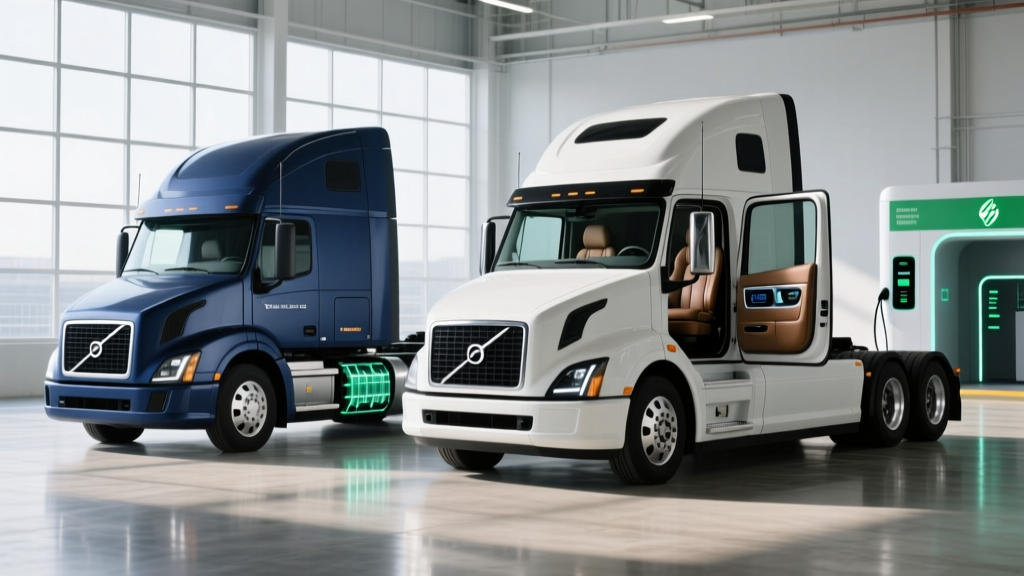
Volvo Trucks North America fields two primary battery-electric models for the US market in 2026, both built on proven Volvo chassis with electric drivetrains replacing the diesel engine and transmission entirely.
| Spec | VNR Electric | FH Electric |
|---|---|---|
| Class | Class 8 | Class 8 |
| Application | Regional haul, drayage, distribution | Regional & longer-haul freight |
| Battery Options | 4-battery (150 kWh) or 6-battery (225 kWh), usable ~132–198 kWh | Up to 6-battery packs, up to ~540 kWh (announced config) |
| EPA Est. Range | ~150 mi (4-batt) / ~175–200 mi (6-batt) | Up to ~275 mi (max battery config, real-world varies) |
| Motor Output | Up to 455 hp (340 kW) continuous / 6,600 lb-ft torque | Up to 490 hp (366 kW) continuous / 6,600+ lb-ft torque |
| DC Fast Charge (peak) | Up to 250 kW CCS | Up to 250 kW CCS |
| 10–80% DC Charge | ~60–90 min depending on pack size | ~75–120 min depending on pack size |
| Level 2 AC Charge | Up to 43 kW AC (overnight depot) | Up to 43 kW AC |
| GVWR | Up to 82,000 lbs (GCW) | Up to 82,000+ lbs (GCW) |
| Starting Price (approx.) | ~$250,000–$300,000 (before incentives) | ~$300,000–$380,000 (before incentives) |
| Warranty | Battery: 5 yr / 600,000 mi (min 70% capacity retention) | Battery: 5 yr / 600,000 mi |
Note: Exact range figures vary by configuration, payload, terrain, and ambient temperature. Volvo publishes application-specific range estimates rather than a single EPA consumer sticker, as Class 8 trucks operate under highly variable duty cycles. Data sourced from Volvo Trucks North America specifications.
Real-World Range: What Fleets Actually See
Electric truck range is far more variable than passenger EV range because payload, route topography, HVAC use, and speed all shift dramatically in commercial operation. Here's what operators report:
VNR Electric (6-battery, 225 kWh): Volvo rates this configuration at roughly 175–200 miles in typical regional-haul use. In real-world fleet testing, operators running loaded routes at highway speeds (65 mph) with HVAC running consistently report 120–150 miles of usable range before needing to return to depot or charge. In cold weather (below 32°F), expect an additional 15–25% reduction due to battery thermal management and cab heating demands — bringing effective range to 90–130 miles.
FH Electric (max battery, ~540 kWh): Volvo's announced maximum range is approximately 275 miles under favorable conditions. Real-world loaded highway operation typically yields 200–240 miles, with cold-weather operation potentially dropping to 160–190 miles.
This is why Volvo positions the VNR Electric primarily for depot-return routes under 150 miles — drayage, food/beverage distribution, and regional LTL — where the truck can charge overnight and complete its shift without en-route charging.
Cost Breakdown: Volvo Electric Trucks vs. Diesel
The upfront premium for electric Class 8 trucks is substantial, but operating costs tell a different story over a 5–7 year ownership cycle.
| Cost Factor | VNR Electric (6-batt) | VNR Diesel (D13) | Notes |
|---|---|---|---|
| Purchase Price | ~$275,000–$300,000 | ~$150,000–$180,000 | Electric premium: ~$100K–$150K |
| IRA §45W Credit | Up to –$40,000 | $0 | Commercial Clean Vehicle Credit, Class 8 qualifies for max $40K |
| State/HVIP Incentives | –$45,000 to –$120,000 (CA HVIP, varies by state) | $0 | California HVIP, New York Truck Voucher, etc. |
| Fuel / Energy (per year, 50K mi) | ~$12,000–$18,000 (at $0.12–$0.18/kWh) | ~$28,000–$35,000 (at $4.00–$4.50/gal, 6.5 MPG) | Savings: $10K–$20K/yr |
| Maintenance (per year) | ~$3,000–$5,000 | ~$10,000–$15,000 | No oil, DEF, DPF, fewer brake replacements (regen) |
| Insurance (per year) | ~$8,000–$12,000 | ~$6,000–$9,000 | Higher replacement cost drives premiums up 20–35% |
| Depot Charging Infra (one-time) | $30,000–$150,000 per charger install | $0 | 43 kW AC depot charger + electrical upgrades |
| Estimated 5-Year TCO | ~$380,000–$480,000 (net of incentives) | ~$420,000–$520,000 | Break-even possible in year 3–5 with incentives |
Charging costs assume depot-level commercial electricity rates. Public DC fast charging for trucks (where available) costs significantly more — typically $0.35–$0.60/kWh. Fuel costs based on national diesel averages as of early 2026. Sources: IRS §45W Commercial Clean Vehicle Credit, Volvo Trucks NA.
Charging Infrastructure: What Fleet Buyers Must Plan
Unlike passenger EVs, electric semi trucks cannot rely on existing public charging infrastructure. Public DC fast chargers are designed for cars pulling trailers, not 82,000-lb GCW combinations. Depot charging is effectively mandatory.
Typical Depot Charging Installation Costs (Per Truck Bay)
| Item | Level 2 AC (43 kW) | DC Fast (150–250 kW) |
|---|---|---|
| Charger Hardware | $15,000–$25,000 | $80,000–$150,000 |
| Electrical Panel / Transformer Upgrade | $10,000–$40,000 | $30,000–$100,000 |
| Trenching, Conduit, Wiring | $5,000–$20,000 | $15,000–$50,000 |
| Permits & Utility Interconnection | $2,000–$10,000 | $5,000–$25,000 |
| Software / Fleet Management | $1,000–$3,000/yr | $2,000–$5,000/yr |
| Total Per Bay | $33,000–$98,000 | $132,000–$330,000 |
Most VNR Electric fleets charge overnight on Level 2 AC at 43 kW. A 225 kWh battery pack charging from 10–100% at 43 kW takes approximately 5–6 hours — ideal for trucks parked from 8 PM to 5 AM. DC fast charging at 250 kW can recover 10–80% in roughly 60–90 minutes, but sustained use of DC fast charging accelerates battery degradation and should be used selectively.
Utility demand charges are a hidden cost: facilities pulling 250+ kW simultaneously may incur demand charges of $10–$25/kW per month, adding thousands in monthly overhead. Smart charging software that staggers charge sessions across trucks is essential for multi-truck depots.
Electric vs. Diesel: Performance & Operational Differences
| Factor | VNR Electric | VNR Diesel (D13 Turbo Compound) |
|---|---|---|
| Peak Power | 455 hp (340 kW) | 405–500 hp |
| Torque | 6,600 lb-ft (instant, no turbo lag) | 1,750–1,950 lb-ft |
| Transmission | 2-speed automated (no manual shifting) | I-Shift 12-speed automated |
| Energy Efficiency | ~1.8–2.2 kWh/mile (loaded) | ~6.0–7.0 MPG (loaded) |
| Regenerative Braking | Yes — significant brake wear reduction | Engine brake only |
| Cab Noise | Near-silent at idle, very low at speed | 75–85 dB typical |
| Exhaust Emissions | Zero tailpipe | DEF + DPF required, NOx/PM |
| Cold-Weather Start | No cranking issues; range drops 15–25% | Block heater needed below 20°F |
| Refueling / Recharge Time | 5–6 hr (AC depot) / 1–1.5 hr (DC 10–80%) | ~15 min (150-gal diesel fill) |
| Route Flexibility | Limited to ~150 mi from depot (practical) | 900+ mi range, refuel anywhere |
The torque advantage is massive and immediately noticeable: 6,600 lb-ft available from 0 RPM means the VNR Electric pulls away from stops with authority even at full GCW, with no downshifting or turbo spool-up delay. Drivers consistently report less fatigue due to the smooth, quiet powertrain and regenerative braking that reduces service brake use by 40–60%.
Federal & State Incentives for Electric Trucks
The incentive landscape for commercial electric trucks is substantial but complex. Key programs in 2026:
- IRA §45W Commercial Clean Vehicle Credit: Up to $40,000 for Class 8 vehicles (or 30% of cost, whichever is less). No MSRP cap for commercial vehicles, but the vehicle must be acquired for business use and meet battery sourcing requirements. Unlike the §30D consumer credit, this is a business credit — consult a tax professional. (IRS source)
- California HVIP (Hybrid and Zero-Emission Truck and Bus Voucher): Vouchers of $45,000–$120,000+ per Class 8 electric truck, depending on fleet size and drayage eligibility. First-come, first-served funding.
- New York Truck Voucher Incentive Program: Up to $185,000 for Class 8 electric trucks (funding rounds vary).
- Utility Make-Ready Programs: Many utilities (PG&E, SCE, ConEdison) cover 50–100% of electrical infrastructure costs for depot charging installations.
- IRA §30C Alternative Fuel Refueling Property Credit: Up to $100,000 per item of charging equipment for commercial installations in eligible census tracts.
Stacking incentives can bring effective purchase cost close to diesel parity — but availability varies by state, funding round, and fleet eligibility. Always confirm current program status with state energy offices.
Common Misconceptions About Electric Semi Trucks
| Myth | Fact |
|---|---|
| "Electric trucks can't pull heavy loads" | The VNR Electric operates at full 82,000 lb GCW. Instant 6,600 lb-ft torque actually improves gradeability vs. diesel at low speeds. |
| "Batteries won't last and replacement costs $100K+" | Volvo warranties batteries for 5 years / 600,000 miles at minimum 70% capacity retention. Real-world fleet data shows NMC packs losing ~2–3% per year under normal use. Replacement cost is $40,000–$80,000 depending on pack size — significant, but offset by years of fuel/maintenance savings. |
| "You can charge at any public station" | Public truck-compatible DC fast charging is extremely limited as of 2026. Depot charging is effectively required for daily operations. Public truck charging (e.g., WattEV, TeraWatt, Tesla Megacharger) is expanding but not yet ubiquitous. |
| "Electric trucks are zero-emission end to end" | Zero tailpipe emissions, yes. But upstream electricity generation matters — grids powered by coal/gas still carry a carbon footprint. That said, even on average US grid mix, electric trucks reduce lifecycle GHG by 50–70% vs. diesel (per ICCT analysis). |
| "Electric trucks are slower" | The VNR Electric hits governed speed (typically 65–70 mph) faster than most diesel trucks due to instant torque. Highway cruising performance is comparable. |
Decision Framework: Is a Volvo Electric Truck Right for Your Fleet?
Choose the VNR Electric if:
- Your daily routes are under 150 miles round-trip with return to a single depot
- You operate in a state with strong incentive programs (CA, NY, NJ, WA)
- Your fleet runs drayage, food/beverage distribution, or regional LTL
- You can install depot Level 2 charging (or already have electrical capacity)
- Local air quality regulations or customer sustainability mandates are driving ZEV adoption
- You plan to hold trucks 5–7+ years to capture full TCO advantage
Choose the FH Electric if:
- Your routes stretch 150–250 miles and you need maximum battery capacity
- You have access to mid-route DC fast charging or can negotiate charging partnerships
- You're running longer regional haul (not cross-country — that still requires diesel or hydrogen)
Stick with Diesel (for now) if:
- Your routes exceed 250 miles daily with no predictable charging access
- You operate in states with no truck ZEV incentives and high electricity rates
- You need cross-country flexibility and cannot tolerate 1–2 hour charge stops
- Your fleet turns trucks every 3 years or less (insufficient time to recoup electric premium)
Frequently Asked Questions
What is the real-world range of the Volvo VNR Electric?
With the 6-battery (225 kWh) configuration, expect approximately 120–150 miles in loaded highway operation at 65 mph, and up to 175 miles in stop-and-go urban distribution (where regenerative braking recovers more energy). Cold weather (below 32°F) reduces range by an additional 15–25%. Always plan routes with a 20–30% range buffer.
How long does it take to charge a Volvo electric truck?
On a 43 kW Level 2 depot charger, a full charge (10–100%) takes approximately 5–6 hours for the 6-battery VNR Electric — ideal for overnight charging. On a 250 kW DC fast charger, 10–80% takes roughly 60–90 minutes. Charging slows significantly above 80% State of Charge due to the charge curve taper — a key reason fleets typically charge to 80–90% rather than 100%.
Do Volvo electric trucks qualify for the $7,500 EV tax credit?
No — the consumer §30D credit applies to light-duty vehicles under 14,000 lbs GVWR. Class 8 trucks qualify instead for the §45W Commercial Clean Vehicle Credit, which offers up to $40,000 per vehicle (or 30% of cost, whichever is less). This is a business tax credit with different eligibility rules — consult your tax advisor and review IRS guidelines.
What does battery replacement cost on a VNR Electric?
Battery pack replacement costs range from approximately $40,000 to $80,000 depending on configuration (4 vs. 6 battery packs). However, Volvo's 5-year/600,000-mile warranty covers capacity retention below 70%. Most fleet operators report 2–3% annual degradation under normal duty cycles, suggesting packs retain 85–90% capacity at the 5-year mark — well within warranty thresholds.
Can Volvo electric trucks operate in cold climates?
Yes, but with range penalties. Volvo equips the VNR and FH Electric with active battery thermal management (liquid heating and cooling). In temperatures below 32°F, expect 15–25% range loss due to battery heating demands and reduced regenerative braking efficiency. Below 0°F, range loss can reach 30%. Preconditioning the battery while plugged in at depot minimizes this penalty. Fleets in Minnesota, Canada, and Scandinavia operate these trucks year-round, but route planning must account for winter range reduction.
How does Volvo compare to competitors like Tesla Semi and Freightliner eCascadia?
The Freightliner eCascadia is the closest competitor — similar Class 8 positioning, ~150–230 mi range, and comparable pricing. The Tesla Semi claims 500 mi range (with 900 kWh pack) and a lower starting price (~$250,000), but production volume and service network remain limited as of 2026. Volvo's advantage is its established dealer/service network across North America and deep integration with fleet telematics. Tesla's advantage is range and the Megacharger network (still expanding). For most fleets, dealer support and parts availability matter more than peak range claims.
This article reflects 2026 model-year specifications and incentive programs as of publication. Commercial vehicle pricing is configuration-dependent and negotiated through Volvo Trucks dealers. Always verify current incentive availability with state agencies and consult a tax professional regarding federal credit eligibility.