Quick Answer: Which Volvo Electric SUV Is Right for You?
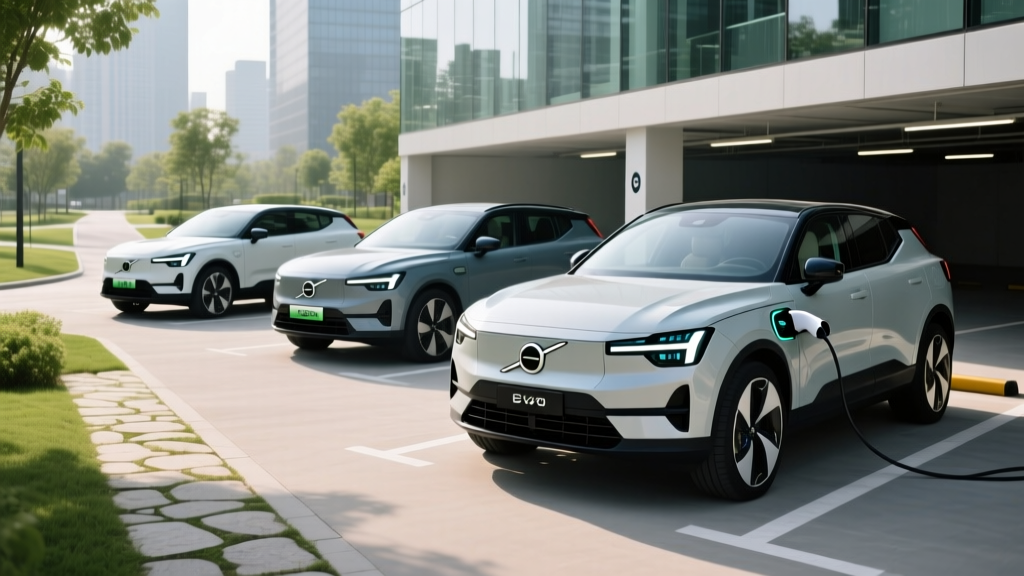
Volvo sells three all-electric SUVs for the 2026 model year. The EX30 (subcompact, ~275 mi EPA, starting ~$36,345) is the entry point. The EX40 (compact, ~293 mi EPA, starting ~$53,550) is the volume seller and XC40 Recharge successor. The EX90 (three-row flagship, ~310 mi EPA, starting ~$79,995) targets families needing space and luxury. All use 800V-capable architectures (EX30/EX90) or proven 400V (EX40), support DC fast charging from 150–250 kW peak, and qualify for varying levels of the federal §30D tax credit depending on battery sourcing and your income. If you have home Level 2 charging and drive under 250 miles daily, any of these replaces a gas Volvo seamlessly.
Volvo's 2026 Electric SUV Lineup at a Glance
Volvo committed to full electrification faster than most legacy automakers. By 2026, the "Recharge" plug-in hybrid naming is being phased in favor of dedicated EV nameplates: EX for electric, XC for combustion/hybrid. Here is how the three electric SUVs stack up on paper:
| Spec | EX30 (Single Motor Plus) | EX40 (Twin Motor Ultra) | EX90 (Twin Motor Ultra) |
|---|---|---|---|
| EPA Range | ~275 mi | ~293 mi | ~310 mi |
| Battery (usable) | 69 kWh (NMC) | 82 kWh (NMC) | 111 kWh (NMC) |
| Horsepower | 272 hp | 416 hp | 496 hp |
| 0–60 mph | ~5.1 sec | ~4.5 sec | ~4.7 sec |
| Peak DC Charge Rate | 153 kW | 200 kW | 250 kW |
| 10–80% DC Fast Charge | ~26 min | ~28 min | ~30 min |
| Level 2 (240V/48A) | ~10.5 hr | ~12 hr | ~14 hr |
| MPGe (combined) | ~104 MPGe | ~89 MPGe | ~77 MPGe |
| Starting MSRP | $36,345 | $53,550 | $79,995 |
| Battery/Powertrain Warranty | 8 yr / 100,000 mi | 8 yr / 100,000 mi | 8 yr / 100,000 mi |
Sources: EPA fueleconomy.gov, Volvo Cars USA specifications. Real-world range typically runs 10–20% below EPA on sustained highway driving at 75+ mph, with additional 15–30% loss in sub-freezing temperatures.
Real-World Range vs. EPA Sticker: What to Actually Expect
The EPA numbers above assume a mix of city and highway driving at moderate temperatures. In practice, your mileage will vary based on three factors that Volvo's marketing won't emphasize:
Highway & Cold-Weather Range Reality
- EX30: EPA 275 mi → expect ~230 mi at 75 mph on a warm day; ~185–200 mi in 25°F weather with cabin heat.
- EX40 Twin Motor: EPA 293 mi → expect ~245 mi highway; ~200–215 mi in freezing conditions. The heat pump (standard on Ultra trims) mitigates cold loss by roughly 8–10% compared to resistive heating.
- EX90: EPA 310 mi → expect ~260 mi highway; ~215–235 mi in cold weather. Heavier mass and larger frontal area compound highway energy consumption.
All three models feature battery preconditioning for DC fast charging — activate it via the navigation system when routing to a charger to warm the pack and hit peak charge rates.
Charging Speeds, Connectors, and the NACS Transition
Volvo adopted the North American Charging Standard (NACS) connector for new models. The EX90 ships with a native NACS port. The EX30 and EX40 in 2026 use CCS1 with a NACS adapter included (or available) for Tesla Supercharger access. This matters because the Tesla Supercharger network remains the most reliable DC fast-charging network in the US, with over 25,000 stalls nationally.
| Charging Level | Power | EX30 (mi/hr) | EX40 (mi/hr) | EX90 (mi/hr) |
|---|---|---|---|---|
| Level 1 (120V/12A) | ~1.4 kW | ~4 mi/hr | ~4 mi/hr | ~3 mi/hr |
| Level 2 (240V/48A) | ~11.5 kW | ~33 mi/hr | ~30 mi/hr | ~28 mi/hr |
| DC Fast (peak) | 153–250 kW | ~150 mi in 26 min | ~180 mi in 28 min | ~210 mi in 30 min |
Charge curve reality: Peak kW is not sustained kW. The EX90 hits 250 kW only between roughly 10–35% state of charge (SoC), then tapers to ~150 kW by 60%, and ~50 kW above 80%. The 10–80% times above reflect the full curve, not a linear calculation. This is why charging past 80% on a road trip is time-inefficient — plan to charge more frequently to lower SoC targets instead.
Volvo Electric SUVs vs. Gas Equivalents: Cost Comparison
The most common question from Volvo shoppers: does going electric actually save money compared to the XC40, XC60, or XC90? Here is a five-year ownership comparison using national averages:
| Cost Factor (5 yr) | EX40 Twin Motor ($53,550) | XC60 B5 AWD Gas (~$49,000) |
|---|---|---|
| Purchase Price (after incentives) | ~$49,800 (est. $3,750 credit)* | $49,000 |
| Fuel / Electricity (75,000 mi) | ~$3,400 (home L2 at $0.14/kWh) | ~$8,100 (25 MPG avg, $3.60/gal) |
| Maintenance | ~$1,800 | ~$4,200 |
| Insurance (avg) | ~$10,500 | ~$8,500 |
| Estimated Depreciation | ~$22,000 | ~$20,500 |
| 5-Year Total Cost | ~$87,500 | ~$90,300 |
*Federal §30D credit eligibility for Volvo models varies by battery sourcing and buyer income. Check current rules at IRS.gov. Point-of-sale transfer is available at participating dealers. State incentives vary — consult your state energy office.
The EX40 breaks even or beats the XC60 over five years primarily through fuel and maintenance savings — no oil changes, no transmission fluid, fewer brake replacements due to regenerative braking. Insurance runs higher on EVs (roughly 15–25% more) due to repair costs and parts pricing, partially offsetting savings.
Federal Tax Credit: What You Actually Qualify For
The §30D clean vehicle credit offers up to $7,500, but eligibility is a three-part test that trips up many buyers:
- MSRP cap: SUVs must be under $80,000. The EX30 and EX40 qualify; the EX90 Ultra may exceed the cap depending on options. Always verify the trim's exact MSRP.
- Income cap: Modified AGI must not exceed $150,000 (single), $225,000 (head of household), or $300,000 (joint). There is no workaround — if your income exceeds the limit, you do not qualify for the new-vehicle credit.
- Battery sourcing: The credit splits into two halves ($3,750 for critical minerals, $3,750 for battery component assembly). Volvo sources from multiple suppliers, and eligibility shifts as supply chains change. The dealer must provide a written eligibility report at sale.
- Point-of-sale transfer: You can transfer the credit to the dealer as a down-payment reduction at purchase rather than waiting to claim it on your tax return. This requires the dealer to be IRS-registered.
Do not assume you get $7,500. Many Volvo EV buyers in 2025–2026 qualified for $3,750 (one half) or $0 depending on the specific battery batch and their income. Consult a tax professional and verify with the IRS seller report before signing.
Myths vs. Facts: Common Volvo EV Misconceptions
| Myth | Fact |
|---|---|
| "Volvo EV batteries need replacing every 5 years" | Volvo warranties the battery for 8 years/100,000 miles with a minimum 70% capacity retention. Industry data from Recurrent shows modern NMC packs losing only 5–10% capacity over 100,000 miles under normal use. |
| "You can't road-trip an electric Volvo" | With 250–310 miles of range and 25–30 minute DC fast-charge stops, a 600-mile trip takes roughly 10.5 hours vs. 9.5 in a gas car — about one extra hour total. The constraint is charger availability, not vehicle capability. |
| "I need a 200-amp electrical panel upgrade for home charging" | Most homes with a 100-amp or 150-amp panel can support a 48-amp Level 2 charger (like the ChargePoint Home Flex) on a dedicated 60-amp circuit. A licensed electrician should verify your panel's spare capacity. Upgrades cost $1,500–$4,000 when needed. |
| "Volvo's driver assist is self-driving" | Pilot Assist is an SAE Level 2 system — it provides steering and speed assistance but requires continuous driver supervision. It does not navigate autonomously, handle all intersections, or replace driver attention. |
| "EVs are worse in winter" | Range drops 15–30% in cold weather, but EVs start instantly (no cold cranking), have instant cabin heat via heat pump, and AWD traction is excellent due to low center of gravity. Preconditioning while plugged in eliminates cold-start range loss for daily commutes. |
Home Charging Setup: What First-Time Buyers Must Know
If you're buying your first EV, home charging access is the single biggest ownership variable. Here is what to budget for:
| Item | Typical Cost Range |
|---|---|
| Level 2 charger (e.g., ChargePoint Home Flex, Emporia Vue) | $400–$700 |
| Electrician labor (240V/60A circuit, 20–40 ft run) | $800–$2,000 |
| Permit & inspection | $100–$400 |
| Panel upgrade (if needed — 200A service) | $1,500–$4,000 |
| Total (no panel upgrade) | $1,300–$3,100 |
| Total (with panel upgrade) | $2,800–$7,100 |
Critical tip: Get a quote from a licensed electrician before purchasing your Volvo. Some older homes (pre-1980) may have 60-amp or 100-amp panels with no spare capacity, making Level 2 charging impossible without an upgrade. Level 1 (120V) charging adds only ~4 miles per hour — adequate only if you drive under 40 miles daily and can charge for 12+ hours overnight.
Decision Framework: Which Volvo Electric SUV Should You Buy?
Choose the EX30 if:
- You're a single driver or couple with no kids needing daily back-seat access
- Your commute is under 50 miles round-trip
- Budget is a priority — you want a premium badge under $40K
- You'll use it primarily as a city/suburban vehicle with occasional road trips
Choose the EX40 if:
- You need compact SUV cargo space (dogs, strollers, gear) but not three rows
- You want AWD with 416 hp for mountain or snow driving
- You're cross-shopping the Tesla Model Y, BMW iX3, or Genesis GV60
- You have home Level 2 charging and drive 30–150 miles daily
Choose the EX90 if:
- You need three rows and 6–7 passenger seating
- You're replacing an XC90 or cross-shopping the Rivian R1S, BMW iX, or Mercedes EQS SUV
- You value LiDAR-equipped safety tech and Volvo's latest SPA2 platform
- Your budget supports an $80K+ vehicle and you understand the MSRP cap implications for the tax credit
Skip all three and consider a PHEV if:
- You lack home charging access (apartment, street parking only)
- You regularly drive 400+ miles between stops in rural areas with sparse DC charging
- You want electric commuting but gas flexibility — look at the XC60 or XC90 Recharge plug-in hybrids instead
Frequently Asked Questions
Does the Volvo EX40 qualify for the full $7,500 federal tax credit?
It depends on the specific vehicle's battery sourcing and your income. The EX40's MSRP is under the $80,000 SUV cap, so it clears the price test. However, the critical-minerals and battery-component sourcing requirements change throughout the year. Ask the dealer for the IRS seller report before purchasing, and verify your MAGI is under the $150K/$225K/$300K thresholds. The credit can be transferred at point of sale as a down-payment reduction at participating dealers.
How long does a Volvo EV battery last before replacement?
Volvo warranties its high-voltage batteries for 8 years or 100,000 miles, guaranteeing at least 70% capacity retention. Real-world data from fleet operators and battery analytics firms shows NMC packs in similar vehicles retaining 88–93% capacity at 100,000 miles. Full battery replacement is rare and costs $12,000–$20,000 out of warranty, but most owners will never need it within typical ownership periods.
Can I charge a Volvo EV at Tesla Superchargers?
Yes. The EX90 has a native NACS port and can use Superchargers directly. The EX30 and EX40 use CCS1 ports but can access Superchargers with the included or available NACS adapter. You'll need to activate Supercharger access through the Volvo app or your Tesla account. Non-Tesla DC networks (Electrify America, EVgo, ChargePoint) work natively with CCS1 on the EX30/EX40.
Is Volvo's Pilot Assist self-driving?
No. Pilot Assist is an SAE Level 2 driver-assistance system. It provides adaptive cruise control and lane-centering on highways, but you must keep your hands on the wheel and eyes on the road at all times. It does not handle stoplights, complex intersections, or construction zones autonomously. Volvo's EX90 includes LiDAR hardware for enhanced perception, but this supports advanced safety — not autonomous driving.
What's the real cost to charge a Volvo EX40 at home?
The EX40's 82 kWh battery, charged from 10–90% (~66 kWh usable), costs approximately $9.24 at the US residential average of $0.14/kWh. That provides roughly 250 real-world miles, or about $0.037 per mile. Compare that to the gas XC60 at 25 MPG combined and $3.60/gallon: $0.144 per mile. Home charging is roughly 75% cheaper per mile than gasoline. Public DC fast charging is more expensive ($0.30–$0.50/kWh) but still typically beats gas on a per-mile basis.