Quick Verdict: A Luxury EV That Demands Smart Financing
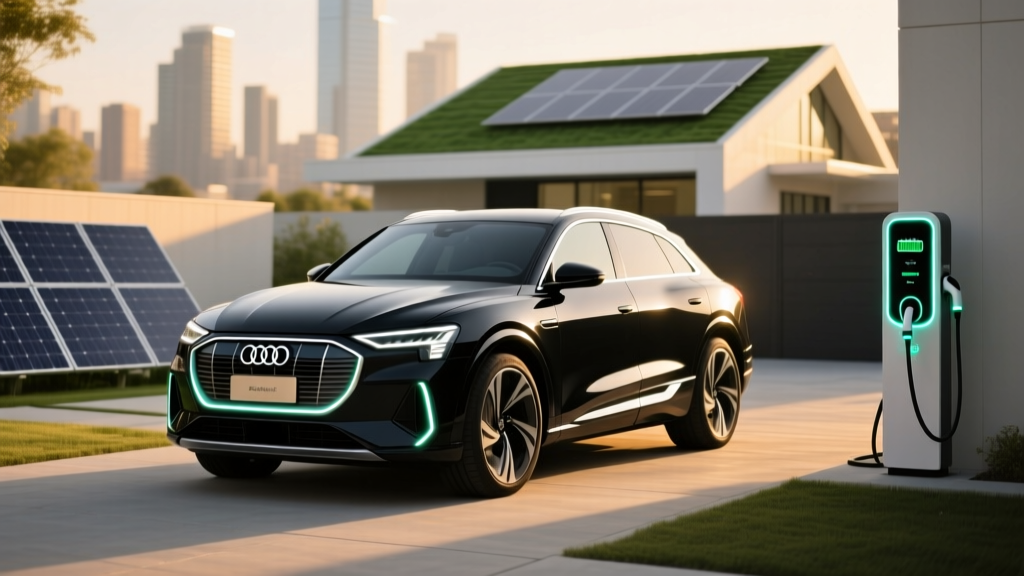
The 2026 Audi Q8 e-tron occupies a specific niche: buyers who want German luxury build quality, a refined ride, and a badge that doesn't scream "tech bro" — but who also need to make the math work. With a starting MSRP of $74,400 and real-world range hovering around 240–260 highway miles, this is not an impulse purchase. Structuring the right Audi e-tron finance deal means understanding the vehicle's actual efficiency, charging behavior, tax-credit eligibility under current IRS §30D rules, and five-year ownership economics before you sign.
This review gives you the exact numbers — EPA range, battery chemistry, charge-curve behavior, trim pricing, and financing math — so you can walk into the dealership (or configure online) with leverage.
Spec Table: 2026 Audi Q8 e-tron at a Glance
| Spec | Q8 e-tron Premium Plus | Q8 e-tron Prestige | SQ8 e-tron |
|---|---|---|---|
| Base MSRP | $74,400 | $81,200 | $96,400 |
| EPA Range | 285 mi | 285 mi | 253 mi |
| Battery (usable) | 106 kWh NMC | 106 kWh NMC | 106 kWh NMC |
| Drivetrain | Dual-motor AWD | Dual-motor AWD | Tri-motor AWD |
| Horsepower | 402 hp (boost) | 402 hp (boost) | 496 hp (boost) |
| 0–60 mph | 5.5 sec | 5.5 sec | 4.5 sec |
| Max DC Charge Rate | 170 kW | 170 kW | 170 kW |
| 10–80% DC Time | ~31 min | ~31 min | ~31 min |
| Level 2 Rate | 11.5 kW (~31 mi/hr) | 11.5 kW (~31 mi/hr) | 11.5 kW (~31 mi/hr) |
| MPGe (combined) | 81 MPGe | 81 MPGe | 73 MPGe |
| Efficiency | 42 kWh/100 mi | 42 kWh/100 mi | 46 kWh/100 mi |
| Cargo (rear seats up) | 28.5 cu ft | 28.5 cu ft | 28.5 cu ft |
| Cargo (rear folded) | 56.4 cu ft | 56.4 cu ft | 56.4 cu ft |
| Battery Warranty | 8 yr / 100,000 mi | 8 yr / 100,000 mi | 8 yr / 100,000 mi |
Source: fueleconomy.gov and Audi USA official specifications. SQ8 e-tron range and efficiency reflect sport-tuned suspension and larger 21" wheel option.
Real-World Range: What the EPA Sticker Doesn't Tell You
EPA Estimate: 285 miles (Q8 e-tron Premium Plus / Prestige)
Real-World Highway (70 mph, 72°F): ~245–260 miles
Real-World Cold Weather (30°F, highway): ~200–220 miles
City / Suburban Mixed: ~270–285 miles (regen-friendly driving)
The Q8 e-tron's 106 kWh usable battery (NMC lithium-ion chemistry) gives it a substantial energy reservoir, but this is a heavy vehicle — roughly 5,800 lbs curb weight — and that mass shows up at highway speeds. In EPA testing, the combined cycle yields 81 MPGe (42 kWh per 100 miles), but sustained 75–80 mph driving pushes consumption closer to 46–48 kWh/100 mi.
Cold weather compounds the loss. Without a dedicated heat pump as standard equipment on all trims (Audi uses a resistive heater supplemented by a heat-pump option package on Prestige), expect 20–28% range reduction in sub-freezing temperatures. If your commute is 40 miles round-trip in Minnesota winters, you'll still have ample buffer. If you're planning a 280-mile winter road trip, you'll need a charging stop.
For context against its key rival: the BMW iX xDrive50 delivers an EPA 324 miles on a slightly smaller 105.2 kWh battery, thanks to lighter weight and more aggressive aero. The Mercedes EQE SUV 350 4MATIC lands at 279 miles EPA. The Q8 e-tron sits mid-pack — adequate for most daily use, but not a range leader.
Charging Speed: DC Fast Charge and Home Level 2
| Charging Level | Power | Speed (mi/hr added) | Notes |
|---|---|---|---|
| Level 1 (120V outlet) | ~1.4 kW | ~3–4 mi/hr | Emergency/trickle only; ~70+ hrs for full charge |
| Level 2 (240V home) | 11.5 kW (48A) | ~31 mi/hr | Full charge overnight in ~9.5 hrs; requires NEMA 14-50 or hardwire on 60A circuit |
| DC Fast Charge (peak) | 170 kW | Up to ~190 mi/hr (at peak SoC) | 10–80% in ~31 min; taper significant above 85% |
| DC Fast Charge (sustained avg) | ~125 kW avg (10–80%) | ~140 mi/hr avg | Peak 170 kW held only between ~15–55% SoC |
The Q8 e-tron's 170 kW peak DC charge rate is respectable but no longer class-leading. The Hyundai Ioniq 5 peaks at 240 kW, and the BMW iX at 195 kW. Where the Audi holds its own is in charge-curve consistency: it sustains above 140 kW from roughly 10% to 55% state of charge before tapering. A 10–80% session takes approximately 31 minutes at a functional 350 kW Electrify America or Ionity station.
Preconditioning matters. The Q8 e-tron's navigation-based battery preconditioning activates when you route to a DC fast charger, warming the pack to optimal temperature. Skip preconditioning in cold weather, and your peak rate may drop to 100–120 kW, stretching that 10–80% session past 40 minutes. Always navigate to your charger — don't just drive there.
For home charging, the onboard 11.5 kW AC charger is a strong point. On a 48-amp Level 2 circuit (hardwired, 60A breaker), you'll recover roughly 31 miles of range per hour, meaning a depleted pack refills overnight. Most owners who charge nightly from 50–80% will never need public DC charging for daily driving.
The Q8 e-tron uses the CCS1 connector standard. Audi has confirmed NACS (Tesla Supercharger) adapter compatibility for 2025+ models; 2026 models ship with the adapter included, granting access to Tesla's 15,000+ Supercharger stalls via the included J3400 adapter.
Performance, Ride Quality, and Daily Livability
With 402 horsepower in boost mode (standard Q8 e-tron) and standard quattro all-wheel drive, the Q8 e-tron hits 60 mph in 5.5 seconds. The SQ8 e-tron's tri-motor setup drops that to 4.5 seconds with 496 hp. Neither will embarrass you at a stoplight, but this is a grand-touring SUV, not a track weapon. The steering is precise if light, the air suspension soaks up broken pavement, and cabin isolation at 80 mph is among the best in the segment.
Interior and cargo: Rear-seat legroom measures 38.4 inches — comfortable for adults on longer drives. Cargo space is 28.5 cubic feet behind the second row and 56.4 cu ft with seats folded. There is no front trunk (frunk); the space under the hood houses electronics and the HVAC system. For comparison, the BMW iX offers 35.5 cu ft rear cargo, giving it a practical edge for families hauling strollers or gear.
Tech highlights:
- Dual-touchscreen MMI response setup (10.1" upper, 8.6" lower) with haptic feedback
- Virtual cockpit plus (12.3" configurable driver display)
- Wireless Apple CarPlay / Android Auto
- Available Bang & Olufsen 3D premium audio (16 speakers, Prestige standard)
- Audi adaptive cruise assist with lane guidance (SAE Level 2 — requires driver supervision at all times)
- Surround-view cameras with curb-side wheel view
Notable drawbacks: The dual-screen setup demands more eyes-off-road time than physical knobs for climate control. Rear visibility is compromised by thick D-pillars (the camera system compensates). And the lack of a frunk means charging cables live in the cargo area.
Pricing, Trim Levels, and Audi e-tron Finance Options
| Trim | Base MSRP | Destination | Typical As-Tested | Est. Monthly (72-mo, 6.5% APR, 10% down) |
|---|---|---|---|---|
| Premium Plus | $74,400 | $1,195 | $78,500–$82,000 | ~$960–$1,010 |
| Prestige | $81,200 | $1,195 | $85,000–$91,000 | ~$1,040–$1,120 |
| SQ8 e-tron | $96,400 | $1,195 | $101,000–$108,000 | ~$1,240–$1,330 |
Financing paths to consider:
- Audi Financial Services (AFS) retail loan: AFS periodically offers subsidized APRs (as low as 3.9–4.9% for well-qualified buyers on 60-month terms in 2026). A 72-month term at promotional rates can reduce monthly payments by $80–$120 versus market-rate financing.
- Audi lease: Typical 36-month / 10,000-mile leases on the Premium Plus trim have landed between $850–$1,050/month with $3,500–$5,000 due at signing, depending on regional incentives. Leasing shields you from long-term depreciation risk but forfeits the §30D tax credit (the leasing company claims it and may pass savings through as a capitalized-cost reduction).
- Third-party credit union / bank: Rates from PenFed, Alliant, or local credit unions may beat AFS for borrowers with 740+ credit. Shop rates before visiting the dealer — a pre-approval letter gives you negotiation leverage.
- Point-of-sale credit transfer: Under current IRS §30D rules, if the vehicle and buyer qualify, the $7,500 federal credit can be transferred to the dealer at purchase, reducing the financed amount directly. This is critical for cash-flow planning.
Federal Tax Credit Eligibility: Does the Q8 e-tron Qualify?
- Credit amount: Up to $7,500 ($3,750 for critical minerals + $3,750 for battery components)
- MSRP cap: SUVs/vans/pickups must have MSRP ≤ $80,000. The Q8 e-tron Premium Plus ($74,400 base) qualifies; Prestige and SQ8 exceed the cap at typical as-tested prices.
- Buyer income cap (MAGI): $150K single / $225K head of household / $300K joint filers
- Battery sourcing: Critical-mineral and battery-component requirements tighten annually. Verify current-year compliance on the IRS qualified vehicle list before purchasing.
- Point-of-sale transfer: Available — you can assign the credit to the dealer to reduce the purchase price at closing, even if you owe less than $7,500 in tax liability.
Always confirm eligibility with a tax professional and the IRS qualified vehicle database before finalizing your purchase. Rules and sourcing requirements are subject to change.
Practical finance impact: If you buy a Q8 e-tron Premium Plus at $78,500 (with options) and qualify for the full $7,500 credit via point-of-sale transfer, your financed amount drops to $71,000. On a 72-month loan at 5.9%, that's roughly $930/month versus $1,028/month without the credit — a savings of nearly $7,000 over the loan term. This is why confirming credit eligibility before structuring your Audi e-tron finance deal is non-negotiable.
Five-Year Ownership Cost Snapshot
| Cost Category | Q8 e-tron Premium Plus (est.) | BMW iX xDrive50 (est.) | Mercedes EQE 350 4MATIC SUV (est.) |
|---|---|---|---|
| Purchase price (after credit) | $71,000 | $78,500 | $72,300 |
| Depreciation (5 yr) | ~$35,500 | ~$33,000 | ~$36,100 |
| Electricity (5 yr, 60K mi) | ~$4,200 | ~$3,900 | ~$4,300 |
| Insurance (5 yr avg) | ~$14,500 | ~$14,000 | ~$14,800 |
| Maintenance (5 yr) | ~$2,800 | ~$3,200 | ~$3,000 |
| Est. 5-yr total cost | ~$57,000 | ~$54,100 | ~$58,200 |
Estimates based on national averages for electricity ($0.16/kWh), insurance quotes for 35-year-old driver with clean record, and manufacturer scheduled maintenance. Depreciation estimates reflect historical luxury-EV resale trends. Actual costs vary by region, driving habits, and market conditions.
The Q8 e-tron's five-year cost sits between its German rivals. The BMW iX edges ahead on depreciation retention and slightly better efficiency, while the Q8 e-tron's lower starting MSRP (after credit) narrows the gap. Maintenance costs are modest — brake wear is minimal thanks to regenerative braking, and there are no oil changes, spark plugs, or transmission fluid services.
Pros, Cons, and Who Should Buy
- Exceptional ride refinement and cabin quietness
- 170 kW DC charging with strong mid-range curve hold
- 11.5 kW Level 2 onboard charger (faster than many rivals)
- Standard quattro AWD with adaptive air suspension
- Premium Plus trim qualifies for §30D credit (MSRP under $80K)
- NACS adapter included for Supercharger access
- 8-year / 100,000-mile battery warranty
- Real-world highway range (~245–260 mi) trails BMW iX and Rivian R1S
- No front trunk (frunk)
- Heavy at 5,800 lbs — efficiency suffers at highway speed
- Dual-screen infotainment demands more attention than physical controls
- Prestige and SQ8 trims exceed §30D MSRP cap
- Heat pump not standard on all trims (cold-weather range impact)
- Cargo space (28.5 cu ft) smaller than BMW iX
Who this EV suits best:
- The luxury commuter with a 30–60 mile round-trip and home Level 2 charging — the Q8 e-tron's refinement and overnight charging make daily driving effortless.
- The brand-loyal Audi owner transitioning from a Q5 or Q7 who values build quality, dealer relationships, and understated styling over maximum range.
- The two-car household where the Q8 e-tron handles daily duties and a second vehicle covers rare 400+ mile road trips.
Who should look elsewhere:
- Range-priority buyers — the BMW iX (324 mi EPA) and Tesla Model X (335 mi EPA) deliver more highway margin.
- Families needing maximum cargo — the Rivian R1S or Kia EV9 offer more interior volume and three-row seating.
- Budget-conscious shoppers — the Genesis Electrified GV70 starts ~$10K lower with similar luxury content.
Warranty Coverage and Long-Term Battery Confidence
Audi covers the Q8 e-tron's high-voltage battery for 8 years or 100,000 miles (whichever comes first) against defects and capacity loss below 70% of original capacity. The powertrain (motors, power electronics, onboard charger) shares the same 8-year/100,000-mile term. The basic vehicle warranty is 4 years / 50,000 miles, which is standard for German luxury brands but shorter than Hyundai/Kia/Genesis at 5yr/60K.
NMC chemistry in the Q8 e-tron has demonstrated moderate degradation in field data — owners report approximately 5–8% capacity loss at 60,000 miles based on European e-tron fleet data (the predecessor platform). Audi's 70% retention threshold is less generous than Tesla's 70% at 120,000 miles or Hyundai's 70% at 100,000 miles on a per-year basis, but it aligns with BMW and Mercedes benchmarks.
Longevity tips: Keep routine charging between 20–80% state of charge for daily use. Use DC fast charging for road trips, not daily top-ups. Enable preconditioning whenever possible. These habits can help the NMC pack retain 90%+ capacity over five years of typical ownership.
Frequently Asked Questions
What is the real-world range of the 2026 Audi Q8 e-tron?
The EPA rates the Q8 e-tron Premium Plus and Prestige at 285 miles combined. In real-world highway driving at 70–75 mph in mild temperatures, expect 245–260 miles. In cold weather (below 32°F), that drops to 200–220 miles without a heat pump. City driving with regenerative braking can approach or match the EPA figure.
How fast does the Q8 e-tron charge at home and on DC fast chargers?
On a Level 2 home charger (240V, 48A), the Q8 e-tron charges at 11.5 kW, adding roughly 31 miles of range per hour — a full charge takes about 9.5 hours. On DC fast chargers, it peaks at 170 kW and charges from 10–80% in approximately 31 minutes, though peak rate is sustained mainly between 15–55% state of charge.
How much does the Audi Q8 e-tron cost after the federal tax credit?
The Premium Plus trim starts at $74,400 MSRP (under the $80,000 SUV cap). If you meet IRS §30D income limits (≤$300K joint) and the vehicle meets current-year battery sourcing requirements, you can apply the $7,500 credit as a point-of-sale reduction. That brings the effective starting price to approximately $66,900 before destination, options, and state fees. Prestige and SQ8 trims typically exceed the MSRP cap and do not qualify.
Does the Audi Q8 e-tron qualify for the federal EV tax credit?
The Q8 e-tron Premium Plus qualifies on MSRP ($74,400 ≤ $80,000 SUV cap). However, full $7,500 credit eligibility depends on battery critical-mineral and component sourcing requirements that tighten each year, plus your personal income (MAGI). Always verify on the IRS qualified vehicles list and consult a tax professional before relying on the credit in your finance calculations.
Is the Audi Q8 e-tron worth buying versus the BMW iX or Mercedes EQE SUV?
The Q8 e-tron wins on ride refinement, cabin quietness, and Level 2 charge rate (11.5 kW vs. the iX's 11 kW). The BMW iX delivers better real-world range (324 mi EPA vs. 285), more cargo space, and slightly better five-year cost projections. The Mercedes EQE SUV matches range but trails on charging speed. If ride quality and understated luxury are your priorities, the Q8 e-tron is compelling. If range and practicality lead your checklist, test-drive the iX.
What are the biggest pros and cons of the Q8 e-tron?
Top pros: ride refinement, strong Level 2 charging, NACS Supercharger adapter included, Premium Plus trim qualifies for $7,500 tax credit, air suspension standard. Top cons: real-world highway range trails rivals, no frunk, heavy curb weight reduces efficiency, dual-screen infotainment is distracting, heat pump not standard on all trims.