The Quick Answer: Volvo's Electric Wagon Options in 2026
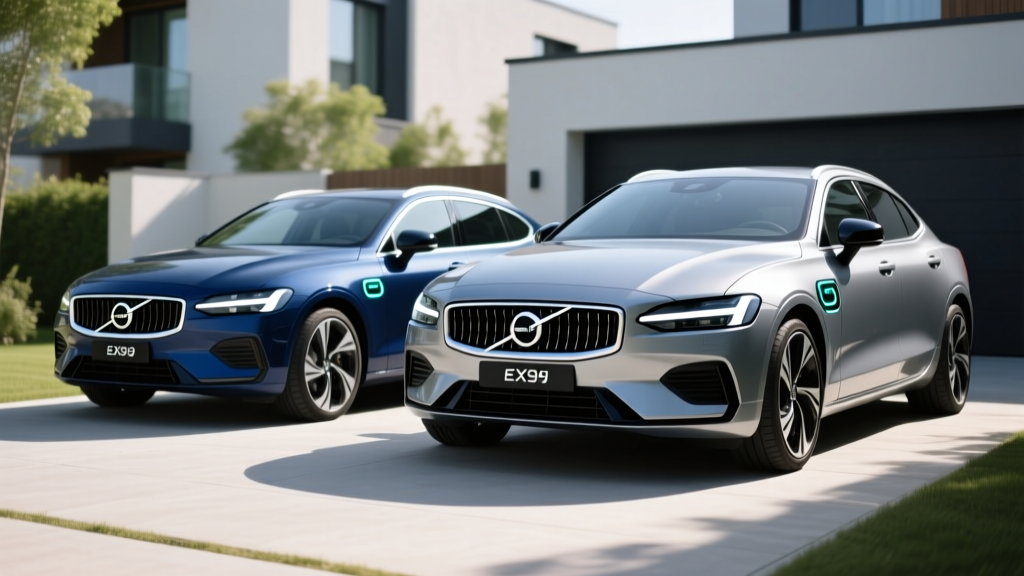
If you're searching for a Volvo electric station wagon, you have two realistic paths in 2026. The Volvo V60 Recharge is a plug-in hybrid (PHEV) wagon offering approximately 35 miles of electric-only range paired with a gas engine for longer trips, starting around $52,000. The Volvo EX90 is Volvo's flagship all-electric three-row SUV (not a traditional wagon, but the closest pure EV Volvo sells in the US with wagon-like cargo versatility), starting near $78,000 with an EPA-estimated 300+ miles of range. Volvo does not currently sell a fully electric V60 wagon in the US market. Your choice depends on whether you need zero-emission daily commuting with a gas safety net (V60 Recharge) or full battery-electric with maximum cargo and tech (EX90).
Understanding the Volvo Electric Wagon Landscape
Volvo's US electrified lineup can confuse wagon shoppers. The brand built its reputation on practical wagons — the V70, the 850, the iconic 240 — but the 2026 lineup splits the electrified wagon buyer into two camps:
- V60 Recharge (PHEV wagon): A traditional station wagon body with an 18.8 kWh battery enabling ~35 miles of pure electric driving, plus a 2.0L turbocharged/supercharged gas engine for total system output of 455 hp and 523 lb-ft of torque.
- EX90 (BEV SUV): A three-row all-electric vehicle with a 111 kWh battery (usable ~107 kWh, NMC chemistry), dual-motor AWD, up to 496 hp, and wagon-rivaling cargo space behind the second row.
Volvo has announced an EX60 — a mid-size electric SUV on the new SPA3 platform expected for the 2027 model year — which may serve as the spiritual successor to the electric wagon buyer. Until then, these two vehicles are your options.
Spec Comparison: V60 Recharge vs EX90
| Specification | 2026 V60 Recharge (PHEV) | 2026 EX90 Twin Motor (BEV) |
|---|---|---|
| Powertrain | 2.0L turbo+super PHEV | Dual-motor AWD BEV |
| Total Output | 455 hp / 523 lb-ft | 496 hp / 686 lb-ft (Performance) |
| Battery (usable) | 18.8 kWh (NMC) | ~107 kWh (NMC) |
| Electric-Only Range | ~35 mi (EPA est.) | N/A (full EV) |
| Total EPA Range | ~430 mi (gas+electric) | ~300-310 mi (EPA est.) |
| MPGe (electric mode) | ~69 MPGe | ~85 MPGe |
| Gas MPG (hybrid mode) | ~31 MPG combined | N/A |
| Max DC Charge Rate | N/A (no DC fast charge) | 250 kW peak |
| Level 2 Charge Rate | 3.7 kW (onboard) | 11 kW (onboard) |
| 10–80% DC Charge | N/A | ~30 min (250 kW station) |
| 0–60 mph | 4.3 sec | 4.7 sec (Twin Motor) |
| Cargo (behind 2nd row) | 25.5 cu ft / 50.9 cu ft max | ~36 cu ft / ~80 cu ft max |
| Starting MSRP | ~$52,450 | ~$78,250 |
| Federal Tax Credit (§30D) | Not eligible (PHEV battery <16 kWh threshold varies; check IRS) | Up to $7,500 (subject to sourcing/income rules) |
| Battery Warranty | 8 yr / 100,000 mi | 8 yr / 100,000 mi |
Sources: fueleconomy.gov, Volvo Cars USA. Real-world highway range for the EX90 typically falls 10–15% below EPA estimates in mixed driving, and cold weather (below 30°F) can reduce range by 20–30% due to cabin heating demands and battery chemistry limitations.
Real Costs: Purchase, Fueling, and 5-Year Ownership
The sticker price is only the start. Here's how the numbers play out over five years and 75,000 miles for a typical driver covering 15,000 miles annually.
| Cost Category | V60 Recharge | EX90 Twin Motor | Gas V60 B5 (baseline) |
|---|---|---|---|
| MSRP (base trim) | $52,450 | $78,250 | $47,950 |
| Federal Tax Credit | $0 | Up to $7,500* | $0 |
| Effective Purchase Price | $52,450 | $70,750 | $47,950 |
| 5-Year Fuel/Energy Cost | ~$4,800** | ~$3,750*** | ~$8,250**** |
| 5-Year Maintenance | ~$2,800 | ~$1,500 | ~$3,500 |
| Estimated Insurance (5yr) | ~$9,500 | ~$11,000 | ~$8,800 |
| 5-Year Total Cost | ~$69,550 | ~$87,000 | ~$68,500 |
*§30D credit eligibility depends on battery critical-mineral sourcing, buyer income caps ($150K single / $300K joint), and MSRP caps ($80K for SUVs). Confirm at IRS.gov. Point-of-sale transfer available at participating dealers.
**Assumes 60% of V60 miles on electricity at $0.14/kWh, 40% on gas at $3.60/gal.
***Assumes home charging at $0.14/kWh; public DC fast charging costs 2–3x more.
****Assumes 28 MPG combined at $3.60/gal.
Key Takeaway on Costs
The EX90 costs roughly $18,000 more than the gas V60 over five years, even after the tax credit and fuel savings. The V60 Recharge essentially breaks even with the gas V60 while offering electric commuting. EVs save on fuel and maintenance, but the upfront premium and higher insurance costs (average 15–25% more for EVs) offset those gains in the short term. Break-even typically occurs around year 7–8 depending on mileage and local electricity rates.
Real-World Ownership: What First-Time EV Buyers Must Know
Whether you choose the PHEV V60 Recharge or the all-electric EX90, these practical realities shape daily ownership:
Home Charging Access Is the Biggest Variable
The V60 Recharge's 3.7 kW onboard charger means a full Level 2 charge (0–100%) takes roughly 5 hours — fine for overnight replenishment of its small 18.8 kWh battery. The EX90's 11 kW onboard charger refills its 107 kWh battery in about 10–11 hours on Level 2.
Installation reality: A dedicated 240V/48A Level 2 home charger (like a ChargePoint Home Flex or Wallbox Pulsar Max) costs $500–$800 for the unit and $800–$2,500 for professional installation, depending on panel proximity and whether your electrical panel needs a 200A upgrade ($1,500–$3,000 additional). Always consult a licensed electrician for final specs — panel capacity, wire gauge, and local code vary.
If you lack home charging access (apartment, street parking), the EX90 becomes significantly harder to live with. Public DC fast charging at $0.35–$0.55/kWh makes electricity costs approach or exceed gasoline. The V60 Recharge is far more forgiving here — you can run it as a conventional hybrid and still get 31 MPG.
Cold Weather Range Loss
The EX90's NMC battery loses approximately 20–30% of its EPA range in sustained sub-30°F conditions. That 310-mile EPA estimate may drop to 220–250 real-world miles on a cold highway run. The V60 Recharge sidesteps this issue entirely — the gas engine provides heat and range regardless of temperature.
The EX90 includes a heat pump (standard on most trims), which recovers waste heat from the drivetrain to warm the cabin more efficiently than resistive heating, reducing cold-weather energy consumption by roughly 10% compared to vehicles without one.
Charging Curve Reality on Road Trips
The EX90's 250 kW peak DC fast-charge rate is impressive, but like all EVs, it doesn't sustain that rate. Expect:
- 10–80%: approximately 30 minutes at a 250+ kW station ( Electrify America, Tesla Supercharger with NACS adapter)
- 80–100%: an additional 25–35 minutes as the charge curve tapers sharply to protect battery health
- Practical road-trip strategy: charge to 80% and drive on — that's ~240 real-world miles of range per stop
The V60 Recharge has no DC fast charging capability — its battery is too small to warrant it. You charge via Level 1 (120V, ~5 hours for full battery) or Level 2 (240V, ~5 hours). On road trips, you simply use the gas engine.
Common Misconceptions About Volvo's Electric Wagons
| Myth | Fact |
|---|---|
| "The V60 Recharge is an electric wagon" | It's a plug-in hybrid. It has a gas engine and requires gasoline for trips beyond its 35-mile electric range. |
| "Volvo sells a fully electric V60 wagon" | Not in the US. The all-electric Volvo wagon doesn't exist yet. The EX90 SUV is the closest BEV option with wagon-like cargo space. |
| "The EX90 qualifies for the full $7,500 tax credit automatically" | Eligibility depends on battery mineral sourcing, your income, and the MSRP cap. The §30D rules are specific — verify on IRS.gov or with a tax professional. |
| "I'll get 310 miles of real-world range from the EX90" | EPA estimates assume mixed driving. Highway-only trips at 75 mph typically yield 260–280 miles; cold weather drops this further to 220–250. |
| "PHEVs don't need charging" | You can drive the V60 Recharge without ever plugging in, but you'll lose the ~$0.04/mile electricity cost advantage and the 35-mile electric commute. Unplugged, it's just a heavy hybrid at ~31 MPG. |
| "EV batteries need replacing every few years" | Volvo warranties its high-voltage batteries for 8 years/100,000 miles with a minimum 70% capacity retention threshold. Modern NMC batteries typically lose only 10–15% capacity over 150,000+ miles. |
Decision Framework: Which Volvo Electric Wagon Fits You?
Choose the V60 Recharge if:
- Your daily commute is under 35 miles round-trip and you can charge at home overnight
- You take regular road trips exceeding 300 miles and don't want to plan charging stops
- You live in a cold climate where EV range loss is a recurring concern
- You want a true station wagon body style with a lower roofline and car-like driving dynamics
- Your budget tops out around $55,000–$60,000
- You lack reliable access to DC fast-charging infrastructure in your area
Choose the EX90 if:
- You want zero tailpipe emissions and plan to keep the vehicle 8+ years
- You have reliable home Level 2 charging and your daily driving stays under 250 miles
- You need three rows of seating and maximum cargo volume (~80 cu ft with seats folded)
- You want Volvo's most advanced ADAS suite (Pilot Assist with LiDAR on upper trims — SAE Level 2, driver supervision required at all times)
- Your budget accommodates $78,000–$90,000+ after the tax credit
- You're committed to battery-electric and accept the road-trip charging planning trade-off
Wait for the EX60 if:
- You want a mid-size electric vehicle closer to wagon proportions than the large EX90
- You're targeting a $55,000–$65,000 all-electric price point
- You can hold off until the 2027 model year (expected late 2026 announcement)
Frequently Asked Questions
Does Volvo make a fully electric station wagon?
Not currently in the US market. The V60 exists only as a PHEV (Recharge) or mild-hybrid (B5). Volvo's pure-electric vehicles are SUVs: the EX30, EX40 (formerly XC40 Recharge), and EX90. An electric mid-size model (the anticipated EX60) is expected for the 2027 model year but has not been released.
How much does it cost to charge the EX90 at home?
At the US average residential electricity rate of ~$0.16/kWh (per EIA data), a full 107 kWh charge costs approximately $17.12 and delivers roughly 280–310 real-world miles. That works out to about $0.055–$0.06 per mile — roughly one-third the per-mile cost of a gas vehicle averaging 28 MPG at $3.60/gallon ($0.13/mile).
Can I tow with the EX90 or V60 Recharge?
The EX90 has a maximum towing capacity of 5,000 lbs when properly equipped. The V60 Recharge is rated for approximately 2,000 lbs. Note that towing significantly reduces EV range — expect a 30–50% range reduction depending on trailer weight and aerodynamics.
What's the battery replacement cost for the EX90?
Out-of-warranty high-voltage battery replacement for a 107+ kWh pack currently runs $18,000–$25,000+ at dealer rates. However, Volvo's 8-year/100,000-mile warranty covers defects and capacity loss below 70%. Industry data shows most modern NMC packs retain 85–90% capacity at 150,000 miles, making full replacement uncommon within the vehicle's typical lifespan.
Is Volvo's Pilot Assist self-driving?
No. Volvo's Pilot Assist is an SAE Level 2 driver-assistance system — it combines adaptive cruise control and lane-centering, but you must keep your hands on the wheel and eyes on the road at all times. The EX90's available LiDAR sensor enhances the system's perception capability, but it does not elevate the automation level. Only Level 4 services (like Waymo in select cities) operate without a human driver.
Should I buy or lease the EX90?
Leasing can make sense if you want to hedge against EV depreciation (which has been steep — some EVs lose 40–50% of value in three years) and plan to upgrade when Volvo's next-generation SPA3 platform vehicles arrive. Buying makes sense if you'll keep the vehicle 6+ years, want to capture the §30D tax credit (which applies to purchases, and some leases via the commercial credit passthrough), and drive enough miles to benefit from lower per-mile energy costs.
Bottom Line: The Volvo Electric Wagon Verdict
The honest answer for wagon loyalists: Volvo doesn't sell a true electric station wagon in 2026. The V60 Recharge is an excellent PHEV wagon that lets you commute on electricity while keeping gas-engine flexibility — and it's the most wagon-like electrified Volvo you can buy today. The EX90 is a compelling all-electric family hauler with genuine road-trip capability, but it's an SUV, not a wagon, and its $78,000+ price demands a long ownership horizon to recoup.
If a low-slung, long-roof electric Volvo wagon is your dream, the upcoming EX60 (2027 model year) is worth monitoring. Until then, the V60 Recharge offers the most practical bridge between Volvo's wagon heritage and an electrified daily routine — as long as you can plug in at home.