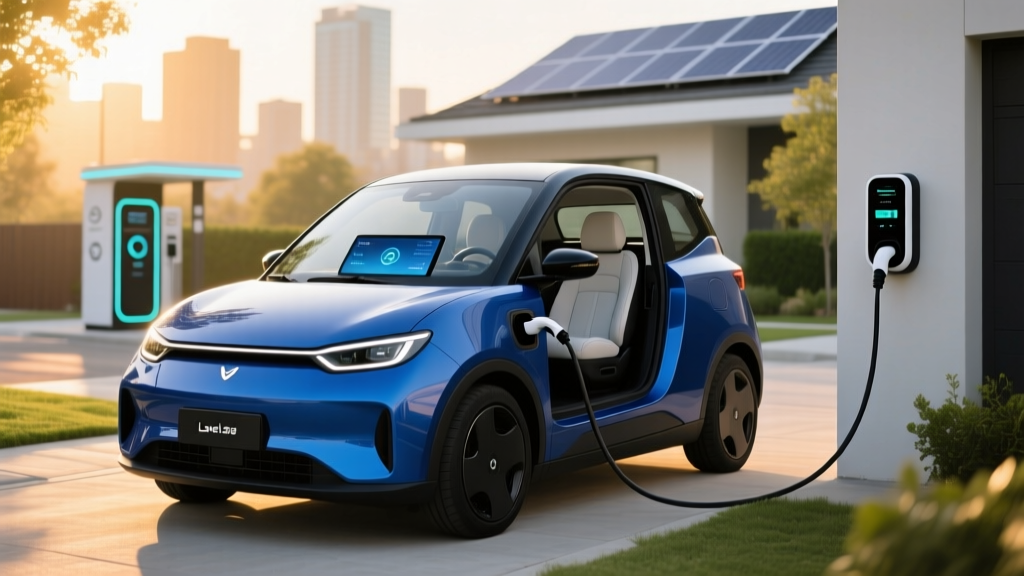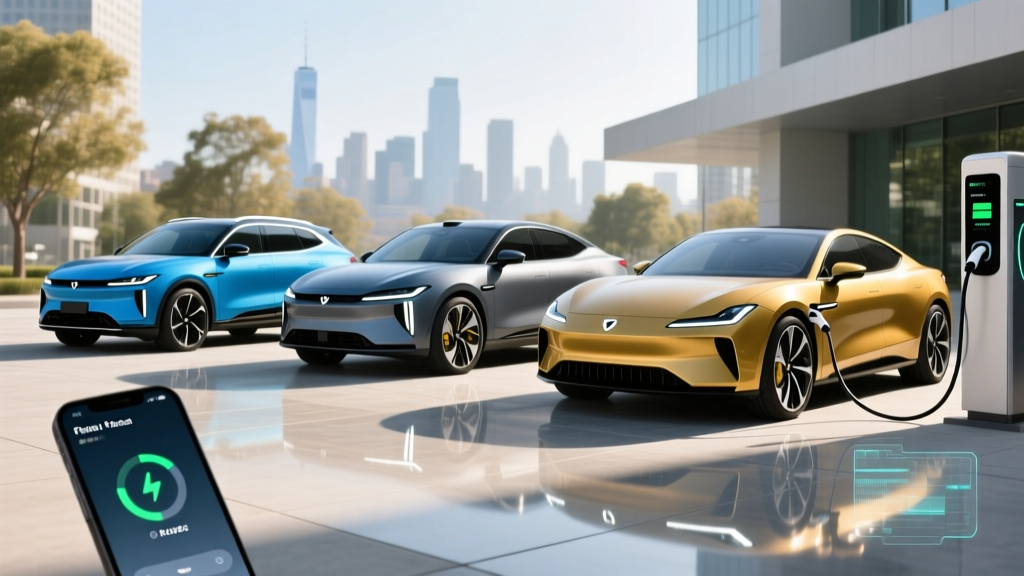
The Fisker name has reemerged in the electric vehicle space with a renewed focus on accessible, design-forward EVs. For 2026, the brand is concentrating its efforts on the Fisker Ocean SUV and teasing future models that aim to compete directly with mainstream electric crossovers. This review examines what current and prospective buyers need to know about range, charging infrastructure compatibility, real-world efficiency, and whether a Fisker vehicle makes financial sense in today's market.
Fisker Ocean: The Flagship EV SUV
The Fisker Ocean remains the brand's sole production vehicle available to consumers in 2026. Positioned as a midsize electric SUV, it targets buyers who want Tesla Model Y or Hyundai Ioniq 5 levels of practicality with a distinct design language and a sustainability-focused brand story. Let's break down the exact specifications that matter for ownership decisions.
| Specification | Ocean Sport (FWD) | Ocean Ultra / Extreme (AWD) |
|---|---|---|
| EPA Estimated Range | 250 miles | 360 miles |
| Battery Capacity (usable) | ~80 kWh (LFP) | ~113 kWh (NMC) |
| Max DC Fast Charge Rate | 150 kW | 250 kW |
| 10–80% DC Charge Time | ~34 minutes | ~30 minutes |
| Level 2 Home Charging | 10.5 kW (~30 mi/hr) | 10.5 kW (~30 mi/hr) |
| 0–60 mph | 6.9 seconds | 3.7 seconds |
| Horsepower | 275 hp | 550 hp |
| Drivetrain | Single-motor FWD | Dual-motor AWD |
| EPA Efficiency (Combined) | 105 MPGe | 98 MPGe |
| Cargo Volume (rear seats up) | 32.7 cu ft | 32.7 cu ft |
| Cargo Volume (rear seats folded) | 67.0 cu ft | 67.0 cu ft |
| Base MSRP | $38,999 | $61,499 (Ultra) / $68,999 (Extreme) |
Sources: fueleconomy.gov (EPA), Fisker official specifications. Figures reflect 2026 model-year data where available; some trims carry over from late-2025 production.
Real-World Range: What the EPA Sticker Doesn't Tell You
The Fisker Ocean Extreme's 360-mile EPA estimate is impressive on paper, but real-world conditions tell a more nuanced story. In mixed highway driving at 70–75 mph, expect approximately 300–320 miles before needing a charge stop. In cold weather (below 30°F), range can drop to 250–280 miles due to battery chemistry limitations and cabin heating demands. The Sport trim's LFP battery is somewhat more resilient in cold conditions but starts with a lower baseline — plan for 200–220 highway miles in winter.
City driving with frequent regenerative braking opportunities can push the Ultra/Extreme trims close to or slightly above their EPA estimates, particularly in mild weather.
The difference between the LFP (lithium iron phosphate) battery in the Sport trim and the NMC (nickel manganese cobalt) pack in higher trims matters for more than just range. LFP chemistry offers a longer cycle life and better thermal stability, making it well-suited for daily charging to 100%. NMC provides higher energy density — hence the 360-mile figure — but benefits from charging to 80–90% for daily use and reserving 100% for road trips. This is a trade-off every Fisker buyer should understand before choosing a trim.
Charging Speed and Infrastructure Compatibility
Charging speed is where the Fisker Ocean's trim hierarchy becomes most apparent. The Ultra and Extreme trims support up to 250 kW DC fast charging on CCS-compatible networks, while the Sport trim peaks at 150 kW. However, peak rates are not sustained rates — and understanding the charge curve is critical for trip planning.
| Charging Level | Power (kW) | Miles Added per Hour | Notes |
|---|---|---|---|
| Level 1 (120V household) | ~1.4 kW | ~4 mi/hr | Emergency/top-up only; 360-mi fill takes 80+ hours |
| Level 2 (240V home) | 10.5 kW | ~30 mi/hr | Full overnight charge in 8–11 hours depending on trim |
| DC Fast (Sport trim) | 150 kW peak | ~180 mi in 30 min | Sustains ~120 kW to 60%, tapers to ~60 kW above 80% |
| DC Fast (Ultra/Extreme) | 250 kW peak | ~240 mi in 30 min | Sustains ~200 kW to 40%, tapers progressively; 10–80% in ~30 min |
The 250 kW peak on Ultra/Extreme trims is achievable at Electrify America, EVgo, and other CCS networks with 350 kW-capable stalls. However, the Ocean's charge curve tapers noticeably above 60% state of charge. In real-world testing, you'll spend roughly 18 minutes going from 10% to 60%, but another 12 minutes going from 60% to 80%. For road trips, the optimal strategy is short, frequent stops staying in the 20–60% window rather than waiting for a full 80% charge.
For home charging, a Level 2 installation on a 240V/48A circuit delivers the Ocean's maximum 10.5 kW acceptance rate. Expect a full charge from near-empty in about 8 hours (Sport) to 11 hours (Extreme). Installation costs typically range from $800 to $2,500 depending on panel capacity and run length — factor in a potential $1,500–$3,000 panel upgrade if your home has a 100A service panel.
Pricing, Trims, and Federal Tax Credit Eligibility
The 2026 Fisker Ocean lineup spans a wide price range, and federal tax credit eligibility under IRS §30D varies significantly by trim and buyer circumstances. Here's the current landscape:
| Trim | Base MSRP | §30D Federal Credit Potential | Effective Price (if eligible) |
|---|---|---|---|
| Sport (FWD) | $38,999 | Up to $7,500 | ~$31,499 |
| Ultra (AWD) | $61,499 | Up to $7,500 (if MSRP cap allows) | ~$53,999 |
| Extreme (AWD) | $68,999 | Likely exceeds MSRP cap | $68,999 (no credit) |
Critical caveats on the §30D credit (per IRS guidelines):
- MSRP cap: SUVs must have a base MSRP at or below $80,000. The Ocean Extreme at $68,999 clears this, but destination charges and dealer add-ons could push certain configurations over.
- Buyer income limits: Modified adjusted gross income must not exceed $150,000 (single), $225,000 (head of household), or $300,000 (joint filers).
- Battery sourcing requirements: The credit splits into two halves — $3,750 for critical minerals and $3,750 for battery component sourcing. Fisker's supply chain compliance with these requirements varies by build date and battery supplier; confirm with your dealer before purchase.
- Point-of-sale transfer: As of 2024, buyers can transfer the credit to the dealer at purchase, reducing the upfront cost rather than waiting for a tax refund. This remains available in 2026.
The Sport trim is the clear value play for credit-eligible buyers, potentially dropping below $32,000 — a price point that undercuts most competing electric SUVs. Always verify current-year eligibility with a tax professional before committing.
Interior, Technology, and Daily Livability
The Ocean's interior emphasizes sustainable materials — recycled plastics, vegan leather, and reclaimed rubber — without sacrificing the premium feel buyers expect at these price points. The 17.1-inch rotating center touchscreen (Extreme trim; 12.8-inch on lower trims) runs Fisker's proprietary infotainment system with wireless Apple CarPlay and Android Auto.
Standout features:
- Solar roof (Extreme trim): Fisker's "California Mode" solar roof adds approximately 1–2 miles of range per day in optimal conditions. It won't replace plugging in, but it offsets phantom drain and powers ventilation during parking.
- Revolving center screen: Rotates between landscape (driving) and portrait (media/navigation) orientations — a unique touch, though some users report it's more novelty than daily utility.
- Frunk (front trunk): 2.0 cu ft of sealed front storage — enough for a charging cable bag and small groceries.
Notable drawbacks:
- Infotainment learning curve: The custom OS lacks the polish of Tesla's or Hyundai's interfaces. Some climate controls are buried in submenus.
- Driver assistance limitations: Fisker's "Intelligent Pilot" is a Level 2 SAE system — it provides adaptive cruise and lane-centering but requires constant driver supervision. It is not autonomous driving.
- Rear visibility: The sloping rear roofline and thick C-pillars create significant blind spots. The digital rearview mirror (standard on Ultra/Extreme) helps but takes adjustment.
- Service network: Fisker's service footprint remains limited compared to legacy automakers. Mobile service handles minor issues, but collision repair and major warranty work may require shipping to regional centers.
The Fisker Ocean's Intelligent Pilot system operates at SAE Level 2. This means the vehicle can simultaneously control steering and speed under certain conditions, but the driver must remain fully engaged — hands on or near the wheel, eyes on the road. It does not handle construction zones, unmapped roads, or complex urban scenarios independently. Compare this to Level 4 robotaxi services (Waymo, Zoox) that operate without a human driver in geofenced areas. The Ocean is an assisted-driving vehicle, not a self-driving one.
Cargo, Passenger Space, and Practicality
The Ocean delivers competitive interior volume for the midsize EV SUV segment:
- Front legroom: 41.5 inches
- Rear legroom: 38.2 inches (adequate for adults on longer trips)
- Cargo behind second row: 32.7 cu ft
- Cargo with rear seats folded: 67.0 cu ft
- Frunk: 2.0 cu ft
- Towing capacity: 4,000 lbs (AWD trims with tow package)
For context, the Tesla Model Y offers 30.2 cu ft behind the second row and 72.1 cu ft folded, while the Hyundai Ioniq 5 provides 27.2 / 59.3 cu ft. The Ocean sits comfortably in the middle — adequate for family road trips with luggage but not class-leading for cargo.
Warranty and Long-Term Battery Outlook
Fisker provides the following warranty coverage for the 2026 Ocean:
- Basic vehicle warranty: 6 years / 60,000 miles
- Battery and powertrain: 8 years / 100,000 miles (capacity retention guaranteed above 70% of original)
- Corrosion protection: 12 years / unlimited miles
The 70% capacity retention threshold is standard for the industry (Tesla, Hyundai, and Ford use similar benchmarks). Based on NMC degradation data from comparable packs in the segment, expect approximately 5–8% capacity loss over the first 100,000 miles under normal use patterns. The LFP battery in the Sport trim typically degrades more slowly — often 3–5% over the same distance — but starts with less total capacity.
Battery replacement costs, should the pack fall below the warranty threshold outside of coverage, are estimated at $12,000–$18,000 for the NMC pack and $9,000–$13,000 for the LFP pack, based on current module pricing trends. These figures are expected to decline as the battery supply chain matures.
Pros and Cons at a Glance
- Class-leading 360-mile EPA range on Ultra/Extreme trims
- Sport trim under $32K after potential tax credit — exceptional value
- Distinctive design with sustainability-focused materials
- Competitive 250 kW DC fast-charge capability (AWD trims)
- Solar roof offsets phantom drain (Extreme trim)
- Generous 8-year/100,000-mile battery warranty
- Limited service and dealer network compared to legacy brands
- Infotainment system lacks polish; some controls buried in menus
- Charge curve tapers significantly above 60% SoC
- Rear visibility hampered by design; relies on digital mirror
- Brand longevity uncertainty — Fisker is a startup in a consolidating market
- No NACS (Tesla Supercharger) compatibility without adapter (CCS native)
Who Should Buy a Fisker Vehicle in 2026?
Choose the Fisker Ocean Sport if: You want a budget-friendly electric SUV for commuting and city driving, can charge at home, and value getting below $32K after the federal credit. The 250-mile range is sufficient for daily use with home charging, and the LFP battery offers long-term durability.
Choose the Fisker Ocean Ultra if: You need 300+ miles of real-world range for regular road trips, want dual-motor AWD for inclement weather, and can budget $54K–$62K. This is the best balance of range, performance, and value in the lineup.
Choose the Fisker Ocean Extreme if: You want maximum range, the solar roof novelty, and premium features — and you're comfortable spending $69K on a startup brand with a limited service network. Tax credit eligibility at this price point is uncertain.
Look elsewhere if: You need a robust dealer/service network (consider Hyundai/Kia), want NACS Supercharger access without adapters (Tesla Model Y, or Ford/GM EVs with NACS), or require proven long-term brand reliability data.
Frequently Asked Questions
What is the real-world range of the Fisker Ocean?
The EPA rates the Ocean Extreme at 360 miles and the Sport at 250 miles. In real-world highway driving at 70+ mph, expect 300–320 miles (Extreme) and 200–220 miles (Sport). Cold weather reduces these figures by 15–25%. City driving with regenerative braking can match or slightly exceed EPA estimates in mild conditions.
How fast does the Fisker Ocean charge?
The Ultra and Extreme trims support up to 250 kW DC fast charging, achieving a 10–80% charge in approximately 30 minutes. The Sport trim peaks at 150 kW, taking about 34 minutes for 10–80%. At home on a Level 2 (240V) charger, all trims accept 10.5 kW, adding roughly 30 miles of range per hour.
Does the Fisker Ocean qualify for the federal EV tax credit?
The Ocean Sport ($38,999 MSRP) and Ultra ($61,499) fall under the $80,000 SUV MSRP cap for the §30D credit. The Extreme ($68,999) also clears the cap at base price. However, eligibility also depends on buyer income limits ($150K single / $300K joint), battery sourcing compliance, and point-of-sale transfer availability. Consult the IRS clean vehicle credit page and a tax professional before purchasing.
Is the Fisker Ocean worth buying vs. a Tesla Model Y or Hyundai Ioniq 5?
The Ocean competes on range (360 miles beats most rivals) and the Sport trim's post-credit value. However, the Tesla Model Y offers a more mature Supercharger network and software ecosystem, while the Hyundai Ioniq 5 provides faster 10–80% charging (~18 minutes at 350 kW stalls) and a wider dealer network. If service accessibility and charging infrastructure are top priorities, the competitors have an edge. If maximum range and design differentiation matter most, the Ocean makes a strong case.
What are the biggest risks of buying a Fisker vehicle?
The primary concerns are the limited service network (fewer than 50 service points nationwide as of early 2026), brand longevity uncertainty in a competitive and consolidating EV market, and reliance on CCS charging infrastructure as the industry shifts toward NACS. Buyers in areas without nearby Fisker-authorized service centers should weigh the inconvenience of mobile-only or ship-to-repair service models.
Can I charge a Fisker Ocean at Tesla Superchargers?
Not natively. The Ocean uses a CCS1 connector. As the industry transitions to NACS (Tesla's connector standard), Fisker has not announced a factory NACS port or official adapter for the Ocean. Third-party CCS-to-NACS adapters exist but may not support the Ocean's full 250 kW charge rate. Check adapter compatibility and warranty implications before relying on Supercharger access.