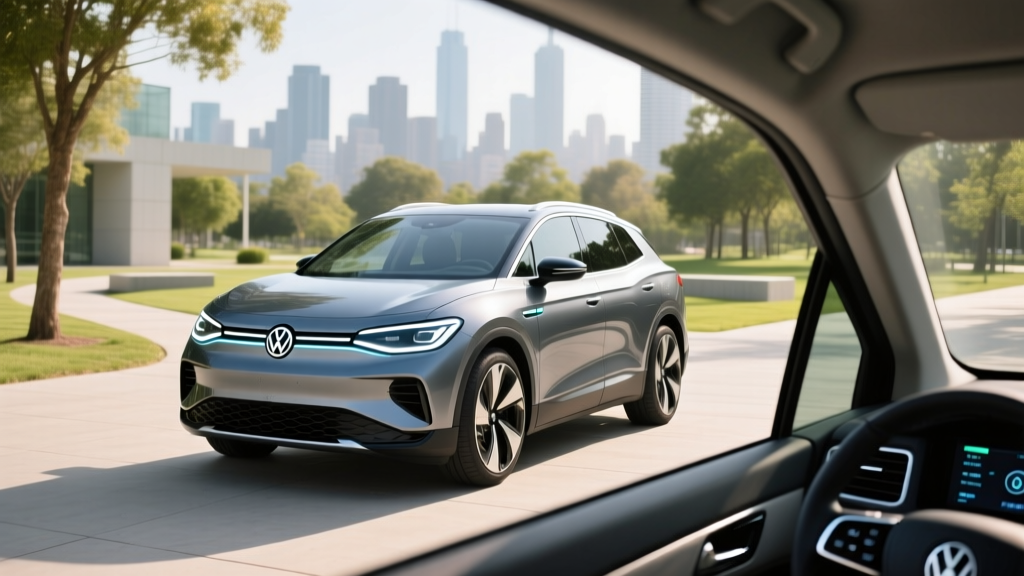
The Volkswagen Tiguan has long been one of America's best-selling compact SUVs, and for 2026 and beyond, VW is preparing a fully electric successor. If you're searching for a Tiguan electric model, here's what you need to know right now: Volkswagen has not yet released a battery-electric Tiguan for the U.S. market. The current Tiguan remains a turbocharged gasoline SUV. However, VW's ID.4 — built on the same MEB platform that would underpin any future electric Tiguan — is already on sale and serves as VW's de facto electric compact SUV offering. VW executives have signaled that an electrified Tiguan nameplate is part of the brand's long-term roadmap, likely arriving as a next-generation model on an updated SSP (Scalable Systems Platform) architecture, potentially for the 2027 or 2028 model year.
Quick Answer: Is There a Tiguan Electric?
No — not yet. As of early 2026, Volkswagen does not sell a battery-electric Tiguan in the United States. The closest equivalent is the VW ID.4 (EPA range up to 291 miles, starting at ~$39,735). VW has indicated that the Tiguan nameplate will eventually transition to an electric platform, but no official U.S. launch date, pricing, or final specs have been confirmed. Any figures below for a future Tiguan EV are estimated and preliminary based on VW's published platform roadmaps and current ID.4 benchmarks.
The Current Tiguan vs. VW's Electric Lineup
To understand where a Tiguan electric would fit, it helps to look at what VW offers today. The 2026 Volkswagen Tiguan is powered by a 2.0-liter turbocharged four-cylinder engine producing 201 horsepower, paired with an eight-speed automatic transmission. EPA fuel economy sits at approximately 23 mpg city / 30 mpg highway / 26 mpg combined for front-wheel-drive models, per fueleconomy.gov.
Meanwhile, the 2026 VW ID.4 — VW's current electric compact SUV — uses a 82 kWh (usable) NMC battery pack, offers up to 291 miles of EPA-estimated range in rear-wheel-drive form, and starts at roughly $39,735 before incentives. The ID.4 Pro S AWD variant adds a second motor for 295 hp and drops range to around 263 miles EPA.
| Attribute | 2026 Tiguan (2.0T Gas) | 2026 ID.4 Pro (RWD EV) |
|---|---|---|
| Powertrain | 2.0L Turbo I4, 201 hp | Single motor, 282 hp |
| EPA Range / MPG | ~26 mpg combined | 291 miles (EPA) |
| Energy Capacity | 15.3-gallon fuel tank | 82 kWh usable battery |
| Refuel / Recharge Time | ~5 min (gas station) | ~28 min (10–80% at 175 kW DC) |
| Starting MSRP | ~$29,495 | ~$39,735 |
| Federal Tax Credit (§30D) | None | Up to $7,500 (eligibility varies) |
| Estimated Annual Fuel/Energy Cost | ~$2,150 (gas at $3.40/gal) | ~$600 (electricity at $0.15/kWh) |
| Battery / Powertrain Warranty | 4 yr / 50,000 mi | 8 yr / 100,000 mi (battery) |
What a Future Tiguan Electric Could Look Like
Volkswagen's next-generation SSP platform, expected to debut around 2027–2028, promises several improvements over the current MEB architecture used in the ID.4. Based on VW's public technical disclosures and industry reporting, a future Tiguan electric built on SSP could offer:
- Battery chemistry: Likely a mix of NMC for long-range trims and potentially LFP (lithium iron phosphate) for base models, reducing cost and improving cycle life at the expense of some energy density.
- Usable battery capacity: Estimated 75–95 kWh, depending on trim and drivetrain.
- EPA-estimated range: Potentially 300–350 miles for a single-motor RWD configuration, though real-world highway range could be 10–15% lower, especially in cold climates.
- DC fast charging: SSP is designed for 800-volt architecture, which could enable peak charge rates of 250–350 kW — a significant upgrade from the ID.4's current 175 kW peak. A 10–80% charge could drop to roughly 18–22 minutes under optimal conditions.
- Performance: Dual-motor AWD variants could produce 350+ hp with 0–60 mph times in the low 5-second range.
- Pricing: Estimated starting MSRP of $38,000–$45,000, depending on battery size and trim, before any applicable federal incentives.
These are preliminary estimates — VW has not confirmed final specifications. We'll update this article as official information becomes available.
Real Costs: Gas Tiguan vs. Electric SUV Ownership
Whether you buy a gas Tiguan today or wait for an electric version, understanding total cost of ownership matters. Here's a five-year comparison using the current Tiguan and the ID.4 as a stand-in for a future Tiguan EV.
| Cost Category | Gas Tiguan (2.0T) | ID.4 Pro (RWD EV) |
|---|---|---|
| Purchase Price (MSRP) | $29,495 | $39,735 |
| Federal Tax Credit (§30D) | $0 | Up to –$7,500* |
| Effective Purchase Price | $29,495 | ~$32,235 |
| Fuel / Energy (5 yrs) | ~$10,750 | ~$3,000 |
| Maintenance (5 yrs) | ~$3,500 | ~$1,800 |
| Insurance (5 yrs, avg) | ~$7,500 | ~$8,500 |
| Total Estimated 5-Yr Cost | ~$51,245 | ~$45,535 |
*Federal §30D tax credit eligibility depends on buyer income (AGI caps: $150K single / $300K joint), vehicle MSRP (SUV cap: $80,000), and battery component/critical mineral sourcing requirements. The credit can now be transferred to the dealer at point of sale as a discount. Always verify current eligibility on irs.gov and consult a tax professional.
The ID.4's higher sticker price is substantially offset by the tax credit and dramatically lower fueling and maintenance costs. Over five years, the EV saves an estimated $5,700+ even before accounting for state incentives, utility off-peak charging rates, or potential time-of-use savings.
Real-World Ownership Considerations Before You Buy
Whether you opt for today's ID.4 or wait for a future Tiguan electric, these practical factors determine whether EV ownership works for you:
Home Charging Access
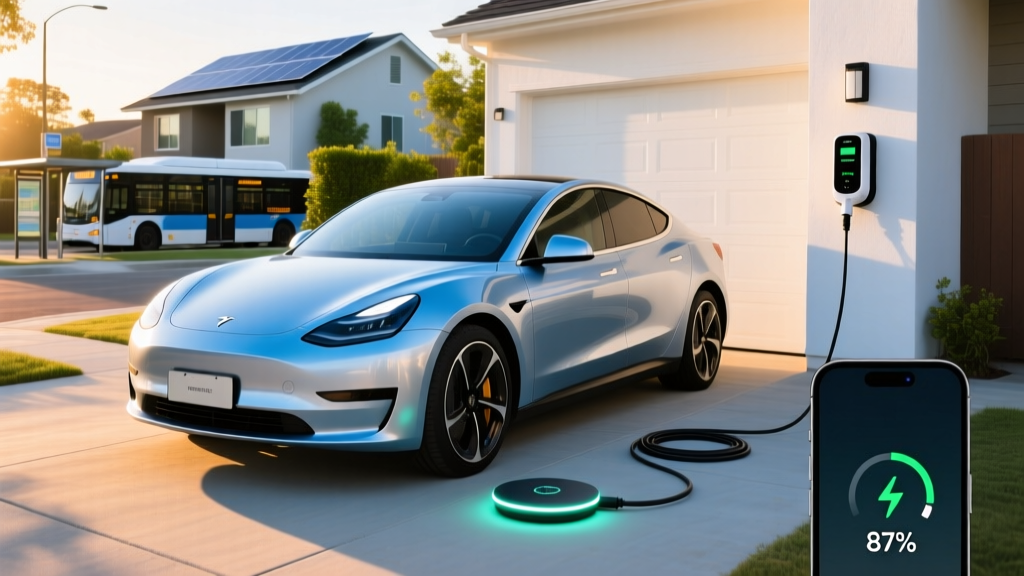
This is the single biggest variable. If you can install a Level 2 (240V) home charger — typically a 7–11 kW wallbox on a 40–50 amp circuit — you'll wake up every morning with a full battery. Installation costs range from $500–$2,500 depending on panel capacity and wiring distance. If your home has a 200-amp electrical panel with spare capacity, expect the lower end. A panel upgrade to 200A can add $1,500–$3,000. Renters and condo dwellers without dedicated parking face a real challenge and should weigh public charging availability carefully before committing.
Climate and Range Loss
EPA range estimates are measured at moderate temperatures. In cold weather (below 32°F), expect 15–30% range reduction depending on severity, use of cabin heating, and whether the vehicle has a heat pump (the ID.4 includes one for 2026). A 291-mile ID.4 might deliver 200–240 real-world miles on a frigid January highway drive. If you live in northern states and regularly drive 200+ miles in winter, plan accordingly — either choose a longer-range trim or budget for a mid-trip DC fast charge.
Driving Patterns
EVs excel in stop-and-go city driving where regenerative braking recaptures energy. Highway driving at 75+ mph is less efficient. If your commute is mostly urban or suburban, an EV's MPGe rating translates to significant savings. If you primarily drive long rural highway stretches, a PHEV (plug-in hybrid) like the Toyota RAV4 Prime may offer a better bridge, combining ~42 miles of electric range with a gas engine for road trips.
Public Charging Reality
The U.S. DC fast-charging network has expanded significantly, with Tesla's Supercharger network now open to non-Tesla EVs via NACS adapters or built-in NACS ports (the ID.4 is expected to adopt NACS in upcoming model years). Electrify America, EVgo, and ChargePoint also operate large networks. However, reliability remains inconsistent — plan road trips with backup charging stops and use apps like PlugShare to check station status.
Common EV Misconceptions — Fact-Checked
| Myth | Fact |
|---|---|
| "EV batteries need replacing every few years." | Modern NMC and LFP batteries are designed for 1,500–3,000+ charge cycles. VW warranties the ID.4 battery for 8 years / 100,000 miles with a minimum 70% capacity retention threshold. Real-world degradation data from older MEB vehicles shows roughly 5–8% loss over the first 100K miles. |
| "Charging takes too long for road trips." | At a 175 kW DC fast charger, the ID.4 charges 10–80% in approximately 28 minutes. Future SSP-based models with 800V architecture could cut that to 18–22 minutes. Most road-trip stops involve a restroom and food break anyway. |
| "EVs are worse for the environment because of battery manufacturing." | Studies from the ICCT and Argonne National Laboratory show that EVs produce fewer lifecycle emissions than gas cars within 1–2 years of driving, even accounting for battery production. The break-even point varies by electricity grid mix. |
| "I'll save money on maintenance but pay more for insurance." | Partly true. EVs have no oil changes, fewer brake replacements (regen braking saves pads), and simpler drivetrains. However, EV insurance premiums run 10–20% higher on average due to higher repair costs after collisions and elevated vehicle prices. |
| "The tax credit is $7,500 for everyone." | No. Under current IRS §30D rules, the credit depends on your income (AGI caps apply), the vehicle's MSRP (must be under $80,000 for SUVs), and battery sourcing requirements (critical minerals and component manufacturing). Some EVs qualify for the full $7,500, some for $3,750, and some for $0 depending on the model year and supply chain. Check the latest list on fueleconomy.gov. |
Decision Framework: Should You Wait or Buy Now?
Choose Your Path
Buy the VW ID.4 now if:
- You need an electric compact SUV within the next 6 months.
- Your daily driving is under 200 miles round-trip and you have home charging access.
- You want to lock in current §30D tax credit eligibility before sourcing rules potentially tighten.
- You're comfortable with 263–291 miles of EPA range and 175 kW peak DC charging.
Wait for a future Tiguan electric if:
- You can wait 18–36 months for a next-gen model.
- You want 800V fast-charging capability (250–350 kW peak) for faster road-trip stops.
- You prefer the Tiguan's design language and VW's potential to carry over the nameplate to an EV.
- You want potentially longer range (300–350 miles EPA) from an updated SSP battery pack.
Consider a PHEV (e.g., Toyota RAV4 Prime) instead if:
- You can't install a Level 2 home charger and public charging access is poor in your area.
- You regularly tow or drive 400+ miles in a single day in cold weather.
- You want electric-only commuting (42 miles EPA in the RAV4 Prime) without any range anxiety on road trips.
Stick with the gas Tiguan if:
- Your budget is firmly under $30,000 and you need a new vehicle now.
- You live in an apartment without charging access and your area has limited public infrastructure.
- You drive fewer than 8,000 miles per year, making fuel savings too small to offset a higher EV purchase price.
What First-Time EV Buyers Must Know
If you've never owned an electric vehicle and you're considering the ID.4 or waiting for a future Tiguan electric, these fundamentals will shape your experience:
- kW vs. kWh — know the difference. kW (kilowatts) measures power — how fast you charge or how hard the motor pulls. kWh (kilowatt-hours) measures energy — the battery's total capacity, like gallons in a fuel tank. An 82 kWh battery charged at 11 kW (Level 2) takes roughly 7.5 hours from empty to full.
- EPA range is a ceiling, not a guarantee. Real-world range depends on speed, temperature, terrain, and climate control use. Plan trips around 80–85% of the EPA figure for highway driving in moderate weather, and 65–75% in cold conditions.
- Charge curves matter more than peak kW. A vehicle might advertise "175 kW peak charging," but that rate only applies at low state-of-charge (typically 10–30%). Above 80%, charging slows dramatically to protect the battery. The 10–80% time is the number that actually matters for road trips.
- Precondition your battery. If your EV has battery preconditioning (the ID.4 does), use it. When you set a DC fast charger as your navigation destination, the car warms or cools the battery to the optimal temperature for charging, which can shave 5–10 minutes off your stop.
- Install a home charger before the car arrives. A Level 2 home charger (240V, 32–48 amps) adds roughly 25–35 miles of range per hour of charging. For most owners, this means a full overnight replenishment. Schedule your electrician 4–8 weeks ahead of delivery.
Frequently Asked Questions
Is Volkswagen discontinuing the gas Tiguan?
Not immediately. VW has refreshed the Tiguan for 2025–2026 with updated styling and tech. The brand's long-term strategy involves transitioning nameplates to electric platforms, but VW has confirmed gas-powered models will remain on sale alongside EVs through at least the late 2020s. Any transition to a Tiguan EV will likely coincide with the next major generational redesign.
How does the VW ID.4 compare to competitors like the Tesla Model Y or Hyundai Ioniq 5?
The ID.4 competes directly with both. The Tesla Model Y Long Range offers ~310 miles EPA and access to the Supercharger network, starting around $44,990. The Hyundai Ioniq 5 offers up to ~303 miles EPA with 800V fast charging (10–80% in ~18 minutes at 350 kW), starting around $42,450. The ID.4 undercuts both on price, especially after the tax credit, but trails on charging speed and range. Per IIHS, the ID.4 earns strong safety ratings, which matters for family buyers.
Will a future Tiguan electric qualify for the $7,500 federal tax credit?
It depends on the battery sourcing rules in effect at launch. Under current IRS §30D requirements, a vehicle must meet critical mineral and battery component thresholds that tighten annually. VW has been working to localize battery supply chains in North America (including partnerships with PowerCo and potential U.S. cell manufacturing), which improves the odds of credit eligibility — but nothing is guaranteed for an unreleased model. Always check irs.gov closer to the vehicle's launch.
What's the difference between LFP and NMC batteries, and which should I want?
NMC (nickel manganese cobalt) offers higher energy density, meaning more range per kilogram — ideal for long-range trims. LFP (lithium iron phosphate) is cheaper, lasts more charge cycles (3,000+ vs. ~1,500 for NMC), and can be charged to 100% daily without accelerated degradation. The trade-off: LFP is heavier and less energy-dense, so LFP-equipped vehicles typically offer less range. If your commute is short and you want maximum battery longevity, LFP is excellent. For road-trippers, NMC's extra range is worth the trade-off.
Can I charge a VW electric SUV at Tesla Superchargers?
VW has announced that future models will adopt the NACS (North American Charging Standard) connector, aligning with Tesla's Supercharger network. Current ID.4 models use CCS1 and can access select Supercharger locations via an adapter, though compatibility is not universal. A future Tiguan electric on the SSP platform is expected to ship with a native NACS port, granting full Supercharger access without an adapter.