Quick Answer: Does a Volkswagen Jetta Electric Exist?
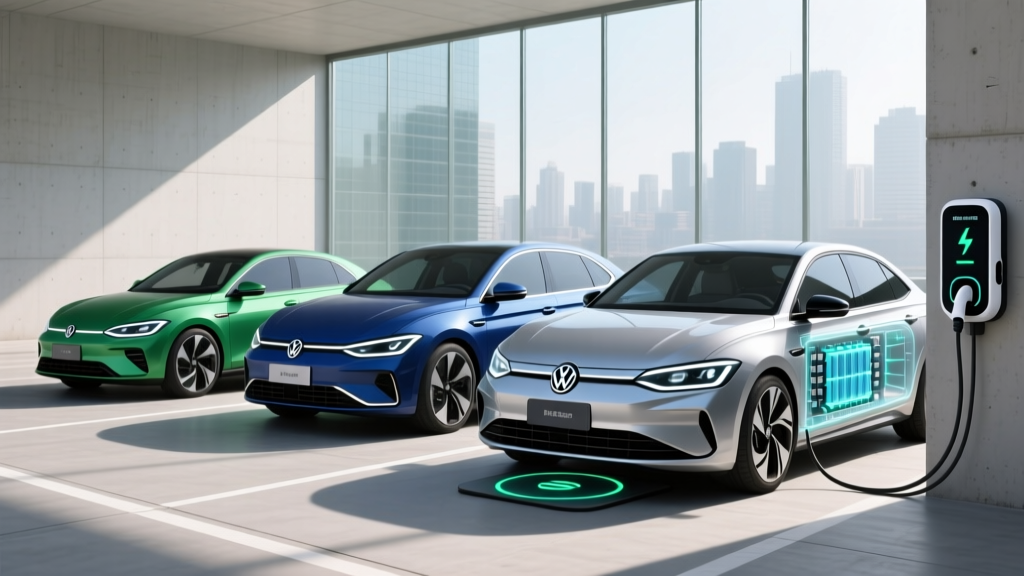
No. As of 2026, Volkswagen does not sell an electric Jetta in the United States. The Jetta remains a gasoline-only compact sedan (1.5L turbo I-4, 158 hp, EPA 34 mpg combined). VW's US electric lineup centers on the ID.4 crossover SUV (starting ~$39,995) and the upcoming ID.7 sedan (announced, not yet on sale). If you want a VW-badged electric sedan, the ID.7 is the closest equivalent to an "electric Jetta," but it targets the midsize class and carries a higher price. For now, buyers seeking an electric compact sedan in the Jetta's spirit should look at alternatives like the Hyundai Ioniq 6, Tesla Model 3, or the Chevy Bolt EV.
Why Volkswagen Hasn't Made a Jetta EV
The Jetta occupies a specific market position in VW's US portfolio: an affordable, fuel-efficient compact sedan priced from roughly $22,000. Converting it to electric while maintaining that price point has been a persistent challenge. Battery costs, even after years of decline, still add $8,000–$12,000 to a vehicle's bill of materials compared to an equivalent ICE powertrain. VW's electric strategy has prioritized higher-margin segments — SUVs and crossovers — where buyers tolerate higher base prices.
The ID.7 sedan, built on VW's MEB platform, was announced for the US market but has faced repeated delays. When it arrives, expect a starting MSRP near $45,000–$50,000 — firmly midsize territory and well above the Jetta's price bracket. VW has also signaled it will eventually introduce smaller, more affordable EVs globally under its "ID.2all" concept, but no US-bound compact electric sedan has been confirmed for 2026 or 2027.
The practical upshot: if you're searching for a "Volkswagen Jetta electric" because you love the Jetta's size, price, and efficiency but want to go electric, you'll need to look outside VW's current US showroom.
Best Electric Alternatives to a Jetta EV
Here's how the closest compact/midsize electric sedans stack up against the gas Jetta for 2026 model year:
| Spec | VW Jetta (Gas) | Hyundai Ioniq 6 SE | Tesla Model 3 RWD | Chevy Bolt EV (if avail.) |
|---|---|---|---|---|
| Base MSRP | $22,595 | $38,650 | $38,990 | $26,500 (est.) |
| EPA Range | ~420 mi (tank) | 361 mi | 341 mi | 259 mi |
| Battery (kWh usable) | N/A | 77.4 kWh (NMC) | 60 kWh (LFP) | 65 kWh (NMC) |
| Efficiency | 34 mpg comb. | 140 MPGe / 24 kWh/100mi | 132 MPGe / 25 kWh/100mi | 120 MPGe / 28 kWh/100mi |
| Peak DC Fast Charge | N/A | 240 kW | 170 kW | 55 kW |
| 10–80% DCFC Time | N/A | ~18 min | ~25 min | ~55 min |
| 0–60 mph | ~7.7 sec | 6.1 sec | 5.8 sec | 6.5 sec |
| Horsepower | 158 hp | 225 hp | 271 hp | 200 hp |
| Federal Tax Credit (§30D) | $0 | Up to $7,500* | Up to $7,500* | Up to $7,500* |
| Battery Warranty | N/A | 10 yr / 100,000 mi | 8 yr / 120,000 mi | 8 yr / 100,000 mi |
*Federal §30D tax credit eligibility depends on buyer AGI limits, MSRP caps, battery sourcing requirements, and current-year IRS rules. Verify at irs.gov before purchasing. Credit may be transferred to dealer at point of sale.
Real Cost Comparison: Gas Jetta vs. Electric Sedan
The upfront price gap between a $22,595 Jetta and a ~$39,000 electric sedan is significant. But total cost of ownership (TCO) over five years tells a more nuanced story — especially after the federal tax credit and lower fuel/maintenance costs are factored in.
| 5-Year Cost Category | VW Jetta S (Gas) | Hyundai Ioniq 6 SE (EV) |
|---|---|---|
| Purchase Price (MSRP) | $22,595 | $38,650 |
| Federal Tax Credit | $0 | –$7,500 (if eligible) |
| Net Purchase | $22,595 | $31,150 |
| Fuel/Energy (60,000 mi, 15k/yr) | $6,750 (gas @ $3.00/gal, 34 mpg) | $2,880 (electric @ $0.12/kWh, 24 kWh/100mi, home charging) |
| Maintenance (5 yr) | $2,500 (oil, filters, brakes) | $900 (cabin filter, wipers, tire rotation) |
| Insurance (est. average) | $6,000 | $7,500 |
| Depreciation (est. 5-yr) | $9,500 | $14,000 |
| Total 5-Year Cost | $47,345 | $56,430 |
| Cost per Mile | $0.79 | $0.94 |
Assumptions: 15,000 miles/year, national avg gas $3.00/gal, home electricity $0.12/kWh. Public DC fast charging at $0.35–$0.50/kWh would increase EV energy costs. Insurance estimates vary by driver, state, and vehicle. Depreciation figures are estimates based on current market trends. Sources: fueleconomy.gov, manufacturer data.
Key takeaway: Even after the $7,500 tax credit, the Ioniq 6 costs roughly $9,000 more over five years than a gas Jetta, driven primarily by higher depreciation and insurance. However, EV ownership costs drop significantly if you have access to cheap home charging, drive more than 15,000 miles/year, or live in a state with additional rebates. The gap also narrows if gas prices rise above $3.50/gal.
Real-World Ownership Considerations Before Going Electric
Buying an EV is not simply swapping a gas tank for a battery. These factors will determine whether an electric Jetta alternative works for your life:
Home Charging Access
This is the single biggest variable. If you can install a Level 2 (240V) home charger — typically a $500–$2,000 investment including electrician labor — you'll wake up to a full battery every morning and rarely need public charging. A Level 2 charger delivers 7–11 kW, adding roughly 25–40 miles of range per hour of charging. Overnight (8 hours), that's 200+ miles — more than most daily commutes.
If you live in an apartment, rely on street parking, or lack a dedicated 240V circuit, public charging becomes your lifeline. That's manageable in cities with dense networks (LA, SF, NYC) but risky in charging deserts (rural Midwest, parts of the South).
Climate and Range Loss
EPA range figures assume moderate temperatures. In cold weather (below 30°F), expect 15–30% range loss due to battery chemistry limitations and cabin heating demands. A 361-mile Ioniq 6 might deliver 250–300 real-world miles in a Minnesota winter. Heat pumps (standard on the Ioniq 6 and Model 3) mitigate this somewhat, but physics is physics.
Driving Patterns
Highway driving at 75+ mph reduces range by 10–20% versus the EPA combined cycle. If your commute is mostly 65 mph suburban, you'll match or beat EPA numbers. Sustained 80 mph interstate runs will leave you searching for chargers sooner than the sticker suggests.
Charging Curve Reality
Peak DC fast-charge rates (e.g., 240 kW) are sustained only briefly — typically between 10–30% state of charge. Above 80%, charging slows dramatically to protect battery health. A "10–80% in 18 minutes" spec is accurate; a "0–100% in 25 minutes" claim would be misleading. Plan road-trip stops around the 10–80% window for efficiency.
Common Misconceptions About Going Electric
| Myth | Fact |
|---|---|
| "EVs are always cheaper to own than gas cars." | Not always. Lower fuel/maintenance costs are real, but higher purchase price, insurance, and depreciation can offset savings — especially for affordable gas cars like the Jetta. TCO depends on your miles, electricity rate, and tax-credit eligibility. |
| "EV batteries need replacing every few years." | Modern EV batteries (NMC and LFP) are engineered for 150,000–200,000+ miles with less than 10–15% degradation. Federal law mandates 8-year/100,000-mile battery warranties (10 years in CARB states). Most owners will never need a replacement. |
| "Public charging is unreliable everywhere." | Network reliability varies widely. Tesla Superchargers consistently report 99%+ uptime. Electrify America and EVgo have improved but still experience 5–15% failure rates at some stations. Apps like PlugShare show real-time user reports. |
| "I can charge at any public station with any EV." | Connector compatibility matters. Tesla uses NACS; most non-Tesla EVs use CCS1 (2024–2026 models). Many automakers are adopting NACS for 2025–2026 models. CHAdeMO is essentially phased out. Always verify connector type before a road trip. |
| "The $7,500 tax credit applies to everyone." | IRS §30D has strict rules: buyer AGI caps ($150K single / $300K joint), vehicle MSRP caps ($55K sedans / $80K SUVs), and battery critical-mineral sourcing requirements that change annually. Always verify at irs.gov. |
Decision Framework: Should You Wait for an Electric Jetta or Buy Now?
Choose a Gas Jetta If:
- Your budget is strictly under $25,000
- You lack reliable home or workplace charging access
- You regularly drive 400+ mile trips through areas with sparse charging infrastructure
- You live in extreme cold climates and need maximum range predictability
- You want the lowest total cost of ownership over 5 years with minimal upfront investment
Choose an Electric Sedan (Ioniq 6, Model 3) If:
- You can install a Level 2 home charger and your daily driving is under 80 miles
- You qualify for the full $7,500 federal tax credit (and possibly state incentives)
- You drive 15,000+ miles/year — higher mileage amplifies fuel savings
- You value instant torque, quiet operation, and zero tailpipe emissions
- You plan to keep the vehicle 8+ years, spreading out the higher purchase price
Wait for the VW ID.7 If:
- You're loyal to VW and want a brand-specific electric sedan
- Your budget stretches to $45,000–$50,000
- You want a midsize sedan with 300+ miles of range and VW's dealer/service network
- You're willing to wait — US availability remains unconfirmed for 2026
First-Time EV Buyer Checklist
If you've decided to go electric, here's what to nail down before signing:
- Verify tax-credit eligibility — Check IRS §30D rules for the exact vehicle, your income, and current-year sourcing requirements. The dealer can apply the credit at point of sale if eligible.
- Get an electrician quote — Before buying, have a licensed electrician assess your panel capacity and quote a Level 2 charger installation. Costs range from $500 (simple run) to $3,000+ (panel upgrade needed).
- Test the charging ecosystem — Download PlugShare, EVgo, and Electrify America apps. Check what's available near your home, workplace, and frequent routes.
- Understand your rate plan — Many utilities offer time-of-use (TOU) plans with off-peak rates as low as $0.06–$0.08/kWh overnight. This can cut your fuel cost nearly in half versus standard rates.
- Check insurance quotes — EVs typically cost 10–25% more to insure than comparable gas cars due to higher repair costs and vehicle values. Get quotes before committing.
- Learn preconditioning — Most EVs let you warm the battery before fast charging (via navigation or app). This dramatically improves charge speed in cold weather — a feature many new owners overlook.
Frequently Asked Questions
Will VW ever make an electric Jetta?
VW has not announced an electric Jetta for the US market. The company's affordable EV plans center on smaller global models (like the ID.2all concept), but none are confirmed for US sale before 2028 at the earliest. The ID.7 sedan is the closest VW electric equivalent, but it's larger and pricier.
What's the cheapest electric sedan comparable to a Jetta?
The Chevrolet Bolt EV (if still available in your market) starts around $26,500 before incentives, making it the most affordable option. After the $7,500 federal credit (if eligible), effective price drops to ~$19,000 — actually below the gas Jetta. However, the Bolt's 259-mile range and slower 55 kW DC charging are trade-offs.
How much does it cost to charge an EV at home vs. buying gas for a Jetta?
At the national average electricity rate of $0.12/kWh, charging an Ioniq 6 (24 kWh/100mi) costs about $0.029 per mile. A gas Jetta at 34 mpg with $3.00/gal fuel costs $0.088 per mile. That's a 67% per-mile fuel savings with home charging. Over 15,000 miles/year, you'd save roughly $885 annually on fuel alone.
Do I need a special charger at home?
You can charge on a standard 120V outlet (Level 1, ~1.4 kW), but it adds only 3–5 miles of range per hour — impractical for daily use unless you drive very little. A 240V Level 2 charger (7–11 kW) is the practical standard, adding 25–40 miles per hour. Equipment costs $300–$700; professional installation adds $300–$2,000 depending on your electrical panel.
Is the Hyundai Ioniq 6 eligible for the $7,500 federal tax credit in 2026?
Eligibility depends on the specific model year's battery sourcing compliance with IRS §30D critical-mineral and battery-component rules, which tighten annually. Buyer income caps ($150K single / $300K joint AGI) and the $55,000 sedan MSRP cap also apply. The Ioniq 6 SE ($38,650) falls under the MSRP cap. Always verify current eligibility on fueleconomy.gov or irs.gov before purchasing.
How does cold weather affect EV range compared to a gas Jetta?
Gas cars also lose efficiency in cold weather (roughly 10–15% mpg reduction in winter), but EVs are hit harder — typically 15–30% range loss below 30°F due to battery chemistry and resistive cabin heating. An Ioniq 6 rated at 361 miles EPA might deliver 260–300 miles in sustained cold. A heat pump (standard on Ioniq 6 and Model 3) reduces this penalty by ~5–8 percentage points. Preconditioning the battery while plugged in helps preserve range and charge speed.