Quick Verdict: The Three-Row EV VW Still Won't Sell in America
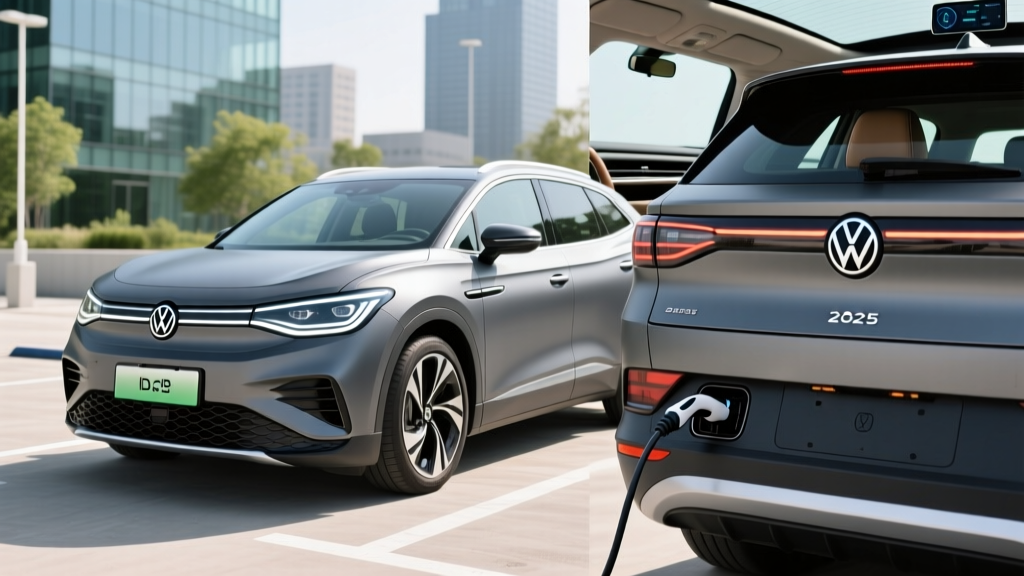
The Volkswagen ID.6 is the automaker's largest electric vehicle — a three-row, six- or seven-seat crossover built on the MEB platform and positioned as an affordable electric family hauler. For the 2026 model year, it continues to be sold exclusively in China through the SAIC-Volkswagen and FAW-Volkswagen joint ventures. Despite persistent rumors and buyer searches, Volkswagen has not announced US availability for the ID.6, and the brand's American EV lineup remains anchored by the smaller ID.4.
This review covers the ID.6's full specifications, real-world range data, charging performance, and pricing as sold in its primary market — along with an honest assessment of why US buyers should (or shouldn't) hold their breath for a domestic release.
Volkswagen ID.6 Specifications at a Glance
| Specification | ID.6 X (RWD) | ID.6 Crozz / Prime AWD |
|---|---|---|
| Battery (usable) | 84.8 kWh | 84.8 kWh |
| Chemistry | NMC (Nickel Manganese Cobalt) | NMC |
| CLTC Range | ~375 mi (601 km) | ~340 mi (550 km) |
| Estimated EPA Range (if certified) | ~280–300 mi | ~255–275 mi |
| Powertrain | Rear-wheel drive, single motor | Dual-motor AWD |
| Horsepower | 201 hp (150 kW) | 308 hp (230 kW) |
| Torque | 229 lb-ft | 339 lb-ft |
| 0–60 mph (est.) | ~8.2 sec | ~6.5 sec |
| Max DC Fast Charge | ~135 kW peak | ~135 kW peak |
| 10–80% DCFC Time | ~34 min | ~34 min |
| Level 2 AC Charge Rate | 11 kW (AC onboard) | 11 kW |
| Seating | 6 or 7 passengers | 6 or 7 passengers |
| Cargo (behind 3rd row) | ~7.8 cu ft | ~7.8 cu ft |
| Cargo (2nd row folded) | ~42 cu ft | ~42 cu ft |
| Length / Wheelbase | 190.6 in / 115.4 in | 191.4 in / 115.4 in |
| China MSRP (approx.) | ¥259,888 (~$35,800 USD) | ¥336,888 (~$46,400 USD) |
| Warranty (China) | 8 yr / 99,400 mi battery | 8 yr / 99,400 mi battery |
Range and Efficiency: CLTC vs What US Buyers Would Actually See
The ID.6 carries an 84.8 kWh usable NMC lithium-ion battery pack — the same MEB-platform pack found in the ID.4 and ID.5. In China, range is rated under the CLTC (China Light-Duty Vehicle Test Cycle) standard, which is notably more generous than the US EPA cycle.
Efficiency for a vehicle of this size is reasonable but not class-leading. Expect approximately 2.8–3.1 kWh per mile (roughly 95–105 MPGe combined) in mixed driving. The boxy three-row shape and 4,800+ lb curb weight work against efficiency at highway speeds. For comparison, the Kia EV9 — the closest US-market rival in size — achieves 2.7–3.0 kWh/mile depending on trim.
The ID.6 does include a heat pump as standard equipment on most trims, which helps mitigate cold-weather range loss compared to vehicles using resistive cabin heating. Battery preconditioning for DC fast charging is available through the navigation system, though early MEB-platform vehicles have been criticized for sluggish preconditioning logic.
Charging Performance: DC Fast and Level 2 Home Charging
Charging is where the ID.6's MEB-platform limitations become most apparent for 2026 buyers accustomed to 800-volt architectures from Hyundai/Kia and newer competitors.
| Charging Level | Power / Rate | Time / Miles Added |
|---|---|---|
| Level 1 (120V household) | ~1.4 kW | ~3–4 mi/hr; full charge in ~60+ hrs |
| Level 2 (240V home, 48A) | 11 kW (onboard limit) | ~28–32 mi/hr; 0–100% in ~8.5 hrs |
| DC Fast Charge (peak) | ~135 kW peak | 10–80% in ~34 min |
| DC Fast Charge (sustained avg.) | ~85–95 kW avg (10–80%) | Adds ~150 mi in 30 min |
The 400-volt MEB architecture caps the ID.6's peak DC fast-charge rate at approximately 135 kW. In practice, the vehicle sustains peak rate only between roughly 10–30% State of Charge, then tapers progressively. The charge curve flattens considerably above 60% SoC, and charging from 80–100% adds another 25–30 minutes. This taper behavior is typical of NMC chemistry managed conservatively to preserve long-term battery health.
For home charging, the 11 kW onboard AC charger is adequate for overnight replenishment. On a 48-amp Level 2 circuit (requiring a 60-amp breaker), you'll add roughly 30 miles of range per hour of charging — enough to fully recharge from 20% overnight in about 7 hours. If your home electrical panel only supports a 32-amp circuit (40-amp breaker), expect closer to 7.7 kW and ~20 mi/hr.
One frustration carried over from other MEB vehicles: the ID.6 uses a CCS2 connector in China (GB/T standard, actually). A hypothetical US version would use the NACS connector, given Volkswagen's commitment to adopt Tesla's North American Charging Standard across its lineup starting with 2025+ models. This would grant access to Tesla Supercharger stations — a significant practical advantage for road trips.
Performance and Driving Dynamics
The ID.6 isn't engineered for performance enthusiasts — it's a comfort-oriented family mover. The single-motor RWD variant produces 201 horsepower and 229 lb-ft of torque, delivering a 0–60 mph time in the low 8-second range. That's adequate for merging and passing but noticeably slower than rivals like the Kia EV9 GT-Line (379 hp, 5.0 sec 0–60).
The dual-motor AWD variant (badged Crozz or Prime depending on the JV partner) bumps output to 308 horsepower and drops 0–60 to approximately 6.5 seconds. The additional front motor provides meaningful traction benefits in rain and snow, and the torque fill from dual motors makes highway passing feel effortless.
Ride quality is a strength. The ID.6's long 115.4-inch wheelbase and MEB platform's low center of gravity deliver composed, quiet highway cruising. The rear suspension uses a multi-link setup that absorbs bumps better than the torsion-beam rear end found in some competitors. Steering is light and numb — typical of VW's EV tuning — but perfectly acceptable for a family hauler.
Regenerative braking offers multiple levels selectable via steering-wheel paddles, including a B-mode for aggressive regen that approximates one-pedal driving. However, unlike some competitors, the ID.6 does not come to a complete stop in B-mode — you still need the brake pedal for the final few mph.
Interior, Cargo, and Technology
The ID.6's cabin follows VW's minimalist ID-family design language: a 5.3-inch digital instrument cluster behind the steering wheel, a 12-inch central touchscreen (upgraded to 12.9 inches on 2026 models), and a head-up display with augmented-reality navigation overlays on higher trims.
Passenger space is the ID.6's core value proposition:
- Front legroom: ~41.1 inches
- Second-row legroom: ~37.6 inches (sliding bench)
- Third-row legroom: ~29.5 inches (best for children or short trips)
- Headroom (front/rear): ~41.0 / 39.2 inches
The available 6-seat configuration replaces the second-row bench with two captain's chairs and a center pass-through, improving both comfort and third-row access. The 7-seat layout uses a 60/40 split second-row bench.
Cargo volume is modest behind the third row at roughly 7.8 cubic feet — enough for a few grocery bags or a compact stroller. Fold the third row and you get approximately 42 cubic feet; fold both rear rows for a flat load floor with roughly 76 cubic feet. There is no front trunk (frunk) — the MEB platform's electronics and HVAC components fill that space.
Technology highlights include wireless Apple CarPlay and Android Auto, a panoramic fixed glass roof (with available electrochromic dimming on top trims), ambient interior lighting, and VW's ID. Light strip — a thin LED bar across the dash that provides navigation prompts and charging status visually.
Driver assistance comes via VW's IQ.Drive suite: adaptive cruise control with stop-and-go, lane-centering assist, blind-spot monitoring, rear cross-traffic alert, and Travel Assist (a combined lane-keeping + ACC system rated at SAE Level 2). This is a driver-assist system requiring continuous driver engagement — not autonomous driving.
Pricing, Trims, and Federal Tax Credit Eligibility
In China, the 2026 ID.6 starts at approximately ¥259,888 (~$35,800 USD) for the RWD X trim and climbs to ¥336,888 (~$46,400 USD) for the AWD Prime/Crozz top trim. These prices are remarkably competitive in the Chinese market, where government subsidies and intense EV competition drive pricing down.
| Trim (China Market) | Approx. Price (USD) | Drivetrain | Key Features |
|---|---|---|---|
| ID.6 X Pure (base) | ~$35,800 | RWD, 201 hp | 6 seats, 12" screen, IQ.Drive |
| ID.6 X Pro | ~$39,500 | RWD, 201 hp | AR HUD, panoramic roof, pwr liftgate |
| ID.6 Crozz AWD | ~$43,200 | AWD, 308 hp | Dual motor, leather, 360° camera |
| ID.6 Prime AWD (top) | ~$46,400 | AWD, 308 hp | All above + matrix LED, Harman audio |
US Tax Credit Status: Because the ID.6 is not sold in the United States, it is not eligible for the IRS §30D federal EV tax credit. If Volkswagen were to introduce the ID.6 in the US, eligibility would depend on:
- MSRP cap: SUVs/vans must be under $80,000 MSRP — likely met
- Buyer income cap: AGI ≤ $300,000 (joint) / $150,000 (single)
- Battery component sourcing: Increasingly strict North American assembly and critical-mineral requirements (phased annually through 2029)
- Final assembly: Must occur in North America — a significant hurdle unless VW builds the ID.6 at its Chattanooga, TN plant
Given these requirements, a US-market ID.6 would likely need domestic production to qualify for any portion of the $7,500 credit. VW's Chattanooga facility currently builds the ID.4, and expanding to the ID.6 would require significant retooling investment that VW has not announced as of early 2026.
How the ID.6 Compares to US-Market Alternatives
Since you cannot buy the ID.6 in America, here is how its closest US-market competitors stack up for buyers seeking a three-row electric SUV:
| Spec | VW ID.6 (China) | Kia EV9 (US) | VW ID.4 (US) | Hyundai Ioniq 9 (US) |
|---|---|---|---|---|
| Rows / Seats | 3 / 6–7 | 3 / 6–7 | 2 / 5 | 3 / 6–7 |
| EPA Range | N/A (est. ~280 mi) | 230–304 mi | 206–291 mi | ~300+ mi (est.) |
| Battery | 84.8 kWh NMC | 76.1–100 kWh NMC | 62–82 kWh NMC | 110.3 kWh NMC |
| Peak DCFC | ~135 kW | 210 kW (800V) | 175 kW | ~240 kW (800V) |
| 10–80% Time | ~34 min | ~24 min | ~28 min | ~24 min |
| Base MSRP (US) | Not sold | $54,900 | $39,735 | ~$52,000 (est.) |
| Tax Credit | None | Partial / varies | Up to $7,500 | Varies |
The Kia EV9 and Hyundai Ioniq 9 both offer faster charging via 800-volt architectures, more power, and US availability — but at significantly higher starting prices. The ID.4 remains VW's only US electric SUV and seats only five. The ID.6's theoretical appeal is its combination of three rows and a sub-$40,000 price point — something no current US-market EV matches.
Pros, Cons, and Who Should Consider the ID.6
Pros
- Three-row seating at a budget price point
- Standard heat pump for cold-weather efficiency
- Comfortable ride quality, quiet cabin
- Competitive cargo space with rows folded
- AR head-up display on higher trims
Cons
- Not available in the US — no announced plans
- DC charging limited to ~135 kW (400V architecture)
- Sluggish 10–80% charge time vs 800V rivals
- Touch-sensitive steering wheel controls are frustrating
- No frunk for additional cargo
- Third row best suited for children only
Who the ID.6 would suit best (if available): Budget-conscious families needing occasional third-row seating for school runs or short carpools, who charge primarily at home and don't road-trip frequently enough for DC charging speed to be a dealbreaker. In its absence, US buyers in this segment should evaluate the Kia EV9 (best overall three-row EV), the ID.4 (if five seats suffice and tax credit eligibility matters), or wait for the Hyundai Ioniq 9 to arrive at dealerships.
Frequently Asked Questions
What is the real-world range of the Volkswagen ID.6?
The CLTC-rated range is ~375 miles (RWD), but a US EPA equivalent would likely fall between 280–300 miles. In real-world highway driving at 70 mph, expect 240–260 miles. Cold weather (below freezing) can reduce range to 180–210 miles on a full charge due to battery resistance and cabin heating demand, even with the standard heat pump.
How fast does the ID.6 charge at home and on DC fast chargers?
On a DC fast charger, the ID.6 peaks at approximately 135 kW and charges from 10–80% in about 34 minutes. The sustained average rate over that session is closer to 85–95 kW due to charge-curve tapering. At home on a Level 2 (240V, 48A) charger, the 11 kW onboard charger delivers roughly 30 miles of range per hour, fully recharging overnight.
Does the Volkswagen ID.6 qualify for the US federal EV tax credit?
No. The ID.6 is not sold in the United States and therefore cannot qualify for the IRS §30D Clean Vehicle Credit. Even if VW introduced it stateside, the vehicle would need North American final assembly and compliant battery sourcing to qualify — neither of which is confirmed.
Will Volkswagen sell the ID.6 in the US?
As of early 2026, VW has not announced plans to bring the ID.6 to the US market. The company's American EV strategy focuses on the ID.4 (built in Chattanooga, TN) and upcoming next-generation models on the SSP platform. The ID.6's China-exclusive manufacturing and 400V architecture make it a less likely candidate for US introduction as newer, faster-charging models enter VW's pipeline.
Is the ID.6 worth waiting for vs buying a Kia EV9 or VW ID.4?
Waiting is not recommended. There is no timeline for US availability, and the ID.6's 400V charging architecture already trails the 800V systems in the Kia EV9 and Hyundai Ioniq 9. If you need three rows now, the EV9 is the stronger choice despite its higher price. If budget is the priority and five seats work, the ID.4 with its available $7,500 federal tax credit (subject to IRS eligibility rules) offers better value for US buyers.
What is the ID.6's battery warranty?
In China, Volkswagen provides an 8-year / 160,000 km (~99,400 mile) warranty on the high-voltage battery, covering capacity retention below 70% of original capacity. This is consistent with VW's global MEB-platform battery warranty terms and comparable to the 8-year/100,000-mile warranty offered on the US-market ID.4.