Quick Verdict: The Benchmark Luxury EV Sedan
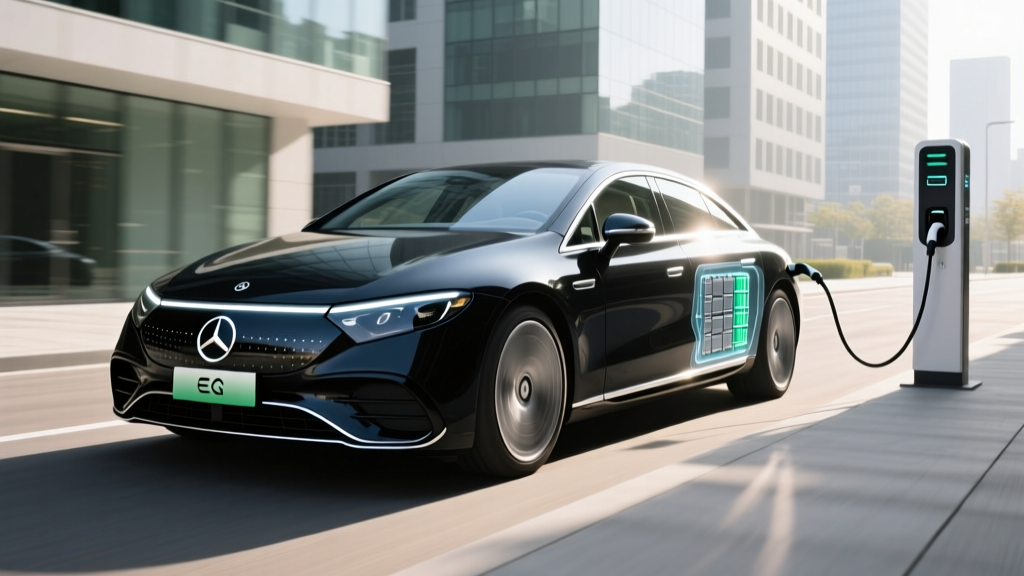
The 2023 Mercedes-Benz EQS remains the standard-bearer for full-size electric luxury sedans. With an EPA-estimated 350 miles of range (EQS 450+), a 107.8 kWh usable NMC battery, and 200 kW peak DC fast charging, it delivers genuine cross-country capability wrapped in a cabin that makes the S-Class look spartan. But at a starting MSRP of $104,400 — and with federal tax credit eligibility hinging on strict IRS sourcing rules — this is a purchase that demands careful number-crunching before you sign.
For buyers prioritizing ride comfort, cabin silence, and cutting-edge tech (the Hyperscreen is genuinely transformative), the EQS is unmatched. For those who want sporty dynamics or maximum charging speed, rivals like the Porsche Taycan and Lucid Air make compelling counterarguments. Here's everything you need to know, with exact figures and real-world context.
Range, Efficiency, and Real-World Expectations
The 2023 EQS lineup offers three main configurations, each with distinct range profiles:
| Trim | Drivetrain | EPA Range | MPGe (Combined) | kWh/100mi |
|---|---|---|---|---|
| EQS 450+ | RWD, Single Motor | 350 mi | 97 MPGe | 35 kWh |
| EQS 450 4MATIC | AWD, Dual Motor | 340 mi | 94 MPGe | 36 kWh |
| EQS 580 4MATIC | AWD, Dual Motor | 340 mi | 92 MPGe | 37 kWh |
The EQS's 107.8 kWh usable battery capacity (from a 108.4 kWh gross pack) uses NMC (nickel manganese cobalt) chemistry, which offers higher energy density than LFP but requires more careful state-of-charge management for long-term health. Mercedes recommends daily charging to 80-90% and reserving 100% for road trips.
Charging Speed: DC Fast, Level 2, and Level 1
Charging is where luxury EV buyers often have the most questions. The EQS supports the CCS1 connector standard (pre-NACS adoption) and offers solid but not class-leading DC fast-charge performance.
| Charging Level | Power / Rate | Time / Miles Added | Notes |
|---|---|---|---|
| DC Fast Charge (peak) | 200 kW | 10-80% in ~31 minutes | Peak rate sustained to ~50% SoC, then tapers; preconditioning required for max speed |
| DC Fast Charge (50 kW station) | 50 kW | 10-80% in ~95 minutes | Common at older CCS stations |
| Level 2 Home (240V, 48A) | 11.5 kW | ~32 mi/hr; full charge in ~10 hrs | Requires hardwired Level 2 charger (e.g., ChargePoint Home Flex, Tesla Wall Connector with J1772 adapter) |
| Level 2 Home (240V, 32A) | 7.7 kW | ~22 mi/hr; full charge in ~14 hrs | Typical NEMA 14-50 outlet with portable cord |
| Level 1 (120V) | 1.4 kW | ~4 mi/hr; full charge in ~72+ hrs | Emergency/trickle only — impractical for daily use on a 107.8 kWh pack |
Charging curve reality: The 200 kW peak is impressive, but like all EVs, the EQS tapers significantly above 80% SoC to protect battery longevity. A 10-80% session at a capable 350 kW Electrify America or EVgo station will average closer to 130-150 kW sustained, which is why the 31-minute figure holds. Always use the EQS's navigation-based battery preconditioning when routing to a DC fast charger — it warms the pack to optimal temperature and can shave 5-10 minutes off your session in cold weather.
Performance and Drivetrain
The EQS prioritizes effortless, silent acceleration over sports-sedan aggression. Here's how the lineup breaks down:
| Trim | Horsepower | Torque (lb-ft) | 0-60 mph | Drivetrain |
|---|---|---|---|---|
| EQS 450+ | 329 hp | 406 | 5.5 sec | RWD, single rear motor |
| EQS 450 4MATIC | 355 hp | 590 | 5.3 sec | AWD, dual motor |
| EQS 580 4MATIC | 516 hp | 631 | 4.1 sec | AWD, dual motor |
The 450+ is the efficiency champion and perfectly adequate for daily driving — its 5.5-second 0-60 time beats most gas-powered luxury sedans. The 580 4MATIC delivers genuine thrust that makes highway merging effortless, but the added weight and dual-motor drag cost you 10 miles of EPA range. All trims feature standard adaptive air suspension, rear-axle steering (up to 10 degrees, shrinking the turning circle to a remarkable 35.8 feet), and Mercedes' excellent one-pedal driving mode with adjustable regen levels.
Pricing, Trims, and Federal Tax Credit Eligibility
The 2023 EQS is a six-figure vehicle before incentives. Here's the pricing breakdown by trim:
| Trim | Base MSRP | As-Tested (Typical) | §30D Federal Credit | Effective Price |
|---|---|---|---|---|
| EQS 450+ Sedan | $104,400 | $112,000-$118,000 | Up to $7,500* | ~$96,900-$110,500 |
| EQS 450 4MATIC Sedan | $107,400 | $115,000-$122,000 | Up to $7,500* | ~$99,900-$114,500 |
| EQS 580 4MATIC Sedan | $125,950 | $135,000-$145,000 | Up to $7,500* | ~$118,450-$137,500 |
| EQS 450+ SUV | $104,400 | $112,000-$120,000 | Up to $7,500* | ~$96,900-$112,500 |
*Federal tax credit caveats (IRS §30D): The EQS sedan qualifies under the $55,000 MSRP cap for sedans — wait, it doesn't. The EQS sedan MSRP exceeds $55,000, which is the §30D cap for sedans. However, the EQS SUV qualifies under the $80,000 MSRP cap for SUVs/trucks/vans. For the sedan, buyers should investigate the §30D used-EV credit (up to $4,000 on pre-owned models priced under $25,000 — unlikely for an EQS) or the commercial clean vehicle credit (§45W) if purchased through a business entity. Additionally, buyer income caps apply: modified AGI cannot exceed $300,000 (joint), $225,000 (head of household), or $150,000 (single). Battery component and critical mineral sourcing requirements further restrict eligibility. Always verify current rules at irs.gov and consult a tax professional before relying on credit amounts.
Interior, Cargo, and Technology
The EQS cabin is a masterclass in luxury EV design, but the headline feature is the optional MBUX Hyperscreen — a 56-inch curved glass panel spanning the entire dashboard, integrating a 17.7-inch central OLED display, 12.3-inch driver cluster, and 12.3-inch passenger screen. It's genuinely impressive, though the learning curve is steep and some drivers prefer physical buttons for climate and volume.
Cargo and passenger dimensions:
- Cargo volume: 22.0 cu ft (trunk) — the liftback design provides a wide opening and excellent usability, rivaling many midsize SUVs
- Front legroom: 41.7 inches
- Rear legroom: 41.4 inches — genuinely limousine-like, with available rear-seat entertainment and heated/ventilated/massaging outboard seats
- Frunk: None — the EQS does not offer a front trunk, a notable omission at this price point
Standout tech features:
- MBUX Hyperscreen with OLED displays and augmented-reality navigation
- Burmester 4D surround sound (15 speakers standard, 31 speakers with Dolby Atmos optional)
- HEPA-grade Energizing Air Control with active fragrance system
- Rear-axle steering (standard 4.5°, optional 10°)
- Drive Pilot — Mercedes' SAE Level 3 conditional automated driving system, available in select markets (Nevada, California) for use in heavy traffic up to 40 mph on approved highways. The driver can legally disengage from the driving task when conditions are met — a genuine differentiator vs. Level 2 systems like Tesla Autopilot or GM Super Cruise
Notable drawbacks:
- No frunk — all cargo must go in the trunk
- Hyperscreen replaces physical controls; some users find touchscreen climate adjustments distracting
- Rear visibility is compromised by the sloping roofline; the surround-view camera is essential
- Regenerative braking feel can be inconsistent in certain modes vs. competitors' true one-pedal systems
Warranty and Long-Term Ownership
Mercedes backs the EQS with competitive warranty coverage for the luxury segment:
| Coverage | Term |
|---|---|
| New Vehicle Limited Warranty | 4 years / 50,000 miles |
| High-Voltage Battery Warranty | 10 years / 155,000 miles (capacity retention above 70% of original) |
| Powertrain (Electric Drive Units) | 4 years / 50,000 miles (standard); extended options available |
| Corrosion Perforation | 6 years / unlimited miles |
| Roadside Assistance | 4 years / 50,000 miles |
The 10-year/155,000-mile battery warranty with a 70% capacity retention threshold is solid and aligns with industry norms (Tesla offers 8 years/120,000-150,000 miles at 70%). NMC chemistry in the EQS has shown strong real-world degradation data — early 2022-2023 EQS owners report roughly 3-5% capacity loss after 30,000-40,000 miles, which is consistent with well-managed NMC packs. To maximize longevity, avoid frequent DC fast charging above 80% SoC, use the EQS's built-in charge-limit settings, and leverage preconditioning whenever possible.
Pros, Cons, and Who Should Buy the EQS
Pros
- Class-leading 350-mile EPA range (450+ trim)
- Extraordinarily quiet, comfortable ride with air suspension
- MBUX Hyperscreen is the most advanced production infotainment system available
- SAE Level 3 Drive Pilot (in approved areas) is a genuine technology milestone
- Rear-axle steering gives limo space with compact-car maneuverability
- 22 cu ft liftback cargo area outperforms most luxury sedans
Cons
- Starting above $104,000; sedan does NOT qualify for §30D new-vehicle credit due to MSRP cap
- 200 kW peak DC charging is slower than Lucid Air (300+ kW) and Porsche Taycan (270 kW)
- No front trunk (frunk)
- Hyperscreen learning curve; lack of physical buttons frustrates some drivers
- Heavy at 5,600+ lbs — noticeable in cornering despite air suspension
- Insurance premiums run 15-25% higher than comparable gas S-Class
Who the 2023 EQS Suits Best
Choose the EQS if: You prioritize cabin luxury, ride comfort, and technology above all else. You have home Level 2 charging access. You drive primarily in urban/suburban environments or take road trips where 350-mile range provides genuine peace of mind. You want the most advanced production driver-assist system (Level 3 Drive Pilot, where available).
Look elsewhere if: You want sports-sedan dynamics (Porsche Taycan), maximum charging speed for frequent road-trip DC charging (Lucid Air), a lower entry price (BMW i7 starts at ~$120K but the Tesla Model S starts at ~$75K), or you need a frunk and traditional sedan controls. If federal tax credit eligibility is a dealbreaker, the EQS SUV version or a competitor under the MSRP cap may be a better financial choice.
FAQ: 2023 Mercedes EQS
What is the real-world range of the 2023 Mercedes EQS?
The EQS 450+ carries an EPA-estimated 350 miles. In real-world highway driving at 70-75 mph, expect 280-310 miles. In cold weather below freezing, plan for 245-280 miles. City driving at moderate speeds in temperate weather can match or slightly exceed the EPA figure thanks to regenerative braking.
How fast does the EQS charge at home and on the road?
On a 200 kW+ DC fast charger, the EQS charges from 10-80% in approximately 31 minutes. At home on a 48-amp Level 2 charger (11.5 kW), it adds roughly 32 miles per hour, with a full charge taking about 10 hours. Level 1 (120V) is impractical for daily use on this 107.8 kWh battery.
Does the 2023 EQS qualify for the $7,500 federal EV tax credit?
The EQS sedan does NOT qualify for the §30D new clean vehicle credit because its MSRP exceeds the $55,000 sedan cap. The EQS SUV (MSRP cap: $80,000 for SUVs) may qualify depending on trim and battery-sourcing compliance. Buyer income caps ($300K joint / $150K single) and critical mineral sourcing rules also apply. Consult irs.gov and a tax professional for your specific situation.
Is the 2023 EQS worth buying vs. the Lucid Air or BMW i7?
The EQS wins on cabin luxury, MBUX tech, and the unique SAE Level 3 Drive Pilot capability. The Lucid Air offers superior range (up to 516 miles EPA) and faster 300+ kW charging at a lower starting price. The BMW i7 provides a more traditional luxury sedan experience with physical controls and competitive range (318 miles EPA). Your choice depends on whether you value cutting-edge screen tech and Level 3 automation (EQS), maximum range and charging speed (Lucid), or classic BMW luxury ergonomics (i7).
What is the biggest drawback of owning the EQS?
Beyond the six-figure price, the most common owner complaints are the lack of a frunk, the Hyperscreen's replacement of physical controls (distracting for some), and 200 kW DC charging that falls behind Lucid and Porsche. Insurance costs also run notably higher than the gas-powered S-Class.
How long will the EQS battery last?
Mercedes warranties the high-voltage battery for 10 years or 155,000 miles against degradation below 70% of original capacity. Based on early owner data and NMC chemistry performance, most EQS batteries should retain 85-90% capacity at 100,000 miles with proper care (avoiding frequent 100% charges and excessive DC fast charging). Full battery replacement, if ever needed outside warranty, is estimated at $20,000-$30,000+ at current pricing.