Quick Verdict: Two Very Different Electric SUVs
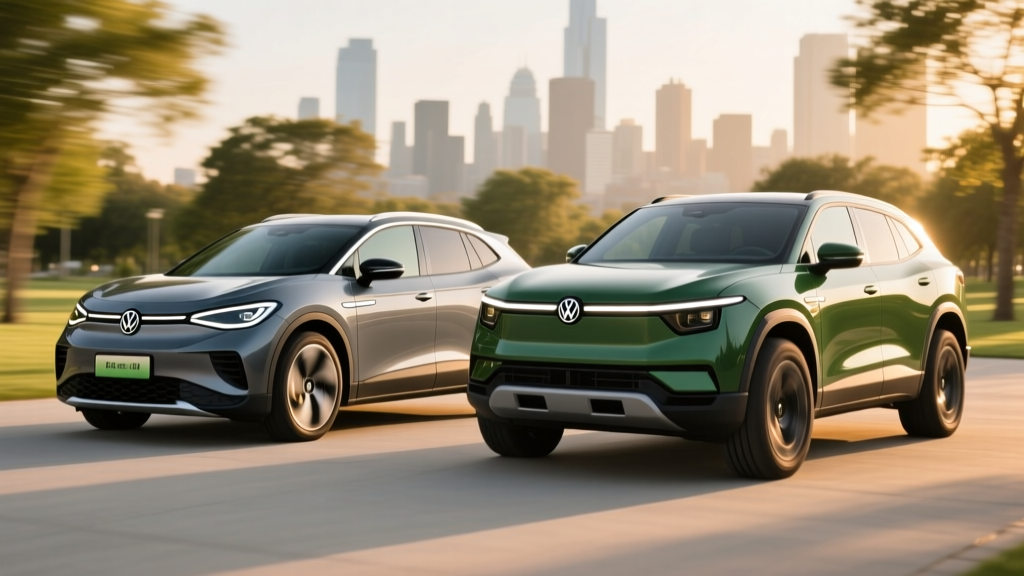
Shoppers searching for a Volkswagen Rivian comparison are usually weighing two distinct philosophies in the electric SUV space. The 2026 Volkswagen ID.4 is a practical, value-oriented compact electric crossover built for daily commuting and accessible pricing. The 2026 Rivian R1S is a premium, adventure-focused three-row SUV engineered for off-road capability, towing, and family road trips. Neither is universally better — the right choice depends entirely on your budget, passenger needs, and how you plan to use the vehicle.
Choose the VW ID.4 if: You want a sub-$40,000 EV for commuting, qualify for the full federal tax credit, and don't need three rows or serious towing capacity.
Choose the Rivian R1S if: You need three-row seating, plan to tow or go off-road, value premium build quality, and have a budget above $75,000.
Range, Battery, and Real-World Efficiency
| Specification | 2026 VW ID.4 (Pro S AWD) | 2026 Rivian R1S (Dual-Motor Max) |
|---|---|---|
| EPA Range | 275 miles | 410 miles |
| Battery Capacity (usable) | 82 kWh | 141 kWh |
| Battery Chemistry | NMC (Nickel Manganese Cobalt) | NMC (large-format cylindrical cells) |
| Efficiency (MPGe combined) | 104 MPGe | 73 MPGe |
| Energy Consumption | 32 kWh/100 mi | 46 kWh/100 mi |
| Drivetrain | Dual-motor AWD | Dual-motor AWD |
Real-World Range Reality Check:
VW ID.4: The EPA rates the AWD Pro S at 275 miles. Expect 240–260 miles in mixed highway driving at 70 mph. In freezing temperatures (below 32°F), plan for 190–215 miles due to cabin heating demands and battery resistance. City driving with regenerative braking can push closer to the 275-mile sticker.
Rivian R1S: The Max Pack's 410-mile EPA rating is impressive, but this 6,800-pound SUV consumes energy quickly at highway speeds. Real-world highway range at 75 mph settles around 340–370 miles. Cold weather drops that to roughly 280–310 miles. The R1S's heat pump helps mitigate winter losses compared to resistive heating systems.
The ID.4 is far more efficient per mile traveled — its lighter curb weight (~4,700 lbs vs. ~6,800 lbs) means less energy moved per mile. But the R1S compensates with a massive battery that delivers genuinely long range even with the efficiency penalty. For cross-country road trips, the R1S requires fewer charging stops despite burning more kWh per mile.
Charging Speed: DC Fast and Home Level 2
| Charging Metric | 2026 VW ID.4 | 2026 Rivian R1S |
|---|---|---|
| Max DC Fast-Charge Rate | 175 kW peak | 220 kW peak |
| 10–80% DC Fast Charge | ~30 minutes | ~34 minutes |
| Sustained DC Rate (10–60%) | ~130 kW average | ~170 kW average |
| Level 2 Home Charging Rate | 11 kW (48A) | 11.5 kW (48A) |
| Miles Added per Hour (Level 2) | ~33 mi/hr | ~25 mi/hr |
| Full Level 2 Charge (0–100%) | ~8 hours | ~13 hours |
| Charge Port / Connector | NACS (native, 2025+) | NACS (native) |
Both vehicles now ship with native NACS (North American Charging Standard) ports, granting direct access to the Tesla Supercharger network without adapters — a significant advantage for road-trip charging reliability.
The R1S charges at a higher peak rate (220 kW vs. 175 kW), but its enormous 141 kWh battery means the 10–80% session takes slightly longer. The ID.4's smaller battery fills faster in absolute time, making it more convenient for quick top-ups on longer drives.
Charge curve reality: Neither vehicle sustains peak kW for the entire session. The ID.4 peaks at 175 kW around 20% SoC, then tapers to ~100 kW by 60% and ~50 kW by 80%. The R1S sustains its higher rate longer thanks to advanced thermal management, but the taper above 80% is equally steep. For road trips, plan to charge to 80% and go — the final 20% can add 20+ minutes.
Home charging note: Both vehicles benefit from a 48-amp Level 2 home charger on a 60-amp dedicated circuit. Expect installation costs of $800–$2,000 for the charger and electrical work, depending on panel proximity. Consult a licensed electrician to verify your panel has capacity — a 200-amp service panel is typically required.
Performance and Drivetrain
| Performance Metric | 2026 VW ID.4 (Pro S AWD) | 2026 Rivian R1S (Dual-Motor) |
|---|---|---|
| Horsepower | 295 hp | 533 hp |
| Torque | 339 lb-ft | 610 lb-ft |
| 0–60 mph | 5.4 seconds | 4.5 seconds |
| Top Speed | 112 mph | 125 mph |
| Towing Capacity | 2,700 lbs | 7,700 lbs |
| Ground Clearance | 6.7 inches | 14.9 inches (max, air suspension) |
The performance gap is substantial. The R1S delivers sports-car acceleration in a three-row SUV, with instant torque that makes highway merging effortless even when fully loaded. Its air suspension adjusts ride height for off-road trails, highway efficiency, or loading cargo.
The ID.4 is no slouch at 5.4 seconds to 60 — quicker than most gas-powered compact SUVs — but its mission is efficiency and comfort, not performance thrills. Its 2,700-pound towing capacity handles a small utility trailer or a pair of jet skis, but it's not a serious tow vehicle. The R1S's 7,700-pound rating can pull a mid-size travel trailer, though expect range to drop 30–50% while towing at highway speeds.
Interior Space, Cargo, and Practicality
| Dimension | 2026 VW ID.4 | 2026 Rivian R1S |
|---|---|---|
| Seating Capacity | 5 passengers (2 rows) | 7 passengers (3 rows) |
| Front Legroom | 41.1 inches | 41.3 inches |
| Second-Row Legroom | 37.6 inches | 38.2 inches |
| Third-Row Legroom | N/A | 30.4 inches |
| Cargo (behind 2nd row) | 30.3 cu ft | 46.7 cu ft |
| Cargo (max, seats folded) | 64.2 cu ft | 104.7 cu ft |
| Front Trunk (Frunk) | No | 11.0 cu ft |
If you need three rows, the R1S is the clear answer. Its third row fits children or smaller adults for short trips, and the 11-cubic-foot frunk adds secure, weatherproof storage that the ID.4 lacks entirely.
The ID.4's cabin is well-packaged for five adults, with a flat floor and decent rear-seat comfort. Cargo space is competitive with gas-powered compact SUVs like the Toyota RAV4. However, the lack of a frunk means all cargo goes in the rear, and the ID.4's interior materials lean budget — hard plastics on lower door panels and the dash are noticeable at this price point.
The R1S interior is a step up in material quality, with standard vegan leather, real wood or aluminum trim, and a more premium feel throughout. Rivian's camp kitchen and gear tunnel accessories (sold separately) cater to the overlanding crowd.
Pricing, Trims, and Federal Tax Credit Eligibility
| Trim / Config | Base MSRP | As-Tested (Typical) | Est. Federal Credit | Effective Price |
|---|---|---|---|---|
| ID.4 Standard (RWD) | $39,735 | $41,500 | Up to $7,500* | ~$32,235 |
| ID.4 Pro S AWD | $47,735 | $50,200 | Up to $7,500* | ~$40,235 |
| R1S Dual-Motor Standard | $75,900 | $79,500 | $0 (MSRP cap) | $75,900 |
| R1S Dual-Motor Max | $84,900 | $92,000 | $0 (MSRP cap) | $84,900 |
*Federal tax credit caveats (IRS §30D): The IRS clean vehicle credit has strict eligibility rules that apply to the ID.4 but eliminate the R1S entirely:
- MSRP Cap: SUVs must be under $80,000 MSRP. The R1S starts at $75,900, but most configurations with options exceed the cap. The ID.4 (all trims) falls well under the limit.
- Buyer Income Cap: Modified AGI must not exceed $150,000 (single) / $300,000 (joint). Higher earners are ineligible regardless of vehicle.
- Battery Sourcing: The credit phases based on critical mineral and battery component sourcing requirements that tighten annually. Volkswagen's Chattanooga, TN production and supply chain currently qualify for the full $7,500, but verify current-year rules at irs.gov before purchasing.
- Point-of-Sale Transfer: The credit can be applied at the dealership as an upfront price reduction, lowering your out-of-pocket cost immediately rather than waiting for a tax refund.
The R1S's MSRP places most configurations above the $80,000 SUV cap, making it ineligible for the federal credit in most trims. This is a significant factor — the effective price gap between a fully credited ID.4 and a base R1S widens to over $43,000.
Warranty and Ownership Costs
| Warranty / Cost | 2026 VW ID.4 | 2026 Rivian R1S |
|---|---|---|
| Battery Warranty | 8 years / 100,000 miles | 8 years / 175,000 miles |
| Powertrain Warranty | 4 years / 50,000 miles | 8 years / 175,000 miles |
| Bumper-to-Bumper | 4 years / 50,000 miles | 5 years / 60,000 miles |
| Battery Capacity Threshold | 70% retention | 70% retention |
| Est. Annual Insurance | $1,800–$2,400 | $3,200–$4,500 |
Rivian offers substantially longer powertrain coverage (8 years vs. 4 years), which matters for a vehicle designed for heavy use and high mileage. Both guarantee at least 70% battery capacity retention over 8 years — the industry standard per EPA reporting guidelines.
Insurance costs are notably higher for the R1S, reflecting its higher repair costs, premium parts, and higher MSRP. Get quotes before committing — a $1,500–$2,000 annual insurance premium gap adds up over five years.
Tech, Driver Assistance, and Standout Features
Volkswagen ID.4 highlights:
- 12.9-inch infotainment touchscreen with wireless Apple CarPlay and Android Auto
- IQ.DRIVE suite: adaptive cruise control, lane centering, automatic emergency braking, park assist
- Head-up display with augmented-reality navigation prompts (Pro S and above)
- Heated seats and steering wheel standard; ventilated seats on Pro S
- Panoramic fixed glass roof
Rivian R1S highlights:
- 15.6-inch center display + 12.3-inch digital instrument cluster
- Rivian Driver+ (Level 2): adaptive cruise, lane centering, automatic lane change on highway
- Quad-zone automatic climate control
- Powered tonneau cover, gear tunnel (R1T-derived storage concept adapted for SUV)
- Over-the-air updates adding features continuously (camp mode, pet mode, etc.)
- Available air suspension with auto-leveling and adjustable ride height
Driver-Assist Clarity: Both the VW IQ.DRIVE and Rivian Driver+ are SAE Level 2 systems. They assist with steering and speed but require the driver to remain fully engaged, hands on or near the wheel, eyes on the road. Neither system is "self-driving." For context, only Waymo-style robotaxi services operating in geofenced areas qualify as SAE Level 4.
Notable drawbacks:
The ID.4's infotainment software has drawn consistent criticism for sluggish response times and unintuitive menu structures — VW has issued OTA improvements, but it still trails competitors like Hyundai's system. Capacitive touch sliders for volume and climate are a common frustration.
The R1S's drawbacks center on service infrastructure. Rivian's service center network remains limited outside major metro areas, and mobile service availability varies by region. Wait times for body repair after minor collisions can stretch weeks. The R1S also lacks Apple CarPlay/Android Auto — Rivian uses its proprietary system exclusively.
Pros and Cons at a Glance
2026 VW ID.4
Pros:
- Under $40k effective price after $7,500 federal credit (Standard trim)
- Strong efficiency (104 MPGe combined) keeps charging costs low
- Native NACS access to Tesla Supercharger network
- Practical cargo space, comfortable ride quality
- Built in Chattanooga, TN — strong domestic content
Cons:
- Infotainment UI lags behind segment leaders
- No front trunk (frunk)
- Modest 2,700-lb towing capacity
- Interior materials feel budget at the $45k+ trims
- Real-world highway range ~240–260 miles may require planning on long trips
2026 Rivian R1S
Pros:
- 410-mile EPA range (Max Pack) — among the longest of any three-row EV
- Genuine off-road capability with air suspension and 14.9" ground clearance
- 7,700-lb towing capacity
- Premium interior, seven-passenger seating, 11-cu-ft frunk
- Extensive OTA updates continuously add features
Cons:
- Starts at $75,900; no federal tax credit for most configurations
- High insurance costs ($3,200–$4,500/year)
- Service center network still sparse in many regions
- No Apple CarPlay or Android Auto
- Heavy vehicle means higher tire wear and energy cost per mile
Who Should Buy Which?
The ID.4 is ideal for: Budget-conscious commuters, couples or small families who need five seats, renters or homeowners with Level 2 access who want a low-stress daily driver. If your typical drive is under 100 miles round-trip and you take 2–3 road trips per year, the ID.4 covers those needs at a price point that, after the federal credit, undercuts many gas-powered competitors.
The R1S is ideal for: Families needing three rows, outdoor enthusiasts who tow boats or trailers, buyers who want a premium experience and don't mind the cost. If you regularly drive 300+ miles between charging stops, carry more than five passengers, or want genuine trail capability, the R1S has no direct rival in the EV space.
Frequently Asked Questions
What is the real-world range of the VW ID.4 and Rivian R1S?
The VW ID.4 AWD delivers approximately 240–260 miles on the highway and up to 275 in city driving. In cold weather, expect 190–215 miles. The Rivian R1S Max Pack achieves 340–370 highway miles and drops to roughly 280–310 in freezing temperatures. Both figures assume 70–75 mph speeds and standard climate control use.
How fast does each vehicle charge at home and on the road?
At a DC fast charger, the ID.4 peaks at 175 kW (10–80% in ~30 minutes) and the R1S at 220 kW (10–80% in ~34 minutes). At home on a Level 2 charger (48A/11–11.5 kW), the ID.4 adds ~33 miles per hour and fully charges in ~8 hours. The R1S adds ~25 miles per hour and takes ~13 hours for a full charge due to its larger battery.
Does the VW ID.4 qualify for the $7,500 federal EV tax credit?
Yes, the 2026 ID.4 qualifies for up to $7,500 under IRS §30D, provided the buyer meets income limits ($150k single / $300k joint MAGI) and the vehicle meets battery sourcing requirements (currently satisfied). The credit can be transferred to the dealer at point of sale for an immediate price reduction. Always verify current eligibility at irs.gov before purchasing.
Does the Rivian R1S qualify for the federal tax credit?
Generally no. The R1S's MSRP exceeds the $80,000 SUV cap in most configurations, disqualifying it from the §30D credit. Some base Dual-Motor Standard configurations priced under $80,000 may technically qualify if the buyer meets income limits, but options and packages quickly push the MSRP above the threshold. Check the specific VIN's eligibility with your Rivian advisor.
Is the Rivian R1S worth the premium over the ID.4?
They serve fundamentally different needs. If you need three rows, tow capacity, off-road capability, or 400+ miles of range, the R1S justifies its price because no competitor offers that combination. If you need a five-seat commuter with low running costs and a sub-$35k effective price, the ID.4 is the better financial decision. They rarely compete head-to-head in actual purchase decisions.
How do cold temperatures affect each vehicle?
Both lose 15–25% of range in sustained below-freezing temperatures. The R1S's heat pump is more efficient than resistive heating and helps preserve range compared to older EV designs. The ID.4 uses a heat pump as well (standard from 2025+). Preconditioning the battery while plugged in — available on both vehicles via their apps — recovers significant range and improves charging speed in cold weather.