Why Volkswagen Is Pausing US ID.4 Production
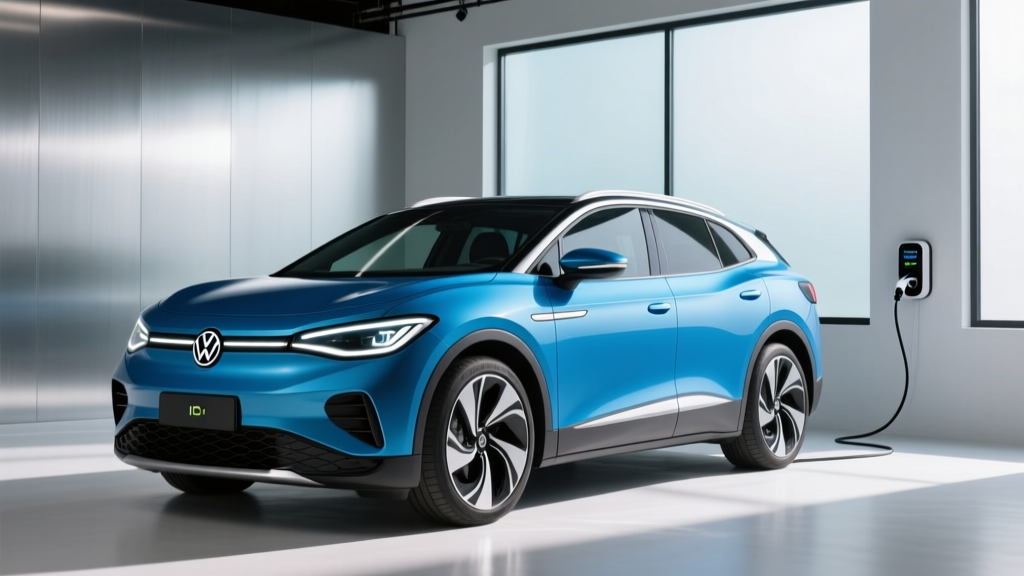
In early 2026, Volkswagen confirmed it would temporarily halt US assembly of the ID.4 at its Chattanooga, Tennessee plant, redirecting factory capacity toward high-margin internal-combustion SUVs like the Atlas and Tiguan. The move reflects a broader recalibration: while EV demand continues to grow, legacy automakers are balancing electrification investments against the near-term profitability of gas-powered crossovers.
For US buyers, the ID.4 remains available through existing dealer inventory and continued imports of European-built units. But the production pause raises practical questions: Is the ID.4 still a smart buy in 2026? What does the pause mean for parts, service, and long-term support? And how does VW's electric compact SUV stack up against rivals that are only getting more aggressive on price and range?
Below is a full, data-driven review of the 2026 Volkswagen ID.4 — every number you need to make an informed decision.
2026 Volkswagen ID.4: Core Specifications at a Glance
| Spec | ID.4 Standard (RWD) | ID.4 AWD Pro S |
|---|---|---|
| EPA Range | 275 miles | 263 miles |
| Battery (usable) | 77 kWh (NMC) | 77 kWh (NMC) |
| Horsepower | 201 hp | 295 hp |
| 0–60 mph | 7.7 sec | 5.4 sec |
| Drivetrain | Rear-wheel drive (single motor) | Dual-motor AWD |
| Peak DC Fast Charge | 170 kW | 170 kW |
| 10–80% DC Time | ~28 min | ~28 min |
| Level 2 Home Charge | 11 kW (~37 mi/hr) | 11 kW (~37 mi/hr) |
| MPGe (combined) | 104 MPGe | 98 MPGe |
| Energy Consumption | 32 kWh/100 mi | 34 kWh/100 mi |
| Cargo (rear seats up) | 30.3 cu ft | 30.3 cu ft |
| Cargo (rear seats folded) | 64.2 cu ft | 64.2 cu ft |
| Rear Legroom | 37.6 in | 37.6 in |
| Base MSRP | $39,735 | $47,435 |
| Battery/Powertrain Warranty | 8 years / 100,000 miles | |
Source: fueleconomy.gov and Volkswagen of America 2026 specifications.
Range and Efficiency: EPA Numbers vs. Real-World Reality
EPA Estimated Range: 275 miles (RWD Standard) / 263 miles (AWD Pro S)
Real-World Expectation: In mixed suburban/highway driving at moderate temperatures, expect 240–260 miles from the RWD model. Sustained 75+ mph highway runs drop range to approximately 220–235 miles. In sub-30°F winter conditions without preconditioning, plan for 180–210 miles — a 25–35% reduction typical of NMC chemistry packs without a dedicated heat pump on lower trims.
The ID.4's 77 kWh usable battery (82 kWh gross, NMC lithium-ion) delivers competitive but not class-leading efficiency at 32 kWh per 100 miles. For context, the Hyundai Ioniq 5 achieves 30 kWh/100 mi on its Long Range RWD variant, while the Ford Mustang Mach-E Extended Range RWD sits at 33 kWh/100 mi.
One factor worth noting: VW's thermal management system on the 2026 ID.4 has improved cold-weather preconditioning compared to early 2021–2022 models, but the system still consumes meaningful energy during cabin and battery warming. If you live in a cold climate and lack a garage with Level 2 access, budget for range loss and plan charging stops accordingly.
Charging Speed: DC Fast and Home Level 2
The ID.4 peaks at 170 kW on a DC fast charger — adequate for road-trip use but noticeably behind the 230–250 kW peaks of the Ioniq 5, Kia EV6, and Tesla Model Y on V3 Superchargers.
| Charging Level | Power / Rate | Time / Range Added |
|---|---|---|
| Level 1 (120V household) | ~1.4 kW | ~4 miles per hour |
| Level 2 (240V home, 48A) | 11 kW | ~37 miles per hour; full charge in ~8 hours |
| DC Fast (peak) | 170 kW | 10–80% in ~28 minutes |
| DC Fast (sustained 10–80%) | ~120 kW avg | ~180 miles added in 28 min |
The charging curve tells the real story. The ID.4 holds close to its 170 kW peak only between roughly 10% and 30% State of Charge (SoC), then tapers progressively. From 60% to 80%, you're looking at roughly 70–90 kW. This means the published 28-minute 10–80% figure is accurate but requires arriving at the charger with a low battery and leaving at 80% — staying plugged in past 80% is painfully slow and not worth your time on a road trip.
On Electrify America's 350 kW chargers (which VW ID.4 owners receive complimentary access to through a promotional period), the ID.4 will not exceed 170 kW regardless of the station's capability. NACS adapter compatibility is not native; VW has not confirmed a Tesla Supercharger adapter program for US ID.4 owners as of early 2026, which limits the public fast-charging network compared to Ford and Rivian owners who gained Supercharger access in 2024–2025.
Performance and Driving Dynamics
The RWD ID.4's 201 horsepower and 7.7-second 0–60 time place it firmly in the "adequate for commuting" category. Throttle response is immediate thanks to electric torque delivery, but the single-motor setup lacks the urgency of dual-motor competitors. Highway passing is confident but unhurried.
The AWD Pro S variant, with its 295 hp and 5.4-second sprint, transforms the character of the car. It's genuinely quick off the line and holds pace with turbocharged gas crossovers effortlessly. The trade-off is 12 fewer miles of EPA range and a roughly $7,700 price premium.
Ride quality is a strength. The ID.4's MEB platform delivers a composed, comfortable ride with well-damped suspension — noticeably more refined than the early-build 2021 models that drew criticism for firm low-speed behavior. Steering is light and numb, which is fine for commuting but uninspiring on back roads. This is a comfort-oriented family hauler, not a sport SUV.
Interior, Tech, and Notable Drawbacks
The ID.4's cabin is spacious, with 37.6 inches of rear legroom rivaling midsize gas SUVs. Cargo space at 30.3 cu ft behind the second row is generous, expanding to 64.2 cu ft with seats folded. A small frunk (front trunk) exists but is limited to charging-cable storage — don't expect the cargo capacity of a Mustang Mach-E frunk.
The 12.9-inch infotainment touchscreen runs VW's ID. Software 4.0, which has improved significantly over the laggy, buggy interface of 2021–2023 models. Wireless Apple CarPlay and Android Auto are standard. However, VW's reliance on capacitive touch sliders for volume and climate control remains a frustration — they're imprecise, lack haptic feedback, and are a consistent owner complaint. Physical buttons for core functions would be a major improvement.
Driver-assistance tech includes Travel Assist (adaptive cruise + lane centering), which operates at SAE Level 2 — meaning the driver must remain fully engaged with hands on the wheel and eyes on the road. It is not autonomous driving. The system is competent on highways but requires regular steering-wheel touch confirmation and can be overly conservative in lane-change scenarios.
Pricing, Tax Credits, and Total Cost
| Trim | Base MSRP | §30D Federal Credit (est.) | Effective Price |
|---|---|---|---|
| ID.4 Standard (RWD) | $39,735 | Up to $7,500* | ~$32,235 |
| ID.4 Pro (RWD) | $43,735 | Up to $7,500* | ~$36,235 |
| ID.4 Pro S AWD | $47,435 | Up to $7,500* | ~$39,935 |
| ID.4 Pro S Plus AWD | $51,435 | Up to $7,500* | ~$43,935 |
*Federal §30D tax credit eligibility depends on buyer income caps ($150K single / $300K joint AGI), vehicle MSRP caps ($80K for SUVs — all ID.4 trims qualify), and battery critical-mineral and component sourcing requirements that shift annually. As of 2026, the ID.4's Chattanooga-built battery pack has historically met sourcing thresholds, but the production pause and potential shift to imported units could affect eligibility. Always verify current status at IRS.gov or with a tax professional before purchasing. Point-of-sale transfer is available if the dealer is registered.
The production pause adds a layer of uncertainty. If VW shifts to importing European-built ID.4s, battery sourcing rules could disqualify some or all trims from the full $7,500 credit. This is a developing situation — check with your dealer and the IRS before committing.
Should You Still Buy the ID.4? Pros, Cons, and Competition
Pros
- Spacious interior with class-competitive rear legroom and cargo volume
- Comfortable, refined ride quality on the MEB platform
- 8-year/100,000-mile battery and powertrain warranty
- Improved infotainment software over earlier model years
- Strong value with federal tax credit applied (~$32K effective for base RWD)
Cons
- DC fast charging peaks at 170 kW — behind Hyundai/Kia/Tesla rivals
- Capacitive touch sliders for volume and climate are imprecise
- No confirmed NACS/Supercharger adapter access for US owners
- Real-world highway and cold-weather range falls notably short of EPA
- Production pause creates uncertainty on parts, service, and tax credit sourcing
Choose the ID.4 if: You prioritize ride comfort, interior space, and a strong warranty; you have reliable home Level 2 charging; and you can confirm federal tax credit eligibility before purchase.
Look at competitors if: Fast DC charging is critical for your road-trip habits (Ioniq 5/EV6); you need Supercharger network access (Tesla Model Y); or you want maximum real-world range per dollar (Chevrolet Equus EV or upcoming models).
Frequently Asked Questions
What is the real-world range of the 2026 Volkswagen ID.4?
EPA rates the RWD ID.4 at 275 miles and the AWD at 263 miles. In real-world mixed driving at moderate temperatures, expect 240–260 miles. Highway-only driving at 75+ mph yields roughly 220–235 miles. Cold weather (below 30°F) without preconditioning can drop range to 180–210 miles.
How fast does the ID.4 charge at home and on DC fast chargers?
On a Level 2 home charger (240V, 48A), the ID.4 charges at 11 kW, adding roughly 37 miles of range per hour and reaching a full charge in about 8 hours. On DC fast chargers, it peaks at 170 kW and reaches 10–80% in approximately 28 minutes, though the charging curve tapers significantly above 60% SoC.
Does the 2026 ID.4 qualify for the federal EV tax credit?
The ID.4 has historically qualified for the full $7,500 §30D credit when built at the Chattanooga plant with compliant battery sourcing. However, the US production pause may shift supply to European-built units, potentially affecting critical-mineral and component sourcing compliance. Verify current eligibility at IRS.gov or with a qualified tax professional before purchasing. Buyer income caps ($150K single / $300K joint) and the $80K SUV MSRP cap also apply.
Is the VW ID.4 worth buying vs. the Hyundai Ioniq 5 or Tesla Model Y?
The ID.4 competes on comfort, space, and value (especially after the tax credit). The Ioniq 5 charges faster (up to 230 kW on 800V architecture) and has a slightly more modern interior. The Model Y offers Supercharger network access and stronger performance but less rear-seat comfort. If ride quality and interior room top your list, the ID.4 remains a strong choice. If charging speed or network access is paramount, look to the Ioniq 5 or Model Y.
What does VW's US production pause mean for service and parts?
Volkswagen has stated that existing Chattanooga-built inventory and imported units will be fully supported through its dealer network. The 8-year/100,000-mile battery warranty remains in effect regardless of production location. However, a reduced US fleet could affect long-term parts availability and resale values. Monitor VW's official communications for updates on the production timeline.
Does the ID.4 have a heat pump for cold-weather efficiency?
Higher trims (Pro S and above) include a heat pump that improves cabin heating efficiency and reduces winter range loss. The base Standard trim relies on resistive heating, which draws more energy from the traction battery in cold conditions. If you live in a cold climate, the heat pump is worth the trim upgrade.