Quick Verdict: The ID.4's Position in 2026
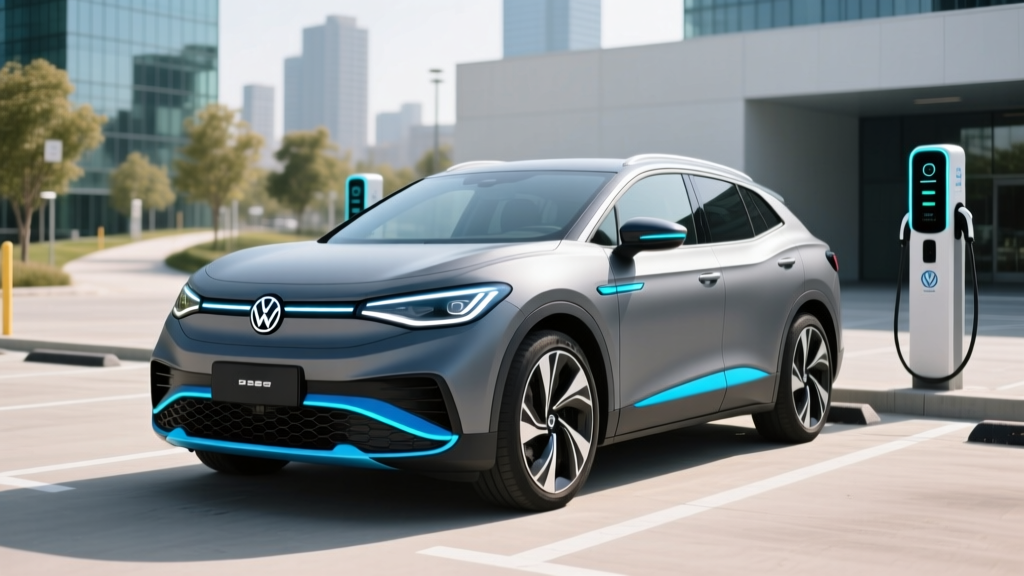
The 2026 Volkswagen ID.4 occupies a specific niche: a practical, comfortable compact electric SUV that prioritizes ride quality and cabin space over outright performance or cutting-edge tech. With EPA-estimated range reaching 291 miles on the Pro S Plus RWD trim, a usable 82 kWh battery pack, and DC fast-charging up to 175 kW, the ID.4 delivers the fundamentals that most EV buyers actually need. It doesn't chase 0-60 records or headline-grabbing charge rates, but it does offer a refined driving experience, generous cargo room, and a competitive price point that — when combined with the federal §30D tax credit — brings the effective cost well below $40,000 for eligible buyers.
This review breaks down every spec that matters for real ownership: range under actual driving conditions, charging curve behavior, total cost after incentives, and how the ID.4 stacks up against the Hyundai Ioniq 5, Tesla Model Y, and Ford Mustang Mach-E.
2026 VW ID.4 Full Spec Sheet
| Specification | Pro (RWD) | Pro S Plus (RWD) | AWD Pro S |
|---|---|---|---|
| Base MSRP | $38,995 | $46,495 | $49,995 |
| EPA Range | 261 mi | 291 mi | 263 mi |
| Battery (usable) | 82 kWh (NMC) | 82 kWh (NMC) | 82 kWh (NMC) |
| Drivetrain | RWD (single motor) | RWD (single motor) | AWD (dual motor) |
| Horsepower | 282 hp | 282 hp | 335 hp |
| 0-60 mph | ~7.7 sec | ~7.7 sec | ~5.4 sec |
| Max DC Fast Charge | 175 kW | 175 kW | 175 kW |
| 10-80% DCFC Time | ~28 min | ~28 min | ~28 min |
| Level 2 Home Charge Rate | 11 kW | 11 kW | 11 kW |
| MPGe (combined) | 107 MPGe | 104 MPGe | 102 MPGe |
| Efficiency (kWh/100mi) | 31 kWh | 32 kWh | 33 kWh |
| Battery Warranty | 8 yr / 100,000 mi | 8 yr / 100,000 mi | 8 yr / 100,000 mi |
| Vehicle Warranty | 4 yr / 50,000 mi | 4 yr / 50,000 mi | 4 yr / 50,000 mi |
Sources: fueleconomy.gov, Volkswagen USA. All figures are manufacturer-estimated or EPA-published for the 2026 model year.
Range and Efficiency: EPA Numbers vs. Real-World Driving
EPA Estimate: Up to 291 miles (Pro S Plus RWD, 82 kWh pack)
Real-World Highway (70 mph, moderate climate): Expect 240–265 miles
Real-World Cold Weather (below 30°F): Expect 200–230 miles
City/Commuter Driving: 270–295 miles (regen braking recovers more energy)
The ID.4's 82 kWh usable battery (gross capacity is approximately 86 kWh, with a ~4 kWh buffer to protect longevity) uses NMC (nickel manganese cobalt) chemistry. This chemistry offers strong energy density — critical for fitting 291 miles of range into a compact SUV footprint — but it does mean you should follow best practices for long-term health: avoid routinely charging to 100% and try not to let the pack sit at very low state of charge for extended periods.
The RWD Pro S Plus trim achieves the best range because it pairs the larger battery with a single rear motor, avoiding the efficiency penalty of the dual-motor AWD system. According to fueleconomy.gov, the combined MPGe ranges from 102 (AWD) to 107 (Pro RWD), translating to roughly 31–33 kWh consumed per 100 miles driven.
For context, a 300-mile road trip at highway speeds in summer conditions will likely require one 20–25 minute DC fast-charging stop. In winter, plan for two shorter stops or one longer one, as both range and charge speed decrease in cold temperatures due to the battery's thermal management demands.
Charging Speed: DC Fast Charging and Home Level 2
The ID.4 supports DC fast charging at a peak rate of 175 kW via its CCS1 connector. Volkswagen states a 10–80% charge time of approximately 28 minutes under ideal conditions. However, as with all EVs, the charge curve is not linear.
| Charging Method | Power (kW) | Speed (miles of range per hour) | Notes |
|---|---|---|---|
| Level 1 (120V household) | ~1.4 kW | ~4 mi/hr | Emergency/trickle only; 82 kWh takes ~60+ hours |
| Level 2 (240V, 48A home charger) | 11 kW | ~33 mi/hr | Full charge in ~7.5 hours; ideal overnight solution |
| DC Fast Charge (peak) | 175 kW | ~200+ mi/hr (at peak) | Peak sustained from ~10-30% SoC; tapers significantly above 80% |
| DC Fast Charge (10-80%) | ~120 kW avg | — | 10-80% in ~28 min; 80-100% adds another 25+ min |
The critical insight for ID.4 owners: the 175 kW peak is real, but it's sustained primarily between roughly 10% and 30% state of charge. From 30–60%, expect approximately 135–150 kW. From 60–80%, the rate drops to roughly 80–100 kW. Above 80%, charging slows dramatically to protect the battery — often below 40 kW. This is why Volkswagen (and every other manufacturer) quotes 10–80% times rather than 0–100%.
At home, the 11 kW onboard charger means a 48-amp Level 2 circuit (requiring a 60-amp breaker) will replenish the full 82 kWh in about 7.5 hours. Most owners who plug in nightly will never wake up to anything less than a full battery. If your home electrical panel only supports a 40-amp circuit (32A charging), you'll see roughly 7.7 kW and a full charge in about 10.5 hours — still adequate for most daily driving needs.
Preconditioning tip: The ID.4 allows you to precondition the battery via the infotainment system or app before arriving at a DC fast charger. This warms the pack to optimal temperature and is essential for achieving peak charge rates, especially in cool or cold weather. Without preconditioning, a cold battery may accept only 50–70 kW initially, adding 10–15 minutes to your stop.
Performance and Driving Dynamics
The single-motor RWD ID.4 produces 282 horsepower and 339 lb-ft of torque, yielding a 0–60 mph time of approximately 7.7 seconds. This is adequate for merging and passing but won't feel particularly quick compared to rivals like the Ioniq 5 (5.0 seconds in Long Range RWD) or the Model Y Long Range (5.0 seconds).
The dual-motor AWD variant bumps output to 335 hp and drops the 0–60 time to roughly 5.4 seconds, which is genuinely brisk for a family crossover. The AWD system also provides meaningful traction benefits in snow and rain, though it costs you about 28 miles of EPA range compared to the RWD Pro S Plus.
Where the ID.4 genuinely excels is ride comfort. VW tuned the suspension for compliance rather than sportiness, and the result is one of the smoothest, quietest rides in the compact EV SUV segment. Road noise is well-suppressed, and the steering — while not particularly communicative — is accurate and confidence-inspiring. This is a vehicle optimized for long-distance comfort, not canyon carving.
Regenerative braking in the ID.4 is adjustable via steering-wheel paddles (B mode for max regen, D mode with three levels). It does not offer true one-pedal driving in the way a Nissan Leaf or Chevrolet Bolt does — the regen doesn't bring the car to a complete stop — but B mode provides strong deceleration that covers most city-driving scenarios without touching the brake pedal.
Pricing, Trims, and Federal Tax Credit Eligibility
| Trim | MSRP (incl. destination) | Est. After §30D Credit | Key Features |
|---|---|---|---|
| Standard Range | $38,995 | ~$31,495* | 62 kWh pack, 206 mi range, 18" wheels, heated seats |
| Pro (RWD) | $41,495 | ~$33,995* | 82 kWh pack, 261 mi, panoramic roof, power liftgate |
| Pro S (RWD) | $44,495 | ~$36,995* | 20" wheels, premium interior, 12" display, Travel Assist |
| Pro S Plus (RWD) | $46,495 | ~$38,995* | 291 mi range, ventilated seats, head-up display, DCC suspension |
| AWD Pro S | $49,995 | ~$42,495* | Dual motor, 335 hp, 263 mi, all Pro S features |
| AWD Pro S Plus | $52,495 | ~$44,995* | Top trim, 270 mi AWD, all premium features |
*Effective prices assume full $7,500 §30D federal tax credit eligibility. The 2026 ID.4 qualifies as an SUV under the IRS §30D rules, which carry an $80,000 MSRP cap for SUVs. Actual eligibility depends on buyer income limits, battery component sourcing, and critical mineral requirements. Consult a tax professional.
- MSRP Cap: Vehicle must be under $80,000 (SUV classification) — all ID.4 trims qualify.
- Buyer Income Cap: Modified AGI ≤ $150,000 (single), $225,000 (head of household), $300,000 (joint).
- Battery Sourcing: Battery components must meet North American manufacturing/assembly thresholds; critical minerals must meet percentage thresholds from FTA countries. VW has been progressively shifting ID.4 battery sourcing to meet these rules — verify current-year compliance at the dealer or on the IRS eligible vehicle list.
- Point-of-Sale Transfer: Eligible buyers can transfer the credit to the dealer at purchase, reducing the purchase price immediately rather than waiting to claim it on their tax return.
- Final Assembly: Must occur in North America. The ID.4 for the US market is assembled in Chattanooga, Tennessee, satisfying this requirement.
The ID.4's Chattanooga assembly is a significant advantage: it guarantees North American final assembly compliance, which is a hard requirement under §30D. Combined with VW's ongoing efforts to meet battery-component and critical-mineral thresholds, most ID.4 trims have been eligible for the full $7,500 credit for qualifying buyers. Always confirm current eligibility on the IRS qualified vehicle list before purchasing, as sourcing requirements tighten annually.
Interior Space, Technology, and Daily Livability
The ID.4's cabin is where it makes one of its strongest cases against competitors. Rear-seat legroom measures 37.6 inches — competitive with the Ioniq 5 (39.4 in) and significantly better than many gas-powered compact SUVs. Cargo volume behind the second row is 30.3 cubic feet, expanding to 64.2 cubic feet with the rear seats folded. For comparison, the Tesla Model Y offers 30.2 / 72.1 cu ft, so the ID.4 is nearly identical in daily use with a slight disadvantage in maximum volume due to its more traditional SUV roofline.
The infotainment system uses a 12.9-inch touchscreen (on Pro S and above; 10.4-inch on lower trims) running VW's latest ID. Software. Response times have improved significantly since the ID.4's 2021 launch, and wireless Apple CarPlay and Android Auto are standard. The digital instrument cluster is compact (5.3 inches) but legible, supplemented by a head-up display with augmented-reality navigation on Pro S Plus trims.
Driver assistance is handled by VW's IQ.DRIVE suite, which includes adaptive cruise control, lane-keeping assist, automatic emergency braking, and Travel Assist — VW's Level 2 highway driving system that combines lane centering with adaptive cruise for hands-on-wheel semi-autonomous driving up to highway speeds.
Travel Assist is an SAE Level 2 driver-assistance system. The driver must keep hands on the wheel, monitor the road, and remain prepared to take over at any time. This is not self-driving. It reduces fatigue on long highway drives but does not replace an attentive driver.
Notable tech drawbacks: the ID.4 lacks a front trunk (frunk), which competitors like the Model Y and Mach-E provide for additional cargo flexibility. The capacitive-touch steering wheel controls and HVAC slider bars have drawn consistent criticism for being less intuitive than physical buttons. And while the ID.4 supports DC fast charging at 175 kW, it still uses the CCS1 connector — though VW has confirmed future models will adopt NACS (Tesla's connector), the 2026 ID.4 requires a CCS-to-NACS adapter for Tesla Supercharger access.
ID.4 vs. Key Competitors: Ioniq 5, Model Y, and Mach-E
| Spec | 2026 VW ID.4 Pro S Plus (RWD) | 2026 Hyundai Ioniq 5 Limited (RWD) | 2026 Tesla Model Y Long Range (AWD) | 2026 Ford Mach-E Premium (RWD ER) |
|---|---|---|---|---|
| MSRP | $46,495 | $52,600 | $48,990 | $48,995 |
| EPA Range | 291 mi | 303 mi | 320 mi | 310 mi |
| Battery | 82 kWh (NMC) | 84 kWh (NMC) | ~78 kWh (NMC) | 91 kWh (NMC) |
| Peak DCFC | 175 kW | 240 kW | 250 kW | 150 kW |
| 10-80% DCFC | ~28 min | ~18 min | ~20 min | ~38 min |
| 0-60 mph | 7.7 sec | 7.0 sec | 5.0 sec | 6.1 sec |
| MPGe (combined) | 104 | 114 | 122 | 101 |
| Cargo (rear seats up) | 30.3 cu ft | 27.2 cu ft | 30.2 cu ft | 29.7 cu ft |
| NACS Native? | No (CCS1) | No (CCS1) | Yes | No (CCS1) |
Choose the VW ID.4 if: You prioritize ride comfort, cabin quietness, and a traditional SUV feel; you want competitive range at a lower MSRP than the Ioniq 5 or Model Y; you value strong rear-seat space and a smooth, unhurried driving character.
Choose the Hyundai Ioniq 5 if: Fastest DC charging speed is a priority (18-minute 10-80%); you want the best MPGe efficiency in the segment; you prefer the Ioniq 5's distinctive design and V2L capability.
Choose the Tesla Model Y if: You need native Supercharger access without adapters; maximum range (320 mi) and performance matter most; you want the most extensive public charging network today.
Choose the Ford Mach-E if: You prefer a sportier driving feel and hatchback styling; you want the largest battery option (91 kWh extended range); Ford's BlueCruise hands-free highway driving is appealing.
Pros, Cons, and Who Should Buy the ID.4
- Excellent ride comfort and cabin quietness
- 291-mile EPA range on Pro S Plus RWD
- Generous rear-seat legroom (37.6 in)
- Competitive MSRP, especially after §30D credit
- US-assembled (Chattanooga, TN) — supports tax credit
- Comprehensive 8-year/100,000-mile battery warranty
- Smooth, linear power delivery; easy to drive daily
- DC fast charge speed (175 kW) lags Ioniq 5 and Model Y
- No front trunk (frunk)
- Capacitive-touch controls can be frustrating
- CCS1 connector requires adapter for Tesla Superchargers
- Infotainment still not as responsive as Tesla or Hyundai
- AWD range penalty is significant (~28 mi loss)
- 0-60 time is slowest in its class (RWD)
Best suited for: The ID.4 is ideal for families and commuters who prioritize comfort over performance, have reliable home Level 2 charging, and primarily take road trips under 300 miles (or are comfortable with one DC fast-charge stop). It's a strong value play when the §30D credit applies, effectively making it one of the most affordable long-range compact EV SUVs on the market.
Not ideal for: Buyers who frequently road-trip 400+ miles and want the fastest possible charge stops; those who need native Tesla Supercharger access; drivers who prioritize sporty handling or quick acceleration.
Frequently Asked Questions
What is the real-world range of the 2026 Volkswagen ID.4?
The EPA rates the ID.4 Pro S Plus RWD at 291 miles. In real-world highway driving at 70 mph in moderate temperatures, expect 240–265 miles. In cold weather (below 30°F), range drops to approximately 200–230 miles due to cabin heating demands and reduced battery efficiency. City driving with regenerative braking can approach or slightly exceed the EPA figure.
How fast does the ID.4 charge at home and on the road?
At home on a 240V Level 2 charger (48A), the ID.4 charges at 11 kW, adding roughly 33 miles of range per hour and reaching a full charge in about 7.5 hours. On DC fast chargers, it peaks at 175 kW and charges from 10–80% in approximately 28 minutes. Charging above 80% slows significantly, so plan to unplug at 80% on road trips to save time.
Does the 2026 VW ID.4 qualify for the $7,500 federal EV tax credit?
Most ID.4 trims qualify for the full $7,500 §30D credit for eligible buyers, because the vehicle is assembled in Chattanooga, TN (North American final assembly) and VW has worked to meet battery-component and critical-mineral sourcing requirements. However, eligibility depends on your income (≤$150K single / $300K joint), the vehicle's MSRP (all trims are under the $80K SUV cap), and current-year sourcing compliance. Verify on the IRS eligible vehicle list before purchasing.
Is the ID.4 worth buying over the Tesla Model Y or Hyundai Ioniq 5?
The ID.4 wins on ride comfort, cabin quietness, and value after tax credits. The Ioniq 5 charges significantly faster (240 kW vs. 175 kW) and is more efficient. The Model Y offers the longest range (320 mi), native Supercharger access, and the strongest performance. If comfort and price are your top priorities, the ID.4 is the strongest choice. If charging speed or range matter most, look at the Ioniq 5 or Model Y.
What is the ID.4's battery warranty, and how long will the battery last?
Volkswagen covers the ID.4 battery for 8 years or 100,000 miles, whichever comes first, guaranteeing it will retain at least 70% of its original capacity. NMC batteries like the ID.4's typically degrade 10–15% over the first 100,000 miles based on industry data. To maximize longevity, charge to 80% for daily use, avoid frequent DC fast charging when Level 2 is available, and precondition the battery in cold weather.
Does the ID.4 have a frunk (front trunk)?
No. The ID.4 does not have a front trunk. The space under the hood houses electronics and the HVAC system. Competitors like the Tesla Model Y and Ford Mustang Mach-E offer a frunk for additional storage.
Can I use Tesla Superchargers with the ID.4?
Not natively. The 2026 ID.4 uses the CCS1 connector, while Tesla Superchargers use NACS. However, you can use a CCS-to-NACS adapter (sold separately or provided by some networks) to access Tesla Superchargers that have been opened to non-Tesla vehicles. VW has indicated future models will adopt NACS, but the 2026 ID.4 retains CCS1.