Volkswagen ID.4 Ownership Experience Review: What It Is Really Like to Live With VW's Electric SUV
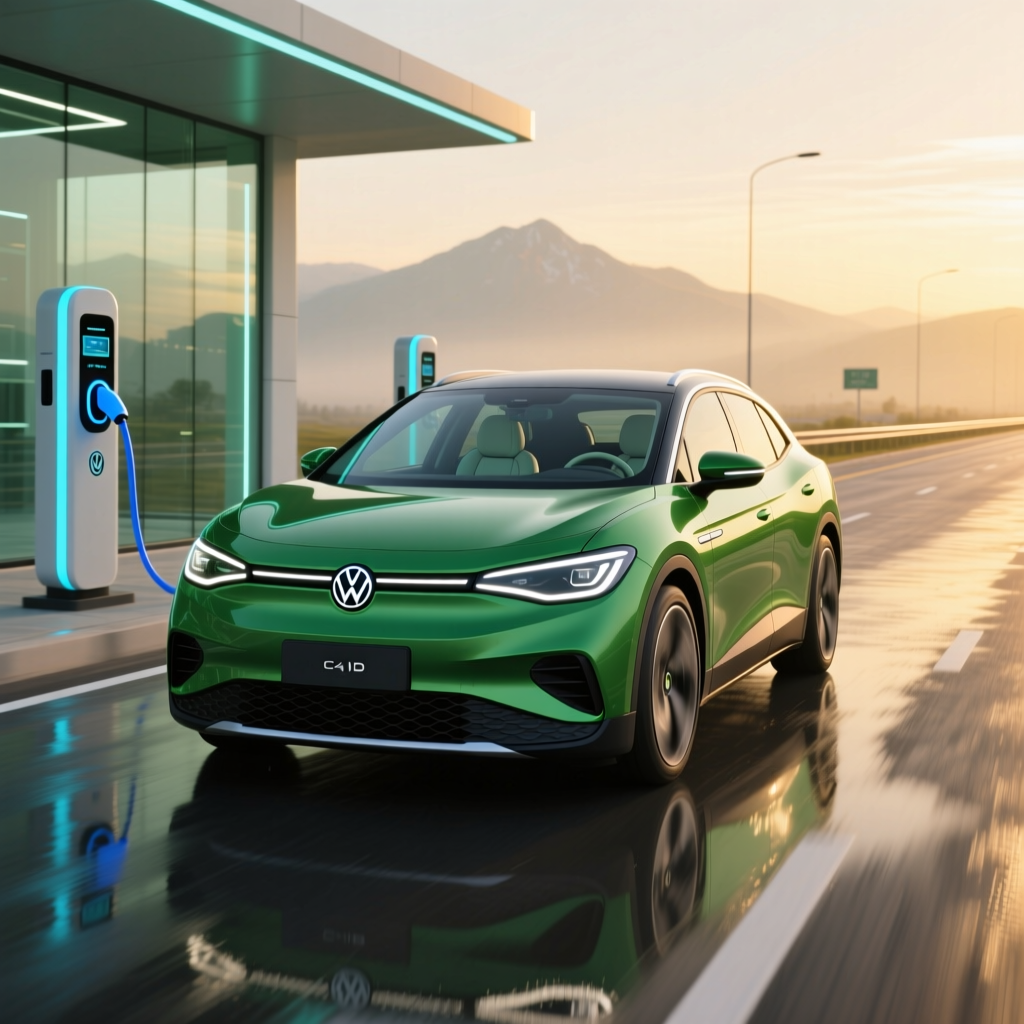
The Volkswagen ID.4 arrived with a bold promise: to deliver a practical, spacious, and affordable electric SUV for everyday drivers transitioning from gas-powered vehicles. As one of the most accessible mainstream EVs on the market, it has attracted thousands of buyers looking for a no-nonsense electric crossover. But how does it actually perform once the honeymoon phase ends and daily life sets in?
In this in-depth ownership experience review, we break down everything you need to know about living with the Volkswagen ID.4 — from real-world range and charging speeds to interior technology, driving dynamics, and long-term ownership costs. Whether you are considering purchasing one new or evaluating it on the used EV market, this guide covers the full picture.
For more electric vehicle reviews and comparisons, check out our complete EV review hub and our curated best electric SUVs list.
Vehicle Overview: What Is the Volkswagen ID.4?
The Volkswagen ID.4 is a compact electric crossover SUV built on VW's dedicated MEB (Modularer E-Antriebs-Baukasten) platform. It seats five passengers comfortably and offers a cargo area that competes favorably with rivals in its class. The ID.4 is available in both rear-wheel-drive and all-wheel-drive configurations, with battery options that provide EPA-estimated ranges between approximately 200 and 275 miles depending on the trim and drivetrain.
The ID.4 represents Volkswagen's most significant push into the mass-market EV space. It was designed from the ground up as an electric vehicle rather than a conversion of an existing gas-powered model, which gives it packaging advantages like a flat floor and generous interior volume. Pricing positions it as a strong value proposition in the compact electric SUV segment, often undercutting competitors like the Ford Mustang Mach-E and Hyundai Ioniq 5 on base price.
| Specification | RWD Standard Range | RWD Pro/Pro S | AWD Pro/Pro S |
|---|---|---|---|
| Drivetrain | Rear-Wheel Drive | Rear-Wheel Drive | All-Wheel Drive |
| Horsepower | 201 hp | 282 hp | 295 hp |
| Torque | 229 lb-ft | 339 lb-ft | 339 lb-ft |
| Battery Capacity (gross) | 62 kWh | 82 kWh | 82 kWh |
| EPA-Estimated Range | ~206 miles | ~275 miles | ~245-260 miles |
| DC Fast Charging (max) | ~120 kW | ~170 kW | ~170 kW |
| 0-60 mph (est.) | ~8.5 sec | ~7.7 sec | ~5.7 sec |
| Cargo Volume (rear seats up) | 30.3 cu ft | 30.3 cu ft | 30.3 cu ft |
| Towing Capacity | 2,200 lbs | 2,700 lbs | 2,700 lbs |
For a detailed head-to-head analysis, see our Volkswagen ID.4 vs Ford Mustang Mach-E comparison and our ID.4 vs Hyundai Ioniq 5 comparison.
Real-World Range: How Far Does the ID.4 Actually Go?
EPA range estimates provide a useful baseline, but real-world driving conditions rarely match laboratory testing perfectly. Owners consistently report that the ID.4 with the larger 82 kWh battery (Pro and Pro S trims) achieves between 230 and 260 miles in mixed driving during mild weather. Highway-heavy driving at speeds above 70 mph tends to reduce range to approximately 200-220 miles, while city driving with frequent regenerative braking opportunities can push range closer to or even slightly above the EPA estimate.
Temperature has a significant impact on the ID.4's real-world range, as it does with all electric vehicles. In cold weather — particularly below freezing — owners report range reductions of 20 to 35 percent. This means the Pro S AWD model, rated at roughly 245 miles EPA, might deliver only 160-195 miles in harsh winter conditions. The ID.4 does include a battery preconditioning feature for DC fast charging, but it lacks a dedicated heat pump in earlier model years, which contributes to greater winter energy consumption.
Independent testing by organizations such as Edmunds has corroborated these findings, with the ID.4 generally performing close to its EPA ratings in moderate climates. The real-world range experience is best described as adequate for daily commuting and regional road trips, though long-distance travelers will want to plan charging stops carefully.
For drivers who primarily commute less than 50 miles round-trip, the ID.4's range is more than sufficient and means charging only once or twice per week. For those considering an EV for longer commutes or frequent road trips, our best EVs for road trips guide highlights models with superior range.
Charging Speed and Infrastructure: How Fast Can You Refuel?
Charging performance is one of the most critical factors in EV ownership satisfaction, and the Volkswagen ID.4 delivers respectable — though not class-leading — charging speeds. The Pro and Pro S models with the 82 kWh battery support DC fast charging at up to approximately 170 kW, while the Standard Range models peak at around 120 kW.
In practice, a DC fast charging session from 10 to 80 percent state of charge takes roughly 30-36 minutes on a sufficiently powerful charger. The charging curve is relatively conservative compared to some competitors; the ID.4 does not sustain its peak charging rate for as long as vehicles built on 800-volt architectures like the Hyundai Ioniq 5 or Kia EV6. This means that while the peak number is competitive, the average charging speed over a full session is somewhat lower.
Level 2 home charging is where the ID.4 truly shines for daily ownership. Using a 240-volt home charger rated at 11 kW, owners can replenish the larger battery from empty to full in approximately 7.5 to 8 hours. This means plugging in overnight consistently provides a full charge by morning. Volkswagen has partnered with Electrify America to provide ID.4 owners with complimentary charging credits, which helps offset the cost of public fast charging during the initial ownership period.
The ID.4 uses the CCS (Combined Charging System) connector standard. With the ongoing industry shift toward the NACS (North American Charging Standard) connector used by Tesla's Supercharger network, owners should stay informed about adapter availability and network access changes. Volkswagen has announced plans to adopt NACS on future models, and adapters are expected to enable access to Tesla Superchargers for existing CCS-equipped vehicles.
For a broader look at charging considerations across different models, our complete EV charging guide covers everything from home charger installation to public network comparisons.
Interior, Technology, and Comfort
Step inside the ID.4, and you are greeted by a minimalist, modern cabin that prioritizes clean lines and sustainable materials. The interior design language is distinctly Volkswagen — understated, functional, and well-built. Soft-touch materials cover most surfaces, and the overall fit and finish meets expectations for the price point.
The centerpiece of the dashboard is a floating touchscreen infotainment display — typically a 10-inch or 12-inch unit depending on trim. The infotainment system runs Volkswagen's ID. Software platform, which has been a point of contention among owners and reviewers alike. Earlier software versions were criticized for sluggish response times, occasional glitches, and a lack of physical buttons for common functions like climate control. Subsequent over-the-air (OTA) updates have improved performance and added features, but some owners still find the touch-sensitive sliders for volume and temperature to be less intuitive than traditional knobs.
The digital instrument cluster is a compact 5.3-inch display mounted behind the steering wheel, supplemented by an available augmented reality head-up display on higher trims. The head-up display projects navigation directions and speed information onto the windshield, and owners frequently cite it as one of the ID.4's most appreciated features once they become accustomed to it.
Passenger comfort is a strong suit. The front seats are supportive for long drives, and the rear seats offer generous legroom thanks to the flat floor enabled by the MEB platform. The panoramic fixed glass roof (standard on Pro S trims) creates an airy, open cabin feel that passengers love, though some owners note it can increase cabin heat on sunny days. Cargo space measures 30.3 cubic feet behind the rear seats and expands to 64.2 cubic feet with the rear seats folded, making it practical for family hauling duties.
One common complaint among owners is the lack of a front trunk (frunk). Unlike many competitors, the ID.4 does not offer any front storage compartment, which is a missed opportunity for additional cargo flexibility. For buyers who prioritize interior technology and storage, our best EV interiors roundup highlights alternatives with more feature-rich cabins.
Driving Dynamics: How Does the ID.4 Feel on the Road?
The Volkswagen ID.4 is tuned for comfort rather than sportiness, and that philosophy is evident from the first mile. The ride quality is composed and well-damped, absorbing bumps and road imperfections with a maturity that exceeds some competitors. The low center of gravity inherent to its battery-electric architecture contributes to minimal body roll through corners, giving the ID.4 a planted, confident feel even on winding roads.
The rear-wheel-drive models deliver smooth, linear acceleration that feels adequate for merging and passing. The 282 horsepower in the Pro models provides a noticeable step up in responsiveness, while the all-wheel-drive variant with 295 horsepower and a 0-60 mph time of approximately 5.7 seconds delivers genuinely quick acceleration that satisfies most drivers. The AWD model's dual-motor setup also provides enhanced traction in rain and snow, making it the preferred choice for buyers in regions with inclement weather.
Steering is light and precise, though it lacks the communicative feedback that driving enthusiasts might desire. This is by design — Volkswagen clearly targets buyers who value easy, stress-free driving over razor-sharp handling. The turning circle is impressively tight for a compact SUV, making the ID.4 surprisingly maneuverable in urban environments and parking garages.
Regenerative braking behavior is another area where the ID.4 takes a conservative approach. Unlike some EVs that offer aggressive one-pedal driving modes, the ID.4's maximum regenerative braking setting (B mode) provides moderate deceleration that falls short of bringing the vehicle to a complete stop. This is a deliberate choice meant to ease the transition for drivers new to EVs, but it frustrates some owners who prefer stronger regen. The D mode offers coasting behavior that maximizes efficiency on highways, and the available adaptive cruise control integrates regenerative braking intelligently with traffic flow.
Overall, the ID.4's driving experience is best described as refined, comfortable, and approachable. It does not try to be a sports car, and for its target audience, that is perfectly appropriate. If sporty driving dynamics are a priority, consider the Ford Mustang Mach-E or Tesla Model Y, both featured in our best electric SUVs rankings.
Ownership Costs: Purchase Price, Incentives, and Long-Term Value
The Volkswagen ID.4 is positioned as one of the more affordable mainstream electric SUVs, and its total cost of ownership story is compelling when all factors are considered. Base pricing typically starts in the low-to-mid $30,000s for the Standard Range model and climbs into the mid-to-upper $40,000s for fully loaded Pro S AWD trims. This pricing makes it competitive with gas-powered compact SUVs when federal and state incentives are factored in.
Eligible buyers can take advantage of the federal EV tax credit, which can reduce the effective purchase price by up to $7,500 depending on income limitations, vehicle eligibility, and point-of-sale provisions under current law. Many states and municipalities offer additional rebates, tax credits, or reduced registration fees for electric vehicles. Always check the latest incentive availability through fueleconomy.gov and your state's energy office.
Operating costs are where the ID.4 truly separates itself from internal combustion competitors. Electricity costs vary by region, but the national average translates to an equivalent fuel cost of roughly $1.00 to $1.50 per gallon of gasoline. Home charging during off-peak hours can reduce this further. Maintenance expenses are significantly lower than gas vehicles — there are no oil changes, spark plugs, or transmission fluid replacements to worry about. Brake pad replacement intervals are extended thanks to regenerative braking, with many owners reporting original brake pads lasting well beyond 80,000 miles.
Insurance costs for the ID.4 are generally in line with comparable gas-powered SUVs, though rates vary by provider and region. Depreciation is a more complex factor; EVs as a category have experienced steeper depreciation in the used market compared to some gas vehicles, partly due to rapid technology advancement and price competition from newer models. The ID.4's strong warranty coverage — including an 8-year/100,000-mile battery warranty — provides peace of mind for long-term owners and helps support residual values.
For a comprehensive breakdown of EV ownership economics, including electricity cost calculators and maintenance schedules, visit our EV total cost of ownership guide.
Pros and Cons: The Honest Verdict
Pros
- Competitive pricing: One of the most affordable electric SUVs in its class, especially when incentives are applied.
- Comfortable ride quality: Well-tuned suspension delivers a smooth, composed driving experience on all road surfaces.
- Spacious interior: Generous rear legroom and cargo capacity make it practical for families.
- Low operating costs: Minimal maintenance requirements and inexpensive home charging keep ongoing expenses low.
- Strong warranty coverage: The 8-year/100,000-mile battery warranty and comprehensive vehicle warranty provide long-term confidence.
- Good visibility and maneuverability: Tight turning radius and excellent outward visibility make city driving easy.
- Available AWD: The dual-motor all-wheel-drive option provides confident traction in adverse weather conditions.
Cons
- Infotainment frustrations: Touch-sensitive controls and occasionally sluggish software can detract from the daily experience.
- No front trunk (frunk): Missed opportunity for additional storage that most EV competitors provide.
- Moderate regenerative braking: Lacks true one-pedal driving capability, which some EV drivers expect.
- Average DC fast charging speed: Charging curve is conservative compared to 800V competitors.
- Winter range loss: Absence of a heat pump in earlier models contributes to significant cold-weather range reduction.
- Limited performance feel: Driving dynamics prioritize comfort over engagement, which may disappoint enthusiasts.
Frequently Asked Questions
Is the Volkswagen ID.4 a good first electric vehicle?
Yes, the ID.4 is widely regarded as one of the best entry points into EV ownership. Its familiar SUV form factor, comfortable ride, straightforward driving experience, and competitive pricing make the transition from a gas-powered vehicle feel natural rather than overwhelming. The moderate regenerative braking and conventional driving feel are specifically designed to ease new EV owners into the experience. Combined with low maintenance requirements and the convenience of home charging, it is an excellent choice for first-time EV buyers.
How reliable is the Volkswagen ID.4?
The ID.4 has shown average to slightly above-average reliability based on owner surveys and industry assessments. As with many first-generation vehicles on a new platform, early production models experienced some software-related issues that have been progressively addressed through over-the-air updates and dealer service campaigns. The electric drivetrain itself — consisting of the battery, motor, and power electronics — has proven robust, with very few reports of major mechanical failures. Volkswagen's 8-year/100,000-mile battery warranty provides additional protection against premature battery degradation.
Can the Volkswagen ID.4 tow a trailer?
Yes, the ID.4 is rated for towing. Rear-wheel-drive Standard Range models can tow up to approximately 2,200 pounds, while Pro and AWD models are rated for up to 2,700 pounds when properly equipped with a factory tow hitch. This is sufficient for small utility trailers, bike racks, and light camping trailers. However, towing significantly reduces range — expect a reduction of 30 to 50 percent depending on trailer weight, aerodynamics, and terrain. Plan charging stops accordingly when towing longer distances.
How does the ID.4 compare to the Tesla Model Y?
The ID.4 and Model Y target similar buyers but take different approaches. The Tesla Model Y offers superior range, faster charging via the Supercharger network, more advanced driver assistance features, and sportier driving dynamics. The ID.4 counters with a lower starting price, a more traditional and comfortable ride, a quieter cabin, and a more conventional dealership service experience. The Model Y also offers a frunk and optional third-row seating. For a detailed comparison, see our ID.4 vs Tesla Model Y comparison.
What is the best Volkswagen ID.4 trim to buy?
For most buyers, the Pro model with the larger 82 kWh battery and rear-wheel drive offers the best balance of range, value, and features. It provides the longest EPA-estimated range in the lineup and includes most of the features daily drivers need. The Pro S adds premium touches like the panoramic glass roof, heated seats, and the augmented reality head-up display, making it worth the upgrade for those who value comfort features. The AWD variant is recommended primarily for buyers in regions with significant snowfall or those who frequently drive on unpaved roads. The Standard Range model is best suited for budget-conscious buyers with short commutes who primarily need a city and suburban vehicle.
Final Thoughts: Who Should Buy the Volkswagen ID.4?
The Volkswagen ID.4 is a compelling choice for buyers seeking a practical, comfortable, and affordable electric SUV without the complexity or premium pricing of luxury alternatives. It excels as a daily commuter and family hauler, offering low operating costs, a spacious cabin, and a smooth, quiet ride that makes electric driving feel effortless.
It is not the most technologically advanced EV in its segment, nor does it offer the longest range or fastest charging. Buyers who prioritize cutting-edge infotainment, aggressive one-pedal driving, or sporty handling may find better matches elsewhere. But for the vast majority of drivers who simply want a reliable, comfortable electric vehicle that handles daily life without drama, the ID.4 delivers exactly what it promises.
As the EV market continues to evolve with new competitors and advancing technology, the ID.4 remains a strong value proposition — particularly on the used market where depreciation has made it even more attractive. If you are ready to make the switch to electric and want a vehicle that feels familiar, practical, and well-built, the Volkswagen ID.4 deserves serious consideration.
Ready to explore more options? Browse our best electric SUVs roundup, compare the ID.4 against the competition in our EV comparison center, or read our complete EV buying guide for expert tips on making your purchase.