Why Everyone Searches "LeBron James Tesla"
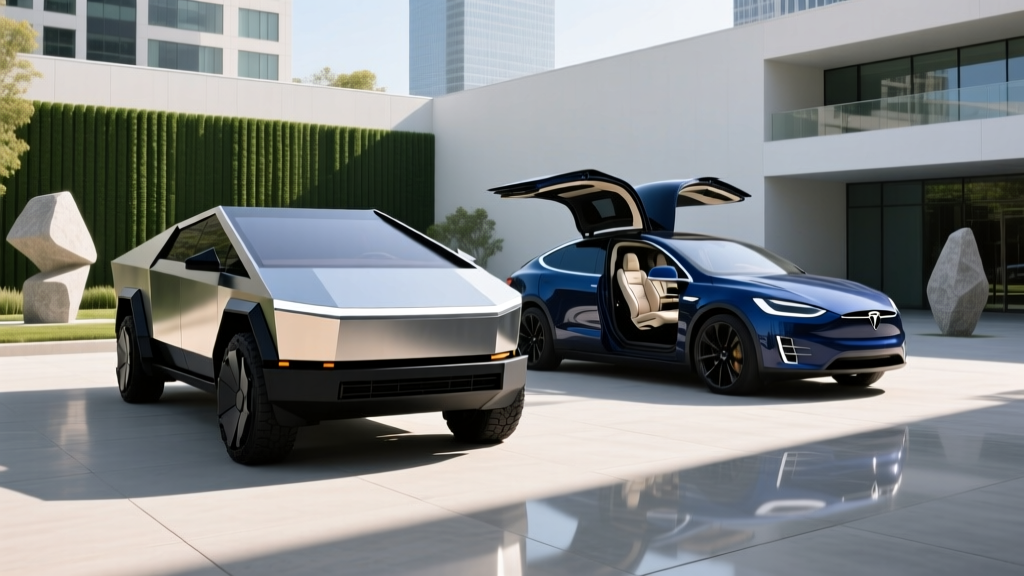
When LeBron James took delivery of a Tesla Cybertruck in early 2024, social media lit up — and the search term LeBron James Tesla has stayed in the EV conversation ever since. The NBA icon has been photographed with multiple Tesla vehicles over the years, including the Model X and, more recently, the angular Cybertruck. For EV shoppers, the real question isn't which Tesla a celebrity drives — it's whether these specific models deliver for your driveway, budget, and daily commute.
This review breaks down the two Tesla models most associated with LeBron James: the 2026 Tesla Cybertruck (AWD) and the 2026 Tesla Model X (Long Range). We'll cover real-world range, charging speeds, pricing after federal tax credits, cargo space, and whether either vehicle justifies its price tag against key competitors.
2026 Tesla Cybertruck AWD: Full Spec Breakdown
| Spec | Value |
|---|---|
| EPA Estimated Range | 340 miles |
| Battery Capacity (usable) | ~123 kWh (NMC lithium-ion) |
| Drivetrain | Dual-Motor AWD |
| Horsepower | 600 hp |
| 0–60 mph | 3.9 seconds |
| Max DC Fast Charge | 250 kW (peak) |
| 10–80% DC Charge Time | ~27 minutes |
| Level 2 Home Charge Rate | 11.5 kW (~34 mi/hr) |
| Efficiency | 54 MPGe / 58 kWh/100 mi |
| Towing Capacity | 7,500 lbs |
| Cargo Volume (bed + frunk) | ~67 cu ft (bed, tonneau closed) + ~7 cu ft (frunk) |
| Base MSRP | $79,990 |
| Battery & Drive Unit Warranty | 8 years / 120,000 miles |
The EPA rates the Cybertruck AWD at 340 miles. In real-world highway driving at 70–75 mph, expect roughly 270–295 miles before you need to stop. The Cybertruck's boxy stainless-steel exoskeleton creates significant aerodynamic drag, which hits efficiency hard at highway speeds. In cold weather (below 30°F), plan on 220–250 miles of usable range between charges. Tesla's heat pump helps, but the large battery and heavy curb weight (~6,600 lbs) work against winter efficiency.
2026 Tesla Model X Long Range: Full Spec Breakdown
| Spec | Value |
|---|---|
| EPA Estimated Range | 335 miles |
| Battery Capacity (usable) | ~95 kWh (NMC lithium-ion) |
| Drivetrain | Dual-Motor AWD |
| Horsepower | 670 hp |
| 0–60 mph | 3.8 seconds |
| Max DC Fast Charge | 250 kW (peak) |
| 10–80% DC Charge Time | ~30 minutes |
| Level 2 Home Charge Rate | 11.5 kW (~36 mi/hr) |
| Efficiency | 101 MPGe / 33 kWh/100 mi |
| Cargo Volume (behind 2nd row) | ~40 cu ft (5-seat); ~82 cu ft (folded) |
| Seating | 5, 6, or 7 passengers |
| Base MSRP | $77,990 |
| Battery & Drive Unit Warranty | 8 years / 150,000 miles |
The Model X Long Range carries a 335-mile EPA estimate. Highway cruising at 70 mph typically yields 280–305 miles of real range — better than the Cybertruck thanks to a more aerodynamic profile despite its SUV proportions. Cold-weather range drops to approximately 240–270 miles. The Model X's heat pump and mature thermal management system help mitigate winter losses, but the heavy curb weight (~5,100 lbs) still demands significant energy to get moving.
Charging Speed: Home and DC Fast Charging Compared
| Charging Level | Cybertruck AWD | Model X LR |
|---|---|---|
| Level 1 (120V, 12A) | ~4 mi/hr | ~4 mi/hr |
| Level 2 (240V, 48A / 11.5 kW) | ~34 mi/hr | ~36 mi/hr |
| DC Fast Charge (peak) | 250 kW | 250 kW |
| 10–80% DC Time | ~27 min | ~30 min |
| Connector (2026) | NACS (native) | NACS (native) |
| Supercharger Access | Full network | Full network |
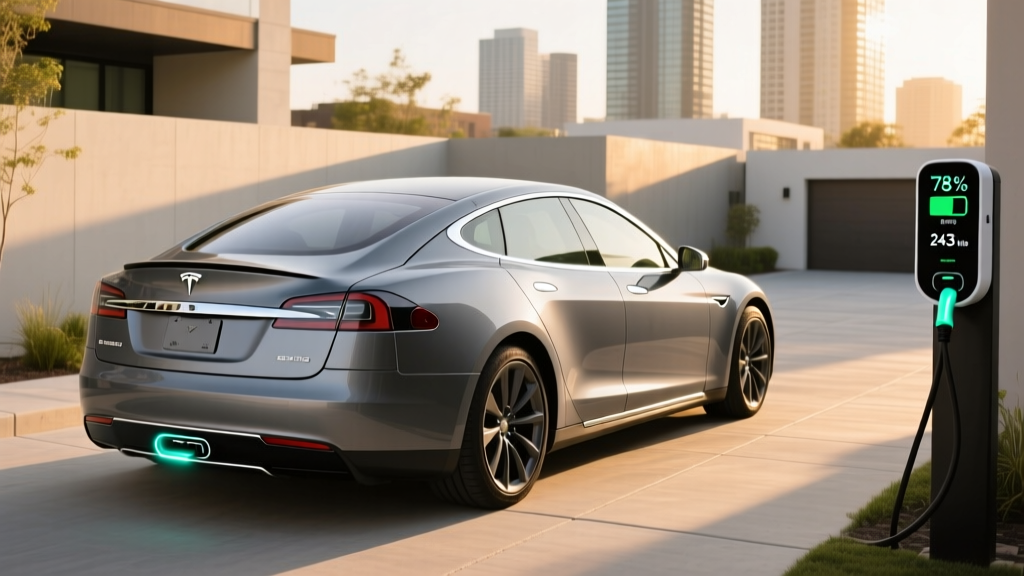
Both vehicles peak at 250 kW on V3 Superchargers, but peak rate is not sustained rate. The Cybertruck's larger ~123 kWh battery means it can hold higher charge power longer in the curve, which is why its 10–80% time is slightly faster despite packing more energy. Above 80% State of Charge (SoC), both vehicles taper sharply — expect the final 20% to take nearly as long as the first 70%. For daily use, charge to 80% and precondition the battery before fast-charging sessions to optimize speed.
Home charging note: Both vehicles support 11.5 kW Level 2 charging, which requires a 60-amp dedicated circuit (240V, hardwired Wall Connector). Budget $800–$2,000 for a professional Level 2 installation depending on your electrical panel's capacity. If your panel is at or near its limit (common in older homes with 100-amp service), a panel upgrade to 200 amps can add $1,500–$3,000.
Pricing, Trims, and Federal Tax Credit Eligibility
| Model / Trim | MSRP | Federal §30D Credit | Effective Price (if eligible) |
|---|---|---|---|
| Cybertruck AWD | $79,990 | $0 (exceeds MSRP cap) | $79,990 |
| Cybertruck Cyberbeast | $99,990 | $0 (exceeds MSRP cap) | $99,990 |
| Model X Long Range | $77,990 | $0 (exceeds MSRP cap) | $77,990 |
| Model X Plaid | $92,990 | $0 (exceeds MSRP cap) | $92,990 |
Here's the critical detail many buyers miss: neither the Cybertruck nor the Model X qualifies for the federal §30D new clean vehicle credit. Under current IRS rules, SUVs and trucks must have an MSRP at or below $80,000 (vans and sedans: $55,000) to be eligible. The base Cybertruck AWD at $79,990 sits $10 above the truck cap when destination and order fees are included, and the Model X at $77,990 similarly exceeds the SUV threshold after fees. Even if MSRPs technically squeaked under, buyer income caps ($300K joint / $225K head of household / $150K individual) and strict battery-component and critical-mineral sourcing requirements further limit eligibility.
For the LeBron James Tesla buyer — someone likely undeterred by the lack of a $7,500 credit — the real financial consideration is total cost of ownership: insurance premiums on both models run 20–40% higher than comparable ICE vehicles, and tire replacement on the Cybertruck's large, heavy-duty tires can exceed $2,000 per set.
Tech, Driver Assistance, and Interior Features
Cybertruck: The 18.5-inch center touchscreen runs Tesla's latest software with a custom truck-specific UI including tire-pressure monitoring per axle, tow-mode calibration, and an integrated bed camera. The steer-by-wire system (no mechanical linkage between the yoke and wheels) is a genuine engineering departure — it reduces the turning circle to an impressive 34 feet despite the truck's 223-inch length, but some drivers report an adjustment period to the variable-ratio feel. The Cybertruck includes Tesla's Basic Autopilot (SAE Level 2) as standard, with Full Self-Driving (Supervised) available as a $8,000 add-on. FSD is not autonomous — it requires continuous driver attention and hands-on-wheel supervision.
Tesla Autopilot and FSD (Supervised) are SAE Level 2 driver-assistance systems. The driver must remain fully engaged, monitor the road, and be prepared to take over instantly. These systems do not make the vehicle self-driving. Only Level 4 services (e.g., Waymo One in designated geofenced areas) operate without a human driver.
Model X: The refreshed Model X features a 17-inch tilting center display, a second-row 8-inch screen for passengers, and a yoke or conventional steering wheel option. The panoramic windshield extends overhead, creating an airy cabin. Falcon Wing rear doors remain a polarizing feature — dramatic at carpool drop-off, but they require overhead clearance and can be slower to open in tight parking spaces. The Model X offers available six- or seven-seat configurations, making it a legitimate family hauler.
Cargo, Passenger Space, and Practicality
Cybertruck: The 6-foot composite bed with a powered tonneau cover can handle 4x8-foot sheets of plywood (with the tailgate down) and supports 7,500 lbs of towing. The lockable frunk adds ~7 cu ft of secure, weatherproof storage. However, the bed sides are relatively high, making loading heavy items at waist level more difficult than a conventional pickup. Rear-seat legroom measures 38.2 inches — adequate for adults but not class-leading. The angular roofline compromises rear headroom for taller passengers.
Model X: With five seats in place, the Model X delivers ~40 cu ft behind the second row and up to ~82 cu ft with seats folded — competitive with midsize luxury SUVs. The optional third row is best suited for children; adult legroom in the third row drops to ~32 inches. Front-row legroom is generous at 41.2 inches. The Model X's low floor (battery pack underneath) creates a flat load floor and a small front trunk (frunk) for additional storage.
Pros, Cons, and Verdict
Cybertruck AWD — Pros
- 7,500-lb towing and genuine truck utility
- Steer-by-wire enables a tight 34-ft turning circle
- Stainless-steel exoskeleton is dent- and corrosion-resistant
- Full Supercharger network access with NACS native port
- Distinctive design with high curb appeal
Cybertruck AWD — Cons
- Highway efficiency suffers due to poor aerodynamics (~58 kWh/100 mi)
- No federal tax credit eligibility (MSRP cap)
- Steer-by-wire requires driver adaptation
- Poor rearward visibility; relies heavily on cameras
- Insurance premiums significantly above average
Model X Long Range — Pros
- Best-in-class efficiency for a 3-row EV SUV (101 MPGe)
- Up to 7-passenger seating with available third row
- Strong real-world range (~280–305 mi highway)
- 8-year / 150,000-mile battery warranty
- Falcon Wing doors ease second-row child-seat access
Model X Long Range — Cons
- No federal tax credit eligibility (MSRP cap)
- Falcon Wing doors need overhead clearance; can be slow
- Third-row space is tight for adults
- High starting price vs. rivals like the Rivian R1S or Kia EV9
- Panel-gap and build-quality inconsistency reported by some owners
Competitive Landscape: Are These Teslas Worth It?
Cybertruck vs. Ford F-150 Lightning vs. Rivian R1T: The F-150 Lightning offers a more conventional truck experience with a lower starting price (~$55,000) and better bed practicality, though with less range (~320 miles EPA for the extended-range battery). The Rivian R1T (dual-motor, ~$75,000) offers superior off-road capability and a clever gear tunnel but trails the Cybertruck in towing capacity. The Cybertruck wins on range and tech novelty; it loses on traditional truck usability and cost of ownership.
Model X vs. Rivian R1S vs. Kia EV9: The Rivian R1S (starting ~$75,000) offers three rows, genuine off-road chops, and a more traditional SUV feel. The Kia EV9 (starting ~$55,000) is a value-oriented three-row EV with ~300 miles of range and lower running costs. The Model X wins on performance (3.8-second 0–60 in a 3-row SUV is remarkable) and Supercharger access, but its price premium and lack of tax credit make the EV9 a strong alternative for budget-conscious families.
Which Tesla Fits Your Life?
Choose the Cybertruck if: You need genuine truck towing (7,500 lbs), want maximum curb appeal, value the Supercharger network for road trips, and can absorb higher insurance and tire costs.
Choose the Model X if: You need three-row seating for a growing family, prioritize efficiency and range in an SUV form factor, and want supercar-level acceleration with daily practicality.
Look elsewhere if: Federal tax credit eligibility is a dealbreaker, your budget caps below $70,000, or you prefer conventional styling and build consistency.
Frequently Asked Questions
What Tesla does LeBron James drive?
LeBron James has been publicly associated with multiple Tesla vehicles, most notably the Tesla Cybertruck (delivered in early 2024) and the Model X. His exact current garage is private, but these two models are the ones most frequently linked to the "LeBron James Tesla" search.
Does the 2026 Cybertruck qualify for the $7,500 federal tax credit?
No. Under current IRS §30D rules, trucks must have an MSRP at or below $80,000 to qualify. The base Cybertruck AWD at $79,990 plus destination fees exceeds this cap. Buyer income limits and battery-sourcing requirements further restrict eligibility even on borderline-price vehicles.
What is the real-world highway range of the Cybertruck?
Despite its 340-mile EPA rating, the Cybertruck AWD typically delivers 270–295 miles in real-world highway driving at 70–75 mph due to its high-drag stainless-steel body. Cold weather reduces this further to roughly 220–250 miles.
How fast does the Model X charge at home?
With a Tesla Wall Connector on a 60-amp / 240V circuit (11.5 kW), the Model X Long Range adds approximately 36 miles of range per hour of charging. A full overnight session (8–10 hours) easily replenishes a daily commute's worth of energy.
Is the Model X a good family vehicle?
Yes — particularly in six- or seven-seat configurations. The Falcon Wing doors make loading child seats easier than conventional doors in tight spaces. Cargo volume is competitive, and the 335-mile EPA range covers most family road trips with a single Supercharger stop. The main drawback is price: at ~$78,000+ without a tax credit, the Kia EV9 offers similar family utility for significantly less.
What is the battery warranty on these Tesla models?
The Cybertruck carries an 8-year / 120,000-mile battery and drive unit warranty. The Model X offers 8 years / 150,000 miles. Both warranties guarantee a minimum of 70% battery capacity retention over the warranty period, per Tesla's warranty documentation.
Is Tesla Autopilot or FSD self-driving?
No. Both Autopilot and Full Self-Driving (Supervised) are SAE Level 2 driver-assistance systems. They require the driver to remain fully attentive, keep hands on the wheel (or demonstrate engagement), and be ready to take control at any moment. Tesla's naming of "Full Self-Driving" has drawn regulatory scrutiny precisely because the system is not autonomous.