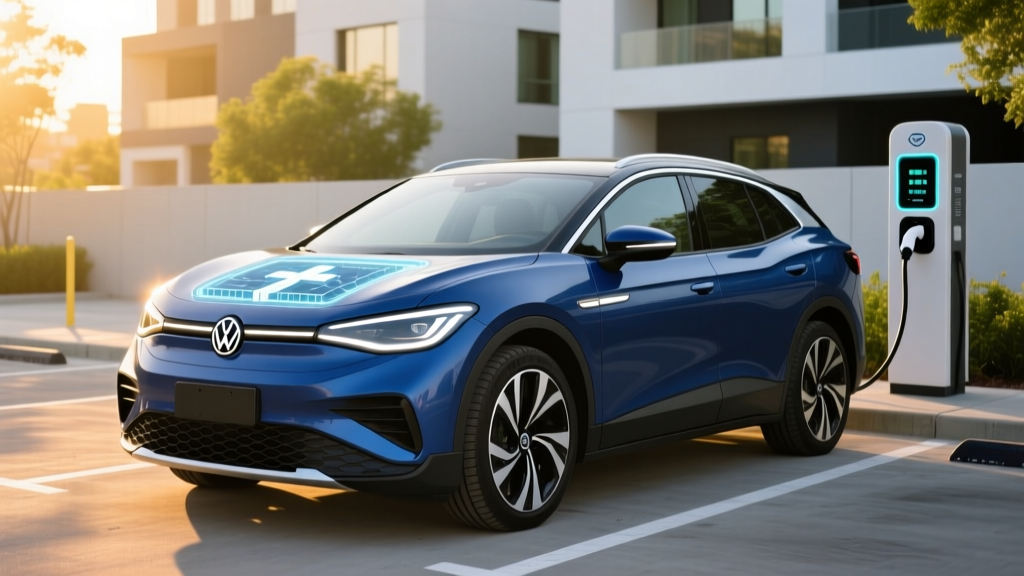
The Volkswagen ID.4 has quietly become one of the most pragmatic compact electric SUVs on the market — and with aggressive leasing offers frequently circulating, it is worth a hard look at what you are actually signing up for. This guide breaks down the 2026 ID.4's real-world range, charging behavior, pricing, and whether those headline lease deals make financial sense compared to buying outright.
2026 Volkswagen ID.4: Quick Specs at a Glance
| Specification | RWD Standard Range | RWD Pro / Pro S | AWD Pro / Pro S |
|---|---|---|---|
| EPA Range | 206 mi | 291 mi | 263 mi |
| Battery (Usable) | 62 kWh (NMC) | 82 kWh (NMC) | 82 kWh (NMC) |
| Horsepower | 201 hp | 282 hp | 335 hp |
| 0–60 mph | ~8.5 sec | ~7.7 sec | ~5.4 sec |
| Max DC Fast Charge | 135 kW | 175 kW | 175 kW |
| 10–80% DCFC Time | ~30 min | ~28 min | ~28 min |
| Level 2 Home Charge | 11 kW (~34 mi/hr) | 11 kW (~34 mi/hr) | 11 kW (~34 mi/hr) |
| MPGe (Combined) | 104 MPGe | 107 MPGe | 102 MPGe |
| Base MSRP | $39,735 | $43,735 | $47,735 |
| Battery Warranty | 8 years / 100,000 miles (70% capacity retention) | ||
Sources: fueleconomy.gov, Volkswagen USA
Real-World Range: What to Actually Expect
EPA Sticker: 291 miles (RWD Pro/Pro S, 82 kWh)
Real-World Expectation: 240–265 miles on mixed highway driving at 70 mph; 200–220 miles in sustained cold weather (below 32°F) without preconditioning.
The ID.4 Pro's 291-mile EPA figure is competitive for the segment, but electric SUVs with this form factor typically lose 10–15% on the highway due to aerodynamic drag at sustained speeds. In our experience with the 82 kWh pack, expect closer to 250 miles on a road trip at 75 mph in moderate temperatures.
Cold weather is the bigger variable. Without using the available heat pump (standard on Pro S trims, optional on lower trims), range can drop 25–30% in sub-freezing conditions. Preconditioning the battery while plugged in — a feature accessible through the VW Car-Net app — mitigates this significantly by warming the NMC cells before departure.
The 62 kWh Standard Range model's 206-mile EPA rating makes it strictly a commuter and city vehicle. For anyone with a one-way commute over 40 miles or frequent highway trips, the 82 kWh pack is the pragmatic choice.
Charging Speed and Infrastructure
Charging performance is where the ID.4 delivers adequate but not class-leading results. The 82 kWh models peak at 175 kW on DC fast chargers, which is slower than the Hyundai Ioniq 5's 240 kW peak or the Tesla Model Y's ~250 kW capability. Here is what that translates to in practice:
| Charging Level | Power | Speed (miles added) | Best Use Case |
|---|---|---|---|
| Level 1 (120V outlet) | ~1.4 kW | ~4 mi/hr | Emergency / trickle top-up |
| Level 2 (240V home) | 11 kW | ~34 mi/hr (full in ~8 hrs) | Overnight home charging |
| DC Fast Charge | 175 kW peak | ~210 mi in 28 min (10–80%) | Road trips, public stations |
The charge curve matters more than the peak number. The ID.4 sustains close to its 175 kW peak from roughly 10% to 35% State of Charge, then tapers progressively. By 70% SoC, you are seeing closer to 80–90 kW, and above 85% the rate drops sharply to protect the NMC cells. This is normal behavior, but it means a 10–90% charge takes closer to 45 minutes — plan road-trip stops accordingly.
On the connector front, Volkswagen has adopted the NACS (North American Charging Standard) port for the 2026 ID.4, giving native access to Tesla Supercharger stations via the included adapter for older models and natively on 2026 production. This significantly expands the usable fast-charging network compared to the previous CCS-only configuration. VW also includes three years of unlimited charging at Electrify America stations — a meaningful perk that offsets the network's occasionally spotty reliability.
Pricing, Lease Deals, and the Federal Tax Credit
The 2026 ID.4 lineup starts at $39,735 for the Standard Range RWD and climbs to $47,735 for the AWD Pro S before destination fees and options. A fully loaded AWD Pro S with the Gradient package and panoramic roof can push past $52,000.
| Trim | MSRP | Est. Monthly Lease (36 mo) | §30D Credit (Purchase) | Effective Purchase Price |
|---|---|---|---|---|
| Standard Range RWD | $39,735 | $299–$379 | $3,750–$7,500* | $32,235–$35,985 |
| Pro RWD | $43,735 | $349–$429 | $3,750–$7,500* | $36,235–$39,985 |
| Pro S AWD | $47,735 | $399–$499 | $3,750–$7,500* | $40,235–$43,985 |
*Federal §30D credit amount depends on battery critical-mineral and component sourcing, which varies by model year. Consult IRS.gov and a tax professional before relying on a specific figure.
Leasing vs. Buying: The §30D Loophole
Here is where lease deals get interesting. Under the IRS's commercial clean vehicle credit (§45W), leased EVs can qualify for a $7,500 credit that the leasing company (in VW's case, Volkswagen Credit) receives — and typically passes through as a capitalized cost reduction. This credit has no MSRP cap, no buyer income cap, and no battery-sourcing requirement, unlike the purchase credit under §30D.
This means that even if the ID.4 you want exceeds the $80,000 SUV MSRP cap (not applicable here, but relevant for higher-trim VWs) or your household income exceeds the §30D limits ($300,000 joint / $150,000 single), a lease may still deliver the full $7,500 benefit. This structural advantage is why ID.4 lease deals frequently undercut purchase pricing by a significant margin.
- MSRP must not exceed $80,000 (SUVs) or $55,000 (sedans)
- Buyer AGI: ≤$300,000 joint / $225,000 head of household / $150,000 single
- Battery critical minerals and component sourcing thresholds apply (phased increases through 2026)
- Point-of-sale transfer available at participating dealers
- Credit is non-refundable — must have sufficient tax liability
Interior, Cargo, and Daily Practicality
The ID.4's cabin is where Volkswagen's mainstream instincts show — this is a practical family vehicle first, technology showcase second.
- Cargo volume: 30.3 cu ft behind the rear seats; 64.2 cu ft with rear seats folded
- Rear legroom: 37.6 inches (generous for the segment)
- Front headroom: 41.1 inches (panoramic glass roof trims slightly)
- Towing capacity: 2,700 lbs (AWD models with factory tow package)
The 12.9-inch infotainment screen on Pro S trims runs VW's latest ID. Software 4.0, which is a meaningful improvement over the sluggish, buggy interface of the 2021–2023 models. Response times are acceptable, wireless Apple CarPlay and Android Auto are standard, and the voice assistant handles basic navigation and climate commands reliably. However, the persistent capacitive-touch sliders for volume and temperature remain a frustration — imprecise and easy to hit accidentally.
The IQ.DRIVE suite includes adaptive cruise control with stop-and-go, lane centering, and automatic emergency braking. This is an SAE Level 2 driver-assistance system — it requires continuous driver supervision and is not a self-driving feature. It works competently on highways but does not match the hands-free capability of GM's Super Cruise or Ford's BlueCruise on approved roads.
Driving Impressions and Performance
The AWD Pro S with its dual-motor setup producing 335 hp delivers a 0–60 mph time of approximately 5.4 seconds — brisk for a family crossover and more than adequate for highway merging. The RWD models at 282 hp feel relaxed but not sluggish, with the instant torque delivery characteristic of electric drivetrains making city driving effortless.
Ride quality is a standout. The ID.4's suspension tuning prioritizes comfort over sportiness, absorbing highway expansion joints and potholes with composure that rivals more expensive competitors. The steering is light and numb — this is not a driver's car, and VW is transparent about that. The turning circle of 31.5 feet is tight for the class, making parking-lot maneuvers easy.
Regenerative braking offers two modes: a coasting "D" mode and a "B" mode with stronger regen. Unlike some competitors, the ID.4 does not offer true one-pedal driving to a full stop — you still need the friction brakes at very low speeds. This is a deliberate engineering choice that some drivers appreciate for its natural feel and others find limiting.
Pros and Cons
Pros
- Competitive 291-mile EPA range (RWD Pro)
- Comfortable ride quality and quiet cabin
- 3 years free Electrify America charging
- NACS port for native Tesla Supercharger access
- Strong lease incentives via §45W commercial credit
- Generous rear-seat legroom and cargo space
- 8-year/100,000-mile battery warranty
Cons
- 175 kW peak DC charging is slower than key rivals
- Capacitive-touch controls are imprecise
- No hands-free driving feature (Level 2 only)
- Infotainment still lags behind Tesla/Hyundai UX
- No front trunk (frunk) — charge components fill the space
- Cold-weather range loss significant without heat pump
How the ID.4 Compares to Key Rivals
The ID.4 competes in a crowded compact electric SUV segment. Here is how it stacks up against the three benchmarks:
| Metric | VW ID.4 Pro AWD | Tesla Model Y LR | Hyundai Ioniq 5 LR AWD | Ford Mustang Mach-E ER AWD |
|---|---|---|---|---|
| EPA Range | 263 mi | 308 mi | 290 mi | 290 mi |
| Peak DC Charge | 175 kW | ~250 kW | 240 kW | 150 kW |
| 0–60 mph | 5.4 sec | 4.8 sec | 5.1 sec | 5.1 sec |
| Base MSRP (AWD) | $47,735 | $48,990 | $50,850 | $52,995 |
| Free DC Charging | 3 yrs (EA) | None | 2 yrs (EA) | None (FordPass network) |
The ID.4's advantage is pricing and included charging perks. The Tesla Model Y offers more range and faster charging; the Ioniq 5 charges fastest of all with its 800-volt architecture. If charging speed on road trips is your top priority, the Ioniq 5 wins. If you want the lowest monthly payment via a lease deal, the ID.4 is frequently the most affordable entry point.
Who Should Lease the ID.4?
Choose the ID.4 if: You want a comfortable, practical family EV at a competitive lease price, your daily driving is under 80 miles, and you value included Electrify America charging for occasional road trips. The lease's §45W credit bypass makes it especially attractive for higher-income households who cannot claim the §30D purchase credit.
Look elsewhere if: You need maximum road-trip range (Tesla Model Y), the fastest possible DC charging (Hyundai Ioniq 5), or a hands-free highway driving feature (GM Super Cruise vehicles). The ID.4 is a solid all-rounder but does not lead in any single performance metric.
Frequently Asked Questions
What is the real-world range of the Volkswagen ID.4?
The 82 kWh RWD Pro/Pro S achieves 291 miles EPA, but expect 240–265 miles on highway-heavy trips and 200–220 miles in sustained freezing temperatures without preconditioning. The AWD model's 263-mile EPA rating translates to roughly 220–240 miles in real-world mixed driving.
How fast does the ID.4 charge at home and on DC fast chargers?
At home on a Level 2 (240V, 48-amp) charger, the ID.4 accepts up to 11 kW, adding roughly 34 miles of range per hour — a full charge takes about 8 hours. On DC fast chargers, the 82 kWh models peak at 175 kW, charging from 10–80% in approximately 28 minutes. Charging from 10–90% takes closer to 45 minutes due to the taper curve above 80%.
How much does the ID.4 cost after tax credits?
If purchasing and qualifying for the full §30D credit, the Pro RWD drops from $43,735 to approximately $36,235. Via lease, the §45W commercial credit of $7,500 is typically applied as a cap cost reduction, bringing effective monthly payments to roughly $349–$429 for the Pro RWD depending on dealer markup, money factor, and residual value. Always verify the current credit amount with your dealer and tax professional.
Does the 2026 ID.4 qualify for the federal EV tax credit?
It depends on your income, the specific battery sourcing for your model year, and whether you purchase or lease. The purchase credit (§30D) has income caps ($300K joint / $150K single), an $80,000 MSRP cap for SUVs (all ID.4 trims qualify), and battery-sourcing requirements that may reduce the credit to $3,750. Leasing bypasses these restrictions via the §45W commercial credit, which is the primary reason ID.4 lease deals are so aggressively priced.
Is the ID.4 worth it compared to the Tesla Model Y or Hyundai Ioniq 5?
The ID.4 wins on comfort, ride quality, and lease pricing. The Model Y wins on range, charging speed, and software. The Ioniq 5 wins on DC charging speed (800V architecture) and design. For a family that prioritizes a smooth ride and low monthly cost via lease, the ID.4 is a strong value. For frequent road-trippers who need the fastest possible charging, the Ioniq 5 or Model Y are better fits.
What is the ID.4's battery warranty?
Volkswagen covers the ID.4's high-voltage battery for 8 years or 100,000 miles, whichever comes first, with a capacity retention threshold of 70%. This means if your battery degrades below 70% of its original usable capacity within that period, VW will repair or replace it. This is competitive with most mainstream EVs, though some manufacturers (like Hyundai) offer 10-year/100,000-mile coverage.