The VW ID.4: A Practical EV SUV Under the Microscope
Volkswagen positioned the ID.4 as the everyman's electric crossover — roomy, approachable, and priced to undercut premium rivals. For 2026, the ID.4 continues with the updated 82 kWh (usable) battery pack and rear-wheel-drive and all-wheel-drive configurations that have defined it since the 2024 refresh. But with competition from the Hyundai Ioniq 5, Kia EV6, and Tesla Model Y intensifying, the ID.4 has to earn its spot on your shortlist on substance, not just brand loyalty.
This review focuses on what buyers actually need to know: the real-world usability of the Volkswagen ID.4 interior, honest range and charging numbers, total cost after federal incentives, and whether the trade-offs make sense for your household.
Quick Specs: 2026 Volkswagen ID.4 at a Glance
| Specification | Standard Range (RWD) | Pro S / Pro S Plus (RWD) | AWD Pro S |
|---|---|---|---|
| EPA Range | 206 mi | 291 mi | 263 mi |
| Battery (usable) | 62 kWh (NMC) | 82 kWh (NMC) | 82 kWh (NMC) |
| Horsepower | 201 hp | 282 hp | 335 hp |
| 0-60 mph | ~7.7 sec | ~7.0 sec | ~5.4 sec |
| Max DC Fast Charge | 140 kW | 170 kW | 170 kW |
| 10-80% DC Time | ~28 min | ~30 min | ~30 min |
| Level 2 Home Charging | 10.9 kW (~33 mi/hr) | 11.5 kW (~37 mi/hr) | 11.5 kW (~37 mi/hr) |
| EPA Efficiency (combined) | 105 MPGe | 104 MPGe | 98 MPGe |
| Base MSRP | $39,735 | $45,735 | $49,735 |
Source: fueleconomy.gov and Volkswagen of America 2026 specifications. MSRP excludes destination charges.
Volkswagen ID.4 Interior: Space, Materials, and Livability
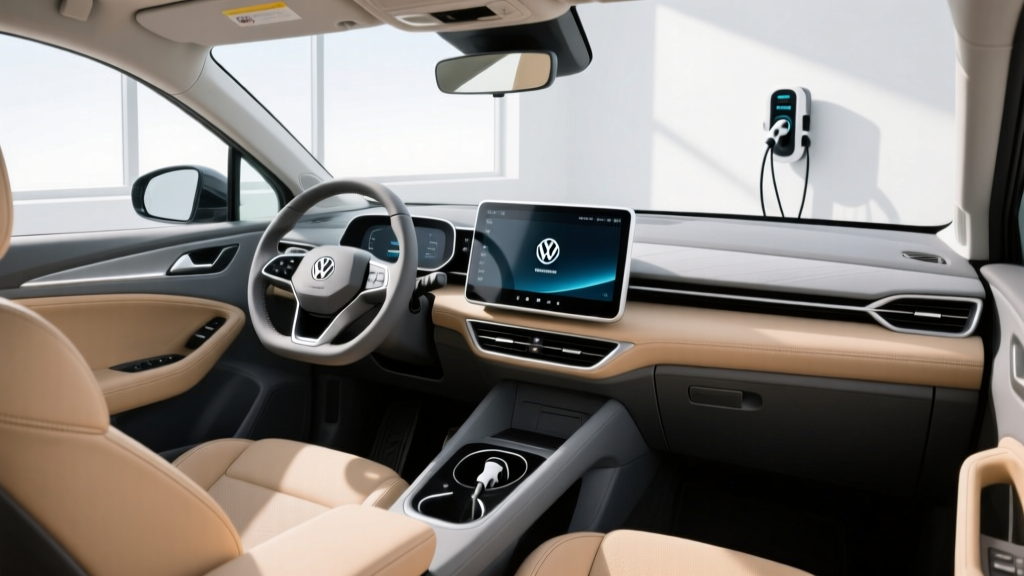
The Volkswagen ID.4 interior is where this EV makes its strongest case as a family vehicle. VW designed the cabin around a flat floor — the hallmark benefit of a dedicated EV platform (MEB) — which gives rear-seat passengers genuinely generous legroom. Front legroom measures 41.1 inches, and the rear offers 37.6 inches, enough for two adults on longer trips without knee-cramping. Headroom is abundant front and rear thanks to the tall roofline.
Materials and Build Quality
VW uses a mix of soft-touch plastics on the upper dash and door uppers with harder, more durable materials lower down. It's not luxury-grade, but it's a step above what you'll find in a similarly priced Toyota RAV4 Hybrid. The standard leatherette (V-Tex) upholstery holds up well to daily wear, while the optional Gradation leather on Pro S Plus trims adds a more premium feel. Panel gaps in US-built ID.4s (Chattanooga, Tennessee) have improved noticeably over early German-built 2021-2022 models.
Infotainment and Controls
The 12.9-inch touchscreen (standard across all 2026 trims) runs VW's latest ID. Software 4.0, which addresses many of the lag and menu-structure complaints from earlier model years. Wireless Apple CarPlay and Android Auto remain standard. However, VW's reliance on capacitive touch sliders for volume and climate control continues to frustrate — they lack haptic feedback and are easy to mis-tap while driving. The small rotary gear selector behind the steering wheel is unintuitive at first but becomes second nature within a week.
Cargo Capacity
Behind the rear seats, you get 30.3 cubic feet of cargo space — competitive with the Hyundai Ioniq 5 (27.2 cu ft) and slightly less than the Tesla Model Y (30.2 cu ft behind second row, though the Y's sloping roofline limits vertical space for taller items). Fold the 60/40 rear bench and capacity expands to 64.2 cubic feet. There is no front trunk (frunk); VW uses that space for HVAC and power electronics. A power liftgate is standard on Pro S and above.
Real-World Range: Beyond the EPA Sticker
- EPA Rated: 291 miles
- Real-World Highway (70-75 mph, mild weather): ~250-265 miles
- Real-World City/Suburban Mixed: ~270-285 miles
- Cold Weather (below 32°F, highway): ~200-230 miles
The ID.4 Pro S's real-world highway range falls roughly 10-14% below the EPA estimate — typical for most EVs at sustained highway speeds. Cold weather compounds this with battery heating demands and cabin climate use. The standard-range 62 kWh model should expect ~170-185 real-world highway miles.
VW's MEB platform includes a heat pump on 2026 US models (standard on Pro S and above, optional on Standard Range), which mitigates some cold-weather range loss by using waste heat from the drivetrain to warm the cabin. If you live in a climate where temperatures routinely drop below freezing, budget for 25-30% range reduction in winter and plan charging stops accordingly.
The ID.4's efficiency of 104 MPGe combined (Pro S RWD) translates to roughly 32 kWh per 100 miles. That's slightly less efficient than the Hyundai Ioniq 5 Long Range (114 MPGe) but competitive within the compact EV SUV class. At a national average residential electricity rate of $0.17/kWh, that's approximately $5.44 to drive 100 miles — about a third of what a 28 MPG gas crossover would cost at $3.40/gallon.
Charging Speeds: DC Fast, Level 2, and Level 1
| Charging Level | Power / Rate | Miles Added per Hour | Notes |
|---|---|---|---|
| Level 1 (120V household) | ~1.2 kW | ~3-4 mi/hr | Emergency/trickle only; ~80+ hrs for full charge |
| Level 2 (240V home) | 11.5 kW (Pro S) | ~37 mi/hr | Full charge in ~7.5 hrs (82 kWh pack) |
| DC Fast Charge (Pro S) | Peak 170 kW | N/A | 10-80% in ~30 min; tapers sharply above 80% |
| DC Fast Charge (Std Range) | Peak 140 kW | N/A | 10-80% in ~28 min (smaller pack) |
The Charging Curve Reality
The ID.4 Pro S peaks at 170 kW at a DC fast charger, but like all EVs, it doesn't sustain that rate. The charging curve holds near peak between roughly 5% and 30% State of Charge, then steps down to ~120 kW through 50%, and further tapers to ~60-70 kW by 70%. Above 80%, charging slows dramatically to protect the NMC battery cells — expect 80-100% to take an additional 25-30 minutes. This is why the industry standard "10-80%" metric exists: the last 20% is painfully slow and should only be used when you genuinely need maximum range for the next leg.
At home on a 48-amp Level 2 charger (hardwired, requiring a 60-amp circuit), the ID.4's 11.5 kW onboard charger replenishes the 82 kWh pack in about 7.5 hours — easily an overnight charge. If your home electrical panel can only support a 32-amp charger (7.7 kW), plan on ~11 hours for a full charge, which still works for most overnight routines.
The ID.4 uses the CCS1 connector for DC fast charging. VW has not yet adopted the Tesla NACS standard on the ID.4 for 2026, meaning you'll rely on Electrify America (which includes 3 years of complimentary 800 kWh charging on new ID.4 purchases), EVgo, ChargePoint, and other CCS-compatible networks. Electrify America's reliability has improved but still trails Tesla's Supercharger network in uptime consistency.
Performance and Driving Impressions
The rear-wheel-drive ID.4 Pro S produces 282 horsepower from its single rear motor, delivering a 0-60 mph time of roughly 7.0 seconds. That's adequate for merging and passing but won't thrill anyone coming from a Tesla Model Y Long Range (5.0 seconds). The AWD Pro S adds a front motor for a combined 335 hp and a 5.4-second 0-60, which feels meaningfully quicker in everyday driving.
Ride quality is where the ID.4 shines. VW tuned the suspension for comfort over sportiness, and the result is a compliant, quiet cruiser that absorbs highway expansion joints and broken pavement with minimal fuss. Steering is light and numb — this is not a driver's EV — but the turning radius is impressively tight at 31.5 feet, making parking-lot maneuvers easy. Regenerative braking offers two modes (D for coasting, B for moderate regen), but VW does not offer true one-pedal driving to a full stop, which some EV converts will miss.
Towing capacity is rated at 2,700 pounds (AWD models with factory hitch) — enough for a small utility trailer or a pair of dirt bikes, but not a camper. RWD models are limited to 2,200 pounds.
Pricing, Trims, and Federal Tax Credit Eligibility
| Trim | MSRP (excl. destination) | Est. §30D Credit* | Effective Price |
|---|---|---|---|
| Standard Range | $39,735 | Up to $7,500 | ~$32,235 |
| Pro | $43,735 | Up to $7,500 | ~$36,235 |
| Pro S (RWD) | $45,735 | Up to $7,500 | ~$38,235 |
| Pro S Plus (RWD) | $48,735 | Up to $7,500 | ~$41,235 |
| AWD Pro S | $49,735 | Up to $7,500 | ~$42,235 |
| AWD Pro S Plus | $53,735 | Up to $7,500 | ~$46,235 |
*Federal §30D tax credit eligibility depends on multiple factors. See checklist below. Point-of-sale transfer is available for 2026, allowing qualified buyers to receive the credit as an upfront discount at the dealership rather than waiting to claim it on their tax return.
§30D Federal Tax Credit Checklist
- MSRP Cap: Vehicle MSRP must not exceed $80,000 for SUVs — all ID.4 trims qualify.
- Buyer Income Cap: Modified AGI must not exceed $150,000 (single), $225,000 (head of household), or $300,000 (joint). Check your prior-year or current-year AGI, whichever is lower.
- Battery Sourcing: A portion of the credit ($3,750) depends on critical minerals sourcing, and another $3,750 on battery component manufacturing. VW's supply chain for the US-built ID.4 has evolved — verify current-year eligibility on IRS.gov's qualified vehicle list before purchasing, as sourcing requirements tighten annually.
- Assembly: Final assembly must occur in North America. The ID.4 is built in Chattanooga, TN — this requirement is satisfied.
- Point-of-Sale Transfer: Available since Jan 1, 2024. You can transfer the credit to the dealer for an immediate price reduction, but you must still meet income requirements and attest to them at purchase.
Important: Tax credit rules are subject to change. Always consult the IRS qualified vehicles page and a tax professional before relying on the credit in your purchase decision.
Driver Assistance and Safety Technology
Every 2026 ID.4 comes equipped with VW's IQ.DRIVE suite, which includes adaptive cruise control with stop-and-go, lane-keeping assist, automatic emergency braking with pedestrian detection, blind-spot monitoring, and rear cross-traffic alert. The system is classified as SAE Level 2 — it provides simultaneous steering and acceleration/braking assistance, but the driver must remain fully engaged and hands-on (or hands-near) the steering wheel at all times. This is not self-driving.
The ID.4's IQ.DRIVE and available Travel Assist (which combines adaptive cruise + lane centering for highway use) require continuous driver supervision. You are legally and operationally responsible for the vehicle at all times. Do not treat this as autonomous driving capability.
The ID.4 earned a 5-star overall safety rating from NHTSA and was an IIHS Top Safety Pick+ in prior model years (verify 2026 ratings on iihs.org when published). The standard six-airbag system includes front, side, and curtain coverage.
Warranty and Long-Term Ownership
Volkswagen backs the ID.4 with a competitive warranty package:
- Battery & Powertrain: 8 years / 100,000 miles (whichever comes first), covering the high-voltage battery against defects and excessive capacity loss. VW defines "excessive" as dropping below 70% of original capacity within the warranty period.
- Bumper-to-Bumper: 4 years / 50,000 miles
- Roadside Assistance: 4 years / 50,000 miles
- Corrosion Perforation: 7 years / 100,000 miles
The 70% capacity retention threshold is industry-standard (matching Hyundai, Kia, and Tesla), though some buyers may prefer the 8-year/unlimited-mile coverage that Hyundai offers on its battery. Real-world degradation data for the ID.4's 82 kWh NMC pack suggests roughly 5-8% capacity loss over the first 60,000 miles based on early-owner reports — well within warranty limits. NMC chemistry generally offers higher energy density than LFP but is slightly more sensitive to repeated 100% charging and high-temperature fast charging. VW recommends setting your daily charge limit to 80% and only charging to 100% before long trips.
Pros and Cons
- Spacious, comfortable interior with flat rear floor
- Competitive real-world range (250+ mi highway, Pro S)
- Smooth, quiet ride quality
- Qualifies for full $7,500 federal credit (verify yearly)
- Tight turning radius, easy to park
- US-built (Chattanooga, TN)
- 3 years free Electrify America charging included
- Capacitive touch sliders are frustrating while driving
- No frunk (front trunk)
- CCS1 only — no NACS/Supercharger access (as of 2026)
- 170 kW peak DC charge rate trails Ioniq 5 (240 kW)
- No true one-pedal driving to a full stop
- Rear drum brakes (unusual at this price point)
- Infotainment still less intuitive than Hyundai/Kia/Tesla
Who Should Buy the Volkswagen ID.4?
- You want a comfortable, quiet family EV crossover with generous rear-seat space.
- Your daily commute is under 80 miles round-trip, and you can charge at home overnight.
- You value a compliant ride over sporty handling.
- You want a US-built EV that qualifies for the full federal tax credit.
- You primarily use Electrify America or ChargePoint for road-trip DC charging.
- You want the fastest DC charging in the segment (consider Ioniq 5 or EV6 at 240-350 kW).
- Supercharger network access is a priority (consider Tesla Model Y or vehicles with NACS).
- You need more than 291 miles of EPA range for frequent 300+ mile road trips.
- You want one-pedal driving or a more engaging driving experience.
- Frunk storage is important to your workflow.
Frequently Asked Questions
What is the real-world range of the Volkswagen ID.4?
The ID.4 Pro S (RWD, 82 kWh) is EPA-rated at 291 miles. In real-world highway driving at 70-75 mph in moderate temperatures, expect 250-265 miles. City and suburban driving with regenerative braking can yield 270-285 miles. In freezing weather with highway use, plan for 200-230 miles.
How fast does the ID.4 charge at home and on the road?
On a 48-amp Level 2 home charger, the ID.4 Pro S charges at up to 11.5 kW, adding about 37 miles of range per hour and fully replenishing the 82 kWh battery in roughly 7.5 hours. On a DC fast charger, it peaks at 170 kW and charges from 10-80% in approximately 30 minutes, though the rate tapers significantly above 80%.
How much does the ID.4 cost after the federal tax credit?
The 2026 ID.4 starts at $39,735 (Standard Range) and goes up to $53,735 (AWD Pro S Plus), before destination. If you qualify for the full $7,500 §30D federal tax credit, effective prices range from roughly $32,235 to $46,235. Eligibility depends on your income, the vehicle's battery sourcing, and MSRP — always verify on IRS.gov before purchasing.
Is the Volkswagen ID.4 worth buying vs. the Hyundai Ioniq 5 or Tesla Model Y?
The ID.4 competes on comfort, interior space, and value after tax credits. The Ioniq 5 charges faster (240 kW peak, 10-80% in ~18 min) and has slightly better efficiency. The Model Y offers Supercharger access, a frunk, and quicker acceleration but at a higher base price and with a firmer ride. If charging speed and road-trip convenience are your top priorities, the Ioniq 5 or Model Y may serve you better. If daily comfort, rear-seat space, and post-credit value matter most, the ID.4 is a strong choice.
Does the ID.4 qualify for the $7,500 federal EV tax credit?
The ID.4 is assembled in Chattanooga, TN (meeting North American final assembly requirements), and its MSRP is well under the $80,000 SUV cap. Whether you receive the full $7,500, a partial credit, or none depends on your adjusted gross income (must be under $150K single / $300K joint) and the current year's battery critical-mineral and component sourcing rules. Check the IRS qualified clean vehicles list for the specific model year and trim you're considering.
What battery chemistry does the ID.4 use, and how long will it last?
The ID.4 uses NMC (nickel manganese cobalt) lithium-ion cells in both the 62 kWh and 82 kWh packs. NMC offers high energy density but benefits from being charged to 80% daily rather than 100%. VW warranties the battery for 8 years or 100,000 miles against capacity loss below 70%. Real-world data from early ID.4 owners suggests 5-8% degradation over the first 60,000 miles with normal charging habits.