Quick Verdict: Is the ID.4 Finance Offer Worth It?
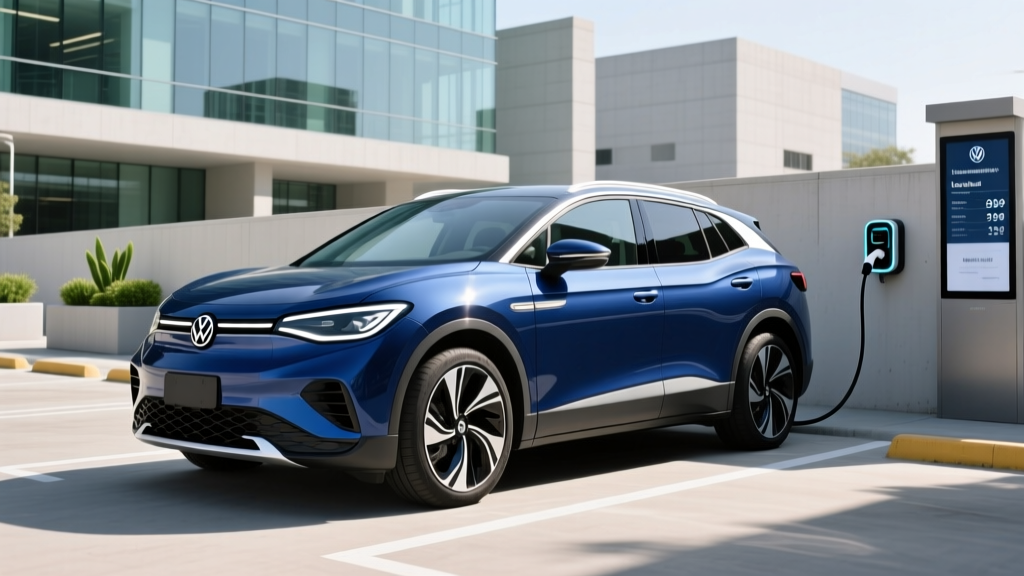
The 2026 Volkswagen ID.4 remains the pragmatic choice in the compact electric SUV segment. It is not the fastest charging or the longest-range vehicle in its class, but it offers a compelling balance of interior space, ride comfort, and value. For buyers analyzing a Volkswagen ID.4 finance offer, the primary draw is often the combination of a sub-$40,000 entry price (before incentives) and the 8-year/100,000-mile battery warranty. While competitors like the Tesla Model Y and Hyundai Ioniq 5 offer superior charging speeds or software ecosystems, the ID.4 provides a more traditional, approachable driving experience that mimics a gas vehicle, reducing the learning curve for first-time EV owners.
Range, Battery, and Real-World Efficiency
For the 2026 model year, Volkswagen continues to offer the ID.4 with two primary battery configurations. The Standard Range model utilizes a 62 kWh (usable) battery, while the Pro and AWD Pro S models feature an 82 kWh (usable) NMC (Nickel Manganese Cobalt) pack. The chemistry choice prioritizes energy density for maximum range, though it requires more active thermal management than LFP alternatives in extreme climates.
Real-World Range Reality Check
EPA Estimate: Up to 291 miles (RWD Pro S) / 263 miles (AWD Pro S).
What to Expect: In mixed driving at 70°F, expect ~270 miles. On a 75 mph highway road trip, range drops to ~230-240 miles. In freezing temperatures (below 32°F), expect a 20-30% reduction, bringing the effective range of the AWD model closer to 185-200 miles without preconditioning.
| Spec | Standard Range (RWD) | Pro / Pro S (RWD) | AWD Pro S |
|---|---|---|---|
| Battery Capacity | 62 kWh (usable) | 82 kWh (usable) | 82 kWh (usable) |
| EPA Range | 206 miles | 291 miles | 263 miles |
| Efficiency (MPGe) | 104 MPGe | 104 MPGe | 98 MPGe |
| Drivetrain | RWD | RWD | AWD (Dual Motor) |
Charging Speed and Infrastructure
A common critique of the ID.4 platform has been its charging curve. The 2026 model maintains a peak DC fast-charging rate of 170 kW on the 82 kWh models (Standard Range peaks at ~130 kW). While 170 kW is respectable, the vehicle only sustains this peak for a short window (typically between 10% and 25% SoC) before tapering. A 10-80% session on a 350 kW Electrify America charger typically takes 28-32 minutes, which is slower than the Hyundai Ioniq 5's 18-minute capability.
| Charging Level | Power Output | Estimated Time / Range Added |
|---|---|---|
| Level 1 (120V) | ~1.2 kW | ~3-4 miles per hour |
| Level 2 (Home 240V) | 11 kW (Max) | ~35 miles per hour (9-10 hours for full) |
| DC Fast Charge | 170 kW (Peak) | 10-80% in ~30 minutes |
For home charging, the 11 kW onboard charger is a strong point, allowing for a full overnight recharge even on the larger battery. However, buyers should ensure their home electrical panel can support a 48-amp hardwired Level 2 charger to maximize this speed.
Performance and Driving Dynamics
The ID.4 is tuned for comfort rather than sportiness. The RWD models produce 282 horsepower and achieve a 0-60 mph time of approximately 7.3 seconds. The AWD models bump this to 335 horsepower and a 0-60 time of 5.4 seconds. The suspension does an excellent job of isolating the cabin from road imperfections, and the turning circle is remarkably tight for an SUV, making it ideal for urban environments. However, the steering feel is notably light and disconnected, which may deter enthusiasts.
Pricing and Finance Offer Analysis
Navigating the Volkswagen ID.4 finance offer requires understanding the intersection of MSRP, dealer incentives, and federal tax credits. As of 2026, the ID.4 qualifies for the full $7,500 federal tax credit under IRS §30D, provided the buyer meets income caps and the vehicle's battery components satisfy the critical mineral and sourcing requirements. Volkswagen has structured its supply chain to maintain this eligibility, a significant advantage over some competitors whose credits have been reduced or eliminated.
| Trim Level | Est. MSRP | Est. Federal Credit | Effective Price |
|---|---|---|---|
| Standard Range | $39,735 | $7,500 | $32,235 |
| Pro (RWD) | $43,735 | $7,500 | $36,235 |
| Pro S (AWD) | $51,735 | $7,500 | $44,235 |
Note: Prices exclude destination charges. Federal credit eligibility is subject to AGI limits ($150k single / $300k joint) and MSRP caps ($80k for SUVs). Many buyers find that the manufacturer's subsidized lease offers (often via VW Credit) provide a lower monthly payment than financing, as the $7,500 credit is frequently passed through as a capitalized cost reduction.
Interior, Tech, and Cargo
The interior of the 2026 ID.4 has seen incremental improvements in software responsiveness, addressing earlier complaints about lag. The 12.9-inch infotainment screen is standard on most trims. While the capacitive touch sliders for volume and climate remain a point of contention for some, the physical button layout has been slightly refined. Cargo space is generous at 30.3 cubic feet behind the rear seats, expanding to 64.2 cubic feet when folded, which outperforms the Tesla Model Y in sheer volume behind the second row.
Pros and Cons
Pros
- Comfortable Ride: Superior suspension tuning for long-distance comfort.
- Tax Credit Eligibility: Consistently qualifies for the full $7,500 federal incentive.
- Interior Space: Class-leading passenger and cargo volume.
- Home Charging: 11 kW onboard charger is faster than many rivals.
Cons
- Charging Speed: 170 kW peak is slower than Hyundai/Kia's 800V architecture.
- Infotainment: Software interface can be unintuitive compared to Tesla or Rivian.
- Frunk: Lack of a front trunk limits storage for charging cables.
- Drum Brakes: Rear drum brakes, while low-maintenance, are a perceived downgrade.
Frequently Asked Questions
Does the 2026 ID.4 qualify for the full $7,500 tax credit?
Yes, based on current 2026 IRS guidelines, the ID.4 meets the battery sourcing requirements. However, buyers must still meet the Modified Adjusted Gross Income (MAGI) limits and the MSRP must remain under the $80,000 cap for SUVs.
How does the ID.4 handle in winter?
The AWD models provide excellent traction. However, like all EVs, range will decrease by 20-30% in freezing weather. The ID.4 includes a heat pump on most trims, which helps mitigate cabin heating energy loss, but preconditioning while plugged in is essential for maximizing range.
Is the VW ID.4 finance offer better than a lease?
Often, VW's lease offers are heavily subsidized. If you plan to keep the car for 8+ years to utilize the full battery warranty, financing is better. If you prefer lower monthly payments and plan to switch vehicles in 36 months, the lease (where the tax credit is applied as a cap cost reduction) is usually the superior financial move.
What is the battery warranty?
Volkswagen provides an 8-year or 100,000-mile warranty on the high-voltage battery, guaranteeing it will retain at least 70% of its original capacity.