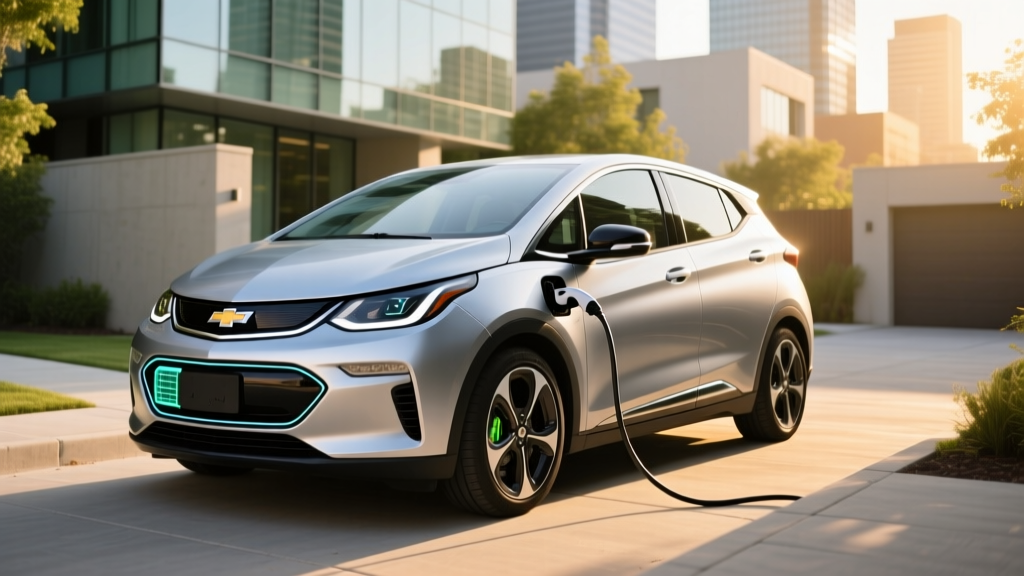
The original Chevy Bolt was the budget EV king until GM retired it in 2023. Now it's back for 2027 on the Ultium platform, and the promise is the same: more range and practicality per dollar than anything else in the segment. After spending time with the specs and early drive impressions, here's the full picture — including where the new Bolt delivers and where it still compromises.
Quick Verdict: The Bolt Is Back, and It's Better
The 2027 Chevy Bolt EV starts at an estimated $26,900 before incentives, making it one of the least expensive new electric vehicles available in the U.S. It pairs a 65 kWh LFP (lithium iron phosphate) battery with a front-wheel-drive motor producing 200 horsepower and an EPA-estimated 259 miles of range. The big upgrade over the old Bolt is DC fast charging: the new model supports CCS2 at up to 150 kW, cutting 10–80% charge time to roughly 30 minutes — a massive improvement over the outgoing car's 55 kW peak.
It's not a luxury EV, and it won't win drag races. But for buyers who want an affordable daily commuter with genuine road-trip capability and low running costs, the 2027 Bolt makes a compelling case.
Range, Efficiency, and Real-World Expectations
| Spec | Value |
|---|---|
| EPA Est. Range | 259 miles |
| Battery (Usable) | 65 kWh, LFP chemistry |
| EPA Efficiency | 120 MPGe combined / 28 kWh per 100 mi |
| Drivetrain | Front-wheel drive (FWD) |
| Motor Output | 200 hp / 236 lb-ft torque |
| 0–60 mph | ~7.0 seconds (est.) |
| DC Fast Charge (Peak) | 150 kW (CCS2) |
| 10–80% DC Charge | ~30 minutes |
| Level 2 Home Charge | 11.5 kW (~37 mi/hr) |
| Base MSRP | $26,900 (1LT) |
| Battery Warranty | 8 years / 100,000 miles |
The EPA sticker says 259 miles, but plan for less in practice. In mixed highway driving at 70+ mph, expect roughly 220–235 miles before needing a charger. In freezing winter conditions (below 30°F), range can drop to 180–200 miles due to cabin heating demands and reduced battery efficiency — a well-documented characteristic of LFP chemistry in cold weather. City driving with regenerative braking can actually exceed the EPA estimate, occasionally reaching 270+ miles in mild weather stop-and-go traffic.
The LFP battery chemistry is a deliberate choice by GM. LFP cells trade some energy density for longevity and thermal stability. They tolerate repeated 100% charging better than NMC (nickel manganese cobalt) batteries, meaning Bolt owners can charge to full daily without the accelerated degradation concerns that NMC packs face. GM recommends periodic 100% charges to keep the battery management system calibrated — something you can't easily do with NMC-based EVs.
Charging Speed: The Bolt's Biggest Upgrade
| Charge Level | Power | Rates Added | Notes |
|---|---|---|---|
| Level 1 (120V outlet) | ~1.4 kW | ~4 miles per hour | Emergency/trickle only |
| Level 2 (240V home) | 11.5 kW | ~37 miles per hour | Full charge in ~6 hours |
| DC Fast (CCS2) | Up to 150 kW | Up to 150 mi in 30 min | 10–80% in ~30 min; tapers above 80% |
The original Bolt's 55 kW DC fast-charging ceiling was its single biggest flaw — a road-trip dealbreaker that meant 60+ minute stops at Electrify America or EVgo stations. The 2027 model nearly triples that rate.
At a 150 kW DC fast charger, the Bolt will peak near its maximum rate at low state of charge (around 10–20% SoC) and sustain strong speeds through 50–60%. Above 80%, the charge curve tapers significantly — this is normal battery physics, not a Bolt-specific issue. If you're road-tripping, plan your stops around the 10–80% window to minimize time plugged in. Charging from 80–100% at a DC station can take nearly as long as the 10–80% session.
For home charging, the 11.5 kW onboard charger is competitive. On a 48-amp Level 2 circuit (requiring a 60-amp breaker), a full charge takes roughly six hours — easily overnight. If your home has a standard 240V/40A dryer-style circuit, expect about 9.6 kW and a full charge closer to seven hours. A licensed electrician can confirm what your panel supports before you buy a wall connector.
Performance and Driving Impressions
The 200-horsepower single front motor won't embarrass anyone at a stoplight, but it's not the Bolt's selling point. The 0–60 mph time of approximately 7.0 seconds is adequate for merging and passing. What impresses is the instant torque delivery — around town, the Bolt feels punchier than its numbers suggest, with seamless acceleration from 0–40 mph that makes it ideal for urban and suburban commuting.
Ride quality is where the Ultium platform shows its value over the old Bolt's BEV2 architecture. The wheelbase is slightly longer, the center of gravity lower, and the suspension tuning more composed over rough pavement. Steering is light but predictable, and the one-pedal driving mode with aggressive regenerative braking lets you navigate traffic with minimal brake-pedal use.
Notably absent: all-wheel drive. The Bolt remains FWD-only, which may deter buyers in heavy snow-belt regions. GM has not announced AWD plans for this generation.
Interior, Cargo, and Technology
Inside, the 2027 Bolt gets GM's latest 11.3-inch infotainment touchscreen running Google Built-In, which includes native Google Maps navigation, Google Assistant, and Play Store apps. Wireless Apple CarPlay and Android Auto are standard. The driver sees a configurable 10.2-inch digital instrument cluster.
Cargo and passenger space:
- Rear legroom: 37.2 inches
- Cargo behind rear seats: 25.1 cu ft
- Cargo with rear seats folded: 56.3 cu ft
- Front trunk (frunk): Not available — the Ultium platform packaging in this compact footprint does not include a frunk
Compared to the Hyundai Kona Electric (25.8 cu ft cargo) and the Nissan Leaf (23.6 cu ft), the Bolt's hatchback cargo area is competitive and practical for groceries, luggage, or a folded bicycle.
Driver assistance: The Bolt comes with Chevy's Super Cruise availability on higher trims (2LT/RS), which is GM's hands-off-wheel, eyes-on-road Level 2 system operating on over 750,000 miles of mapped highways in the U.S. and Canada. This is not self-driving — the driver must remain attentive and the cabin camera monitors eye gaze. Base trims include Chevy Safety Assist: automatic emergency braking, lane-keep assist, following-distance indicator, and IntelliBeam auto high beams.
Pricing, Trims, and Federal Tax Credit
| Trim | MSRP | Est. After §30D Credit* |
|---|---|---|
| 1LT | $26,900 | ~$19,400 |
| 2LT | $30,200 | ~$22,700 |
| RS | $32,500 | ~$25,000 |
*Federal tax credit figures assume full §30D eligibility. See checklist below.
The Bolt's sub-$27,000 starting price is its headline. But the actual out-of-pocket cost depends heavily on whether you qualify for the IRS §30D federal clean vehicle credit, which can reduce your cost by up to $7,500 — now available as a point-of-sale transfer to the dealer, meaning you don't have to wait until tax filing to see the benefit.
- MSRP Cap: Vehicle must be under $55,000 (sedans/hatchbacks). All Bolt trims qualify.
- Buyer Income Cap: Modified AGI must not exceed $150,000 (single), $225,000 (head of household), or $300,000 (joint). Check your prior-year or current-year MAGI.
- Battery Sourcing: The credit splits into two $3,750 halves — one for critical minerals sourcing, one for battery component manufacturing. LFP cells sourced and assembled per current IRS requirements determine whether you receive $3,750 or the full $7,500. Confirm with your dealer before purchase.
- Final Assembly: Must occur in North America. The Bolt is assembled at GM's Orion Assembly plant in Michigan — qualifies.
- Point-of-Sale Transfer: You can transfer the credit to the dealer at purchase for an immediate price reduction, or claim it on your tax return.
Rules subject to change. Consult a tax professional and verify at fueleconomy.gov before purchasing.
How It Compares to Key Competitors
The affordable compact EV segment has thinned out — and that's exactly why the Bolt matters. Here's how it stacks up against the closest alternatives:
- Hyundai Kona Electric (~$33,000): Similar range (261 mi EPA), slightly more cargo space, but costs $6,000+ more at base. Better DC charging (peaks near 100 kW on older architecture, but Kona EV lacks the Ultium platform advantages).
- Nissan Leaf (~$28,500): Still uses CHAdeMO connector (a shrinking network), 212-mile range on the SV Plus, and no active thermal management on the battery — a long-term degradation concern the Bolt's liquid-cooled LFP pack avoids.
- Tesla Model 3 (~$38,000 base): Superior performance, Supercharger network access, and tech, but $11,000+ more expensive. The Bolt is a different value proposition entirely.
For pure price-per-mile-of-range, nothing currently undercuts the Bolt. The trade-offs are a smaller interior than a Model 3 or Ioniq 5, FWD only, and a less premium cabin.
Pros and Cons
- Lowest starting MSRP in the EV segment at $26,900
- LFP battery — charge to 100% daily without degradation guilt
- 150 kW DC fast charging (3× the old Bolt)
- Super Cruise available on higher trims
- Hatchback cargo versatility (56.3 cu ft max)
- Assembled in Michigan — qualifies for §30D assembly requirement
- No AWD option — a drawback in snow country
- FWD-only limits performance appeal
- CCS2 connector (NACS adapter may be needed for Tesla Superchargers)
- No frunk — lost cargo opportunity
- Cabin materials are budget-grade (hard plastics on lower door panels, dash)
- Real-world highway range closer to 220–235 miles
Who the 2027 Chevy Bolt Is For
The Bolt is a commuter-first EV that moonlights as a capable road-tripper when you plan your charging stops. It's ideal for:
- Daily commuters with round trips under 100 miles who can charge at home overnight
- Second-car households looking to eliminate gas costs on the car that does most local driving
- Budget-conscious EV buyers who want new-vehicle warranty and modern tech without crossing $30K
- Rideshare drivers seeking low per-mile energy costs (~$0.04–$0.06/mile on residential electricity vs $0.12–$0.15/mile for gas)
It's not the right pick if you need AWD for mountain/snow driving, require 300+ miles of range for frequent long-distance travel without stops, or want a premium interior experience.
Battery Warranty and Long-Term Ownership
GM covers the Bolt's battery pack for 8 years or 100,000 miles (whichever comes first), with a capacity retention threshold of 70%. If the pack degrades below 70% of its original 65 kWh capacity within that window, GM will repair or replace it. The limited powertrain warranty also runs 5 years / 60,000 miles.
LFP chemistry gives the Bolt a potential longevity edge. Published cycle-life data on LFP cells shows 2,000–3,000+ full charge cycles before reaching 80% capacity — meaning the pack should outlast the vehicle in most ownership scenarios. At 259 miles per cycle, even 2,000 cycles equals over 500,000 miles of theoretical battery life. Real-world degradation depends on temperature exposure, charging habits, and calendar aging, but LFP's track record is strong.
Frequently Asked Questions
What is the real-world range of the 2027 Chevy Bolt?
The EPA rates it at 259 miles, but real-world highway driving yields closer to 220–235 miles. In freezing winter weather, expect 180–200 miles. City driving with regen braking can push past the EPA number in mild conditions.
How fast does the 2027 Bolt charge?
On a DC fast charger, it peaks at 150 kW and charges from 10–80% in approximately 30 minutes. At home on a Level 2 (240V, 48A) charger, it adds about 37 miles of range per hour and fully charges in roughly 6 hours.
Does the 2027 Chevy Bolt qualify for the federal EV tax credit?
Yes — the Bolt is assembled in Michigan (North America), priced under the $55,000 MSRP cap, and is expected to meet battery-sourcing requirements for up to the full $7,500 credit. However, buyer income limits apply ($150K single / $300K joint), and battery-sourcing rules determine whether you receive $3,750 or $7,500. Verify with your dealer and the IRS §30D page before purchasing.
Is the 2027 Bolt worth buying over the Kona Electric or Leaf?
If price is your primary concern, the Bolt wins decisively at $26,900 base — $6,000+ less than the Kona Electric and with better charging infrastructure support than the CHAdeMO-equipped Leaf. The Kona offers slightly more refinement and cargo space, but the Bolt's LFP battery and faster DC charging make it the better value pick for most buyers.
Can I charge the Bolt at Tesla Superchargers?
The 2027 Bolt uses a CCS2 charge port. Accessing the Tesla Supercharger network will require a NACS adapter (expected to be available from GM or third-party suppliers). Confirm adapter compatibility before relying on Superchargers for road trips.
Does the Bolt have a frunk?
No. The Ultium platform packaging in this compact vehicle does not include a front trunk. All cargo space is in the rear hatch area (25.1 cu ft behind rear seats, 56.3 cu ft with seats folded).