Quick Verdict: The 2021 ID.4 at a Glance
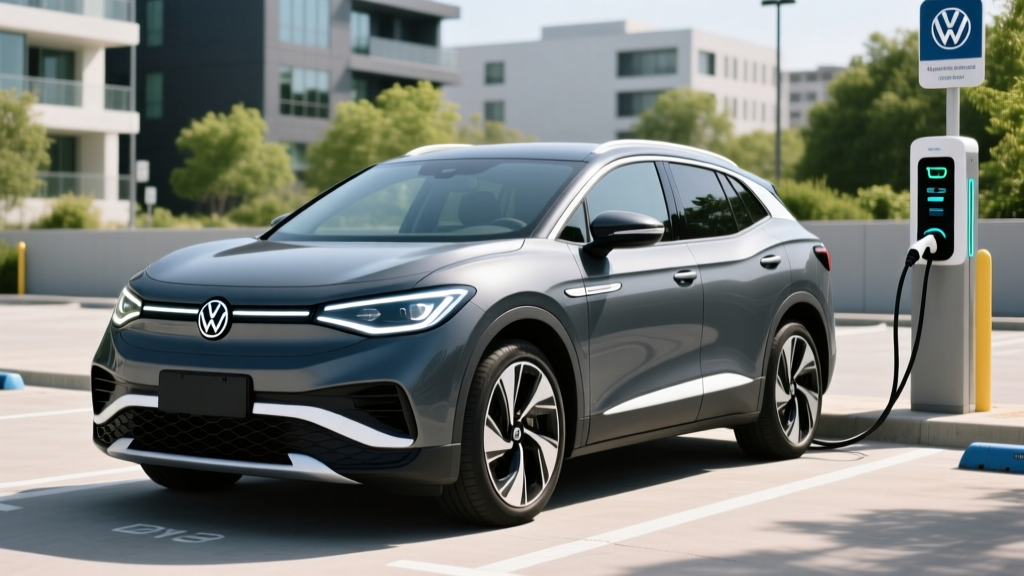
The 2021 Volkswagen ID.4 arrived as VW's first mass-market electric crossover in the United States, built on the company's dedicated MEB platform. For buyers evaluating this first-model-year EV — whether on the used market or comparing it against newer rivals — the ID.4 delivers a practical 250-mile EPA range, competitive interior space, and a comfortable ride, but its 125 kW peak DC fast-charging speed and early-build software quirks remain notable limitations in 2026's faster-charging landscape.
If you're shopping for a used 2021 ID.4 or cross-referencing it against the updated 2025–2026 models (which now feature NACS ports and available 175+ kW charging), this review covers every spec, charging metric, and ownership reality you need to make an informed decision.
| Spec | Value |
|---|---|
| EPA Range | 250 miles (RWD Pro/1st Edition) |
| Battery (Usable) | 77 kWh (82 kWh gross), NMC chemistry |
| Peak DC Fast Charge | 125 kW (CCS1 connector) |
| 10–80% DC Fast Charge | ~38 minutes |
| Level 2 Home Charging | 11 kW (~37 miles/hour) |
| Motor Output | 201 hp, 229 lb-ft torque (RWD) |
| 0–60 mph | 7.7 seconds |
| Drivetrain | Rear-wheel drive (AWD unavailable for 2021) |
| EPA Efficiency | 104 MPGe combined (29 kWh/100 mi) |
| Cargo Volume | 30.3 cu ft (rear seats up) / 64.2 cu ft (folded) |
| Original Base MSRP | $39,995 (Pro trim, before incentives) |
| Battery/Powertrain Warranty | 8 years / 100,000 miles |
Range and Efficiency: EPA vs. Real-World Driving
The 2021 ID.4 carries an EPA-estimated 250 miles of range for the rear-wheel-drive Pro and 1st Edition trims, powered by a 77 kWh usable (82 kWh gross) lithium-ion battery pack using NMC (nickel manganese cobalt) cell chemistry. On paper, that placed it competitively against the 2021 Ford Mustang Mach-E Select (230 miles) but behind the Hyundai Kona Electric (258 miles) and Tesla Model Y Long Range (326 miles).
Real-World Range Expectations: In mixed city/highway driving at moderate temperatures (60–75°F), expect approximately 220–240 miles from a full charge. Sustained highway speeds above 70 mph reduce efficiency noticeably — plan for roughly 190–210 miles on long interstate trips. In freezing conditions (below 32°F), range loss of 20–30% is typical, bringing usable range down to 175–200 miles unless you precondition the battery while plugged in.
The ID.4's efficiency rating of 104 MPGe combined (29 kWh per 100 miles) is respectable but not class-leading. The Tesla Model Y achieves 122 MPGe combined, while the 2021 Mach-E RWD rates at 101 MPGe. In practical terms, the ID.4 consumes about $0.043 per mile at the national average electricity rate of $0.15/kWh — roughly one-third the per-mile fuel cost of a comparable gasoline compact SUV.
One factor that helps in daily use: the ID.4's regenerative braking system offers a B-mode (stronger regen) accessible via the gear selector, though it does not enable true one-pedal driving to a complete stop. You'll still need the friction brakes at low speeds, which some EV veterans find frustrating after experiencing full one-pedal systems in vehicles like the Chevrolet Bolt or Nissan LEAF.
Charging Speed: DC Fast Charging and Home Setup
Charging speed is where the 2021 ID.4 shows its age most clearly relative to 2025–2026 competitors. The peak DC fast-charging rate of 125 kW via its CCS1 connector was adequate at launch, but today's 800-volt architectures from Hyundai/Kia (up to 240 kW) and Tesla's sustained high-rate curves have shifted expectations.
| Charging Level | Power (kW) | Miles Added per Hour | Notes |
|---|---|---|---|
| Level 1 (120V household) | ~1.4 kW | ~4–5 miles/hr | Emergency/trickle only |
| Level 2 (240V, 48A) | 11 kW | ~37 miles/hr | Full charge in ~7.5 hours |
| DC Fast Charge (CCS1) | 125 kW peak | ~190 miles/hr (peak) | 10–80% in ~38 min; tapers above 80% |
At a DC fast charger, the ID.4 holds close to its 125 kW peak from roughly 5% to about 30% state of charge, then steps down progressively. By 60% SoC, you're typically seeing 80–90 kW, and above 80% the rate drops sharply to protect the battery — making that last 20% disproportionately slow. A 10–80% session takes approximately 38 minutes at a capable 150+ kW station. If you're limited to 50 kW CHAdeMO-with-adapter or older Electrify America stalls, expect 10–80% to take closer to 70 minutes.
For home Level 2 charging, the ID.4 accepts up to 11 kW (48 amps at 240 volts), which replenishes the battery from empty in about 7.5 hours — easily enough for overnight charging. A typical Level 2 home installation with a 48-amp hardwired charger (such as a ChargePoint Home Flex or Wallbox Pulsar Plus) runs $800–$1,500 for equipment plus $500–$2,000 for electrician labor and permits, depending on whether your panel needs a service upgrade. The 2021 ID.4 shipped with a portable Level 1/Level 2 EVSE that maxes at 11 kW on a NEMA 14-50 outlet, though many owners opt for a dedicated wall unit for reliability.
Connector note: The 2021 ID.4 uses the CCS1 (Combined Charging System) connector. Volkswagen did not switch to the Tesla NACS standard until the 2025 model year. As a CCS1 owner in 2026, you retain access to Electrify America, EVgo, and most non-Tesla networks. Tesla Supercharger access is available via a CCS-to-NACS adapter (sold separately by VW and third parties), though adapter compatibility and reliability vary by Supercharger generation.
Performance and Driving Dynamics
The 2021 ID.4 is offered exclusively in rear-wheel drive with a single permanent-magnet synchronous motor producing 201 horsepower and 229 lb-ft of torque. The 0–60 mph sprint takes 7.7 seconds — adequate for highway merging and daily commuting but noticeably relaxed compared to the dual-motor AWD variants VW introduced for 2022 and later (which dropped the 0–60 time to approximately 5.4 seconds with 295 hp).
Where the ID.4 earns praise is ride quality. The MEB platform's low center of gravity, multi-link rear suspension, and well-tuned damping give it a composed, almost plush character over rough pavement. Steering is light and precise, though it lacks the feedback enthusiasts crave. The turning circle of 31.5 feet is remarkably tight for a compact SUV — a direct benefit of the rear-mounted motor freeing up front-axle steering angle. This makes the ID.4 genuinely easy to maneuver in parking structures and urban environments.
Braking feel is a mixed bag. The transition from regenerative braking to friction brakes is less seamless than in the Tesla Model Y or Hyundai Ioniq 5, and some drivers report a slightly grabby pedal response at low speeds. It's something you adapt to within a week, but it's a noticeable calibration choice.
Interior, Cargo, and Technology
Inside, the 2021 ID.4 presents a minimalist cabin with a 10-inch infotainment touchscreen (12-inch on the 1st Edition and Pro S trims), a compact digital instrument cluster, and capacitive touch sliders for climate and volume. Rear-seat legroom measures 37.6 inches — generous for the segment and competitive with the Honda CR-V. Front legroom is 41.1 inches. The cabin seats five, though the rear middle seat is best suited for children due to a prominent floor tunnel hump (housing wiring, not a driveshaft).
Cargo capacity stands at 30.3 cubic feet behind the rear seats and 64.2 cubic feet with them folded — solid numbers that edge out the Mach-E (29.7 / 59.7 cu ft) but fall short of the Model Y (30.2 / 72.1 cu ft with front trunk combined). Notably, the 2021 ID.4 has no front trunk (frunk). The space under the hood houses power electronics, and VW uses a small storage cubby in the cabin for charging cables instead.
The technology story for the 2021 model year is the ID.4's weakest link. The infotainment system launched with sluggish response times, inconsistent voice recognition, and frustrating capacitive touch sliders that lack backlighting at night — a widely documented complaint among early adopters. Over-the-air updates through 2022–2024 improved stability and added features, but the underlying hardware remains slower than the 2025+ ID.4's updated ID.Software 4.0 system.
Driver assistance comes via VW's IQ.DRIVE suite, which includes adaptive cruise control with stop-and-go, lane-keeping assist, automatic emergency braking, and blind-spot monitoring. This is an SAE Level 2 system — meaning the driver must remain fully engaged with hands on the wheel and eyes on the road at all times. It is not self-driving. The system works competently on highways but lacks the lane-centering precision of Ford's BlueCruise or GM's Super Cruise on compatible roads.
Pricing, Trims, and Federal Tax Credit Eligibility
The 2021 Volkswagen ID.4 launched in two primary trims for the US market:
- Pro: $39,995 MSRP — 10-inch display, heated front seats, 19-inch wheels
- 1st Edition: $43,995 MSRP — 12-inch display, panoramic roof, gradient LED headlights, exclusive badging (limited to early production)
- Pro S (added late 2021): $44,495 MSRP — 12-inch display, panoramic roof, 20-inch wheels
On the used market in early 2026, a 2021 ID.4 Pro typically sells for $19,000–$24,000 depending on mileage and condition, reflecting significant depreciation from original MSRP — which is good news for used buyers but painful for original owners.
| Item | Amount |
|---|---|
| Original Base MSRP (Pro) | $39,995 |
| Typical Used Price (2026, ~30k mi) | $19,000–$24,000 |
| Federal Used EV Tax Credit (§25E) | Up to $4,000 (30% of sale price, max $4,000, if vehicle ≤$25,000 and buyer meets income caps) |
| Federal New EV Tax Credit (§30D) | Not applicable for used purchases; original 2021 buyers may have received $7,500 if eligible |
Tax credit clarification: The IRS §30D new-vehicle credit does not apply to used purchases. However, buyers of a used 2021 ID.4 may qualify for the §25E used clean vehicle credit — up to $4,000 or 30% of the sale price (whichever is lower), provided the sale price is $25,000 or less, the buyer's modified adjusted gross income falls below $75,000 (single) / $150,000 (joint), and the vehicle is purchased from a licensed dealer. Always verify current eligibility with a tax professional before relying on credit estimates.
Warranty, Battery Longevity, and Maintenance
Volkswagen backs the 2021 ID.4's battery pack and electric drivetrain with an 8-year / 100,000-mile limited warranty — standard for the industry and matching Ford, Hyundai, and Tesla. The warranty guarantees the battery will retain at least 70% of its original capacity during the coverage period. If degradation drops below that threshold, VW will repair or replace the pack at no cost.
Real-world degradation data for the MEB platform's 82 kWh NMC pack is still building, but early reports from high-mileage ID.4 owners in Europe and the US suggest approximately 5–8% capacity loss over the first 60,000 miles — consistent with modern liquid-cooled NMC packs. The ID.4's active thermal management system circulates coolant through the battery to maintain optimal temperature during charging and driving, which is essential for long-term health.
Routine maintenance is minimal compared to a gasoline vehicle: cabin air filter replacement (~$50–$80 every 2 years), brake fluid checks, tire rotation, and windshield washer fluid. The regenerative braking system significantly reduces brake pad wear — many EV owners report original brake pads lasting 80,000+ miles. VW recommends a basic inspection every 10,000 miles or 12 months, with costs typically under $100 per visit.
Pros, Cons, and Who Should Buy
Pros
- Comfortable, well-damped ride quality with a tight 31.5-ft turning circle
- Spacious rear seat (37.6" legroom) and competitive 30.3 cu ft cargo volume
- Strong used-market value — well-equipped examples under $24,000
- 8-year/100,000-mile battery warranty with active thermal management
- Eligible for up to $4,000 used EV tax credit (§25E) if price and income qualify
- Comprehensive IQ.DRIVE safety suite standard on all trims
Cons
- 125 kW peak DC charging is slow vs. 2025–2026 competitors (Ioniq 5: 240 kW)
- Infotainment software is sluggish; capacitive sliders are frustrating, especially at night
- No front trunk (frunk) — lost storage opportunity
- Rear-wheel drive only for 2021; AWD not available until 2022 model year
- Regen braking doesn't enable full one-pedal driving to a stop
- CCS1 connector requires an adapter for Tesla Supercharger access
Who the 2021 ID.4 suits best: This EV is ideal for a two-car household where the ID.4 serves as the daily commuter and errand runner with occasional road trips under 200 miles. It works well for small families needing rear-facing car-seat space and decent cargo room. The comfortable ride and easy maneuverability make it a strong choice for urban and suburban drivers who prioritize comfort over performance. It is not the best pick for frequent long-distance travelers (the 38-minute 10–80% charge time and 250-mile range add up on multi-state trips), performance-oriented buyers (7.7-second 0–60 is relaxed), or those who need AWD for snow-belt winters in the 2021 model year.
2021 ID.4 vs. Key Competitors
On the used market in 2026, the 2021 ID.4 competes against several well-established electric crossovers. Here's how the numbers stack up:
| Spec | VW ID.4 Pro | Ford Mach-E Select RWD | Tesla Model Y LR | Hyundai Kona Electric |
|---|---|---|---|---|
| EPA Range | 250 mi | 230 mi | 326 mi | 258 mi |
| Battery (usable) | 77 kWh | 68 kWh | 75 kWh | 64 kWh |
| Peak DC Charge | 125 kW | 115 kW | 250 kW | 100 kW |
| 0–60 mph | 7.7 sec | 6.1 sec | 4.8 sec | 6.4 sec |
| Cargo (rear up) | 30.3 cu ft | 29.7 cu ft | 30.2 cu ft | 25.8 cu ft |
| Approx. Used Price | $19–24k | $20–25k | $28–34k | $16–20k |
The Model Y dominates on range and charging speed but commands a premium on the used market. The Mach-E offers better performance but sacrifices range. The Kona Electric is the budget pick but is noticeably smaller inside. The ID.4 occupies a middle ground: it's the comfort and space play at a reasonable used price, with the trade-off being slower charging and modest performance.
Frequently Asked Questions
What is the real-world range of the 2021 Volkswagen ID.4?
Expect 220–240 miles in mixed driving at moderate temperatures. Highway-only driving at 70+ mph drops this to roughly 190–210 miles. In freezing weather, plan for 175–200 miles unless you precondition the battery while plugged in. The EPA sticker reads 250 miles, but real-world conditions — especially speed, temperature, and terrain — consistently reduce that figure by 5–25%.
How fast does the 2021 ID.4 charge at home and on the road?
At home on a 240V Level 2 charger (48 amps), the ID.4 charges at up to 11 kW, adding about 37 miles of range per hour and filling the battery from empty in roughly 7.5 hours. On DC fast chargers, it peaks at 125 kW and charges from 10–80% in approximately 38 minutes. Above 80% state of charge, the rate tapers sharply — avoid charging past 80% on road trips unless you need the extra miles.
Does the 2021 ID.4 qualify for any federal tax credit in 2026?
The §30D new-vehicle credit is no longer available for used purchases. However, the §25E used clean vehicle credit can provide up to $4,000 (30% of the sale price) if the purchase price is $25,000 or less, you buy from a licensed dealer, and your modified adjusted gross income is under $75,000 (single) or $150,000 (married filing jointly). Many 2021 ID.4 Pro models on the used market fall at or near the $25,000 threshold, making this credit achievable. Consult a tax professional to confirm your eligibility.
Is the 2021 ID.4 worth buying in 2026 vs. newer EVs?
If you find a well-maintained example under $22,000 and your daily driving stays within 200 miles, the 2021 ID.4 represents strong value — especially if you qualify for the §25E used credit, which can bring your effective cost below $18,000. The trade-offs are the slower 125 kW charging, dated infotainment, and CCS1 connector. If you frequently road-trip or want the latest tech, a used 2022–2023 Hyundai Ioniq 5 or a newer ID.4 with NACS and faster charging may be worth the premium.
What are the biggest problems with the 2021 ID.4?
The most commonly reported issues are software-related: slow infotainment response, unexpected screen blackouts, and the unlit capacitive touch sliders that are hard to use at night. VW addressed many of these through over-the-air updates, but the hardware remains less responsive than newer systems. Some owners have also reported 12V battery drain issues — a pattern seen across many early EVs where the DC-DC converter logic doesn't maintain the auxiliary battery reliably. If buying used, confirm that all available software updates have been applied.
Can I charge a 2021 ID.4 at a Tesla Supercharger?
Yes, but only with a CCS-to-NACS adapter. The 2021 ID.4 has a CCS1 port, while Tesla Superchargers use the NACS connector. Volkswagen and third-party manufacturers sell compatible adapters. Before purchasing an adapter, verify it supports the specific Supercharger generation in your area and that your ID.4's software supports the authentication handshake — not all early-build vehicles do without a software update.