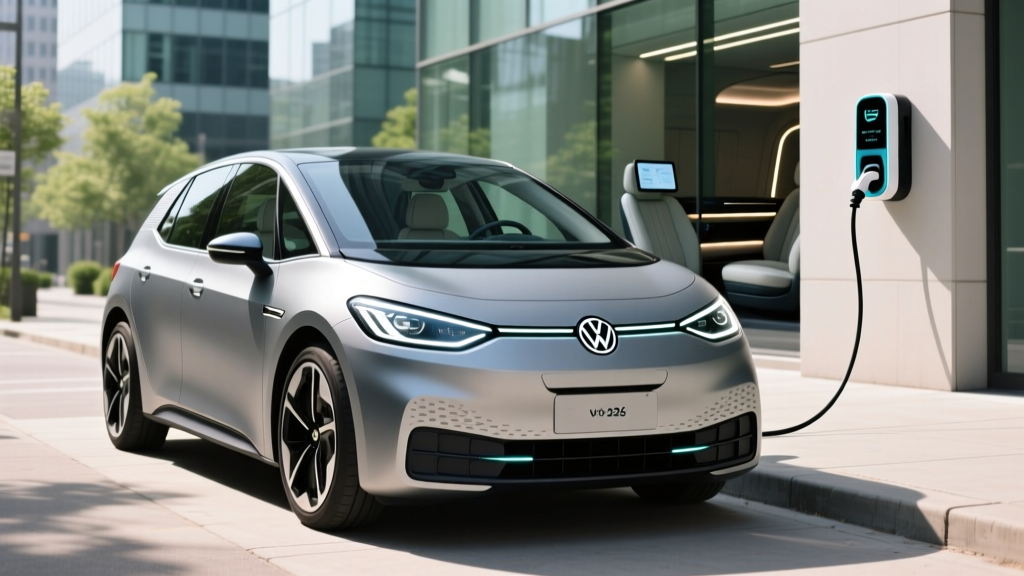
Volkswagen's smallest electric hatchback finally has a clear identity. The Volkswagen ID.2 — the production evolution of the ID. 2all concept — slots below the ID.3 and ID.4 in VW's electric lineup, targeting urban commuters and budget-conscious buyers who want a genuine EV without stepping up to crossover pricing. With a starting MSRP hovering near the critical threshold for federal tax-credit eligibility, the ID.2 is positioned as one of the most affordable mainstream electric hatchbacks available in 2026.
But affordability only matters if the fundamentals hold up. We've compiled the exact EPA figures, charging data, battery chemistry details, and real-world ownership considerations you need before putting down a deposit.
Volkswagen ID.2 Spec Sheet at a Glance
| Spec | Value |
|---|---|
| EPA Est. Range | ~250 mi (est., final EPA pending) |
| Battery Capacity | 58 kWh usable, LFP chemistry |
| Drivetrain | Rear-wheel drive (single motor) |
| Horsepower | ~163 hp (120 kW) |
| 0-60 mph | ~8.0 sec (est.) |
| Max DC Fast Charge | ~130 kW peak |
| 10-80% DC Charge Time | ~25 min (est.) |
| Level 2 Home Charge Rate | 11 kW AC (~35 mi/hr) |
| Efficiency | ~120 MPGe / 28 kWh/100 mi (est.) |
| Cargo Volume | ~14.1 cu ft (rear seats up) |
| Base MSRP | ~$29,990 (est.) |
| Battery Warranty | 8 yr / 100,000 mi (est.) |
Note: As of early 2026, the VW ID.2 is an announced model for select global markets. U.S. availability and final EPA certification remain unconfirmed. All figures marked (est.) are based on VW's published preliminary data and comparable MEB-platform vehicles. Verify with Volkswagen's official U.S. site before making purchase decisions.
Range and Efficiency: What the EPA Sticker Won't Tell You
EPA Estimated: ~250 miles
Expect in real-world highway driving (70-80 mph): ~200-220 miles
Cold-weather (below 32°F) mixed driving: ~170-195 miles
City/regenerative-heavy commuting: ~245-260 miles
The ID.2's 58 kWh LFP (lithium iron phosphate) battery prioritizes longevity and cost over maximum energy density. LFP cells are heavier and slightly less energy-dense than NMC (nickel manganese cobalt) packs, which is why a subcompact hatchback with this pack size lands around 250 miles rather than 300+. That trade-off is intentional: LFP chemistry tolerates repeated 100% charging without the degradation concerns that NMC owners face, and it eliminates cobalt from the supply chain.
Efficiency should land near 120 MPGe combined (roughly 28 kWh per 100 miles), which is competitive with the Chevrolet Bolt EV's final figures and slightly behind the Hyundai Kona Electric. The ID.2's relatively compact frontal area and MEB platform's thermal management system help, but highway speeds above 75 mph will erode range noticeably — a physics reality for every EV in this class.
If your daily commute is under 50 miles round-trip with access to home charging, the ID.2's real-world range is more than sufficient. Road trippers should plan for a charging stop every 180-200 miles to maintain a comfort buffer, especially in winter or mountainous terrain.
Charging Speed: DC Fast, Level 2, and the Curve Reality
| Charging Level | Power (kW) | Miles Added per Hour | Notes |
|---|---|---|---|
| Level 1 (120V household) | ~1.4 kW | ~5 mi/hr | Emergency/trickle only |
| Level 2 (240V home/public) | 11 kW | ~35 mi/hr | Full charge in ~6 hours |
| DC Fast Charge (CCS/NACS) | ~130 kW peak | ~180 mi/hr (peak) | 10-80% in ~25 min |
The 130 kW peak DC fast-charge rate is the ID.2's most debated spec. It's not class-leading — the Hyundai Ioniq 5 and Kia EV6 can peak above 230 kW on 800V architectures — but it's typical for the MEB platform's 400V electrical system and appropriate for a 58 kWh battery.
Here's what the peak number doesn't tell you: charge-curve taper. The ID.2 will hold close to 130 kW from roughly 10% to 45% state of charge, then gradually step down through 80 kW and 50 kW as the battery fills. The 10-80% time of approximately 25 minutes accounts for this taper. For a 250-mile-range vehicle, that 70% charge adds roughly 175 miles of range — enough for most highway driving segments between stops.
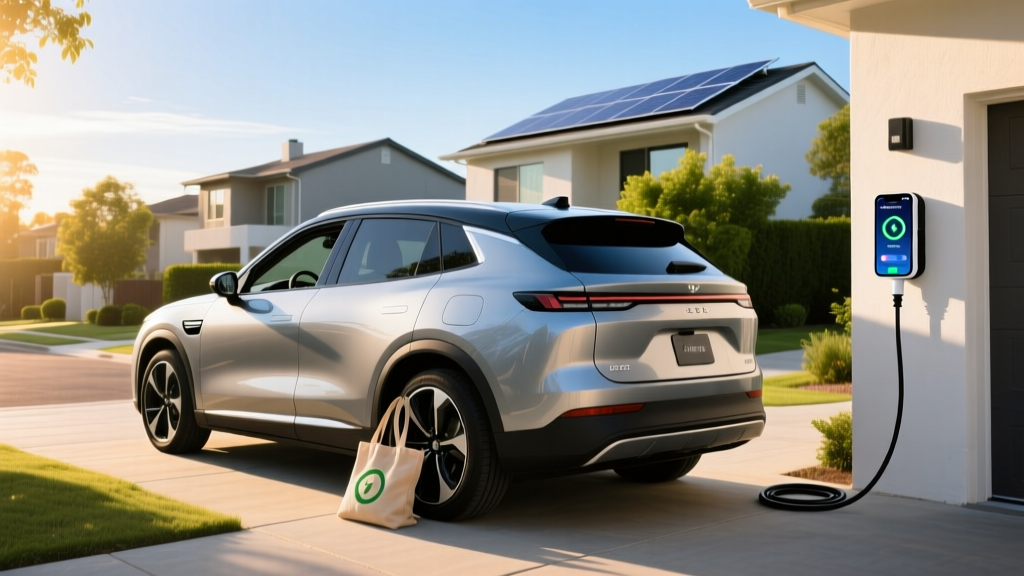
At home on a Level 2 wallbox (240V, 48A circuit), the 11 kW onboard charger replenishes the full 58 kWh battery in about 6 hours. Most owners charging overnight from 20% to 100% will wake up to a full battery every morning. A standard 40A Level 2 charger (9.6 kW) extends that to roughly 7 hours — still practical for overnight use.
For home charging installation, budget $800-$2,500 for a quality Level 2 wallbox and licensed electrician work, depending on your panel capacity and run distance. Homes with 100A electrical panels may need a $1,500-$3,000 service upgrade to 200A to support simultaneous EV charging and household loads. Always consult a licensed electrician for your specific installation.
Performance and Driving Dynamics
The single rear-mounted motor producing approximately 163 hp and 229 lb-ft of torque gives the ID.2 adequate — not thrilling — acceleration. The estimated 8.0-second 0-60 mph time is on par with the Nissan Leaf and base Chevrolet Bolt, putting it squarely in "comfortable commuter" territory rather than performance hatchback territory.
Where the ID.2 should shine is ride quality and maneuverability. VW's MEB platform places the battery low and between the axles, giving the ID.2 a low center of gravity and near-50/50 weight distribution. The short wheelbase and tight turning radius make it ideal for urban parking and narrow streets. Rear-wheel drive also means a slightly more engaging steering feel than front-wheel-drive competitors, though the added weight of the battery pack keeps it from feeling like a traditional hot hatch.
Regenerative braking offers multiple levels selectable via steering-wheel paddles or the infotainment menu, including a one-pedal-driving mode that brings the car to a complete stop without touching the brake pedal. VW's implementation is smoother than some competitors, with a progressive rather than abrupt regen engagement.
Interior Space, Tech, and Daily Livability
The ID.2 rides on VW's shortened MEB platform, which maximizes interior volume relative to its exterior footprint. Expect approximately:
- Rear legroom: ~36.0 inches
- Front headroom: ~40.5 inches
- Cargo (seats up): ~14.1 cu ft
- Cargo (seats folded): ~38 cu ft
- Frunk: Not available (MEB platform limitation)
Those cargo numbers put the ID.2 behind the Chevrolet Bolt EUV and Hyundai Kona Electric for utility, but ahead of the Mini Cooper SE. It's a genuine four-seat hatchback that can handle a week's groceries or two carry-on suitcases, but it's not a cargo hauler.
The infotainment system runs VW's latest ID. Software 4.x on a 12.9-inch center touchscreen with wireless Apple CarPlay and Android Auto. VW has addressed earlier ID. family complaints about touch-sensitive slider controls by restoring physical buttons for climate and volume — a significant ergonomic improvement. A 10.25-inch digital driver display sits behind the steering wheel, and an available augmented-reality head-up display projects navigation arrows onto the windshield.
Driver-assistance features include VW's IQ.DRIVE suite:
- Adaptive cruise control with stop-and-go
- Lane-keeping assist with centering
- Front and rear automatic emergency braking
- Blind-spot monitoring with rear cross-traffic alert
- Park Assist (semi-automated parking)
All IQ.DRIVE features are SAE Level 2 driver-assist systems. The driver must remain fully engaged — hands on or near the wheel, eyes on the road — at all times. These are not autonomous or self-driving features.
Pricing, Trims, and Federal Tax Credit Eligibility
| Trim | Est. MSRP | Key Features |
|---|---|---|
| S (Base) | ~$29,990 | 58 kWh battery, 11 kW AC charging, IQ.DRIVE, 12.9" screen |
| SE | ~$33,500 | Heated seats/steering wheel, heat pump, adaptive cruise, power liftgate |
| 1st Edition (Launch) | ~$35,900 | Panoramic roof, premium audio, unique wheels, AR head-up display |
Does the VW ID.2 Qualify for the $7,500 Federal EV Tax Credit?
This is the question that will make or break the ID.2's value proposition in the U.S. Under current IRS §30D rules, eligibility requires meeting all of the following:
- MSRP cap: Vehicle must be under $55,000 (sedans/hatchbacks) — the ID.2 clears this easily.
- Buyer income cap: Modified AGI must not exceed $150,000 (single) / $300,000 (joint).
- Battery sourcing: A percentage of critical minerals and battery components must be sourced from the U.S. or free-trade-agreement countries (thresholds increase annually through 2029).
- Final assembly: Vehicle must be assembled in North America.
- Point-of-sale transfer: Eligible buyers can transfer the credit to the dealer at purchase, reducing the sale price by up to $7,500 upfront.
The ID.2's biggest tax-credit hurdle is final assembly. Volkswagen manufactures the ID. family primarily in Emden and Zwickau, Germany. Unless VW shifts ID.2 production to its Chattanooga, Tennessee plant or another North American facility, the vehicle will not qualify for the §30D new-vehicle credit regardless of its price. VW has not confirmed U.S. production plans for the ID.2 as of early 2026.
If the ID.2 is imported from Germany, buyers will NOT receive the $7,500 federal credit. Some states offer separate EV rebates (check your state energy office), and the used EV credit (up to $4,000, 30% of sale price) may apply if you purchase a qualifying pre-owned ID.2 from a dealer after it enters the secondhand market. Always verify current eligibility on fueleconomy.gov and consult a tax professional.
Pros, Cons, and the Verdict
Pros
- Sub-$30,000 starting price (if no tariff adjustments)
- LFP battery: charge to 100% daily without degradation worry
- Compact dimensions with surprising interior volume
- VW's improved ID. software with restored physical controls
- Standard IQ.DRIVE safety suite
- Strong brand dealer network for service
Cons
- Likely ineligible for $7,500 federal tax credit (German assembly)
- 130 kW DC charge rate lags 800V competitors
- ~250-mile range limits road-trip convenience vs. 300+ mi EVs
- No frunk for additional storage
- U.S. availability not yet confirmed for 2026
- Cargo space trails Bolt EUV and Kona Electric
Who Should Buy the VW ID.2?
Choose the ID.2 if: You're an urban or suburban commuter with reliable home charging, you want the lowest entry price into a mainstream EV, and your daily driving rarely exceeds 80 miles. The LFP battery is ideal if you want a decade-plus ownership horizon with minimal degradation anxiety.
Look elsewhere if: You need 300+ miles of range for frequent road trips, you rely on the $7,500 federal tax credit to make the math work, you need maximum cargo versatility, or you want the fastest possible DC charging for highway corridor travel.
How the ID.2 Stacks Up Against Key Competitors
| Spec | VW ID.2 | Hyundai Kona Electric | Chevy Bolt EV* | Mini Cooper SE |
|---|---|---|---|---|
| EPA Range | ~250 mi | 261 mi | 259 mi | ~180 mi |
| Battery | 58 kWh LFP | 64.8 kWh NMC | 65 kWh NMC | 54.2 kWh NMC |
| DC Charge Peak | ~130 kW | 100 kW | 55 kW | 95 kW |
| 0-60 mph | ~8.0 sec | 7.6 sec | 6.5 sec | 6.8 sec |
| Base MSRP | ~$29,990 | ~$34,000 | ~$28,000* | ~$32,000 |
| Federal Credit | Unlikely | Eligible (partial) | Eligible* | Not eligible |
*Chevrolet Bolt EV was discontinued after 2023; a next-gen Bolt on the Ultium platform is expected. Figures reflect the final-generation Bolt where applicable. Verify current availability and pricing with manufacturer sources.
Battery Longevity and Warranty
The LFP chemistry in the ID.2 is one of its strongest long-term selling points. LFP cells typically sustain 2,000-3,000+ full charge cycles before degrading to 80% of original capacity — significantly more than typical NMC cells (1,000-2,000 cycles). For an owner driving 12,000 miles per year and charging daily, that translates to well over 15 years of practical battery life before meaningful range loss.
VW is expected to back the ID.2 battery with its standard EV warranty: 8 years / 100,000 miles, guaranteeing a minimum of 70% capacity retention. This matches the industry standard set by Hyundai, Kia, and most mainstream competitors. VW's broader vehicle warranty is expected at 4 years / 50,000 miles bumper-to-bumper.
Frequently Asked Questions
What is the real-world range of the Volkswagen ID.2?
With a preliminary EPA estimate of ~250 miles, expect roughly 200-220 miles in real-world highway driving at 70-80 mph, and 170-195 miles in cold weather (below freezing). City commuting with regenerative braking can push range to 245-260 miles. These are estimates based on comparable MEB-platform vehicles; final EPA certification will provide definitive numbers.
How fast does the ID.2 charge at home and on the road?
On DC fast charging, the ID.2 peaks at approximately 130 kW, achieving a 10-80% charge in roughly 25 minutes. At home on a Level 2 (240V) charger, the 11 kW onboard charger fills the battery in about 6 hours, adding roughly 35 miles of range per hour of charging.
Does the VW ID.2 qualify for the $7,500 federal EV tax credit?
Almost certainly not, unless VW shifts production to North America. The IRS §30D credit requires final assembly in the U.S., Canada, or Mexico. VW's ID. family is currently manufactured in Germany. State-level rebates and the used-EV tax credit (up to $4,000) may still apply depending on your jurisdiction and purchase timing.
Is the VW ID.2 worth buying over the Hyundai Kona Electric or Chevy Bolt?
If VW prices the ID.2 near $30,000 and you have home charging, it's a compelling daily commuter — especially with the LFP battery's longevity advantages. However, if the $7,500 federal credit is essential to your budget, the U.S.-assembled options with confirmed credit eligibility will deliver a significantly lower net cost. Wait for VW's U.S. production confirmation before committing.
When will the VW ID.2 be available in the United States?
As of early 2026, VW has announced the ID.2 for European and select global markets. U.S. availability has not been officially confirmed. If VW commits to the American market, expect a late-2026 or 2027 model-year launch. Monitor VW's official U.S. website for updates.