Quick Answer: Is the Volkswagen ID. Buzz Right for You?
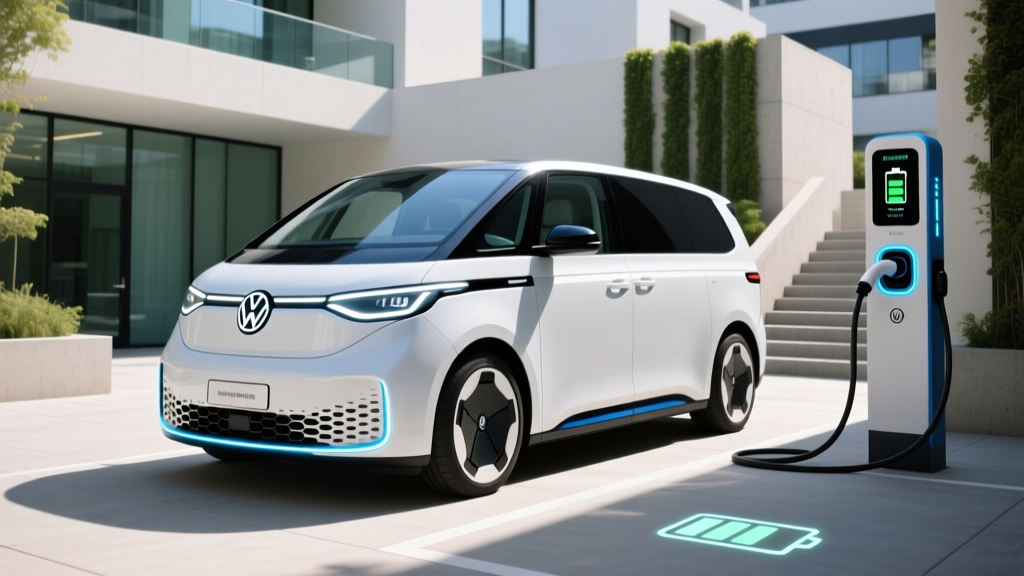
The 2026 Volkswagen ID. Buzz is a three-row electric van with an EPA-estimated 234 miles of range (RWD Pro S trim), a 91 kWh usable NMC battery, and a starting MSRP of $59,995. It charges at up to 170 kW DC, reaching 10–80% in roughly 26 minutes. It qualifies for the §30D federal tax credit (up to $7,500, subject to income and battery-sourcing rules) and offers significantly lower per-mile fueling costs than the gas-powered Honda Odyssey or Toyota Sienna hybrid. Best suited for families with home Level 2 charging who primarily drive under 200 miles daily and want three-row utility without a massive SUV footprint.
Range, Battery, and Real-World Efficiency
The ID. Buzz rides on VW's MEB platform and comes in two configurations for the US market: rear-wheel drive (RWD) and 4Motion all-wheel drive (AWD). Both use the same 91 kWh (usable) nickel-manganese-cobalt (NMC) battery pack mounted under the floor.
| Specification | ID. Buzz Pro S (RWD) | ID. Buzz Pro S Plus AWD |
|---|---|---|
| EPA Range | 234 miles | 218 miles |
| Battery (usable) | 91 kWh NMC | 91 kWh NMC |
| Motor Output | 282 hp / 413 lb-ft | 335 hp / 413 lb-ft (combined) |
| 0–60 mph | ~7.9 sec | ~6.5 sec |
| MPGe (combined) | 87 MPGe | 81 MPGe |
| Max DC Charge Rate | 170 kW | 170 kW |
| 10–80% DC Fast Charge | ~26 minutes | ~26 minutes |
| Level 2 Charge Rate | 11 kW (AC) | 11 kW (AC) |
| Cargo (behind 3rd row) | 18.4 cu ft | 18.4 cu ft |
| Cargo (max, seats folded) | 163.7 cu ft | 163.7 cu ft |
| Towing Capacity | 2,500 lbs | 2,500 lbs |
Real-World Range: What to Actually Expect
The EPA 234-mile sticker on the RWD model is measured under controlled conditions. In real-world driving, plan for:
- Highway cruising at 70–75 mph: ~185–205 miles before needing a charge stop
- Cold weather (below 30°F): 15–25% range reduction, dropping effective range to ~175–200 miles on the RWD trim
- City/suburban mixed driving: Close to or slightly above the 234-mile EPA figure, thanks to regenerative braking at lower speeds
- Full load (7 passengers + cargo): Expect ~5–8% range reduction vs. solo driving
The ID. Buzz's boxy aerodynamic profile works against it at highway speeds. Unlike sleeker crossovers, the van shape creates more drag above 65 mph, which is why highway range falls noticeably short of the combined EPA number. If your daily commute is under 80 miles round-trip, this is largely academic — you'll charge at home overnight and rarely think about it.
Charging: Home Setup and Public DC Fast Charging
The ID. Buzz uses the CCS1 connector standard (VW has confirmed NACS adoption for future models, but the current US-market ID. Buzz ships with CCS1). Here's what charging looks like across all three levels:
| Charging Level | Power (kW) | Miles Added per Hour | Typical Use Case |
|---|---|---|---|
| Level 1 (120V household) | ~1.4 kW | ~4–5 mi/hr | Emergency/trickle only |
| Level 2 (240V, 48A home) | ~11 kW | ~35–40 mi/hr | Overnight home charging (full charge in ~9 hrs) |
| DC Fast Charge | Peak 170 kW | ~190 mi/hr (peak) | Road trips; 10–80% in ~26 min |
The Charging Curve Reality
The 170 kW peak charge rate is just that — a peak. The ID. Buzz sustains its highest charging speeds between roughly 10% and 40% state of charge. Above 60%, the rate tapers to protect battery health, dropping to ~80 kW by 70% and further to ~40 kW past 85%. This is standard behavior for NMC lithium-ion packs with active thermal management, but it means a 10–90% session takes considerably longer than a 10–80% session. For road trips, plan to charge to 80% and go — the last 10–20% adds significant time.
Home Charging Installation Costs
If you're installing a Level 2 home charger (strongly recommended for ID. Buzz ownership), here's what to budget:
| Item | Cost Range |
|---|---|
| Level 2 charger hardware (48A, hardwired — e.g., ChargePoint Home Flex, Emporia Vue) | $400–$700 |
| Electrician labor (240V/60A circuit run) | $800–$2,500 |
| Electrical permit | $50–$200 |
| Panel upgrade (if needed — 100A to 200A service) | $1,500–$3,500 |
| Total (no panel upgrade) | $1,250–$3,400 |
| Total (with panel upgrade) | $2,750–$6,900 |
Always get a quote from a licensed electrician before purchasing hardware. Many utility companies offer rebates of $200–$500 for Level 2 installations — check with your local provider. The federal Alternative Fuel Vehicle Refueling Property Credit (§30C) may also cover up to 30% of home charging equipment and installation costs (max $1,000), subject to census-tract eligibility. Consult a tax professional regarding §30C eligibility.
EV vs. Gas Minivan: Cost and Practicality Comparison
The ID. Buzz's natural competitors are the Honda Odyssey, Toyota Sienna (hybrid), and Chrysler Pacifica (available as PHEV). Here's how the numbers stack up:
| Metric | VW ID. Buzz Pro S (RWD) | Toyota Sienna XLE (HEV) | Honda Odyssey EX-L |
|---|---|---|---|
| Base MSRP | $59,995 | $42,995 | $43,300 |
| After §30D Credit (max) | ~$52,495 | N/A (not a BEV) | N/A |
| EPA Range / MPG | 234 mi / 87 MPGe | ~575 mi / 36 MPG combined | ~510 mi / 22 MPG combined |
| Fuel/Energy Cost per Mile | ~$0.04–$0.06 (home charging) | ~$0.09–$0.11 | ~$0.14–$0.17 |
| Annual Fuel/Energy (15,000 mi) | $600–$900 | $1,350–$1,650 | $2,100–$2,550 |
| Estimated 5-Year Fuel Savings vs. Odyssey | ~$6,000–$8,250 | Baseline | |
| Maintenance (annual avg.) | ~$200–$400 | ~$500–$800 | ~$600–$900 |
| Cargo (behind 3rd row) | 18.4 cu ft | 33.5 cu ft | 38.6 cu ft |
| Seating | 7 passengers | 7–8 passengers | 7–8 passengers |
The ID. Buzz carries a significant upfront premium over gas and hybrid minivans — roughly $17,000–$18,000 more than a Sienna XLE or Odyssey EX-L. Even after the maximum $7,500 federal credit, you're paying ~$9,500 more. However, the per-mile energy cost is dramatically lower. At national-average residential electricity rates (~$0.16/kWh), fully charging the 91 kWh battery costs roughly $14.50 for 234 miles. The same distance in a Honda Odyssey at $3.40/gallon costs about $24.50.
Over five years and 75,000 miles, the ID. Buzz saves an estimated $6,000–$8,250 in fuel costs versus the Odyssey, and $3,000–$4,500 versus the Sienna hybrid. Factor in lower maintenance (no oil changes, no transmission fluid, reduced brake wear from regenerative braking), and the total operating-cost gap narrows the purchase premium — but doesn't fully eliminate it within a typical ownership cycle.
Federal Tax Credit and Ownership Economics
The 2026 Volkswagen ID. Buzz may qualify for the full or partial §30D Clean Vehicle Credit of up to $7,500, but eligibility depends on several factors that change regularly:
- MSRP cap: Vans/minivans classified as SUVs or light trucks have an $80,000 MSRP cap — the ID. Buzz clears this at all trims
- Buyer income limits: Modified AGI must not exceed $300,000 (joint), $225,000 (head of household), or $150,000 (single)
- Battery component sourcing: A percentage of battery components must be manufactured or assembled in North America (threshold increases annually)
- Critical minerals: A percentage of critical minerals must be sourced from the US or FTA partners (threshold increases annually)
- Point-of-sale transfer: You can transfer the credit to the dealer at purchase for an immediate price reduction, rather than waiting to claim it on your tax return
Because battery-sourcing requirements tighten each year, a model that qualifies for the full $7,500 in one model year may qualify for only $3,750 (or nothing) the next. Always verify current eligibility on the IRS website or with your dealer before committing to a purchase.
| Cost Category | ID. Buzz Pro S (RWD) | Honda Odyssey EX-L |
|---|---|---|
| Purchase Price (after max credit) | $52,495 | $43,300 |
| 5-Year Insurance (est.) | $9,000–$11,500 | $7,000–$9,000 |
| 5-Year Energy/Fuel | $3,000–$4,500 | $10,500–$12,750 |
| 5-Year Maintenance | $1,000–$2,000 | $3,000–$4,500 |
| Estimated 5-Year Depreciation | $22,000–$27,000 | $15,000–$19,000 |
| Total 5-Year Cost (est.) | $87,500–$97,500 | $78,800–$88,550 |
EV insurance premiums remain 15–25% higher than comparable gas vehicles, reflecting higher repair costs and battery replacement risk. The ID. Buzz's depreciation is harder to project precisely since it's a newer nameplate, but EVs broadly have seen steeper depreciation than established gas models in recent years. The five-year total cost of ownership gap between the ID. Buzz and the Odyssey narrows to roughly $8,700–$9,000 — still meaningful, but substantially less than the sticker-price gap suggests.
Common Misconceptions About the ID. Buzz
| Myth | Fact |
|---|---|
| "It's the classic VW Microbus reborn" | The ID. Buzz is a modern, 5,000+ lb electric van sharing zero mechanical components with the original Type 2. The retro styling is cosmetic only. |
| "234 miles of range isn't enough for a family van" | The average American drives ~37 miles per day (fueleconomy.gov). 234 miles covers 95%+ of daily driving with home charging. Road trips require planning but are entirely feasible with DC fast charging. |
| "The battery will need expensive replacement in a few years" | VW warranties the battery for 8 years/100,000 miles against degradation below 70% of original capacity. Modern NMC batteries with active thermal management typically retain 85–90% capacity at 100,000 miles. |
| "I can't take it on road trips" | At 170 kW peak DC charging, a 10–80% session takes ~26 minutes at a compatible Electrify America or similar station. Plan one 30-minute stop per 180–200 highway miles. |
| "Electricity from the grid isn't really clean" | Even on coal-heavy grids, EVs produce fewer lifecycle emissions than gas vehicles per EPA analysis. As grids add renewables, EVs get cleaner over time — gas cars never do. |
Decision Framework: Should You Buy the ID. Buzz?
Buy the ID. Buzz If:
- You have access to home Level 2 charging (or can install it)
- Your daily driving is under 150 miles and you take road trips 4–6 times per year or fewer
- You want three-row seating and prefer a van footprint over a large SUV
- You qualify for the §30D tax credit and can apply it at point of sale
- You value low operating costs and are willing to accept higher upfront cost
- You appreciate the distinctive retro-modern design and don't want another crossover
Look Elsewhere If:
- You rely exclusively on street parking with no charging access — public-only charging adds time and cost
- You regularly drive 300+ miles between stops and don't want to plan charging breaks
- Cargo volume behind the third row is critical (the Sienna and Odyssey offer nearly double)
- You need to tow more than 2,500 lbs
- Budget is the primary concern — a Sienna hybrid delivers 36 MPG and three rows for $17,000 less
- You live in an extreme cold-weather climate (consistent sub-zero temps) and need maximum range reliability
What First-Time EV Buyers Should Know
If the ID. Buzz is your first EV, here are the ownership realities that brochures don't emphasize:
Preconditioning matters. The ID. Buzz can warm or cool its battery before you arrive at a DC fast charger (set via the infotainment navigation). A preconditioned battery charges significantly faster, especially in cold weather. Always navigate to your charging stop rather than just driving there — the car will prep the battery automatically.
kW and kWh are not the same thing. kW (kilowatts) measures power — how fast energy flows into the battery during charging. kWh (kilowatt-hours) measures energy capacity — how much the battery holds. The ID. Buzz has a 91 kWh battery and charges at up to 170 kW. Think of kWh as the size of the gas tank, and kW as the flow rate of the pump.
Plan your road-trip charging before you leave. Apps like A Better Routeplanner or PlugShare let you map DC fast-charging stops along your route. Electrify America has the broadest CCS1 network in the US, but reliability varies by station. Have a backup station identified within 15–20 miles of your planned stop.
Your electric bill will go up, but your total fuel spend will go down. Expect to add $40–$70/month to your home electricity bill for typical family-van mileage. That replaces $150–$220/month in gasoline for the same distance in an Odyssey.
Frequently Asked Questions
Does the Volkswagen ID. Buzz qualify for the $7,500 federal tax credit?
It may, depending on your income, the vehicle's battery-sourcing compliance for the current model year, and MSRP. The ID. Buzz is under the $80,000 MSRP cap for its class. Verify current eligibility at IRS.gov or with your VW dealer before purchase.
How long does it take to charge the ID. Buzz at home?
On a Level 2 (240V, 48A) home charger delivering 11 kW, a full 0–100% charge takes approximately 9 hours. Most owners charge from 20–80% overnight, which takes about 5 hours. Level 1 (120V) adds only ~4–5 miles per hour and is impractical as a primary charging method for a vehicle this size.
What happens to the ID. Buzz's range in winter?
Expect a 15–25% range reduction in sustained below-freezing temperatures, bringing the RWD model's effective range to roughly 175–200 miles. The ID. Buzz has a heat pump (standard on US models), which reduces cabin-heating energy draw compared to resistive heaters, partially mitigating cold-weather loss. Preconditioning while plugged in preserves range.
Is the ID. Buzz self-driving?
No. The ID. Buzz comes equipped with VW's IQ.DRIVE suite, which includes adaptive cruise control, lane-keeping assist, and automated emergency braking. This is an SAE Level 2 driver-assistance system — you must keep your hands on the wheel and remain fully engaged at all times. It is not autonomous.
How does the ID. Buzz compare to the Chrysler Pacifica PHEV?
The Pacifica PHEV offers 32 miles of electric-only range before the gas engine kicks in, then operates as a hybrid at ~30 MPG combined. It's a good bridge option if you lack home charging or frequently drive long distances. However, the ID. Buzz offers far lower per-mile energy costs, zero tailpipe emissions, and less mechanical complexity — at a higher purchase price and with range planning required for long trips.
What is the battery warranty on the ID. Buzz?
Volkswagen provides an 8-year/100,000-mile battery warranty (whichever comes first) guaranteeing the high-voltage battery will retain at least 70% of its original usable capacity. The basic vehicle warranty is 4 years/50,000 miles.